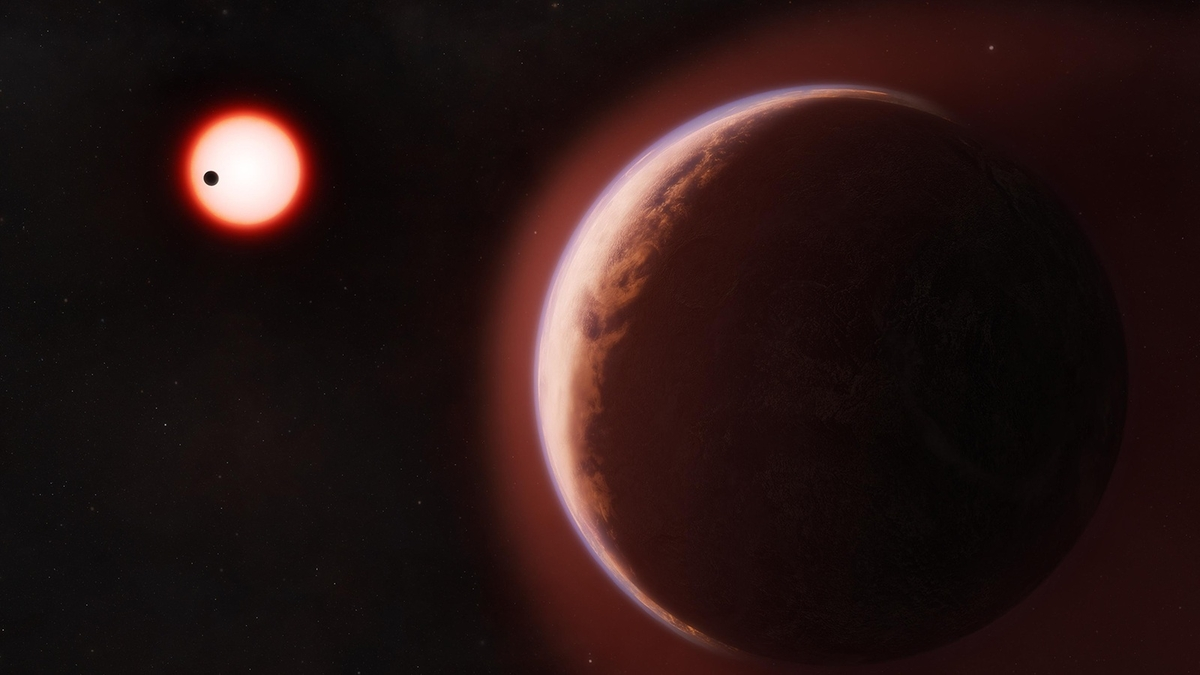
The quest for life beyond our solar system is taking a new direction. An international team of researchers published in the journal Science the results of their observations carried out with the telescope Magellan Clay in Chile.
They detected a helium signal escaping from theatmosphere of LHS 1140ba super-Earth approximately 5.6 times more massive than our planet. This discovery makes this world the “ most promising laboratory » for astrobiology because it is the first time that such a gas shield has been confirmed on a rocky planet in a habitable area (the region neither too hot nor too cold around a star).
Located 49 light years away, this super-Earth meets the three conditions considered essential for habitability: it is rocky, its temperature would allow the presence of liquid water, and it now has a proven gaseous envelope, protecting it from the radiation of its star.
Why is the planet LHS 1140b so promising?
The planet LHS 1140b is considered a exceptional candidate because it ticks all the boxes in the “trifecta” for habitability. Its composition is rocky, its surface temperature could maintainliquid water,and it is protected by an atmosphere. It is this trio of characteristics that propels it to the top of the list of worlds to study.
Discovered in 2017, this extrasolar planet orbits around a woman rouge (a star smaller and cooler than our Sun) relatively calm, which is a major asset.
Indeed, many red dwarfs are very active and their violent eruptions can blow away the atmosphere of nearby planets. The fact that the star of LHS 1140b is, on the contrary, not very active probably allowed the planet to preserve its gaseous envelopean essential shield against cosmic radiation.
How did scientists detect this atmosphere?
The detection was carried out using the transit methoda technique now well mastered. Astronomers used an infrared spectrograph to analyze the star’s light as the planet passed in front of it.
Some of this light filtered through the upper layers of the planet’s atmosphere and the atoms present left a unique chemical signaturein this case that of helium.
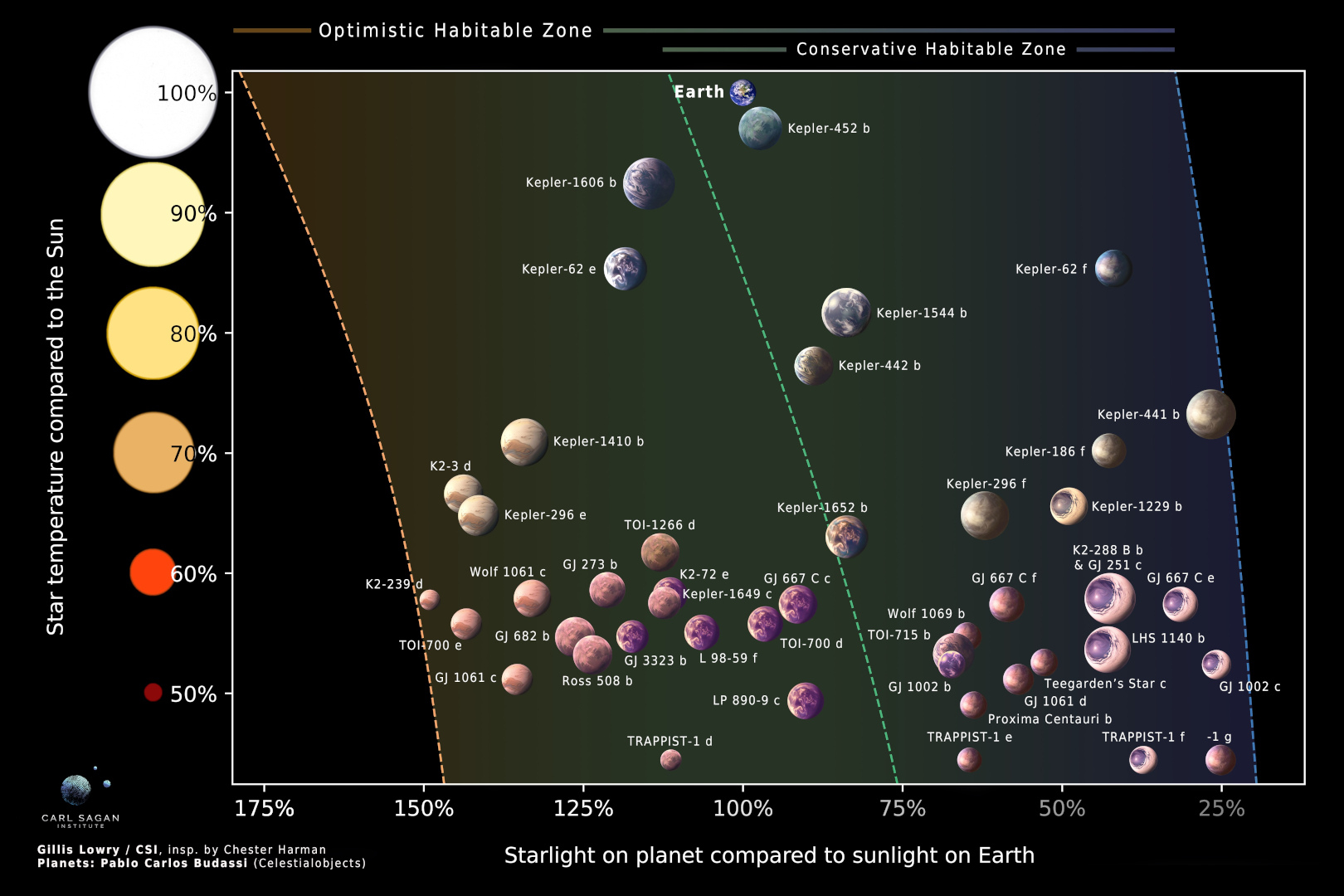

LHS 1140b is one of the most promising rocky exoplanets
The most fascinating thing is that the helium signal, detected in 2024, disappeared during observations in 2025. Far from invalidating the discovery, this variability shows to what extent the planet’s atmosphere is dynamic and reacts to its stellar environment.
This allowed researchers to rule out many false positives possible. They don’t just see an atmosphere, they see it “breathing” in response to its star, which is a information capitale to understand how it works.
Should we see this as proof of extraterrestrial life?
The discovery confirms thata potentially habitable environment exists but it in no way proves the presence of life. Scientists, such as Dr Yamila Miguel of the Leiden Observatory, point out that helium has been detected very high in the atmosphere, far from the surface where the extraterrestrial life could theoretically develop.
This discovery is above all a fantastic front door. It shows that rocky planets around the most common stars in our galaxy can retain an atmosphere.
LHS 1140b becomes a real laboratory open sky for new generation instruments such as the space telescope James Webb. Models predict that beneath this veil of helium could hide carbon dioxide, water vapor and perhaps even oxygen. The next step will be to probe these deeper layers.