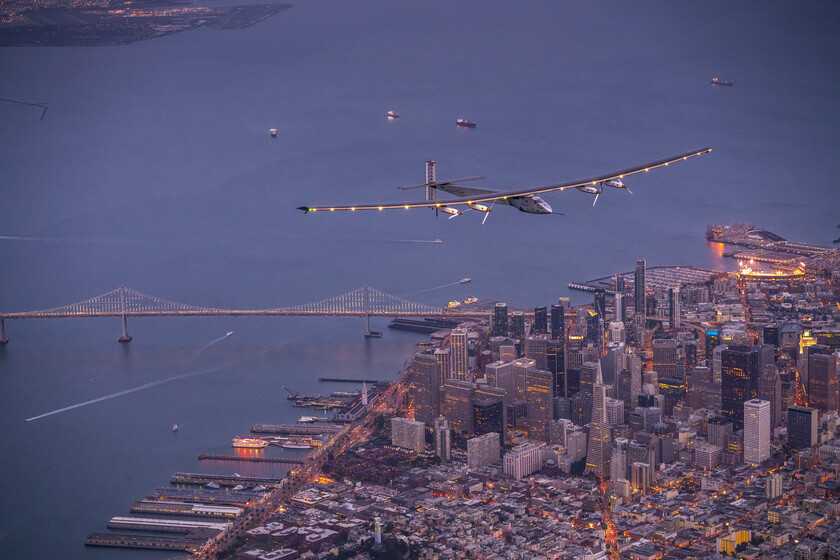
There was a time when the Solar Impulse 2 It seemed like it came from a simple question: how far can a plane go if we leave out conventional fuel. The answer was not a commercial product, but an experimental aircraft powered by solar energy and batteries that ended up flying around the world. That is why the news has a special charge. That plane that symbolized a different way of imagining aviation has ended up crashing in the Gulf of Mexico during an autonomous test.
The coup came on May 4. According to Aviation Safety Network, the Solar Impulse 2 was conducting an autonomous test flight when it lost power and ended up crashing into the water. The least bitter part of the news is that there were no injuries or deaths, something important because the plane was already flying without a crew in this new stage. The most symbolic part is another: the device that for years turned a technological promise into something visible has been reduced to the remains of an accident.
Behind the project was Bertrand Piccard, a figure marked by a family tradition of explorers: his grandfather Auguste Piccard was a pioneer of the depths and his father, Jacques Piccard, reached the Mariana Trench. In 2003 he began to imagine a solar aircraft capable of flying around the world to draw attention to the “sustainable energyFirst came Solar Impulse 1, with its initial flight in 2009, and then the final leap.
The plane that converted the sun into flight energy
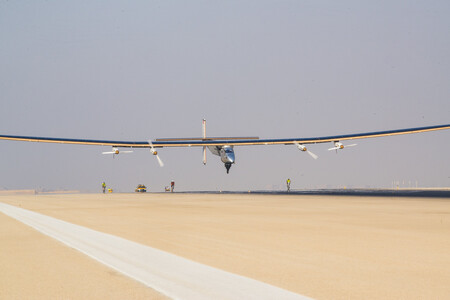
What is striking is that this ambition was not based on a gigantic machine in the traditional sense. The Solar Impulse 2 had a huge wingspan, about 71 meters, greater than that of a Boeing 747, but weighed around 2.3 tons thanks to its carbon fiber structure. The energy came from 17,248 photovoltaic cells distributed throughout the plane, with a maximum power of 66 kW to drive four electric motors and charge four lithium-ion batteries.
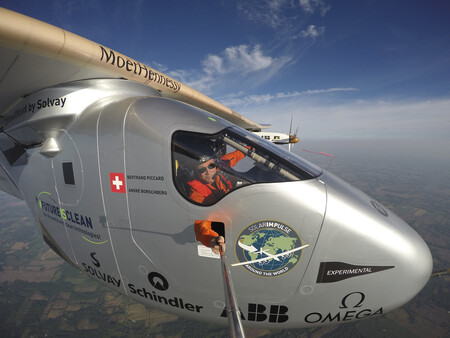
The moment that made it more than a technological oddity came in 2016. That year, the Solar Impulse 2 completed the first trip around the world of a fixed-wing plane powered entirely by solar energy, a journey that lasted more than 15 months. Bertrand Piccard and André Borschberg, co-founder of the foundation, alternated at the controls during the tour. It was not a demonstration of speed, of course: the plane was moving between 31 and 62 miles per hour, slowing down during the night sections.

After that feat, the story changed tone. In 2019, the Solar Impulse Foundation announced the sale of the aircraft to Skydweller Aero for an undisclosed amount. The Spanish-American company did not view the project from exactly the same place as its creators: its interest was in exploring the potential of the aircraft as a surveillance and communications platform, a very different destination from the original message of energy awareness.


With Skydweller the technical transformation of the device also began. After incorporating numerous modifications, the plane completed its first autonomous flight in 2023and the following year it carried out its first completely unmanned operation at Stennis International Airport, near Bay St. Louis, Mississippi.


The company’s stated goal was to develop a fleet of solar aircraft capable of non-stop flights at certain latitudes, between Miami and Rio de Janeiro. The ambition was evident: almost continuous operations for military and commercial contracts, at a much lower cost than satellite-based options. A huge promise that has ended underwater.
Images | Solar Impulse (1, 2, 3, 4)
In | While we all look at Iran, something is moving in the Arctic Circle: Russia is sending bombers with missiles