This seems banal, but it completely changes the way we deal with information. When training with the smartwatch you will see:
- Your current heart rate
- Training zones in real time
- Progress directly during exercise
- GPS routing or maps
You don’t have to access the app to understand what’s happening.
There are also functions that are simply practical or can be crucial in an emergency. A watch like the Samsung Galaxy Watch7 can, among other things, stream music to Bluetooth headphones and detect falls – in an emergency, it can automatically notify helpers.
A ring, on the other hand, remains largely passive on the finger. Although it registers your data in the background, it cannot react directly on the device. While a watch informs you immediately via vibration or display warning, with the ring the detour via the smartphone app is essential.
When smart rings actually make sense
As clear as the advantages of the smartwatch are, there are also situations in which a ring can be the better choice. This becomes particularly apparent when you sleep. Many users find a watch on their wrist annoying at night. A ring is almost always less noticeable and is perceived as more pleasant.
The small format can also score points for water sports. A ring like the RingConn Smart Ring offers less resistance and is less prone to bumping into something. By the way, you should generally be careful when swimming with your smartwatch.
Smart rings show their strengths in these niches – but more as a supplement, not necessarily as a replacement. Curious? Here you will find the best smart rings tested.
Buying advice: These devices are worth a look
Choosing the right digital companion depends primarily on your goals: Are you looking for clinical precision, top sporting performance or unobtrusive monitoring at night?
Medical esthete: Withings ScanWatch Nova
Withings
Price: 600 euros
- Display: Analogue dial with integrated OLED display
- Battery life: Phenomenal 30 days (up to 35 days in power saving mode)
- Health features: Medical 1-channel ECG, 24/7 temperature zone tracking
- Compatibility: Fully optimized for iOS and Android
- Housing: High quality diving watch design, waterproof to 10 ATM
The Withings ScanWatch Nova is a solid choice for anyone who doesn’t want a classic smartwatch look on their wrist, but doesn’t want to compromise on health. It was also developed from a clinical perspective and can provide evidence of irregularities such as atrial fibrillation.
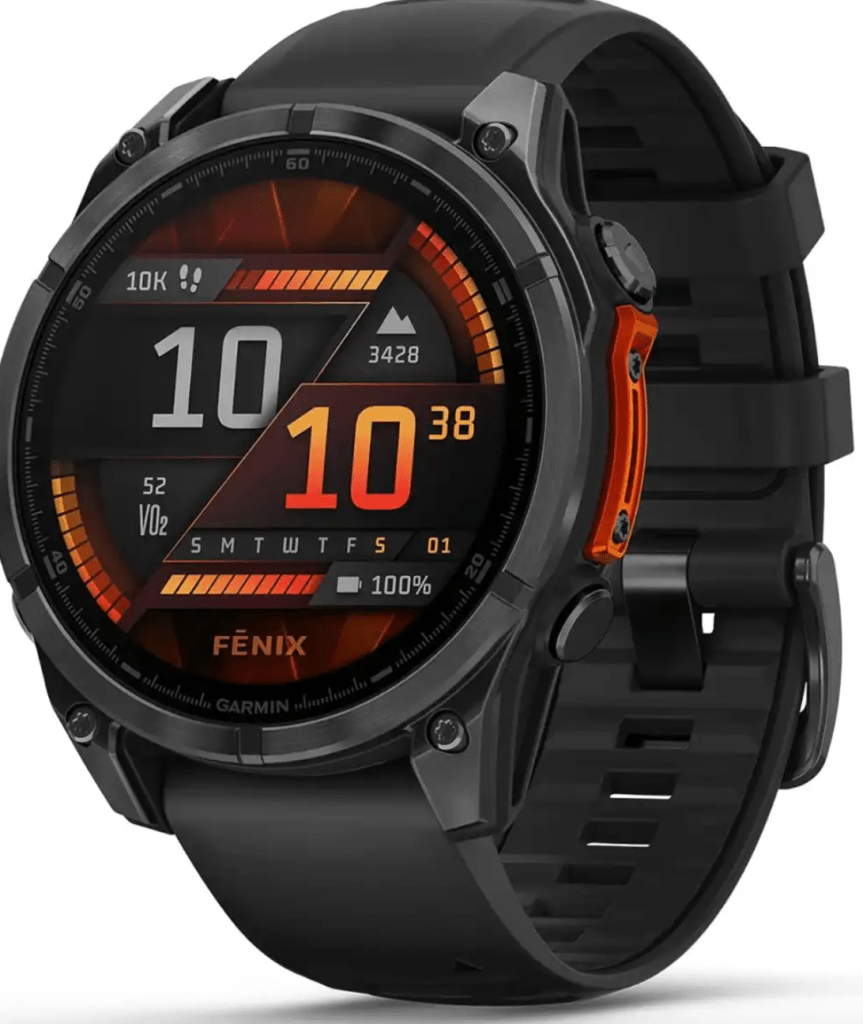
Performance-Profi: Garmin fēnix 8

Garmin
Price: 900 euros
- Display: Clear 1.3″ AMOLED touch display + physical buttons
- Outdoor-Tools: Integrated LED flashlight, TopoActive maps, multi-frequency GPS
- Sports specialist: Over 80 sports apps, waterproof buttons (submersible up to 40m)
- Smart-Features: Garmin Pay, music storage, telephony directly via the watch
- Training: Determination of recovery times and current readiness for training
Anyone who sees sport not just as a hobby but as a passion will find the Garmin fēnix 8 a robust companion for many adventures. It is the Swiss army knife of wearables: While other devices simply collect data, the fēnix 8 offers active navigation and highly specialized training plans that can even minimize the risk of injury.
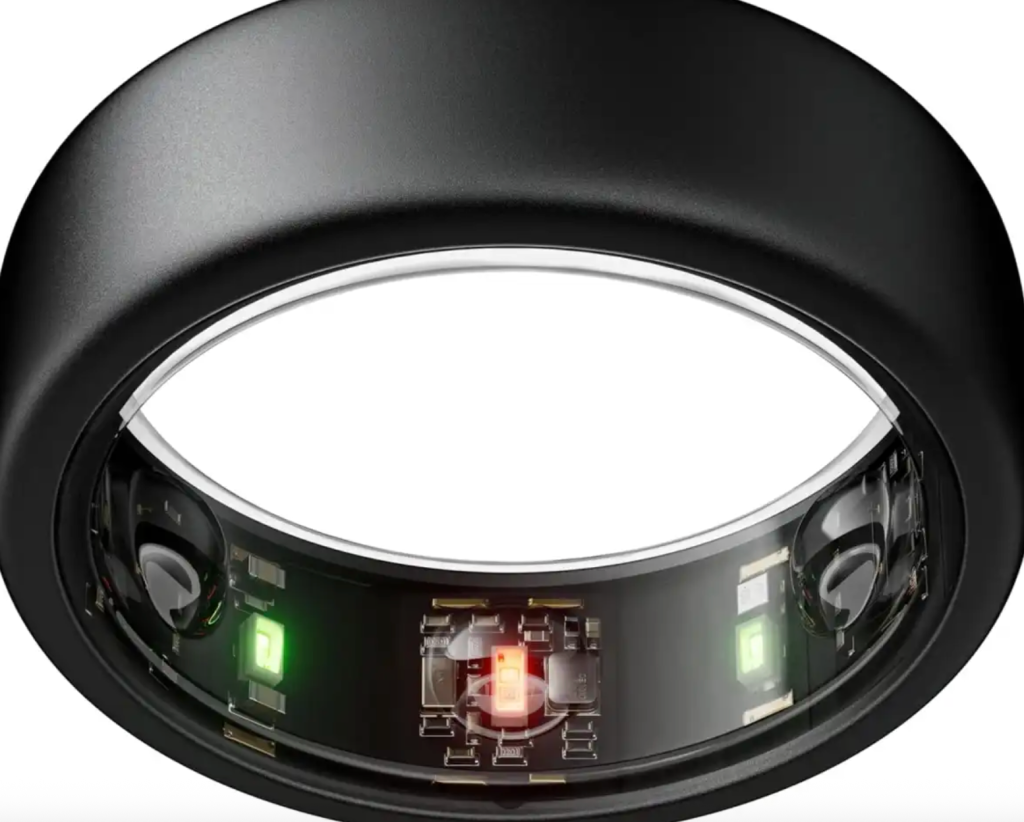
Discreet sleep tracker: Oura Ring 4

Oura
Price: 349 euros
- Material: Ultralight, hypoallergenic titanium
- Sensory: Over 20 biometric metrics (heart rate, 7 temperature sensors)
- Sleep analysis: Market-leading sleep staging
- Battery life: Up to 8 days
- Integration: Syncs with over 40 apps (Apple Health, Strava, Flo etc.)
The Oura Ring 4 is the ideal tool for minimalists who are looking for a complement to the classic watch or who don’t want to wear an annoying band on their wrist at night. Its strength also lies in sleep analysis and temperature monitoring, which can be used to detect impending infections at an early stage. Even if it doesn’t come close to the precision of a smartwatch when measuring active sports due to its design, it is a really powerful wearable for anyone who wants to integrate health tracking into their lifestyle as unobtrusively as possible.
Conclusion: Small form, big compromises
Smart rings are elegant, inconspicuous and definitely useful for certain purposes.
But when it comes to precision, real-time feedback or active support in everyday life, they reach their geometric and technical limits. Smartwatches simply offer more options – and often more reliable data. You could say: the smaller the device, the greater the compromises.
For this reason: If you really want to keep an eye on your health, a smartwatch is currently a much more versatile solution.
(PC-Welt)