




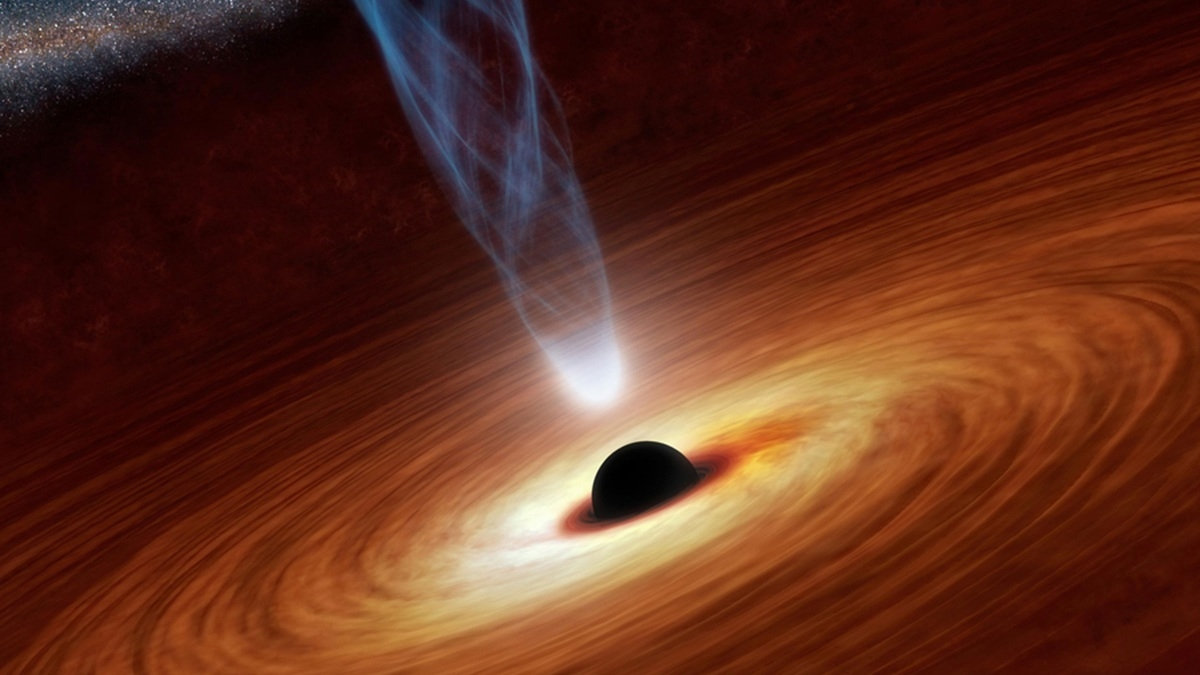
A team of scientists from WITH and theColumbia University has just thrown a wrench into the pond of cosmology. By analyzing archived space telescope data NEOWISE from NASA, they identified the sparkle of an extraordinarily distant cosmic object.
This is the oldest quasars sparkle never detected, the light of which reaches us from ancient times: barely 850 million years after the birth of the Universe.
The surprise does not come so much from its existence as from its behavior which undermines our certainties about the youth of black holes. The analysis of its light, in an article published in Nature Astronomyreveals a surprisingly flat and stable accretion disk, typical of mature black holes, which contradicts current models on the chaotic formation of the first cosmic giants.
What is a quasar and why is its twinkle so important?
A quasar is the most luminous and energetic galactic nucleus there is because it is powered by a supermassive black hole in the middle of a feeding frenzy.
This flicker, or variability, a direct signature of the way in which matter is devoured. It tells us about the very structure of the central engine of the galaxy and its state of development.
Observe a quasar distant is already a feat. But capturing its variations in brightness is a challenge of another order. As MIT researcher Gene Leung explains, this phenomenon resembles “ to the random flicker of a candle flame “. It is this wobble which makes it possible to map the immediate environment of the black hole, which remains an area otherwise impossible to observe directly.
How does this discovery shake up our models of black holes?
This observation reveals that the disk of matter swirling around this primitive black hole is surprisingly flat and thinlike a pancake. However, current theories postulate that young black holes, especially those of the cosmic dawn, should have bloated and chaotic accretion disks, a sign of a disordered growth and fast. This apparent calm is totally unexpected so early in the history of the universe.
The real puzzle for astrophysicists is this: how can an object skip adolescence to reach adulthood directly? This supermassive black hole seems already in a mature and stable phase while its entire environment is still in full formation.
As Anna-Christina Eilers of MIT suggests, this implies that “ very rapid and disorderly growth phases (…) occur much earlier than we thought ».
The accretion disk (the swirl of gas and dust sucked up by a black hole) flat surface of this quasar is therefore a valuable clue on a cosmic timeline to be rewritten.
What technology made it possible to capture this distant signal?
The detection of this signal was made possible thanks to the reanalysis of the mission data NEOWISE (Near-Earth Object Wide-field Infrared Survey Explorer) from NASA.
This infrared telescope has scanned the sky for 14 years, accumulating a phenomenal amount of archives. It was by diving into this gold mine of data, thanks to a project initiated by Kishalay De of Columbia University, that the signal was unearthed.
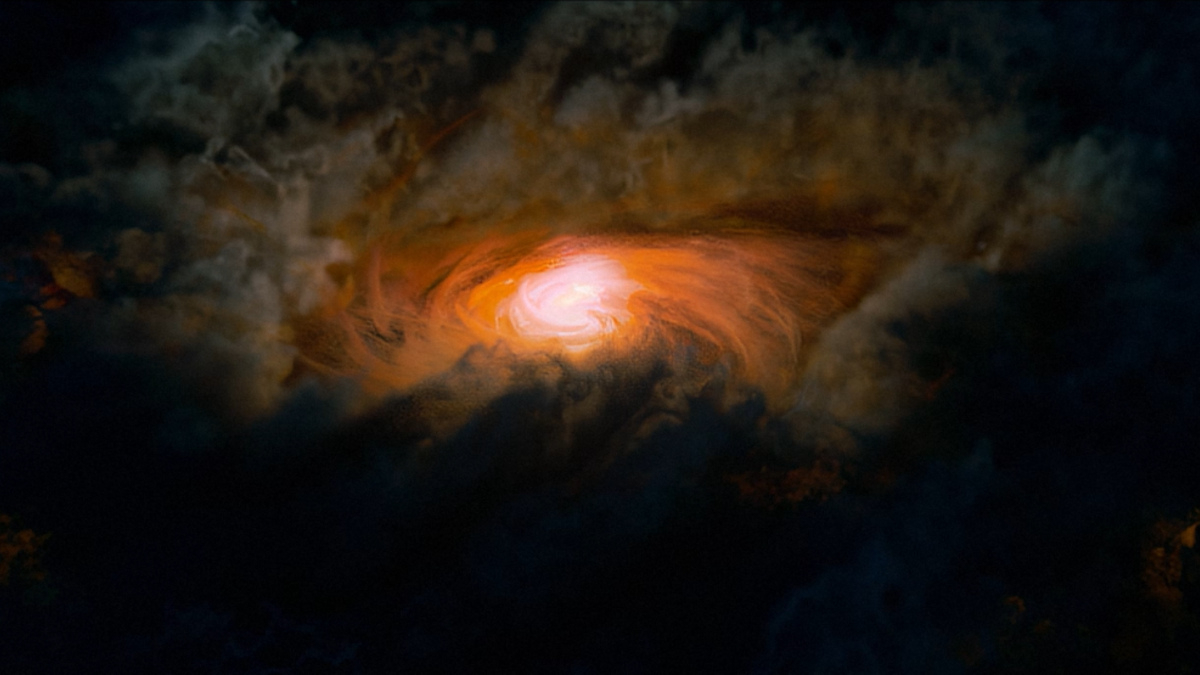

The technical challenge was immense. The light coming from theEarly universe is greatly stretched by cosmic expansion, a phenomenon called redshift.
A flicker that would occur over a few weeks would appear, from Earth, to extend over several months. It was therefore necessary to infrared observations over a very long period to hope to catch this cosmic giant in the act of blinking.
What are the next steps to solve this cosmic mystery?
The next step will be to go back even further in time. Researchers now hope to find quasars in a developmental stage even earlier.
The new quest is to surprise a black hole in its phase of chaotic growththat which visibly preceded the state of maturity observed here, to understand the mechanisms of this express maturation.
This discovery provides evidence that black hole feeding processes were already very similar to those observed today, very shortly after the Big Bang.
It opens a new field of study on the variability of quasars at the dawn of time and sets a new reference for future telescopes which will have the difficult task of finding the real “baby” black holes to finally put together all the pieces of the puzzle of their formation.


