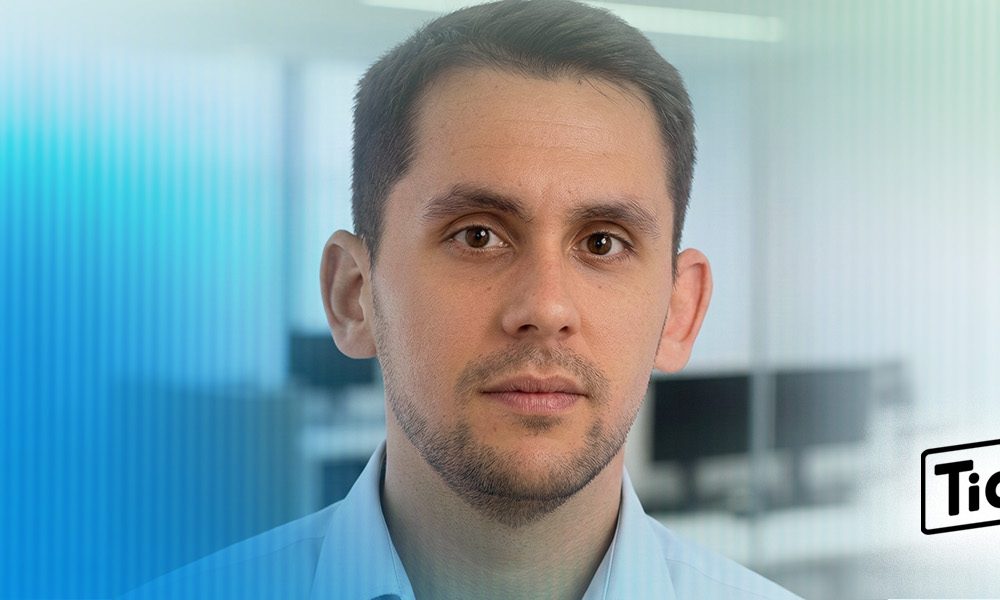
Carlos Lopez Sobrino leads the Behavioral Data Science and Business Analytics line within the advanced analytics team at Saint Luciaone of the insurers with the longest history in Spain. His work combines behavioral economics, machine learning and artificial intelligence to anticipate customer decisions and improve their experience in a personalized way.
From a transversal team that provides service to all the group’s companies, not only the insurance business, López Sobrino works to build models that incorporate psychological and behavioral variablesbeyond classic transactional information. Customer retention, hyperpersonalization and ethical compliance with European artificial intelligence regulations are some of the axes on which its strategy pivots. In this interview with MCPRO he explains how behavioral science is redefining the relationship between insurers and their clients.
(MCPRO) Your area combines behavioral data science with business analytics in an insurance company. How does that translate into practice? What does the behavioral approach contribute compared to more traditional data analysis?
(Carlos López Sobrino) The key is to understand that people do not make decisions from a purely rational point of view. That’s what behavioral economics tells us. We operate with cognitive biases that generate systematic and, therefore, predictable patterns. Our approach is to build a layer of behavioral data that goes beyond classic transactional information, that is, what policy the customer has, how much they pay or how many times they have called us.
We focus on variables that tell us how you decide: your response time to a renewal, your sensitivity to Price, your procrastination patterns or the inertia that leads you to maintain a policy even if you don’t completely need it. With this, machine learning models not only predict what product may interest you, but also when and how to present it to you. More than changing the product, this discipline transforms how we offer it. That’s what we call hyperpersonalization.
(MCPRO) Saint Lucia has been operating for more than one hundred years. That history generates data, but also possible accumulated biases. How do you ensure that the models do not reproduce past discrimination in pricing or the granting of insurance?
(Carlos López Sobrino) I like to say that a fair model is not one that does not discriminate, but one that knows where it can do so, implements controls to mitigate it and explains it. Our strategy pivots on three points. The first is to audit what existed before the model, because historically human decisions have been made that could carry a certain bias. If we train a model with that information, we transmit that systematic bias to it.
The second point is to control the training process by incorporating restrictions that guarantee equity and comply with European regulations. And the third, which for me is fundamental, is explainability. We use techniques such as SHAP values so that the output of the models is interpretable and can be communicated to the business team and, ultimately, to the client. Ethics is not a regulatory requirement for us, it is a competitive advantage. In the insurance sector, trust is the most valuable asset.
The AI Act as a mirror
(MCPRO) The entry into force of the European Artificial Intelligence Regulation is forcing many companies to review their governance. What changes has it meant for you?
(Carlos López Sobrino) For us it has been a turning point, not because it has changed our course, but because it has given us vision of everything that already existed. It has forced us to make an exhaustive inventory of all the uses of artificial intelligence in the group, something that we have done with the help of a law firm and a specialized consulting firm. We have structured the work in three changes.
The first is that census, with standardized documentation of each AI model or system: whether it has gone through a training process, for what purpose it is used, what data it processes. The second is to evaluate the real impact on customers. And the third is to implement concrete controls. In the field of behavioral economics, the regulation establishes explicit prohibitions on exploiting psychological vulnerabilities to distort decisions. That is why we are developing an ethical framework for our behavioral interventions, documenting the intention, the psychological mechanism used and the outcome measured. What we seek is to facilitate the client’s decision making, not take advantage of it.


(MCPRO) Customer retention is critical in insurance, where the cost of acquisition is very high. How do you integrate behavioral variables into dropout prediction models?
(Carlos López Sobrino) There is a reflection that impressed me: retaining a client is not convincing them to stay, but rather eliminating the reasons why they would want to leave, or reminding them why they hired. It is changing the prism, looking for the positive meaning instead of insisting on the negative. We have been evolving leakage propensity models in production for more than four years, and in that time we have learned that transactional information alone is not enough.
Now we enrich them with behavioral variables: if the customer opens our emails, how they interact with us, if they have recently consulted coverage, how they rate us in satisfaction surveys, even how they talk to us when they call the contact center. All of this, well worked out and shared with the models in production, brings us closer to the customer at the moment they need it. If you have had a bad experience in an accident, you must act immediately, not wait months. There is a window of maximum psychological effect that we cannot miss.
(MCPRO) Generative artificial intelligence is on everyone’s lips, but in a regulated sector like insurance, hallucinations have legal and reputational consequences. How are you managing it in Saint Lucia?
(Carlos López Sobrino) Our strategy has two speeds. In the short term we are working on internal use cases, because the risk is contained within the company and the return is immediate. Giving our people tools so that they spend less time searching for information and more time selling is our priority right now.
In the medium term, the aspiration is to use generative for real hyperpersonalization: that when a customer speaks to a chatbot, that chatbot responds in the tone they like, emphasizes the most relevant coverage for their profile and adapts the level of detail to their preferences. But we have to be honest. Hallucinations are a legal and reputational risk in our sector. That is why we move slowly in what affects the external client, prioritizing first consolidating the value internally, maturing the controls and, once we have that solid foundation, opening ourselves to the outside.
Talent search
(MCPRO) What profile are you looking for in your team and how do you see the emergence of agentic AI in your own work?
(Carlos López Sobrino) What I value most in a selection process is not technological: it is curiosity. That is not taught either in the degree or in a bootcamp, you either have it or you don’t. We are looking for solid foundations in statistics and artificial intelligence, of course, but more than finding someone who knows everything, we want profiles that complement us, that make us question our way of seeing things. Someone different from what we already have. Regarding agentic AI, my position is clear: it should be embraced, not feared.
I myself program with the help of artificial intelligence and I am much faster. I know how to do it without it, but it makes me faster. The key is to manage change, so that business profiles, salespeople and operatives understand these tools as an improvement and not as a threat. The union of machine and human will overcome biases that we carry historically. You have to ride the wave.
(MCPRO) Looking at the next three years, what combination of technologies do you think will take the definitive step towards insurers being truly data driven?
(Carlos López Sobrino) If I had to bet, I would say that they are three legs that operate together. Predictive AI, which we already know and which will continue to evolve in churn, pricing, fraud detection and propensity models. Generative AI, which not only provides personalization in customer contact, but also helps extract context from unstructured sources and enriches classic models.
And behavioral artificial intelligence, which operates in real time to generate impact at the right moment, completing the context that the model with only transactional data lacks to learn well. But beyond technology, what I would like for Saint Lucia in the next three years is something simpler to formulate: that being a data driven company does not mean that data replaces human judgment, but that human decision is informed by the best possible evidence, processed with the best available technology and designed with the best understanding of human behavior that we can achieve. Those would be the three ingredients.
To listen to the full interview: