
Apple’s strategy for its Silicon chips has always followed a doubling logic : the Pro chip, then the Max, and finally the Ultra. But the Cupertino company had even greater ambitions. Revelations from journalist Mark Gurman Bloomberg confirm that the company has been working on an even more powerful project, a chip dubbed “Extreme.” Two generations, M2 Extreme and M3 Extremewere even developed before finally being buried, leaving the Mac Pro without its flagship processor and hastening its demise.
What was the project behind these “Extreme” chips?
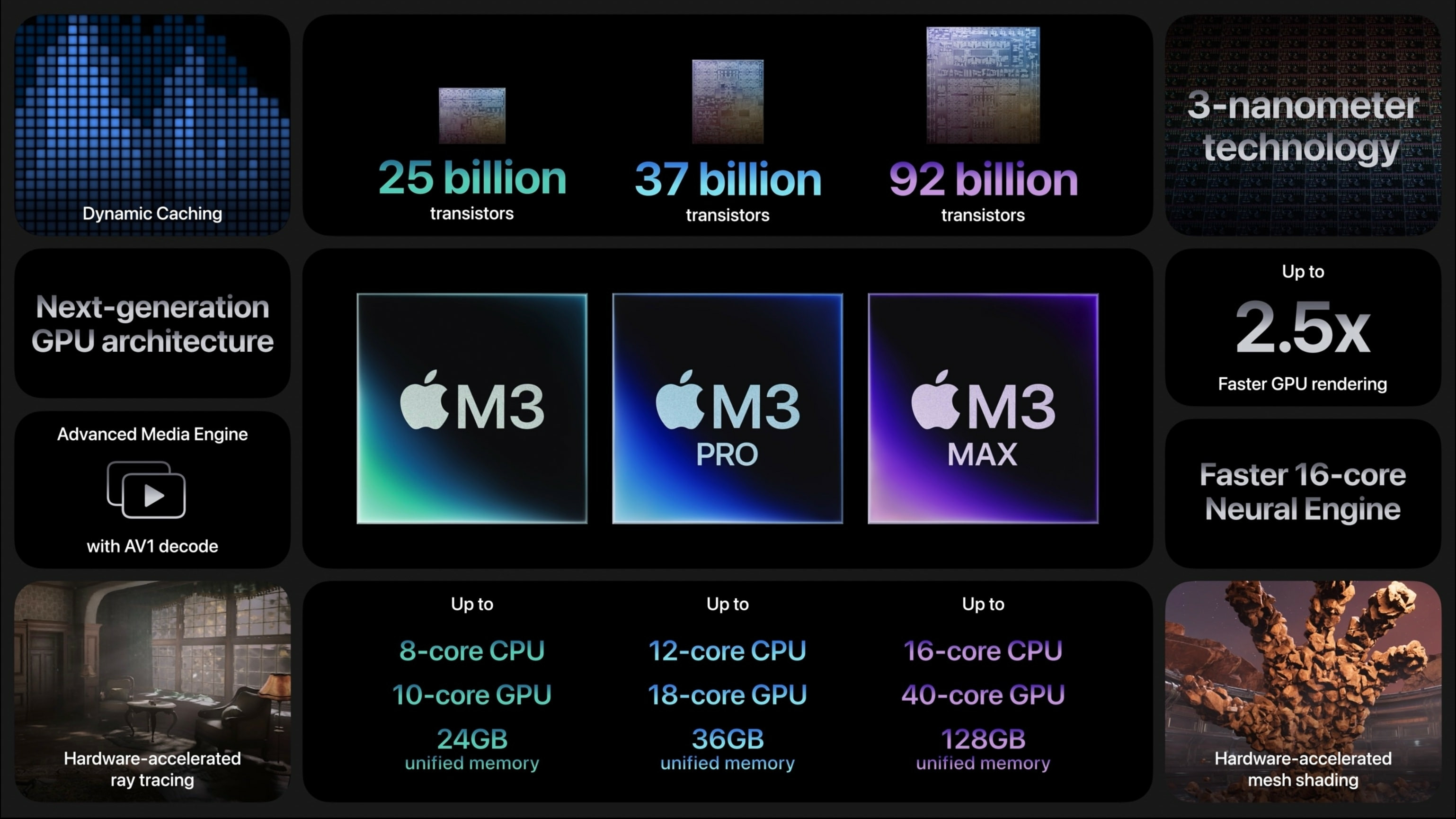
The technical principle lent to this architecture was that of the entire Apple Silicon range: assemble two Ultra chips in one single package. This approach would have made it possible to mechanically double the number of CPU and GPU cores, as well as the amount of unified memory available. On paper, a chip like M2 Extreme could have carried up to 48 CPU cores and 152 GPU cores, figures challenging the most high-end workstations on the market.
The Mac Pro
These processors were specifically designed to equip future models of the Mac Pro. The professional tower, with its larger chassis and its upper ventilation systemwas the only candidate capable of accommodating such a monster of power. The objective was to create a machine without compromise, which would have clearly justified its existence against the very powerful Mac Studio. Unfortunately, this plan was canceled twice.
Why did Apple finally give up on this power monster?
The decision to abandon the project is essentially based on economic considerations. THE production costs and development proved prohibitive. According to estimates, a machine equipped with the M2 Extreme chip could have exceeded 10,000 euros in basic configuration, reserving it for an extremely narrow niche market. Apple judged that the potential demand was simply not sufficient to recoup such an investment.
Without this exclusive chip, the Mac Pro no longer had a major argument to differentiate itself. It found itself equipped with the same M2 Ultra chip as the Mac Studio, while being sold at a significantly higher price. Apart from the presence of PCIe expansion ports, the performance was almost identical, making it commercial positioning very difficult to justify. This lack of differentiation ultimately sealed the fate of the range.

Could artificial intelligence resurrect this abandoned project?
The timing of these revelations is particularly relevant. Today, raw power requirements are evolving with the emergence ofartificial intelligence generative. Running large language models locally is a task that requires a colossal amount of unified memory and a very high number of computing cores, characteristics at the heart of the Extreme project. Macs have become serious tools for this type of use.
If Apple rejected the idea twice because of a traditional market considered too narrow, AI is redefining what a “demanding professional” is. This new audience, comprised of researchers, model developers and creative studios, could create the demand needed to justify the return of such a chip. The idea is not dead; she is simply waiting for the market to be ripe enough to reactivate it, perhaps under a different name.