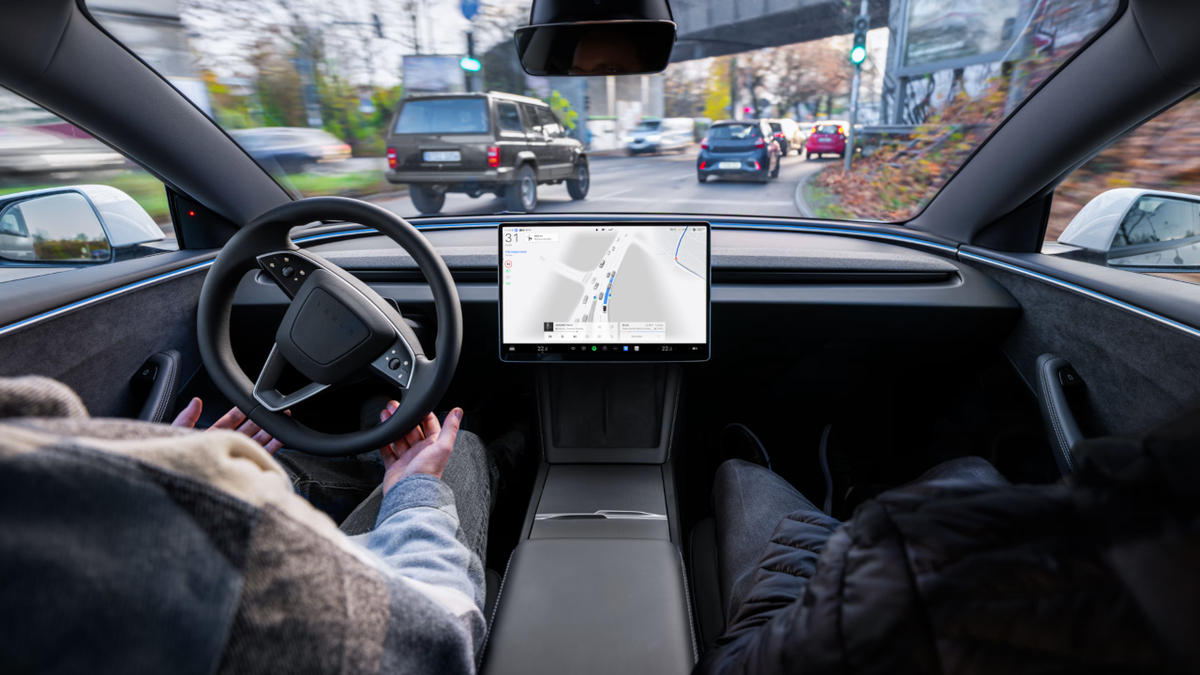
The deployment of the autonomous driving system Tesla in Europe faces a major obstacle. While several countries such as Belgium and Denmark have already given temporary authorizations, Sweden has officially recommended to the European Commission to reject the approval of the Full Self-Driving (FSD). A decision which could call into question the manufacturer’s entire strategy on the continent, because the future of this technology in Europe is now uncertain.
Why does a single feature threaten the entire project?
The major point of friction is called « Speed Offset ». This functionality, integrated into the FSD, allows the driver to program the autonomous driving so that it rolls systematically above the legal speed authorized, according to a fixed margin or a percentage. For the Swedish Transport Administration (Trafikverket), this option is simply unacceptable.
In a letter addressed to the European Technical Committee, the Swedish authorities consider that allowing a automated system of violating the law « risks undermining both the legal framework and the expected security benefits “. Stockholm’s position is clear: without removal of this functionthe country will vote against the European approval of the FSD.
What is at stake in the European vote for Tesla?
The stakes are considerable for Elon Musk’s company. For the FSD to be validated throughout the territory of the Union, a qualified majority is necessary: at least 15 of the 27 Member Statesrepresenting at least 65% of the European population, must vote in favor. A negative vote at the June 30 meeting would void any provisional authorizations already granted.
Countries that have already temporarily approved the system, such as the Netherlands, Belgium or Denmark, would see their decision invalidated within six months following a rejection. Such a scenario would represent a major commercial and strategic setback for Teslawhich relies on this technology to stand out from the competitionespecially Chinese.

Is Sweden isolated in its approach?
Not, the Suede is not alone in expressing reservations. Other Nordic countries, such as Finland and Norway, have also raised concerns, particularly about the reliability of the system in difficult conditions, such as icy roads. Furthermore, the credibility of data provided by Tesla is called into question.
A panel of eleven independent researchers recently accused the manufacturer of having manipulated his statistics security to influence regulators. According to them, the comparisons used by Tesla to assert that its FSD is ten times safer than a human driver are riddled with biases. The European Transport Safety Council has also requested an analysis of this data by independent experts.