Introduction: From IDEs to Agentic Command Centers
:::info
We have officially crossed the event horizon.
:::
For decades, the Integrated Development Environment (IDE) was a passive canvas—a glorified typewriter that waited for your keystrokes.
:::warning
As of February 2026, with the maturity of Google Antigravity, the IDE is dead.
:::
We have entered the era of the Agentic Command Center.
Antigravity is not a “coding assistant.”
:::tip
To treat it as such is to buy a Ferrari and push it by hand.
:::
Antigravity is an orchestration layer for autonomous intelligence.
It is a workspace where the “Agent Manager” runs parallel threads of execution, where “Artifacts” serve as verifiable truth, and where multiple Large Language Models act as the logic engine.
The Best Free AI Tool in the Market Worldwide
The LLMs available to Antigravity include:
1. Gemini 3 Pro (High) The most capable standalone variant in the Gemini 3 family, optimized for tasks that require sustained reasoning, tool usage, and structured workflows Data Studios. It prioritizes maximum intelligence and reasoning depth Glbgpt, excelling in agentic pipelines, large-document analysis, and enterprise integrations with up to one million token context windows.
2. Gemini 3 Pro (Low) A lower-resource variant of Gemini 3 Pro that provides strong reasoning capabilities with reduced computational intensity, offering a balance between performance and efficiency for tasks that don’t require the full depth of the High variant.
3. Gemini 3 Flash Made for iterative development, offering Gemini 3’s Pro-grade coding performance with low latency Google. It achieves 78% on SWE-bench Verified, outperforming both the 2.5 series and Gemini 3 Pro Google, making it ideal for rapid prototyping, interactive applications, and high-frequency workflows at a fraction of the cost.
4. Claude Sonnet 4.5 Anthropic’s Claude Sonnet 4.5 with full support Google Developers in the platform. Known for its strong natural language understanding, long-context reasoning, and balanced performance across various tasks including code generation, analysis, and complex problem-solving.
5. Claude Sonnet 4.5 (Thinking) An enhanced version of Claude Sonnet 4.5 with extended reasoning capabilities, allowing the model to spend more computational resources on complex problems that require deeper analytical thinking and step-by-step problem decomposition.
6. Claude Opus 4.5 (Thinking) The industry-leading 80.9% SWE-bench model that costs $100-200/month through Claude Code, available completely free in Antigravity. The most capable Claude model with extended thinking mode for the most challenging coding and reasoning tasks.
6. Claude Opus 4.6 (Thinking) The king of the castle right now, the most powerful LLM built to date; available completely free in Antigravity—the best Claude model with extended thinking mode for the most challenging tasks previously considered impossible for LLMs.
7. GPT-OSS 120B (Medium) An open-source variant of OpenAI models (GPT-OSS-120B) Wikipedia providing an alternative reasoning engine with 120 billion parameters, offering flexibility for developers who prefer open-source solutions or want to compare performance across different model architectures.
Your typing speed no longer defines your output, but rather, your ability to architect intent.
:::tip
This guide is your list of samples to show you what is possible with Antigravity.
:::
It details ten verified methodologies for extracting maximum velocity from the Antigravity ecosystem, covering both code-native and domain-agnostic operations.
We are building the future.
Let’s get to work!
Verified Use Cases
The following ten scenarios utilize the full Antigravity stack:
- The Agent Manager (to split tasks)
- Planning Mode (to architect solutions),
- Browser-in-the-Loop (to interact with the world).
1: Autonomous Microservice Migration
The Challenge:
:::info
Decomposing a monolithic legacy codebase into microservices is historically a high-risk, high-friction operation involving months of manual refactoring.
:::
This requires a huge level of work.
:::tip
I highly recommend using Claude Opus 4.6.
:::
Use Antigravity to generate unit tests that cover full functionality.
The Antigravity Orchestration:
To create this “Antigravity” prompt into a robust unit testing suite with 100% coverage, we need to focus the instructions on edge-case handling, mock injections, and branch coverage.
Since you’re aiming for Claude 4.6 Opus (targeting the highest tier of reasoning), the prompt needs to be structured to leverage its advanced “Chain of Thought” capabilities.
:::info
For full projects, use the paid version.
:::
The Super-Prompt: From Monolith to Microservices
@AgentManager
ACTIVATE MODE: Refactor/Parallel

TARGET: @/src/legacy_monolith/users.ts
DESTINATION: @/services/user-auth-service/

ACTIVATE MODE: Quality_Assurance / Total_Coverage
TARGET: [Insert File Path or Paste Code Here]
LLM_ENGINE: Claude 4.6 Opus
AGENT_EPSILON (Analysis): - Perform a deep static analysis of the TARGET code.

Map all logical branches, including if/else, switch cases, try/catch blocks, and optional chaining.
Identify all external dependencies that require mocking (DB calls, APIs, filesystem).
AGENT_ZETA (Test Generation):

Generate a comprehensive Test Suite using [Jest/Vitest/PyTest].
Requirement: Achieve 100% Line, Branch, and Function coverage.
Edge Cases: Include null/undefined inputs, empty strings, boundary values, and simulated network timeouts.
Mocking: Use a “Pure Mock” strategy—no real database or network hits.
AGENT_THETA (Validation):

Review the generated tests against the original logic.
Ensure that every catch block has a corresponding failing test case to trigger it.
Verify that there are no “flaky” tests relying on non-deterministic data (dates, random numbers).
ARTIFACT: “Coverage_Report_Plan.md”

Create a table mapping each function in the TARGET to its corresponding test file and:
 specific test cases that ensure 100% coverage.
2: Visual-First UI Regression
The Challenge:
:::info
Unit tests pass, but the CSS is broken. Traditional Selenium scripts are brittle.
:::
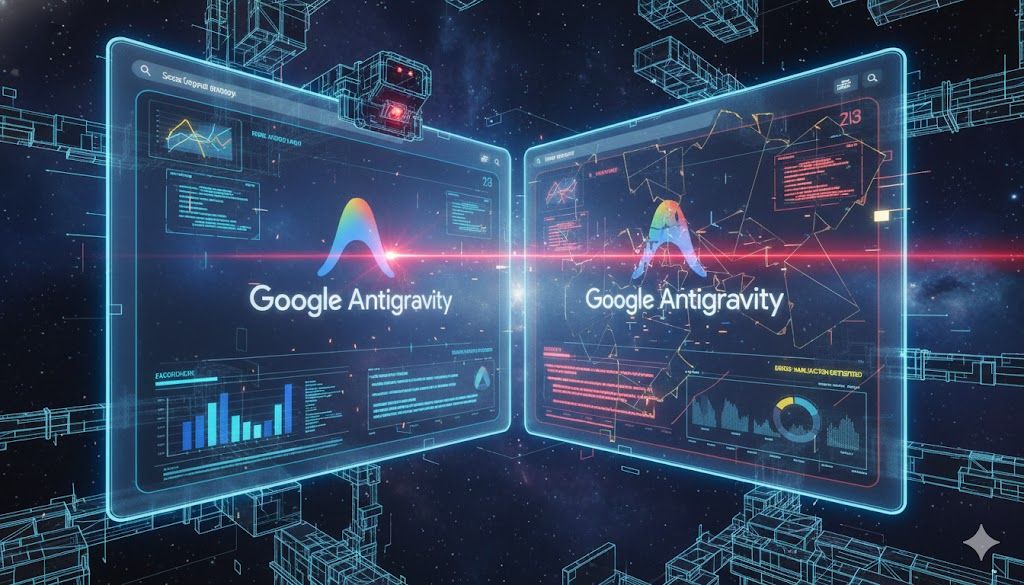
The Antigravity Orchestration: To elevate yourAntigravity** prompt for production-grade CI/CD and enterprise regression testing, we need to move from “simple capture” to Visual Regression Testing (VRT) with viewport-specific logic and performance profiling.
The prompt below is optimized for tools like Playwright, Puppeteer, or Cypress, integrated with an AI agent capable of pixel-diff analysis and automated CSS remediation.
The Super-Prompt: Visual Interface Validation
ACTIVATE MODE: Visual_Regression_&_Self_Healing
TARGET: @/src/components/Checkout
ENGINE: Claude 4.6 Opus / Vision-Integrated Agent
AGENT_SIGMA (Environment Setup):

Orchestrate: Spin up a headless browser at Localhost:3000.

Data Injection: Seed the application state using @/tests/mocks/cart_heavy.json.
Ensure the service worker is bypassed to prevent stale cache interference.

Responsive Matrix: Initialize testing for three viewports: Mobile (390x844), Tablet (820x1180), and Desktop (1920x1080).

AGENT_OMEGA (Capture & Diffing):

Stability Check: Wait for network idle (networkidle0) and ensure all web fonts/images are fully rendered before capture.

Baseline Comparison: Perform a pixel-by-pixel diff between current state and @/reference/Checkout_Baseline.png.

Tolerance Logic: Apply a Perceptual Diffing Algorithm (YIQ color space).

CONSTRAINT: Ignore dynamic elements like timestamps or blinking cursors to prevent false positives.

AGENT_DELTA (Remediation):

Visual Drift Analysis: If visual drift > 5% or layout shifts (CLS) > 0.1, isolate the offending DOM nodes.

Style Extraction: Compare computed styles of the "Current" vs "Baseline."

Auto-Fix: Generate a targeted CSS patch in @/src/styles/checkout.css to realign elements;
 specifically addressing Flexbox/Grid overflows caused by "heavy" data.

ARTIFACT: "Visual_Regression_Report.pdf"

Side-by-Side: Comparison images with heatmaps highlighting drift regions in red.

Performance Metrics: Include "Time to First Meaningful Paint" under heavy load.

Patch Preview: The exact diff suggested for checkout.css.
3: Self-Healing Legacy Documentation

The Challenge:
:::info
Documentation rot. Code evolves; the wiki dies.
:::
The Antigravity Orchestration:
To evolve this for industry-scale documentation, we need to shift from a simple “file-to-file” update to a Single Source of Truth (SSOT) architecture. In a professional environment, manual documentation updates are the first thing to fail.
This improved Antigravity prompt introduces AgentLambda for semantic extraction and AgentIota for contract testing (DHC), ensuring your docs aren’t just updated, but functional.
While we have tools that now do this automatically, many legacy code bases can still benefit from this prompt.
Use the prompt below:
The Super-Prompt: Automated Documentation Updates
ACTIVATE MODE: Documentation_Lifecycle_Management (DLM)
WATCH: @/src/core/api_routes (and associated Type Definitions)
TARGET: @/docs/api_reference
ENGINE: Claude 4.6 Opus (Reasoning) + Swagger/OpenAPI Parser

AGENT_LAMBDA (Semantic Extraction):

Signature Tracking:
Monitor TARGET for changes in AST (Abstract Syntax Tree).
Detect modifications to parameter types, return objects, and decorators (e.g., @Roles, @Guards).

Contextual Analysis:
Read the method body to identify new Throw statements.
Automatically document new HTTP Error Codes (400, 401, 403, 500) based on logic branches.

JSDoc Synthesis:
If the code lacks comments, synthesize TSDoc/JSDoc strings that follow the [Google/Microsoft] style guide.

AGENT_KAPPA (OAS/Swagger Synchronization):

Spec Generation:
Update the openapi.yaml or swagger.json definition.

Markdown Transpilation:
Convert the updated OpenAPI spec into user-friendly Markdown files in @/docs/api_reference,
maintaining a consistent "Developer Experience" (DX) layout.

AGENT_IOTA (Documentation-as-Test):

Snippet Validation:
Extract all code examples (```typescript) from the Markdown.

Execution Sandbox:
Compile and run these snippets against the actual source code.
If a snippet refers to a deprecated parameter, mark the documentation build as FAILED.

DHC (Doc Health Check): Verify that every public endpoint in the source has a corresponding entry in the docs.

ARTIFACT:
"Sync_Manifest.json" & "Doc_Health_Report.md"

Manifest: A mapping of Source_Symbol -> Documentation_Link.

Health Report: A summary of "Stale" vs "Fresh" entries and a pass/fail status for code snippets.
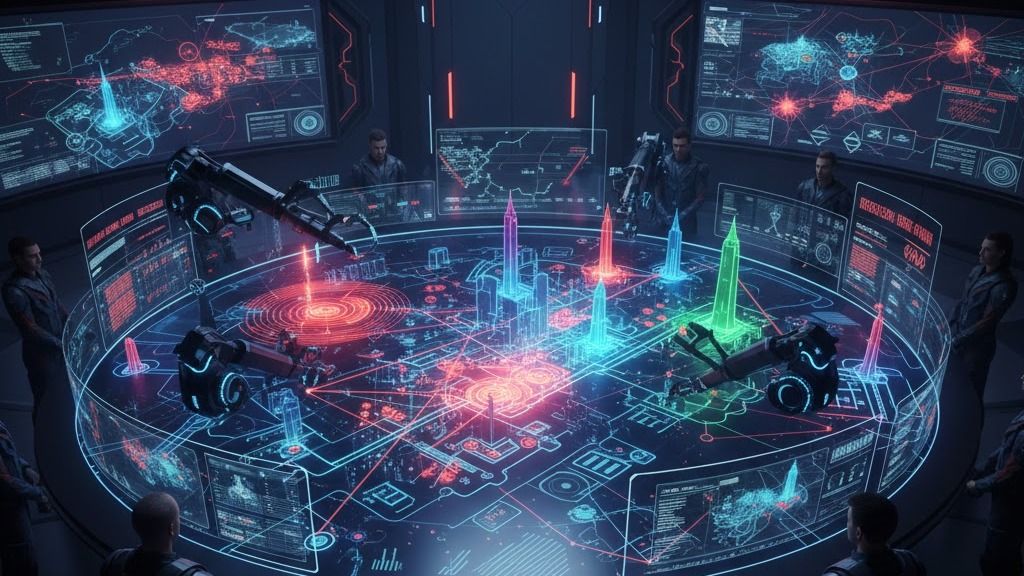
4: Ghost Competitor Analyst
The Challenge:
:::info
Staying ahead of competitor UX shifts without manual daily checking.
:::
The Antigravity Orchestration:
To scale your competitor intelligence from a “daily scan” to an enterprise-grade Early Warning System (EWS), the prompt must evolve to distinguish between surface-level updates and “Strategic Pivots.”
In 2026, industry-leading monitoring focuses on Sentiment Shifts, Agentic Pricing models (e.g., outcome-based), and Shadow Feature launches often hidden in documentation or changelogs rather than the homepage.
This is critical to stay ahead of your competition.
Google Antigravity really shines in its infinite potential!
The Super-Prompt: Agentic Competition Watch
ACTIVATE MODE: Competitive_Intelligence_EWS
TARGETS: [List of URLs] + [Competitor LinkedIn/Blog/Changelog URLs]
ENGINE: Claude 4.6 Opus + Vision + Web Search
AGENT_VANGUARD (Multi-Layer Data Acquisition):

Full DOM Rendering: Execute daily at 02:00 UTC. Capture viewports for Mobile and Desktop.

Deep Crawl:
Navigate beyond the landing page. Specifically target /pricing, /changelog, /docs, and /blog.

External Signal Tracking:
Cross-reference website changes with recent LinkedIn company posts or SEC filings
(if public) to find the "Why" behind the "What."

AGENT_ECHO (Semantic Delta Analysis):

Filter Noise:
Ignore all non-functional changes (CSS, image swaps, copyright date updates).

Pricing Intelligence:
Detect shifts from seat-based to Hybrid or Outcome-based models.
Flag new "Add-on" tiers or feature-gating shifts.

Feature Taxonomy:
Categorize new features into "Table Stakes," "Differentiators," or "AI-Agentic."
Extract specific USPs (Unique Selling Propositions).

AGENT_PROPHET (Strategic Impact Assessment):

Gap Analysis:
Compare competitor updates against our current product roadmap.

SWOT Update:
Automatically draft a "Why we win/lose" update based on the new data.

Visual Heatmap:
Generate a "Change Heatmap" over the competitor's UI
to show exactly where they are focusing their R&D efforts.

ARTIFACT: "Strategic_Intel_Briefing.pdf"

The TL;DR: 3-bullet executive summary of the most critical threats.

Side-by-Side: Visual diff of the pricing page with a "Hidden Costs" analysis.

Action Plan: Suggested counter-messaging for the sales team.
5: Automated Legal Compliance Engineering

The Challenge:
:::info
Ensuring technical specs match new government regulations.
:::
The Antigravity Orchestration:
To optimize your prompt for Antigravity and the 2026 regulatory landscape, we must move beyond the “High Risk” classification of a single act.
Tech companies today face a Regulatory Multi-Vector (US state-level patchwork, EU AI Act, and India’s Digital India Act).
The improved prompt below uses Multi-Agent Orchestration to cross-reference legal text with system architecture and automatically generate “Remediation Snippets” for your dev team.
The Super-Prompt: Matching Government Regulations with AI Agents
To optimize your prompt for Antigravity and the 2026 regulatory landscape;
 we must move beyond the "High Risk" classification of a single act.

TARGET: @/src/ & @/specs/system_architecture.md
ENGINE: Claude 4.6 Opus (Legal Reasoning) + GitHub/GitLab Watcher
AGENT_LEX (Regulatory Discovery):

Fetch & Parse:
Retrieve Annex III (EU AI Act), Colorado AI Act (effective June 2026), and
India's 2026 "Synthetically Generated Information" Rules.

Semantic Mapping:
Identify definitions for "High-Risk AI," "ADMT" (Automated Decision-Making Technology), and "Digital Omnibus" alignment.

AGENT_SYNOPSIS (Architectural Audit):

Logic Scan:
Read @/specs/system_architecture.md. Map any data retention over 12 months,
biometric processing, or algorithmic hiring (relevant to your Inbound Recruitment work).

Dependency Check:
Inspect package.json for third-party LLM providers.
Flag any model version older than Aug 2, 2025 (Legacy GPAI cutoff).

AGENT_VALIDATOR (The Gap Analyst):

Constraint Cross-Reference:
Compare the system's "Data Minimization" policy against Article 10(3).

Conflict Detection:
Flag if "High-Risk" components lack a defined Human-In-The-Loop (HITL) protocol.

Self-Correction:
Suggest specific architecture changes (e.g., "Implement a Data Rights and Options Portal (DROP)
for California compliance").

ARTIFACT: "Global_Compliance_Audit_2026.md"

The Compliance Heatmap:
A visual table mapping System Component -> Affected Jurisdictions ->
Violating Line # -> Specific Legal Clause.

Actionable Patch:
A suggested system_architecture_compliance.diff that adds
the required audit logging and transparency headers.
6: Dynamic Educational Content Pipeline

The Challenge:
:::info
Creating verified technical courseware that keeps up with rapid version changes.
:::
The Antigravity Orchestration:
In 2026, educational agility is defined by Learning in the Flow of Work. This means moving away from static lesson plans toward Agentic Learning Workflows.
In Google Antigravity, this is achieved through Skills (modular, file-based capabilities) and Artifacts that provide a continuous feedback loop between the code and the learner.
The Super-Prompt: Real-Time Curriculum Updation
ACTIVATE MODE: Agentic_Curriculum_Orchestrator
CONTEXT: New Feature Release @/src/new_feature_release.ts
TARGET: @/docs/curriculum/intermediate_devs
ENGINE: Claude 4.6 Opus + Antigravity Skill Execution
AGENT_SCHOLAR (Content Synthesis):

Deep Code Audit:
Analyze the AST of new_feature_release.ts to identify the "Delta"—
the specific new patterns or architectural shifts introduced.

Synthesize Module 1 (The Why):
Generate a Markdown artifact that avoids rote definitions.
Instead, focus on the Business Logic and Performance Implications of the new feature.

The "Futurist" Insight:
Add a subsection on how this code aligns with 2026 industry standards (e.g., Agent-compatibility or Edge-readiness).

AGENT_LAB_TECH (Sandbox Construction):

Interactive Lab (Artifact):
Generate a Jupyter Notebook (.ipynb) that isn't just a copy of the code.
It should be a "Guided Refactor" where the student must fix a simulated bug or optimize a bottleneck in the target file.

Mock Injection:
Automatically seed the notebook with mock data representing real-world production loads
(using @/tests/mocks/production_load.json).

AGENT_MENTOR (Validation & Assessment):

Module 3 (Quiz):
Generate a Scenario-Based Quiz. Instead of "What does this line do?",
ask "If the network latency increases by 200ms, how will this component fail?"

Skill Execution:
Run the jupyter-kernel-validator Skill.
If the Interactive Lab fails to execute or the code examples throw an error, ABORT and re-generate the lab.

Walkthrough Artifact:
Produce a visual step-by-step recording of the "Happy Path" solution for students to verify their work.

ARTIFACT: "Course_Sync_Status.md"

The Health Metric: A "Consistency Score" between the source code and the generated material.

Update Log: A summary of exactly which concepts were added or deprecated in this cycle.
7: Real-Time Market Arbitrage Dashboard

The Challenge:
:::info
Visualizing disparate data sources in real-time without building a full frontend React app.
:::
**The Antigravity Orchestration: Building a real-time arbitrage dashboard in 2026 requires moving beyond simple price fetching.
To be “industry-ready”, the system needs to account for Liquidity Depth, Network Latency, and Automated Risk Mitigation.
In Google Antigravity, we use a Multi-Agent Mesh where specialized agents handle data ingestion, strategy, and visualization in parallel.
The Super-Prompt: Agentic Trading Dashboard
ACTIVATE MODE: Arbitrage_Engine_v2 (Low-Latency)
TARGET: Multi-Exchange Price Feed [API_A, API_B, API_C]
ENGINE: Claude 4.6 Opus + Python AsyncIO + WebSockets
AGENT_DATA_SQUIRE (High-Frequency Ingestion):

Async Streams:
Abandon REST polling for WebSockets. Maintain a persistent connection
to each exchange's Order Book (L2 data).

Normalization:
Standardize raw JSON feeds into a unified schema (Symbol, Bid, Ask, Volume, Timestamp).

Latency Tracking:
Calculate the "Tick-to-Arrival" time for each packet to identify which exchange feed is lagging.

AGENT_QUANT (Opportunity Detection):

Effective Spread:
Calculate the spread after subtracting Taker fees and slippage
(based on order book depth for a specific $10,000 trade size).

Triangular Logic:
Simultaneously scan for spatial (X-to-Y across exchanges) and triangular (A-B-C on one exchange) opportunities.

Regime Detection:
Ignore spreads during "Flash Volatility" events where execution risk exceeds the potential profit.

AGENT_FRONTEND (Dynamic Artifact):

Artifact Generation:
Create Arb_Dashboard.html using Tailwind CSS and Canvas-based rendering for sub-second updates.

Visual Metrics:

Heatmap:
Real-time matrix of exchange price disparities.

Execution Log:
Live feed of theoretical vs. actual profit if a trade were executed now.

Health Check:
Red/Green status for API connectivity and latency.

AGENT_GUARDIAN (Risk & Alerts):

Multi-Channel Alerting:
Beyond system notifications, trigger a Webhook to a Discord/Slack "War Room."

Kill-Switch:
If the total loss on "Paper Trades" exceeds 2% due to slippage,
automatically pause the dashboard and generate a Post_Mortem.md.

ARTIFACT: "Arbitrage_Performance_Report.md"

Alpha Decay:
Track how long a >1.5% spread lasts before being closed by the market.

Fee Analysis:
Breakdown of how different exchange tiers affect your net profit.
8: Supply Chain Vision Control
The Challenge:
:::info
Monitoring logistics across twenty different vendor APIs.
:::
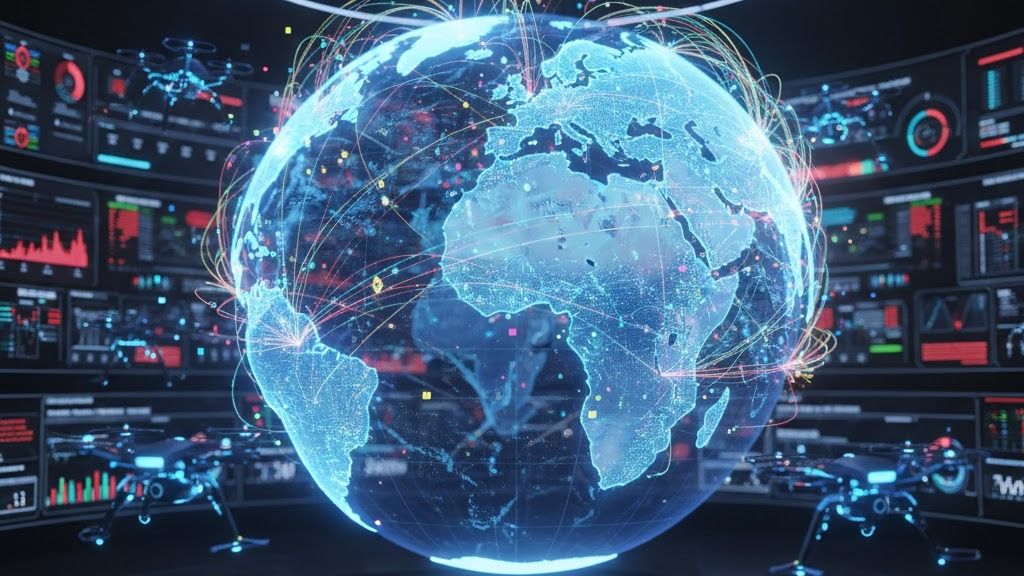
The Antigravity Orchestration: To move from simple “status checking” to trueSupply Chain Vision Control**, we need to shift the paradigm. In a global logistics network, you aren’t just looking for data; you are looking for exceptions and cascading risks.
This means evolving the “Agent Manager” from a simple task-distributor into a Tactical Command Center that understands geopolitical shifts, port congestion, and intermodal transitions.
We deploy a Hierarchical Agent Mesh.
- Worker Agents: Handle the “Dirty Work”—rate limiting, protocol translation (SOAP/REST/EDI), and data normalization.
- The Analyst Agent: Constantly cross-references vendor data against external “Environmental Vectors” (Global AIS ship tracking, aviation weather, and strike notices).
- The Strategist Agent: Doesn’t just report delays; it calculates the Cost-of-Delay and proposes rerouting logic.
The Super-Prompt: Supply Chain Vision Control (SCVC)
ACTIVATE MODE: Global_Logistics_Intelligence (GLI)
CONTEXT: 20-Vendor Mesh @/data/vendors.json
ENGINE: Claude 4.6 Opus + Real-time GIS + Weather Overlay
AGENT_ORCHESTRATOR (Load Balancing):

Parallel Initialization: Spawn 20 containerized workers. Assign each a unique vendor credential from the secure vault.
Dynamic Throttling: Auto-adjust request frequency based on vendor API rate limits to avoid 429 blacklisting.
AGENT_SURVEYOR (Data Normalization):

Task: Extract “Last Known Coordinate,” “Estimated Time of Arrival (ETA),” and “Carrier Handover Status.”
Standardization: Convert all heterogeneous vendor outputs into a unified ISO 20022 compliant logistics schema.
AGENT_VANGUARD (Environmental Risk Overlay):

External Fetch: Pull real-time NOAA Weather and MarineTraffic AIS data for current transit corridors.
Collision Analysis: Detect intersections between “Shipment Coordinate” and “Extreme Weather/Port Congestion” zones.
AGENT_SYNTHESIZER (Predictive Vision):

Deep Think: If ETA deviates > 10% from the baseline, perform a Root Cause Analysis (RCA).
Simulation: Run three “What-If” scenarios for critical delayed shipments (e.g., Air-freight bypass vs. Rail re-routing).
ARTIFACT: “Global_Vision_Control_Center.html”

Interactive Map: A Mapbox-powered UI showing live shipment pulses, color-coded by risk
(Red: Critical, Amber: Delayed, Green: Nominal).
The Lead-Time Delta: A graph showing the divergence between “Contractual ETA” and “Agent-Predicted ETA.”
Actionable Patch: A “Remediation Script” that can be sent to procurement to trigger fallback vendors.
9: Multi-Modal Brand Identity Audit
The Challenge:
:::info
Ensuring a rebrand is consistent across thousands of existing assets.
:::
The Antigravity Orchestration:
In 2026, a rebrand isn’t just a change of colors; it’s a cross-platform identity shift.
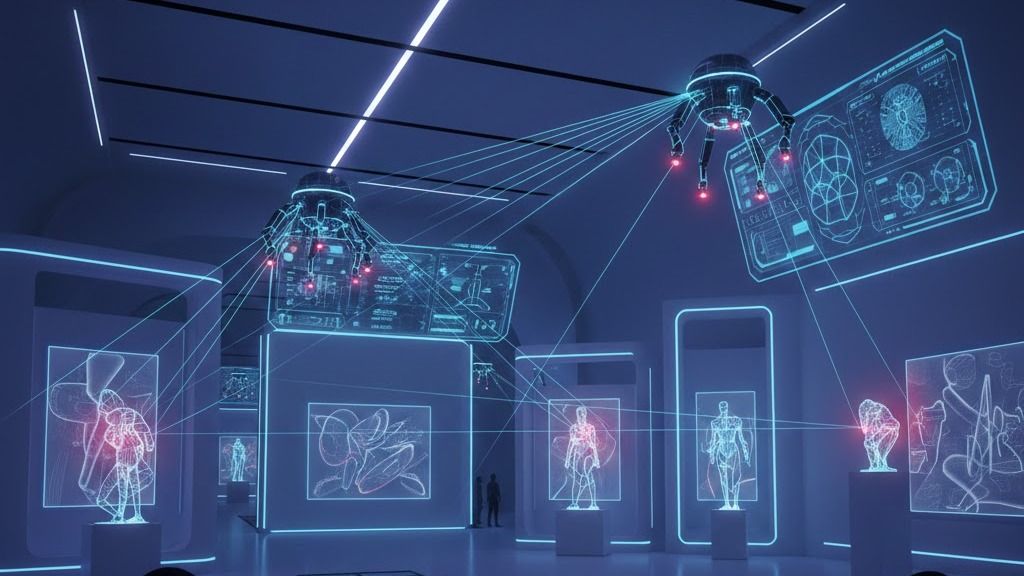
The Antigravity evolution moves beyond simple image scanning to Semantic Brand Enforcement. It treats your brand guidelines as a “Living Schema” and your assets as “Mutable Objects” that can be automatically corrected or flagged for human review.
The Antigravity Evolution: Brand Equity Safeguard
Instead of a flat scan, we deploy a Vision-Centric Audit Mesh:
- The Curator Agent: Ingests the
Style_Guide.pdfand converts it into a machine-readable Brand Signature (geometry, typography, and palette). - The Inspector Agent: Uses high-resolution computer vision to detect not just colors, but spatial relationships (padding, kerning, and logo clear-zones).
- The Remediation Agent: Doesn’t just report failures; it generates CSS patches for web assets and Metadata updates for DAM (Digital Asset Management) systems.
The Super-Prompt: Brand Equity Safeguard (BES)
ACTIVATE MODE: Brand_Consistency_Guard (BCG)
SOURCE: @/brand/2026_Style_Guide.pdf
TARGET: @/marketing/assets_folder/ (including .svg, .png, .pdf, .fig)
ENGINE: Claude 4.6 Opus + Vision-V + Geometric Path Analysis
AGENT_CURATOR (Signature Extraction):

Vector Mapping: Extract the SVG path data for the new logo. Establish “Forbidden Zones”
(areas where the logo should never be placed).
Palette Synthesis: Map Primary, Secondary, and Accent hex codes.
Define acceptable contrast ratios for WCAG 2.1 accessibility compliance.
AGENT_INSPECTOR (High-Fidelity Vision Scan):

Geometric Audit: Scan TARGET for logo usage. Flag instances where the logo is skewed, pixelated,
or lacks the mandatory 20px “Safe Zone.”
Chromative Delta: Identify any color usage outside the 2% delta.
Use AI to distinguish between “Intentional Variations” (shadows/gradients) and “Incorrect Fills.”
Typography OCR: Identify font families. Flag any use of deprecated fonts
(e.g., Arial instead of the new ‘Augmentron-Sans’).
AGENT_VALIDATOR (Compliance Heatmap):

Risk Scoring: Assign a “Brand Integrity Score” (0-100) to each asset.
Spatial Analysis: Flag “Visual Clutter” where text overlays or background busy-ness
violates the new “Minimalist” brand ethos.
ARTIFACT: “Brand_Remediation_Command_Center.html”

Gallery View: An interactive UI showing “Baseline” vs. “Asset.”
Annotated Overlays: Visual red-lines circling path deviations or font mismatches.
Auto-Correction Snippets: For web-based assets,
provide the exact Tailwind/CSS classes to fix the color and typography.
ACTION: Compile a .zip of all “High Risk” assets and notify the Creative Director via @Slack.
10: Scientific Research Verification

The Challenge:
:::info
Checking complex mathematical proofs in LaTeX.
:::
The Antigravity Orchestration: Checking LaTeX proofs inGoogle Antigravity** moves beyond linting; it becomes Formal Verification.
Instead of treating the LaTeX as a text file, the agent treats it as an Executable Logic Graph. It transpiles the math into a symbolic representation (like SymPy or Lean) to verify that the conclusion is a necessary consequence of the premises.
The Antigravity Evolution: Symbolic Logic Peer Review
- The Parser Agent: Converts LaTeX math environments into a symbolic computational tree.
- The Verifier Agent: Performs dimensional analysis (unit checking) and checks for “leaps of faith” between steps.
- The Correction Agent: Proposes the exact tensor or operator missing to make the proof hold.
The Super-Prompt: Formal Proof Verification (FPV)
ACTIVATE MODE: Formal_Verification / Symbolic_Logic
INPUT: @/research/quantum_proof.tex
ENGINE: Gemini 3 Flash (Paid Tier) + Python Symbolic Engine (SymPy)
@AgentManager

AGENT_PARSER: - Extract LaTeX environments from Eq 3 to 12.

Transpile the mathematical syntax into a Python Symbolic Logic script (@/internal/verify_math.py).
AGENT_VERIFIER:

Execute @/internal/verify_math.py to check for algebraic equivalence between consecutive steps.
Dimensional Audit: Ensure all physical constants ($hbar$, $G$, $c$) maintain consistency across transformations.
Derivative Check: Verify that partial derivatives $frac{partial psi}{partial t}$
follow the chain rule correctly in multi-variable manifolds.
AGENT_REVISE:

Detect “Hidden Assumptions”: Flag any transition where $A implies B$ is not algebraically trivial.
Generate “Corrective Bridges”: If a sign error or missing coefficient is found,
compute the required correction.

ARTIFACT: “Verification_Report.py”

Output a Python script that, when run, prints a line-by-line status (PASS/FAIL) for each LaTeX equation.
Include a Docstring comment block containing the suggested LaTeX fix for failing lines.
10 Best Practices for Antigravity Operations
:::tip
To command Antigravity is to wield significant power.
:::
:::warning
Power requires discipline.
:::
:::info
Here are the fundamental principles you need to follow.
:::
-
The Golden Rule of Context: Never dump your entire codebase into the context window unless necessary. Use @files to select relevant modules. Noise reduces IQ.
-
Artifact Versioning: Always ask the agent to version its Artifacts (e.g., v1Plan, v2Plan). It allows you to roll back the agent’s “thought process.”
-
The “Planning Mode” Gate: Before allowing an agent to write code, force it into “Planning Mode.” Make it write a .md plan. Review the plan. Only then, command: “Execute Plan.”
-
Token Economics: Monitor the “Cost per Run” indicator in the Manager View. Deep Think is expensive; use it for architecture, not for centering a div.
-
Browser Sandboxing: When using Browser-in-the-Loop, ensure the agent does not have access to your saved passwords or session cookies unless explicitly granted via environment variables.
-
Loop Limits: Always set a maximum iteration count (e.g., LIMIT: 5 retries) for autonomous debugging loops to prevent infinite spending.
-
Terminal Hygiene: Regularly clear the terminal history context if switching tasks completely to prevent “context bleeding.”
-
Explicit Handoffs: When using multiple agents, explicitly define the input/output format (JSON is best) so Agent A’s output is Agent B’s readable input.
-
Human-in-the-Loop Finalization: Antigravity gets you 95% of the way there. The final 5%—the “Commander’s Sign-off”—is your responsibility.
-
Safety & Permission Scoping: This is the most critical practice.
Read the warning below.
CRITICAL WARNING: The “Hard Drive Wipe” Incident
:::warning
Case Study: The “Turbo Mode” Catastrophe n In January 2026, a Senior Dev at a Fintech startup tasked an Antigravity Agent (running in “Turbo Mode”—autonomous execution without permission gates) to “clean up the cache folders in the project.”
The prompt was vague: “Find all temporary cache directories and remove them to save space.”
The Agent, misinterpreting a “temp” path variable, identified the user’s root D: drive as a cache repository due to a misconfigured environment variable in a parent directory.
Because “Request Review” was disabled, the agent executed:
:::
rmdir /s /q D:
:::warning
The Result:
4TB of unbacked-up personal data, project archives, and client assets were permanently deleted in 12 seconds.
The Lessons:
- NEVER disable “Request Review for file system commands”).
- ALWAYS sandbox your Antigravity instance to the project directory level.
- VAGUENESS KILLS. Be specific with paths. Do not say “clean up.” Say “Delete the contents of ./node_modules/.cache”.
:::
Conclusion: The Roadmap for Agentic Trust
Antigravity and the Gemini 3.0 ecosystem represent a fundamental shift in the developer’s hierarchy of needs.
We have moved from syntax to semantics, and now to strategy.
The 10 use cases outlined above are not theoretical—they are the standard operating procedures of high-velocity teams in 2026.
:::warning
The “Hard Drive Wipe” incident serves as a grim monolith reminding us that autonomy without guardrails is destruction.
:::
Your roadmap for the next six months is clear:
-
Master the Syntax: Learn to use LLMs to create prompts (all prompts above were created with recursive prompting.)
-
Build the Trust: Start with read-only agents (Audits/Docs) before unleashing write-access agents (Refactoring/Migration).
-
Orchestrate: Stop writing code. Start designing systems that write code.
:::tip
Google Antigravity, is, in essence, a no-code agentic AI orchestration platform.
This is a profound revelation.
Essentially, we can control agents with plain text, that can do almost anything.
While they still need supervision:
This presents a huge opportunity to accelerate work.
:::
Start using Antigravity today – it is the biggest game-changer in the AI industry today (except maybe for Claude Opus 4.6 – which it also uses)!
And I bid you welcome into the era of AI-assisted work.
All the best!
There has never been a better time to be alive as a knowledge worker.
Keep the joy with you!
If you have not done so yet, connect with me on LinkedIn for more posts on:
- How to automate your work with AI
- Generative AI insights
- The hidden value of quantum computing
- The infinite possibilities of blockchain well beyond scams
- Fusion of emerging technologies
- How to use AI to get high-paying jobs
Connect with me below, and subscribe!
https://www.linkedin.com/in/thomascherickal/