Just like every other year in recent memory, there have been quite a few changes to the Google Ads platform. This year’s updates included more automation, additional bidding tools, and even further AI integration.
While there are too many changes from the year to list every single one, here are the biggest changes that came to Google Ads in 2025 and what they could mean for you in 2026.
Contents
- Google promoted the Power Pack
- AI Max for Search campaigns rolled out
- Performance Max saw improvements
- Google introduced High Value Mode in Performance Max
- Smart Bidding Exploration hit the scene
- The Investment Strategy Tool was announced
- Google launched Asset Studio
- Brand guidelines helped with consistency
- Advertisers got the Responsive Search Ads asset report
- Google released Search Network Performance reports
- AI Overviews and AI Mode changed the user experience
The biggest Google Ads updates for 2025 (+what they mean for 2026)
Here’s a round-up of the Google Ads changes and updates advertisers saw in 2025 and what they’re going to mean for your strategy next year.
1. Google promoted the Power Pack
At their Google Marketing Live event in May 2025, Google began talking about their Power Pack, now intending to take over for the Power Pair.
The Power Pack has three campaign types: Performance Max, Demand Gen, and a new suite of tools called AI Max.
Here’s how they’re supposed to work in concert with each other:
- Demand Gen creates awareness and interest in your business and products.
- AI Max engages users on Search to capture and convert their intent.
- Performance Max orchestrates full funnel performance at scale.
As far as I can tell, with real-world advertisers running this setup, the jury is still out on whether this approach will really work, but depending on the performance you’re seeing from your campaigns, it could be worth a shot to try in 2026.
🛑 How are your Google Ads really performing? Find out with a free, instant audit >> Google Ads Performance Grader
2. AI Max for Search campaigns rolled out
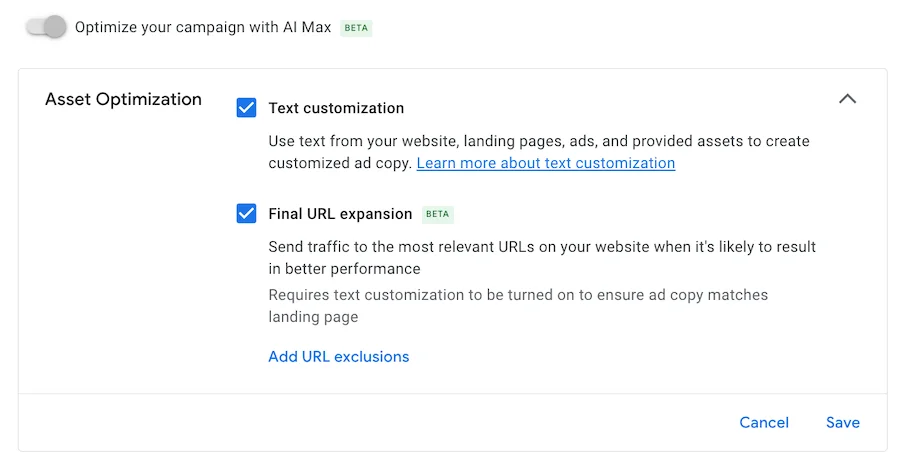
With the announcement of the Power Pack, Google also announced the release of AI Max for Search campaigns. Unlike Performance Max and Demand Gen, this isn’t an entirely new campaign type. Instead, it’s a suite of features you can apply to your Search campaigns. Here are the features you can use:
The gist of AI Max for Search campaigns is that they effectively leverage broad match technology with keywordless targeting (think DSA campaigns) to find new users who may convert.
They also provide the option to use some of Google’s tools from Performance Max within Search, namely Text Customization and URL Expansion.
If you want a more robust rundown of AI Max for Search, you can read this article.
3. Performance Max saw improvements
Just because a new toy was launched doesn’t mean that the old ones weren’t getting some upgrades this year.
Performance Max had a ton of changes, and almost all of them came as more than welcome news to advertisers. We got quite a bit more insight into how the campaigns are performing and controls to improve them. Here’s a quick rundown of what came out:
- Campaign-level negative keywords
- Expanded search themes
- Brand list exclusions
- URL controls beyond page feeds
- Device and demographic targeting controls
- Channel performance reporting
- Search term reporting
- Enhanced asset group reporting for device & time
- Final URL and asset reporting expansion
- Placement exclusions
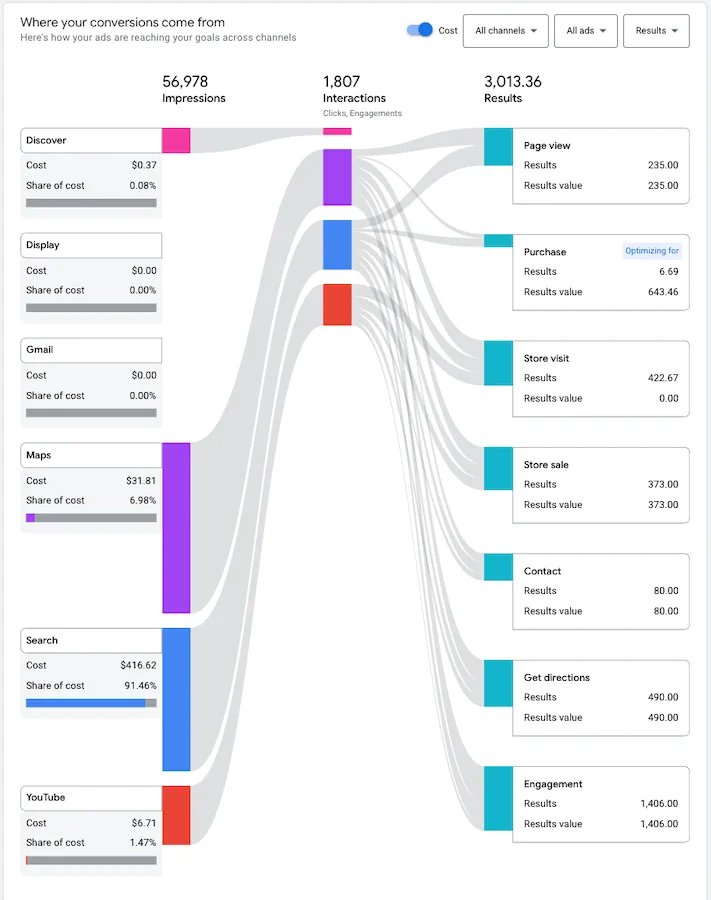
An example of the channel performance report.
If you’ve been hesitant to utilize PMax because it was referred to as Google’s Black Box, that can no longer be your excuse not to test. We now have more controls over who sees our ads and where, with negative keywords, brand exclusions, URL controls, device and demographic controls, as well as placement exclusions.
4. Google introduced High Value Mode in Performance Max
One of the nuances in marketing is that acquiring a new customer is usually more expensive than getting a sale from a returning customer, but the lifetime value of that returning customer makes it worth the additional spend on the first time around.
High Value Mode in PMax campaigns is designed to help you be a little more flexible on the marketing costs for that new customer by increasing your bids when it thinks it’s likely to result in a long-term customer.
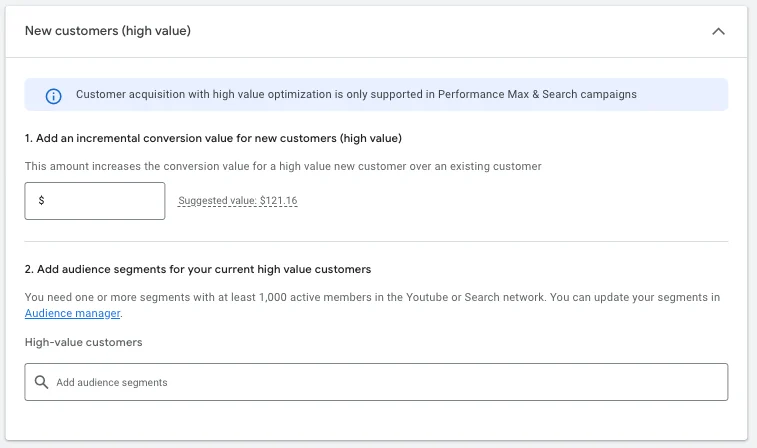
This feature requires you to choose the “Bid more for new customers” feature at the campaign level, then set up additional values based on your business.
If you’re trying to find new users and are willing to spend a little more upfront to get a new long-term customer, this option could be great for you.
5. Smart Bidding Exploration hit the scene
Another new tool from Google also aims to help you gain more sales, but rather than knowing whether someone is a new or returning customer, Smart Bidding Exploration adjusts your expected returns to show for queries you wouldn’t have shown for previously.
This new AI-powered feature allows Google to temporarily lower the effective ROAS target, based on the acceptable range you’ve provided, to capture new users by showing for queries you would not have qualified for with the previous ROAS target.
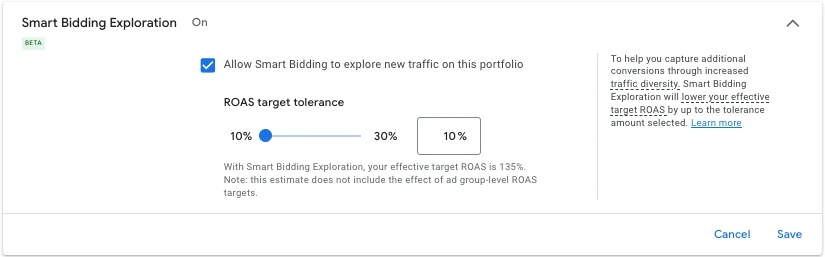
In my opinion, while billed as all upside, this feature really should only be used by a select few advertisers who are seeing excellent returns on their campaigns with high conversion volume and can afford to see an incrementally lower ROAS to gain new customers.
6. The Investment Strategy Tool was announced
The most recent launch from Google is still in beta and hasn’t rolled out to all of our accounts just yet.
The Investment Strategy Tool is intended to be used for advertisers who have an influx of ad spend and want to know the most efficient way to spend it in the near future.
The tool is intended to show you the most efficient place(s) in your account you can add budget, while staying as close to your performance targets as possible.
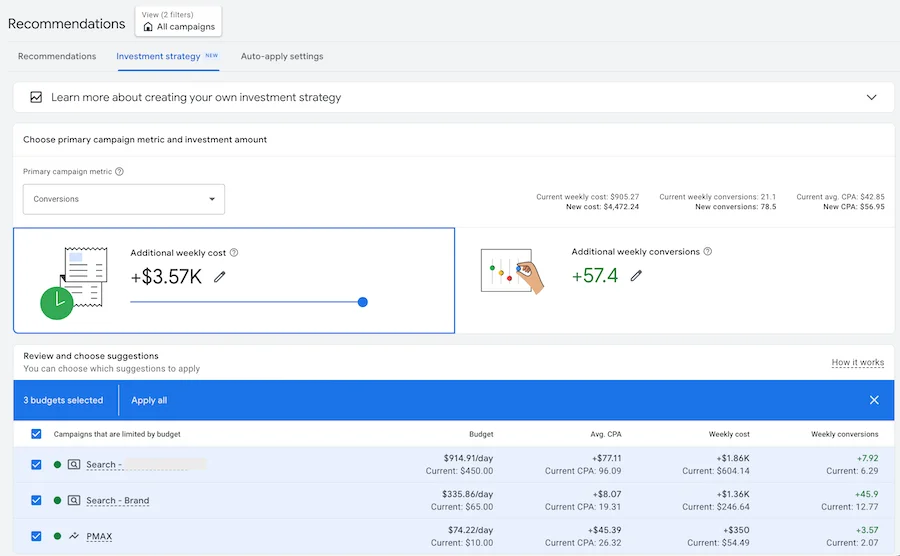
With this feature, you can tell it how much more you want to spend per week or how many additional conversions you’d like to have per week, and it will suggest budget allocations based on all campaigns that are currently capped by budget.
💰 When it comes to managing campaigns on Google, it’s all about bidding smarter…not harder! Download our guide to become a Smart Bidding pro >> The Fool-Proof Guide to Smart Bidding (+How to Get Started Fast)
7. Google launched Asset Studio
Asset Studio began rolling out in August, a new tool designed to help advertisers create and scale creative assets using AI. It leverages their Imagen 4 and Veo for images and videos, respectively, but recently Google’s been incorporating Nano Banana 4 for more control and higher-quality images.

This is a big deal for advertisers, mostly because there’s really no excuse for having poor creatives. Or worse yet, not running campaigns because you can’t get creatives made in the first place.
With some simple prompts and lots of editing options, you can come up with just about anything you need to engage your audience right from inside the Google Ads platform.
8. Brand guidelines helped with consistency
In addition to the Asset Studio, Google seems to have recognized that some of their attempts at automation have resulted in creatives that aren’t “on brand,” if you will. Many times in the past, I’ve had to forgo using automation as the resulting ads (in either text or visuals) weren’t in line with the company I was advertising.
In 2025, Google began using brand guidelines in certain campaign types that let you control what the colors and font can be for your ads. This is a pretty simplistic version, but it definitely opened doors for many companies.
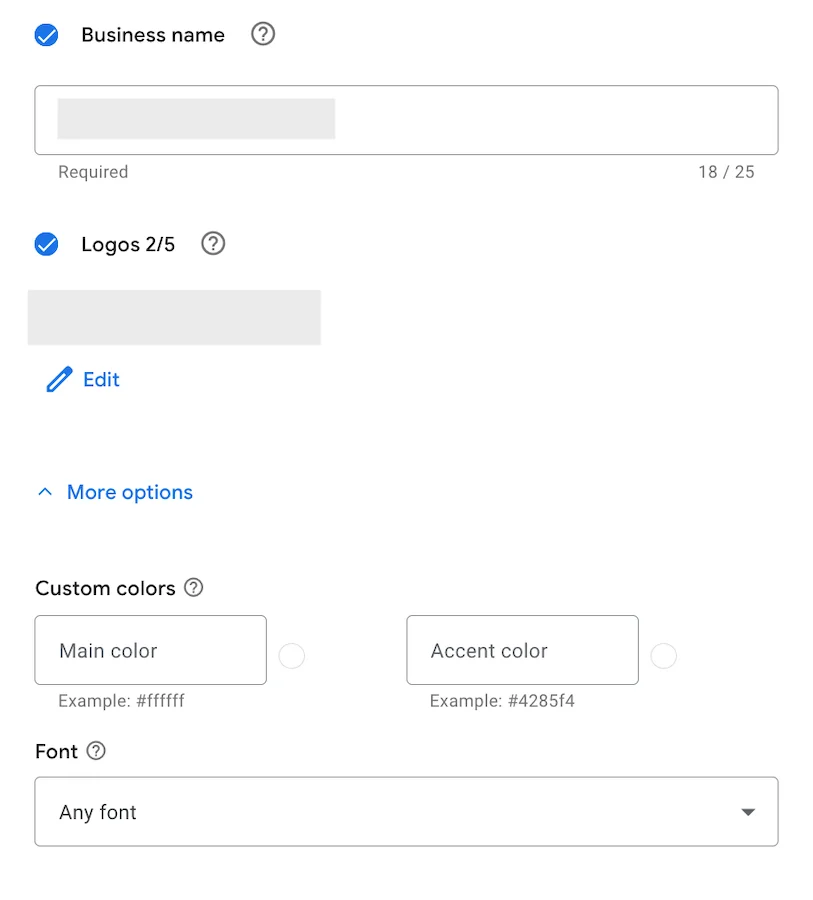
Over the course of the year, they’ve been further expanding these options. You can now provide guidance to Google’s text customization tools to ensure any of the new copy they provide for you will be on brand and keep your same voice. This includes identifying phrases that are off limits or telling Google not to imply things about a brand and the tone it can use.
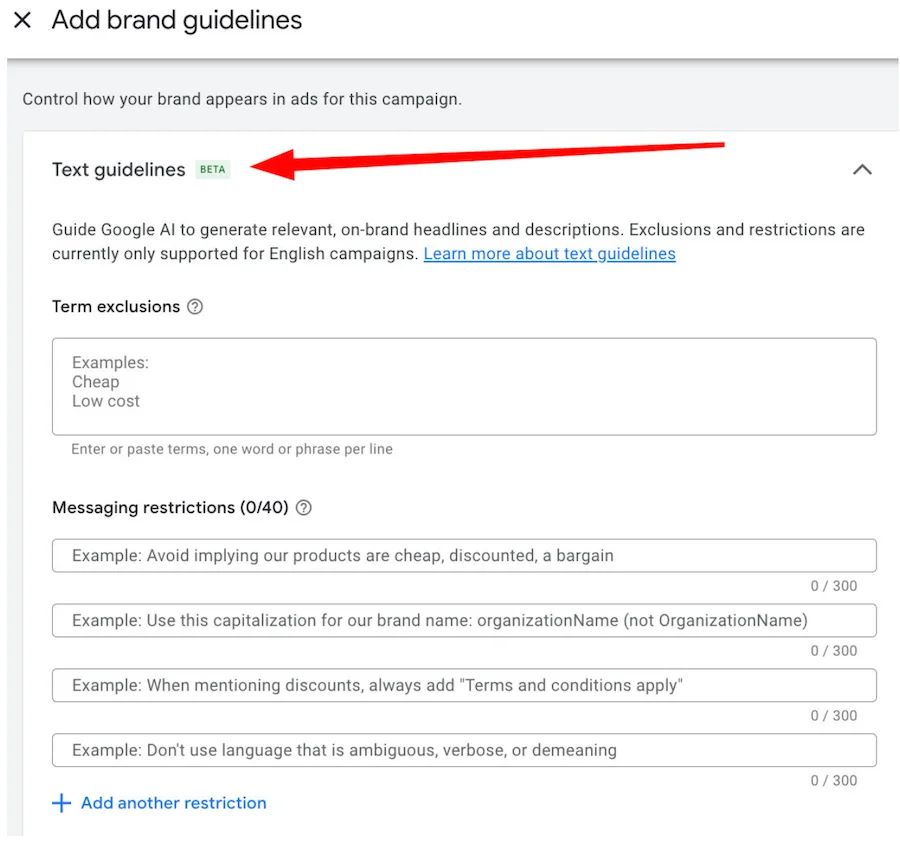
There are lots of advancements here that can really help those companies that are more hesitant to take advantage of the new automated features.
9. Advertisers got the Responsive Search Ads asset report
Ad copy testing got a huge boost in impact. Advertisers can now report on the performance of individual headlines and descriptions within their Responsive Search Ads. We no longer have to rely on the ad unit as a whole and the (entirely underwhelming) Combinations report.

With this information, we can now fully understand which messages are driving the clicks, conversions, and revenue, and create more impactful ad creatives for future tests.
10. Google released Search Network Performance reports
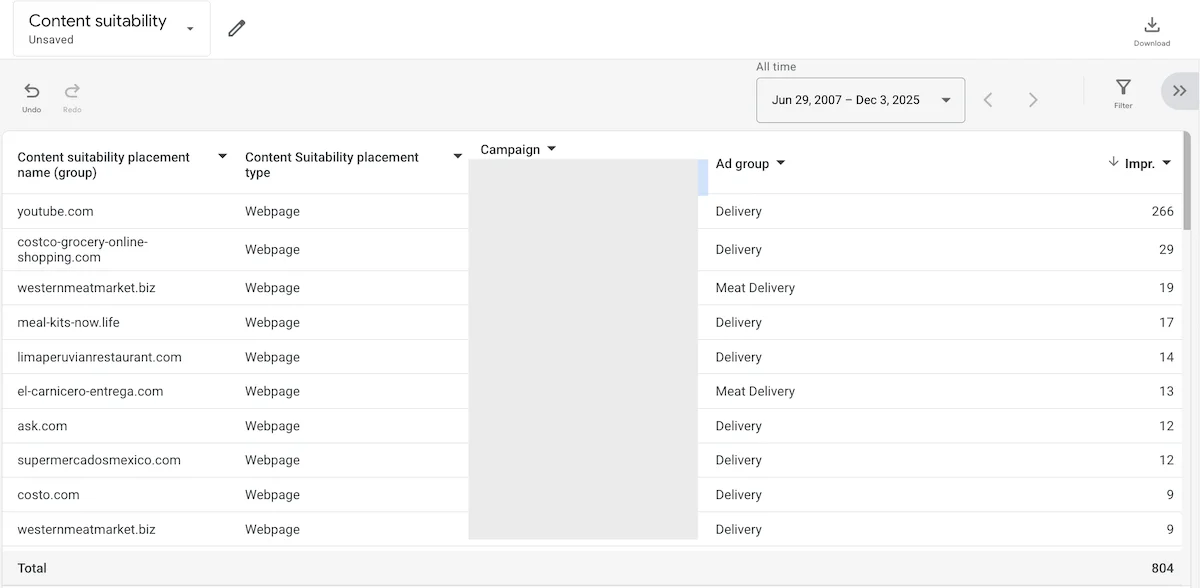
In 2025, we finally got insights into how the different sites within the Search Partner Network perform.
The report lives in the Report Editor under Content Suitability, and while it only shows Impressions, it’s infinitely better than nothing, so I’ll take it!
⚡️ Is your Google Ads account set up for success? Download now >> The Last Guide to Google Ads Account Structure You’ll Ever Need
11. AI Overviews and AI Mode changed the user experience
A 2025 round-up wouldn’t be complete without mentioning the updates that Google is making to its AI results for users on the Search side.
In the past year, Google started leveraging ads in both AI Overviews as well as AI Mode, meaning advertisers could get their listings into the “answer engine” portion of Google.
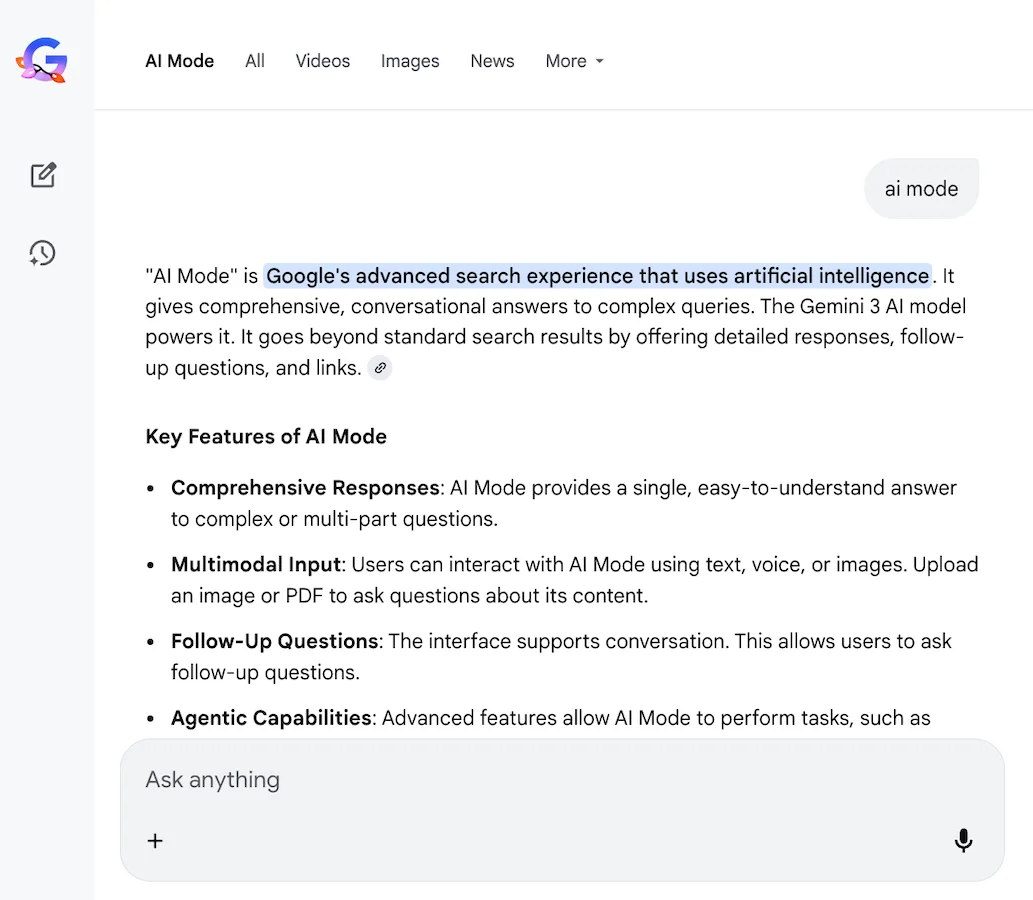
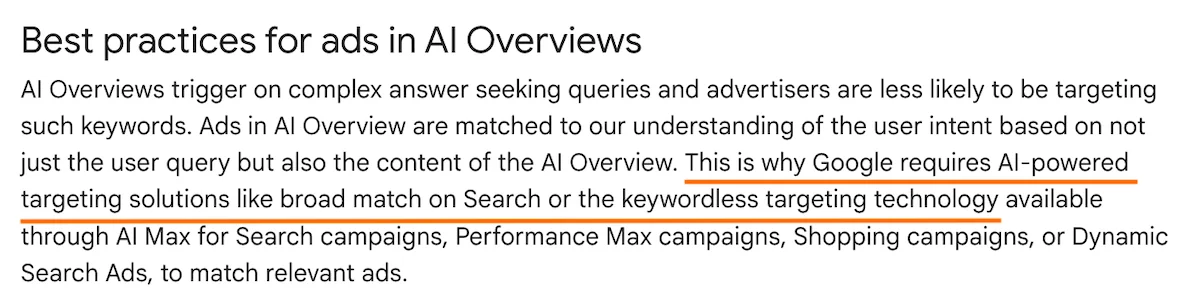
The catch: As of the writing of this post, you need to be using some of the automated solutions Google provides and have your ads be not only relevant to the query, but to the answer and supporting documentation as well, to show in these AI offerings.
Beef up on 2025 Google Ads updates before the New Year
It’s been a big year in the Google Ads interface. We got a lot more insights into performance and many more controls to influence that performance. At the same time, Google is continuing to invest in its AI-powered solutions, whether it’s through new campaign features, new tools, or experiences on the SERPs themselves.
In my estimation, 2025 was a good year for advertisers and for Google. Here’s hoping 2026 will continue in its footsteps and we’ll all be just as happy this time next December.