The year 2026 is shaping up to be an unpredictable one for the consumer electronics market, and not necessarily in a good way. Thanks in part to the AI boom, the demand for memory has skyrocketed, triggering a price surge and supply shortage. As a result, smartphone brands such as Xiaomi have warned of an impending price hike for phones, while Samsung is also debating a similar move internally. And based on recent trends in the PC, it could be a similar wallet-nuking situation for phones heading into 2026. So, what’s the respite? Buy used phones.
Now, buying a pre-owned phone is not a straightforward journey. It’s nothing short of making a leap of faith. But if you can find a reliable channel selling used phones, certified refurbished units, or cleaned units, half the problem is solved. The big question is just how far back you can go at picking up an old phone in terms of its shelf age. What if it runs out of the support channel? What if the hardware isn’t enough for the latest perks, such as on-device AI processing? Or demanding games and emulators? The task can be pretty daunting for anyone not well-versed in smartphone tech.
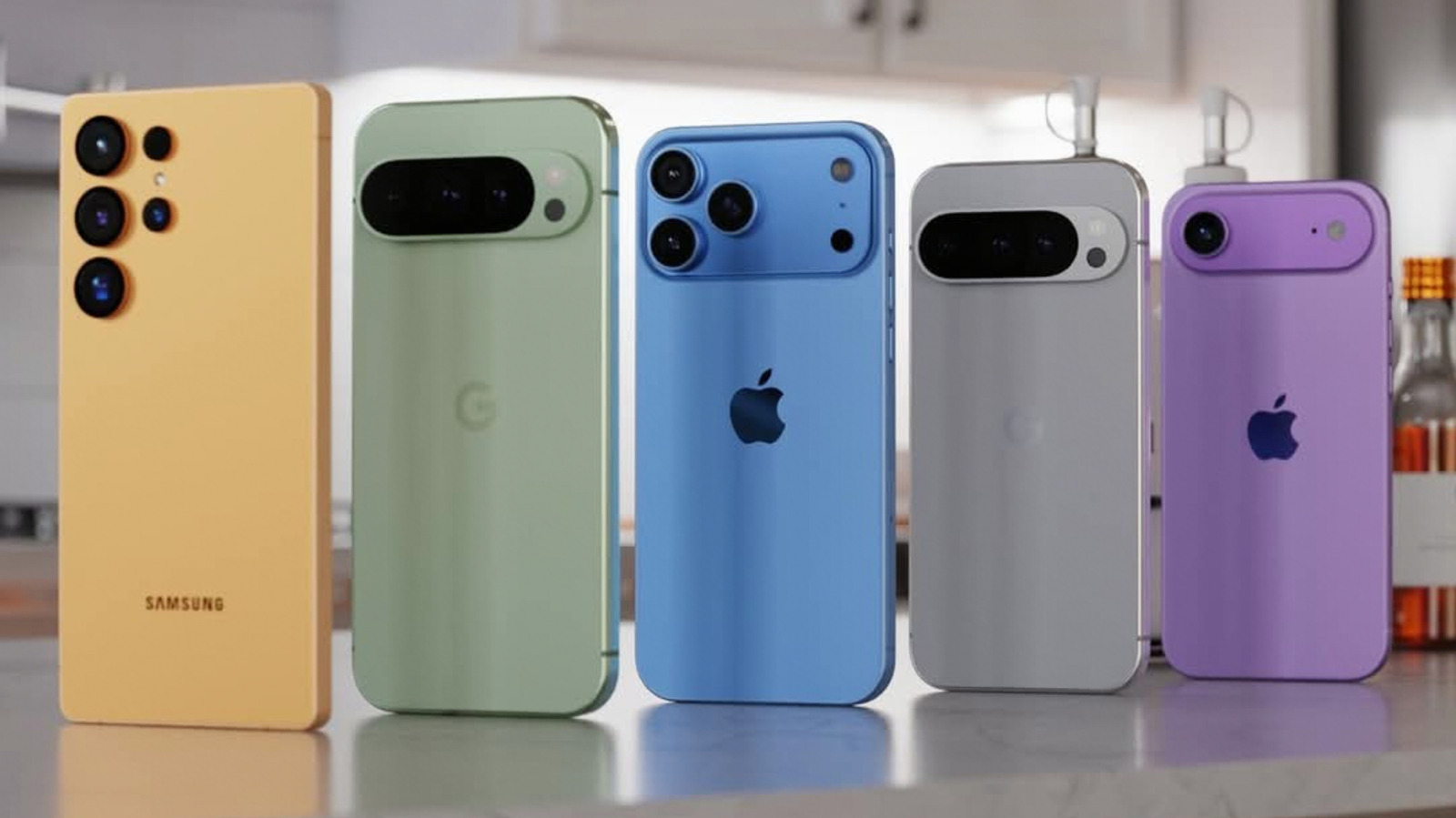
To ease the dilemma, I’ve picked up six phones across different budget points that you can consider buying. All these devices have been used as a daily driver, and I can confidently vouch for their reliability, upsides, and limitations of these devices. Most of these devices are a part of a generous software update cycle, so you won’t have to worry about them going obsolete anytime soon. Let’s dive right into it.
iPhone 15 Pro
I regularly find myself in a situation where I end up recommending an older iPhone owing to the sheer amount of money that can be saved without sacrificing too many generation-over-generation upgrades. The iPhone 15 Pro strikes that sweet spot. It’s the first Apple smartphone with enough memory and a powerful neural chip to run Apple Intelligence (aka AI chores) natively. Whether it’s talking with Siri, image generation, or running AI-powered shortcuts, you won’t even need an internet connection. And with the AI rebirth of Siri right around the corner, you can rest assured that the iPhone 15 Pro will offer you a first-row seat to the upgrades that land in the coming months.
But you’re not buying an iPhone for AI chops. So, here’s the good news for you. It’s a terrific phone, while being at the baseline where you won’t miss out on next-gen software perks. It offers a lovely titanium build and a programmable Action Button that can deploy for a variety of tasks, including any Shortcut of your choice. The performance, driven by the six-core A17 Pro chip, is still blisteringly fast. And even if you push the phone at video edits or graphics-intensive games, you won’t be left yearning for more firepower.
The cameras are pretty rewarding, led by a 48-megapixel main snapper and a pair of 12-megapixel sensors for ultrawide and long-range capture. The cinematic 4K videos produced by the phone are pretty good, but if you want more creative controls, the iPhone 15 Pro will let you capture Log footage, as well. The battery life is also quite reliable, but make sure the used unit you pick has roughly 80-90% of battery health intact, or you’ll need to invest in a battery replacement to maintain peak performance.
Google Pixel 9 Pro
When the Pixel 9 Pro debuted late in 2024, BGR’s review described it as “leaps and bounds ahead.” The device marked a whole new design language for Google smartphones, one where distinct looks were married to an equally premium build. In a sea of smartphones with a corner hump, Google refined a signature design and offered it in some brave color choices. But there’s more to this phone than meets the eye.
The Pixel 9 Pro offers the best taste of Android in its pristine avatar, alongside a whole slew of meaningful AI-powered conveniences. Magic Editor, conversation photo touch-up, custom weather reports, a screenshots app that serves as your memory bank, and cross-app actions are just some of the perks of owning a Pixel phone. Another crucial benefit is the camera performance.
The all-big sensor (50MP + 48MP + 48MP) approach on the Pixel 9 Pro delivers fantastic results. The stills are sharp, but low-light performance and ProRes Zoom are the real standouts of the camera experience. At up to 30x zoom level, the pixel-level reconstruction and upscaling done by the onboard imaging hardware deliver unexpectedly good results. The 120Hz OLED display is also fairly sharp and vivid, reaching up to 3,000 nits of peak brightness.
The only downside is the Tensor G-series processor. It’s not exactly sluggish, but it’s not quite in the same league as the flagship silicon from Apple, Qualcomm, or MediaTek. Day-to-day performance, however, is fairly smooth. A crucial perk is on-device Gemini Nano processing, which handles AI-powered chores such as Gemini interactions, scam detection, call notes, photo editing, and even image-to-video conversion run on-device.
Samsung Galaxy S24 Ultra
For most users in the US seeking an all-out camera flagship on the Android side of the pond, the Galaxy S phones are the sweet spot. The Samsung Galaxy S24 Ultra elevated that reputation, while also earning a solid 9/10 in BGR’s in-depth evaluation. Samsung is currently selling a renewed unit at just over a thousand dollars, while Best Buy has refurbished units for as low as $575. At the latter asking price, this one is an overwhelmingly good smartphone.
It offers a minimalist design, tagging alongside a vibrant 120Hz OLED screen. In a few weeks, the phone will officially be two generations old, but the Qualcomm Snapdragon 8 Gen 3 chip powering it is still fairly capable. The phone’s 5,000 mAh battery is a reliable full-day companion and it supports 45W fast charging. The true standout aspects of this phone are the camera output and software experience.
Samsung’s One UI, which now runs atop Android 16, offers its own unique flavor. Samsung’s Galaxy AI package includes useful features, from real-time two-way translation for conversations to a daily AI-powered briefing of events and tasks — there’s a lot to explore and love. Then there’s the camera experience, which puts the phone in its own class.
The lead 200-megapixel performs dual-layer pixel-binning and clicks beautiful shots with plenty of surface texture and pleasing color reproduction. Thanks to its dual-telephoto camera system, you can pick between 2x, 3x, 5x, and 10x optical quality zoom for long-range capture. The results are pretty good. The new My Filters system lets you extract the unique color chemistry of any picture in your phone’s gallery and then create camera lens filters based on it.
OnePlus 13
This is the first phone from OnePlus that took the fight to its big-name rivals and managed to outshine them in a few crucial areas. The OnePlus 13, which was deemed a complete package in BGR’s review, arrived with a standout dual-tone design that married a denim-inspired leather finish to silvery metal. To go with the eye-catching design, it also served an IP69-certified build, making it one of the most resilient phones out there against dust and water exposure.
A big draw of OnePlus phones has always been the focus on performance, and the Qualcomm Snapdragon 8 Elite silicon fitted inside the phone didn’t disappoint. Paired with the enhancements to OxygenOS software, the phone offered a blisteringly snappy performance. Another surprise was the 120Hz curved OLED screen, which reached 4,500 nits of brightness output, outclassing even the far pricier phones.
What surprised me the most about the OnePlus was the camera output, an area that has been a weakness on the brand’s phones for years. The triple 50-megapixel sensor array at the back produced some stunning shorts with plenty of character. The color tuning was lovely, even though it wasn’t chasing the same realism as the Pixel cameras. The master mode offered plenty of meaningful controls, while on the video side, the phone is capable of capturing Dolby Vision videos.
The standouts are the battery capacity and charging perks. The 6,000mAh battery easily lasts a whole day. Plus, support for 100W wired charging — over twice as fast as the latest iPhones and Pixels — ensured that the massive battery can be topped up fairly quickly. You also get support for 50W wireless charging, while the latest OxygenOS 16 update has added plenty of on-device AI features into the mix.
OnePlus Open
Just like the Samsung Galaxy S25 Ultra, this one is also two generations old and no longer available from the brand’s official website. Amazon is currently selling the OnePlus Open for $1,599, which is a little too high at this stage. On sites like Reebelo, BackMarket, and Swappa, you can get a used or refurbished unit under $650. If you’ve even been on the fence about experiencing a foldable phone, but the high asking price kept you away, this is one of the best options to scratch that itch.
The OnePlus Openm took a rather palm-friendly approach to making a foldable phone, instead of putting a tall slab in your hands. The build quality is terrific, and the leather rear shell gives it a premium look that far outclasses the glass-and-metal sandwich look you see everywhere these days. The two 120Hz OLED panels on the phone didn’t disappoint in terms of sharpness or brightness output.
It was also one of the first phones to not cut corners when it comes camera hardware. You get a pair of 48-megapixel cameras at the back, sitting alongside a 64-megapixel telephoto zoom camera with folded lens (aka periscope) optics. The hardware didn’t disappoint with its imaging performance. BGR’s analysis praised it for the consistently good capture quality and lens versatility. Moreover, with support for 67W top-up, it emerged as the fastest charging foldable phone in the US market, even though the lack of wireless charging was sorely felt. The real winner here was the software, in particular, the Open Canvas. It’s a split-screen multitasking system that lets you run three apps simultaneously and switch between them seamlessly. And in case you’re wondering about software, it has already received Android 16.
iPhone 16
A sleeper hit, the iPhone 16 earned itself an “almost Pro” designation in BGR’s analysis for a variety of reasons. It offered a fresh and more minimalist look than even its pricier Pro siblings. Apple is currently selling it at $699, but you can get an open-box unit from Best Buy for just over $600. For that bill amount, you won’t find a better phone in the US market. The only big miss on this one? The lack of a 120Hz refresh rate screen, something Apple sells as ProMotion tech. The rest of the package is as rewarding as it gets.
The phone’s looks and in-hand feel are terrific. It’s one of those phones that you will love holding, thanks to its sleek build and weight distribution. The big change was the addition of a camera control button, which lets you tap and swipe your way through camera features with ease. It’s not always reliable, but it’s a pretty useful facility once you get the hang of it.
On the inside, you get the A18 processor, which is based on the 3-nanometer process and still sits comfortably on the performance leaderboard for smartphones. It’s blazing fast, supports hardware-accelerated ray-tracing (if you take your mobile games that seriously), and it’s ready to run the whole Apple Intelligence AI stack without breaking a sweat.
The big draw is battery life, and solid camera performance. The phone can comfortably last a day and also benefits from faster charging. Plus, you get MagSafe wireless top-up support and the whole ecosystem of accessories built around it. The 48-megapixel main camera on this one, benefitting from sensor‑shift optical image stabilization, is one of the best snappers in the price segment. Plus, Apple’s long software support commitment is a cherry on top.