Startups On Our Radar spotlights African startups solving African challenges with innovation. In our previous edition, we featured seven game-changing startups pioneering research, e-commerce, health, art and logistics. Expect the next dispatch on December 5, 2025.
This week, we explore seven African startups in the health, research, aquaculture, funding and finance sectors and why they should be on your watchlist. Let’s dive into it:
AquaTrack is de-risking fish farming with its AI-powered solution (Agritech, Nigeria)
For sisters and co-founders, Deborah and Busola Falope, the idea for AquaTrack was born from their own struggles running a fish farm in Port Harcourt. After experiencing low yields, high mortality, poor financial access, and unstable market conditions, they built AquaTrack, an AI-powered farm management system designed to optimise aquaculture operations and link farmers to both finance and markets.
The platform operates as a web application where farmers can monitor ponds, log mortality and feeding rate, and track the entire lifecycle of their stock. The platform has a harvest feature which allows farmers to record sales in real-time, calculate capital, profit, and expenses.
Its AI assistant, which is available both in-app and on WhatsApp, answers simple farming questions and helps with tasks like extracting details from uploaded receipts to support farmers who are not tech-savvy. The startup also connects farmers to finance through its partnership with finance partners that it did not disclose, and operates an online seafood marketplace that links fish farmers directly to consumers, bypassing middlemen.
AquaTrack launched in 2024 after an earlier MVP and began generating revenue in January 2025. It runs on a subscription model: Plans cost ₦6,000 per month, with a 7-day free trial and discounts for annual payments. The team reports over 1,000 onboarded farmers, sales of over 30 tons of fish across Bayelsa, Aba, Enugu, and Oyo states. They claim to have generated ₦23 million ($15,850) in transactional value and accumulated a pipeline of over 160,000 farmers.
Why we’re watching: AquaTrack differentiates itself from competitors like Kenya’s Aquarech and other aquaculture platforms by offering a centralised solution that combines management, farm operations, market access, and credit financing, while competitors focus solely on e-commerce. The platform plans to roll out a prediction and production-planning tool trained on real farm data, offering growth benchmarks that will enable farmers to determine early on whether their harvest is on track or underperforming. The platform also plans to pilot its solution in Kenya through a partnership with a local agritech organisation, which would be announced in 2026.
Black Swan wants to give credit to users who don’t have collateral (Embedded finance, Tanzania)
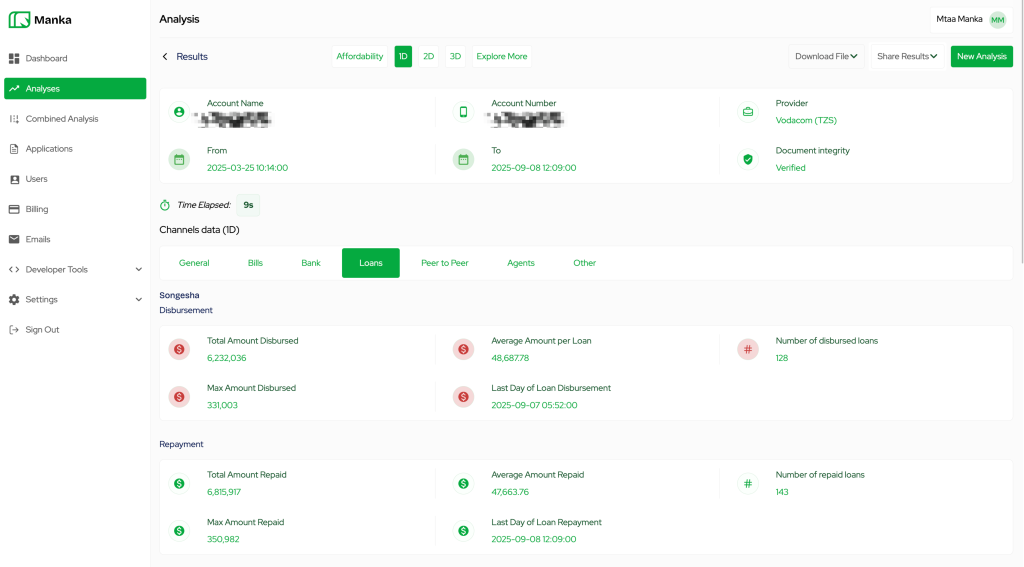
Black Swan, founded by Derick Kazimoto and Alex Mkwizu, is an infrastructure layer that helps financial institutions issue credit using alternative data. It operates as an embedded finance middle layer that enables digital lenders to instantly access and verify customer data, like bank statements and utility records, with customer consent, to make accurate credit decisions.
Using machine learning and AI, Black Swan assesses risk for users who lack traditional collateral, whether they’re trying to access credit, Buy Now, Pay services or device financing. In a typical device financing use case, a customer wanting an iPhone 17 Pro Max would just need to upload their bank statements, and Black Swan’s AI verifies the documents, checks credit bureaus, and pre-approves a loan for devices like phones.
Black Swan is operational in Tanzania and running pilots across Uganda, Kenya, Rwanda, and Malawi. A major development in their roadmap is the credit SIM, which is a portable credit identity tied to a user’s phone number. The idea is that customers can carry their credit history across banks, lenders, and even countries, such that if a user switches from one bank to another, their credit identity follows them. The startup operates on a revenue-share model, earning fees based on the performance of its credit models after accounting for defaults.
Why we’re watching: Despite a surge in digital lending apps, a $100 billion credit gap persists in Africa. Current data indicate that over 500 million adults lack legal identity to access loans, making them invisible to lenders. Black Swan differentiates itself by bypassing these lenders and allowing financing data for such individuals to be available across platforms. Black Swan stands out by being independent from telecom operators, a sharp contrast to established players like Jumo and Kunda, who rely heavily on telco data for digital credit. The infrastructure can also operate in markets without open banking frameworks and help banks serve customers they previously could not evaluate. Black Swan recently validated its model by winning the MEST Africa Challenge 2025.
ResearchGains wants to automate and democratise data collection for African researchers (Data and research, Nigeria)
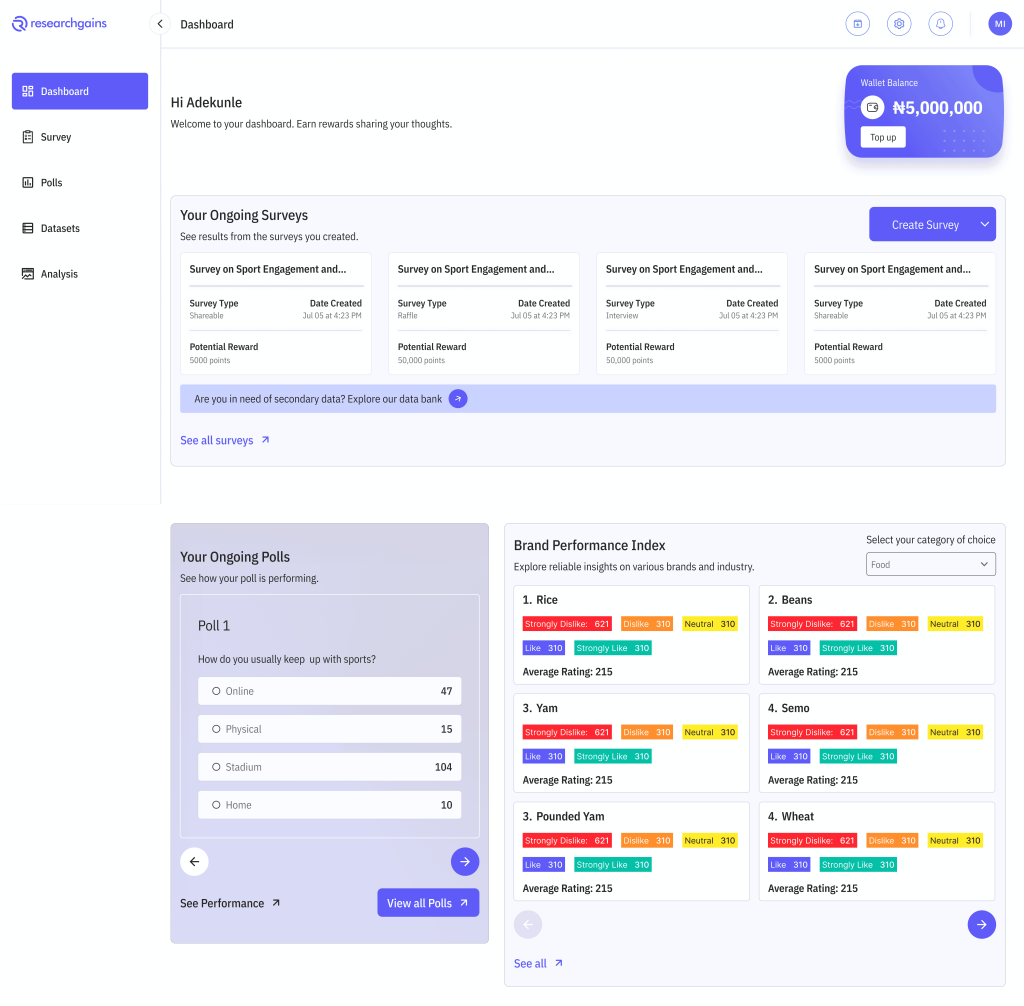
Founded by computer engineer Balogun Babaunde, ResearchGains was born from a frustrating undergraduate research experience, particularly data tampering. ResearchGains provides digital infrastructure that allows a research team to access and store structured data. It is an open data intelligence platform that connects researchers with verified respondents in real-time.
The platform allows researchers to create either qualitative (which could be in audio or video format) or quantitative surveys, and target precise demographic segments using filters like age range, gender, location, employment status, education level, occupation, and ethnicity. To ensure accessibility, the interface supports translation into nine languages, including Yoruba, Igbo, Hausa, Swahili, Zulu, Arabic, and Portuguese. Respondents earn points for completing surveys, which can be withdrawn as cash once a threshold is met.
The startup employs strict quality assurance measures, using National Identification Numbers (NIN) to validate respondent identity, GPS tracking for location-sensitive surveys, and response speed tracking to detect rushed or fraudulent entries.
Surveys are priced per respondent across different package tiers. The Student package charges ₦200 ($0.14) per respondent with a maximum of 300 respondents, while the Small Scale and Medium Scale packages go for ₦300 ($0.21) and ₦250 ($0.17) per respondent, with a maximum capacity of 1,000 and 10,000 respondents, respectively. ResearchGains claims to have access to 5 million respondents across diverse demographic samples.
Why we’re watching: Africa contributes only 2% to global research output. By hosting readily available African respondents and data on its platform, ResearchGains is accelerating Africa’s contribution to research output. While global tools like SurveyMonkey exist, ResearchGains stands as a more affordable option, as pricing for SurveyMonkey begins at $35 monthly. The platform offers a credible path to improving the continent’s research quality and claims to have over 400 local datasets.
Jxtgotfunded wants to make fundraising faster and bias-free (Networking, Nigeria)
Founded by Ozurumba Obinna and Wosu Ogechi, Jxtgotfunded is an AI-powered marketplace designed to help African startups get visibility and connect with the right investors by simplifying the most time-consuming stages of the funding process. The founders built the platform after they realised that startups struggle to get investment, and investors spend months on due diligence because of a lack of trust.
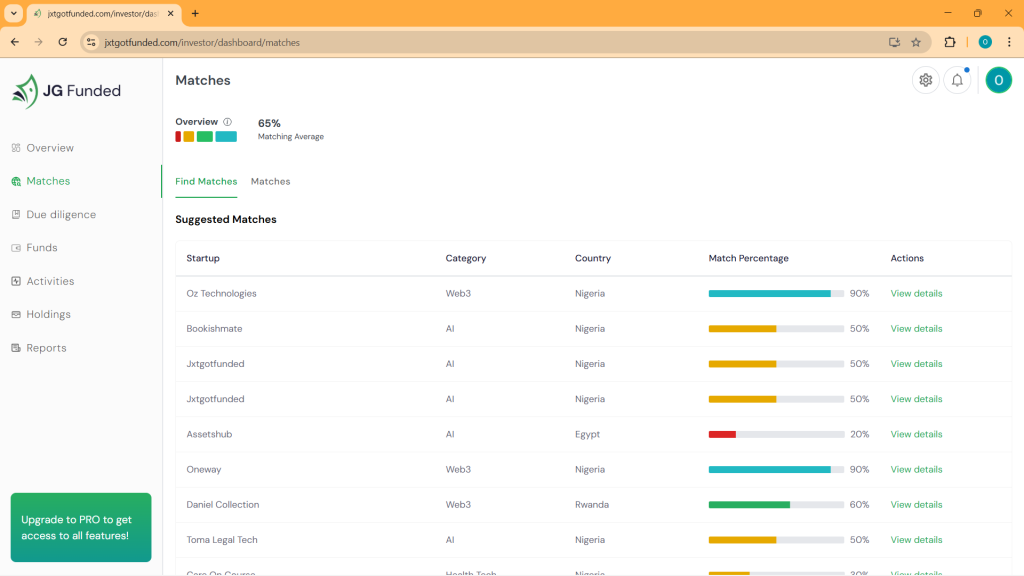
To use this platform, startups can sign up on the web app, upload details about their team, location, funding stage, traction, sector, and pitch deck. On the investor’s end, they will input their ticket sizes, preferred sectors, locations, and past investments. The platform then uses an algorithm and machine learning-based matching system to generate compatibility scores or a match percentage to help investors avoid sifting through pitches that don’t align with what they are looking for. Once matched, investors and founders can chat directly in the app and manage the flow of the deal.
On the platform, startups also get access to pitch deck analytics, templates for key documents like non-disclosure agreements NDAs, and market-intelligence dashboards showing the rate of their funding. The team is also rolling out AI agents that can summarise financial documents, analyse projections, prepare due diligence insights, and generate sector reports.
Currently, the startup operates on a success-fee model, which includes charging a 2% to 5% commission on closed funding rounds. The startup also generates revenue through partnerships with incubators and by providing data and insights for ecosystem players. Plans are underway to activate a subscription model that will unlock advanced features for startups. The platform launched its MVP in October 2024 and claims to have about 500 startups signed up already.
Why we’re watching: In the first half of 2025, startups in Africa raised $1.42 billion across 243 deals. Jxtgotfunded is attempting to accelerate this process with its AI-assisted matching engine and focus on reducing investor bias. The team differentiates their solution from platforms like F6S, which relies on a cohort-based model, and Startup List Africa, which functions primarily as a directory of emerging startups. They argue that global competitors that bear similarity to their offerings, including AngelList, lack the specific socio-cultural context required for trust-building and due diligence in Africa.

Maa is an AI-powered digital companion for African mothers (Healthtech, Ghana)
Maa was founded by Dr. Abena Jim-Annan and Aseda Addai-Deseh after they spotted gaps in maternal care across Africa, including poor continuity of care between prenatal and pediatric stages, emotional isolation, medication-safety knowledge gaps, and geographic barriers to specialists.
Maa operates as an all-in-one AI health companion that digitises the entire maternal journey. Users can store and sync clinical records, such as ultrasounds, lab results, and vaccinations, journal pregnancy milestones, including scans and newborn photos, which the AI compiles into a digital storybook sharable with children in the future, and input vitals so that the app can use them to flag trends, like a rising blood pressure.
The platform also features an intelligent medication management system that monitors safety and provides guidance on medication side effects, as well as dosage reminders. For example, if a user logs nausea after taking folic acid, the app alerts their clinical provider in real-time to adjust the prescription.
Maa also has an integrated telemedicine feature, multilingual support, community and peer-mentorship groups allocated by location or interest, as well as a family sync feature that allows partners to access health records and vital updates if they are not in the same geographical location.
Maa will run on a freemium subscription model with subscriptions starting at $2 monthly. The startup also plans to generate revenue through corporate wellness packages, telemedicine consultation fees, and partnerships with hospitals. Maa is currently in its testing phase. The company says it has over 500 users on its waitlist and aims for a rollout in Q2 2026.
Why we’re watching: In sub-Saharan Africa, only 64% of births are attended by skilled professionals, with a maternal mortality ratio of 536 per 100,000 live births. Maa wants to fill that gap by pairing a clinical perspective with data science to build a maternal product explicitly trained on African data and cultural context. This sets it apart from global maternal apps, which may provide recommendations that are not readily accessible to mothers in their local area.
Mi-Fam is helping smallholder farmers make data-driven decisions (Agritech, Sierra Leone)
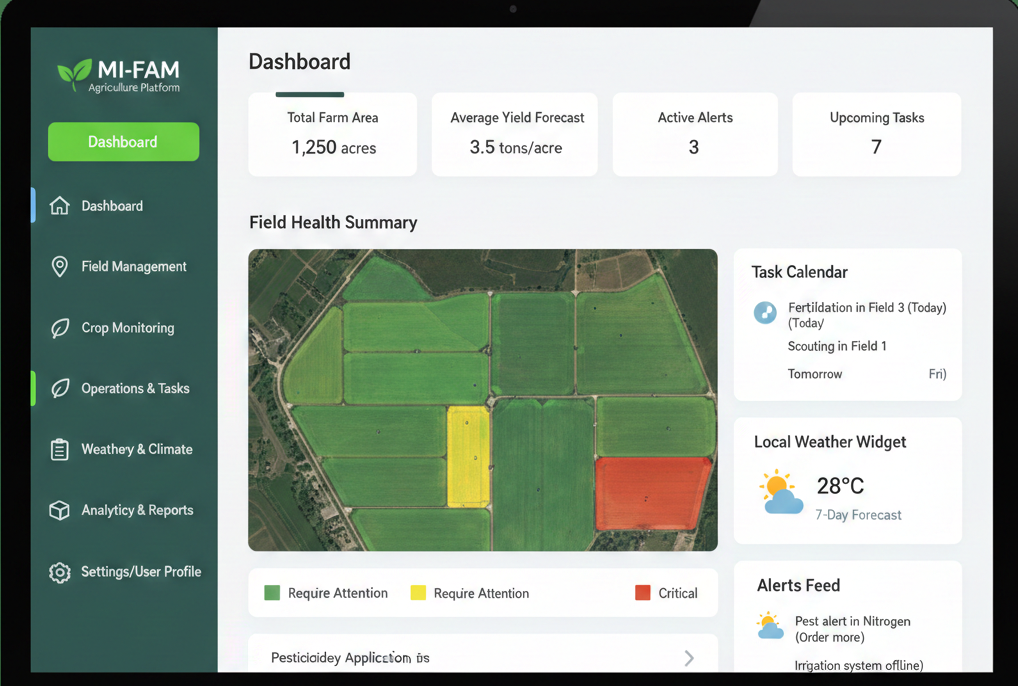
Mi-Fam is an AI-powered agricultural assistant founded by N’fa Bolokada Umar, who grew up watching his mother farm without data, tools, or predictive insights. He observed that local farmers often rely on guesswork or religious faith rather than data to determine where to plant, which could lead to poor yields. Mi-Fam was built to address this information gap by giving farmers AI-supported guidance for managing their crops and a marketplace to sell their produce.
Mi-Fam helps farmers to identify crop diseases and soil issues by simply pointing their camera at a plant. Images are not stored; instead, the app automatically processes the crop image through an AI model that diagnoses the problem and provides tailored recommendations, like telling farmers to remove infected leaves or apply specific fertilisers. The system also analyses weather patterns, including a feature that predicts rainfall and temperature, and suggests the best planting and harvesting dates to the farmer.
Farmers can receive results as text or voice notes in Sierra Leonean languages, including Krio, Mende, and Temne, to ensure that non-literate users can access the app. Mi-Fam includes a marketplace where farmers can list harvested crops for direct sale to buyers and trade equipment like tractors, cutting out the middleman who typically takes large commissions.
The platform, still in its MVP testing phase, generates revenue from premium subscriptions, priced between SLE120 ($5.22) and SLE250 ($10.87), which unlock features like unlimited crop listings for farmers and an AI chatbot capable of advising on general agriculture in local languages.
Why we’re watching: Sierra Leone’s agricultural sector contributes over 50% to the country’s gross domestic product (GDP). Mi-Fam is tackling a deeply local problem of guesswork and unstructured operations in this sector by combining AI diagnostics, local weather prediction, soil advisory tools, and a marketplace that bypasses exploitative middlemen. Mi-Fam’s emphasis on Sierra Leone–specific soil and crop data makes its recommendations more relevant than generalised global tools, making it a potentially transformative tool for smallholder agriculture in Sierra Leone.
YarnGPT is giving artificial intelligence a Nigerian accent (AI, Nigeria)
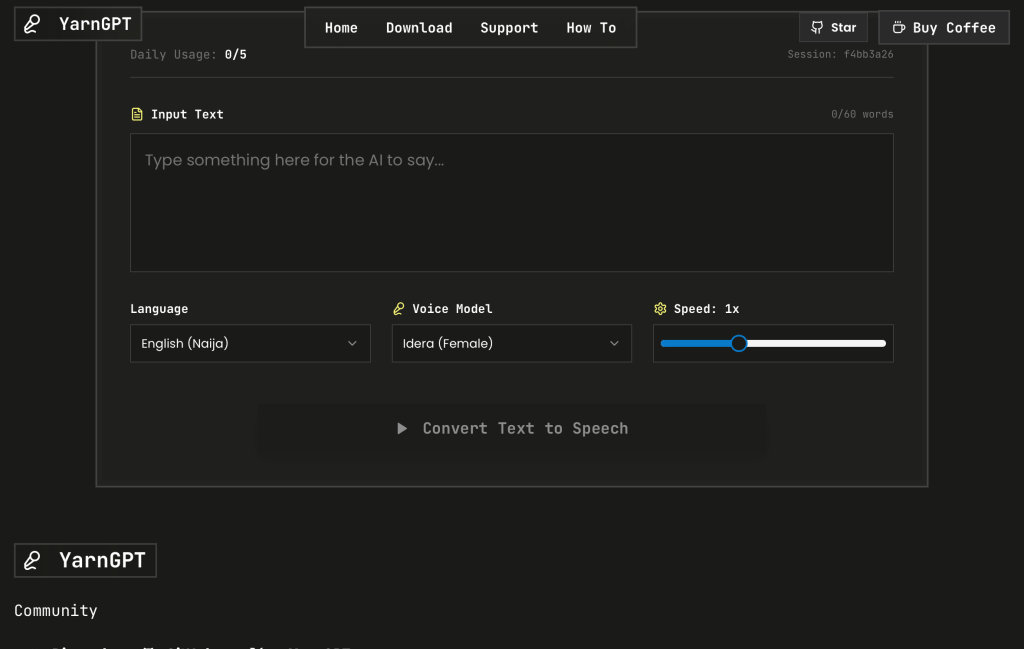
YarnGPT is an AI-powered voice and translation platform created by Saheed Ayanniyi in 2025 after realising that existing open-source text-to-speech models lacked support for Nigerian languages and accents. Ayanniyi began building the platform during his undergraduate years by scraping audio and transcripts from Nigerian movies to create a dataset that understands the rhythm and intonation of Nigerian speech.
YarnGPT offers a suite of audio intelligence tools, primarily focusing on video translation and text-to-speech synthesis. It enables creators and developers to translate videos into Nigerian languages and accents, generate text-to-speech voiceovers, and embed audio readers into websites.
Users can upload videos in English and have them dubbed into local languages like Yoruba, Igbo, and Hausa within minutes. It also includes a URL Input feature that extracts content from web pages, such as news articles, and converts them into audio using Nigerian voices. The platform also provides a developer API for integrating Nigerian-accented or indigenous-language speech into third-party applications. It also includes a dialogue generator that creates multi-voice conversations with controllable pauses and speaker selection.
Why we’re watching: YarnGPT is addressing the accent gap in global AI models by building infrastructure specifically for the Nigerian market. It stands out as a homegrown alternative to global dubbing tools that rely on Western-trained APIs. Its local-first approach allows it to offer highly specific features and democratise access to dubbing tools that allow African creators to reach audiences in their native tongues.
That’s all for today. Expect our next dispatch on December 12th. Know a startup we should feature next? Please nominate here.