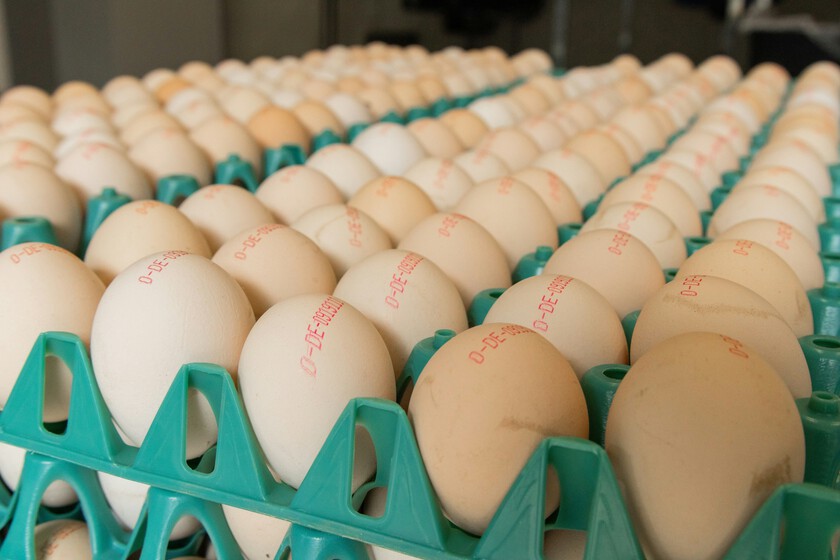
There’s no use beating around the bush: eggs are expensive. Very expensive. And it is not a personal impression. According to the National Institute of Statistics, they have risen 15.9% so far this year and, according to the OCU, the growth has been 105% compared to 2021.
When, a few months ago, we commented that the Price of eggs had risen so much in the US that they had begun to smuggle them across the Mexican border, we did not expect the crisis to reach Spain with the same force.
But we already have him here.
And why is all this happening? As always, the rise is multifactorial. As we explained this month of March, the first key is the demand itself. The sector has registered an increase that dates back to 2024, with an increase of 8%, much higher than that recorded by meat or refrigerated products.
And no one can be surprised: in times of marked inflationary tendency, people naturally switch to cheaper options and eggs, with or without rising prices, are an economical source of protein. But the situation, of course, does not stop there.
More things. Many more things. To the increase in supply, we must add the increase in costs. It is not only the end of discounts on the electricity bill, the rise in labor costs or the boom in grain prices in the world after the invasion of Ukraine; is that the regulation that aims to eliminate cages has subjected the sector to more uncertainties than usual.
And then there’s the flu.
A ghost haunts the farms of the world. With more than 300 million birds dead, the world is experiencing one of the worst outbreaks (if not the worst) of avian flu in memory. And, surprisingly, Spain had avoided it. It is true that we all suspected that it was not a situation that would last too long: 2025 began with Portugal reporting the first outbreak of highly pathogenic flu. It seemed like a matter of time.
Therefore, taking into account that the flu was one of the key factors in North Americans’ problems with eggs, this article is the “chronicle of an announced crisis.”
Because, today, in addition to the 45 wild outbreaks, there are eleven outbreaks in poultry throughout the country. And we must not forget that the fact of detecting a single sick bird entails “the sacrifice of 100% of the poultry herd on the affected farm.”
In other words, to the problems of demand and costs, problems of supply are added.
What can we expect? At this point in 2025, everything seems to indicate that there is only one scenario on the table: that of egg prices that will continue to grow. The reason is simple. There is not one of the factors behind “ovoflation” that seems to be improving.
In fact, the health, regulatory and macroeconomic storm can only cause (at least temporarily) supply to sink further.
As I said at the beginning, according to the INE, the egg is the food that has increased in price the most in 2025. And the problem is beginning to be another: that this increase could drag down the rest of the basic necessities (and the cheapest proteins) throughout 2026. What is clear is that no one has found the goose that lays the golden eggs.
Imagen | Being organic in EU
In WorldOfSoftware | The United States has been immersed in extreme egg prices for months. Spain now faces the same problem