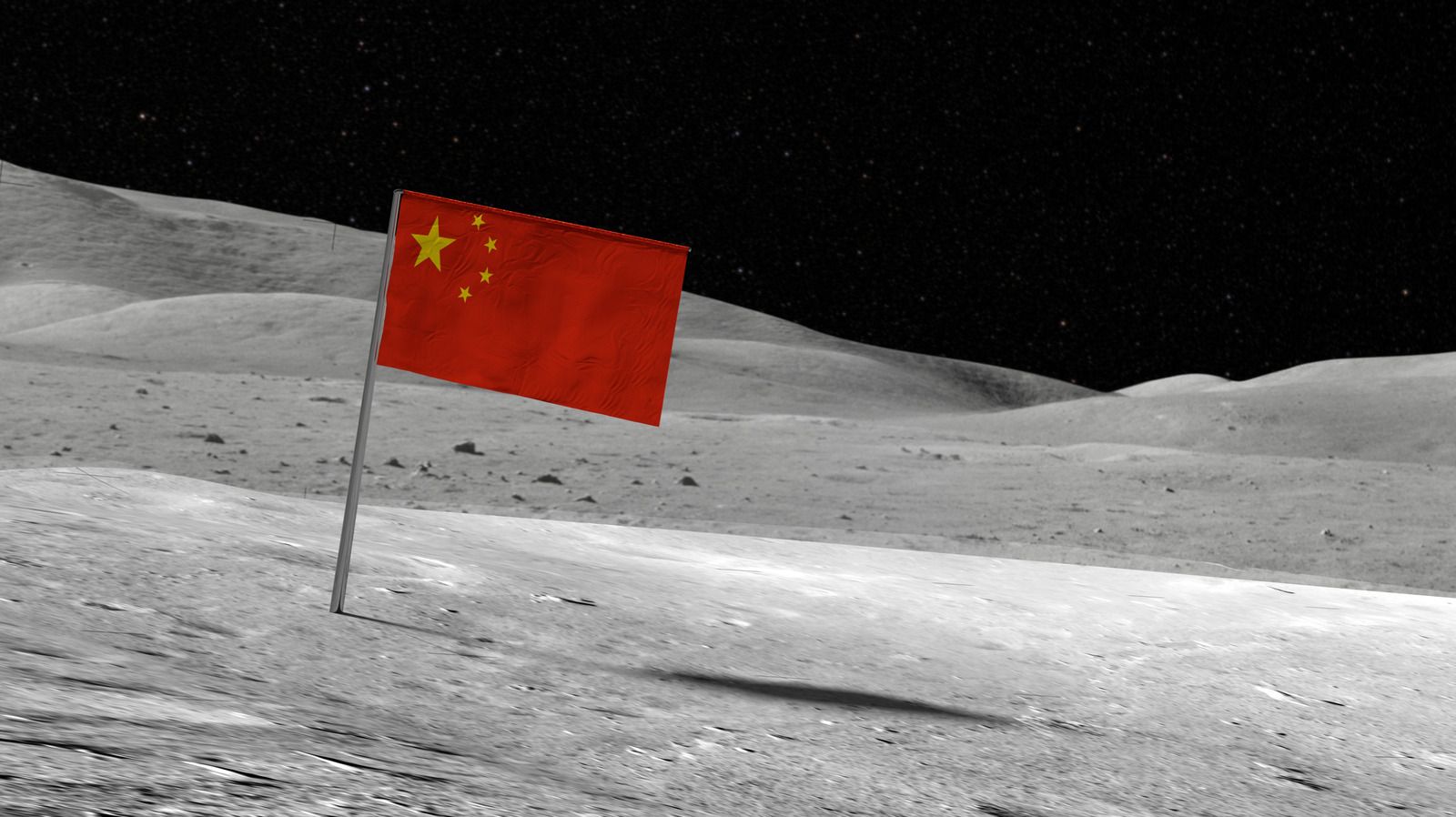
Humans last walked on the moon during NASA’s Apollo 17 mission in December 1972. This moment is often regarded as the pinnacle of the U.S. space program. Back then, the Apollo–Soviet space race was a Cold War struggle for global prestige, scientific dominance, and ideological symbolism. Today, a new lunar rivalry is taking shape, this time between the United States and China. The parallels are striking: two superpowers pushing cutting-edge technologies, racing deadlines, and staking claims to off-Earth influence. And this time around, there’s no guarantee that the U.S. will come out on top.
That said, the context is a little different this time. The Cold War’s razor-sharp geopolitical divide gave way to a more multipolar and competitive landscape, in which commercial actors, alliances, and domestic politics play ever greater roles. Moreover, the U.S. today must navigate shifting budget priorities, a fragmented industrial base, and reliance on private partners. At the same time, China pursues a state-led, long-horizon strategy with fewer public contracts. If China succeeds in putting astronauts back on the moon before NASA does, the implications will resonate far beyond mere lunar footprints.
What’s the holdup, NASA?
China has set a clear goal for its lunar program: to land astronauts on the moon before 2030. Public information indicates a dual-launch approach. A crewed spacecraft, Mengzhou, and a separate lunar lander, Lanyue, will launch on the heavy lift Long March 10 rockets. After rendezvousing in lunar orbit, the lander will carry two taikonauts to the surface. Meanwhile, NASA’s Artemis program, conceived as the agency’s return ticket to the moon, has encountered repeated delays. The most recent adjustments place the Artemis II mission in April 2026 and the lunar landing somewhere in 2027. Technical problems have slowed progress and engineers are still working to fix issues with Orion’s heat shield, which protects the crew during reentry into Earth’s atmosphere. These challenges have forced NASA to revise both the design and the mission schedule.
At the same time, NASA’s budget has come under increasing pressure. While the agency’s focus has tilted towards exploration, certain science missions and infrastructure programs have seen cuts or postponements. This places tremendous strain on contractors, and it undermines the continuity in engineering teams. The Artemis program also has to adapt to shifting priorities from one U.S. administration to the next, making stable, long-term commitments harder to sustain.
NASA is relying on SpaceX to help in this challenging period of shifting policies. SpaceX’s Starship bears the responsibility of safely putting the astronauts on the surface of the moon with the Human Landing System they’re developing. However, Starship requires in-orbit refueling, docking, and crew transfers, all systems that are not yet functioning reliably. So far, the test flights have encountered many failures, and the complex logistics of cryogenic fuel transfers in space remain unproven. In short, the agency is following a narrow, high-stakes path while China’s progress continues to accelerate.
What if China wins the moon race?
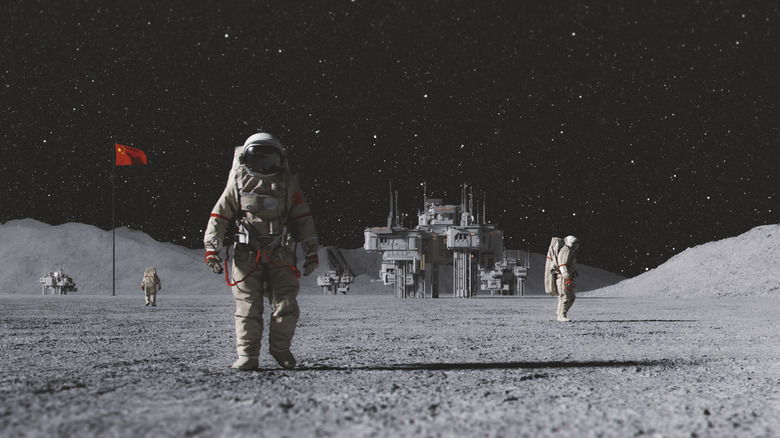
In August 2025, China tested Lanyue in a ground simulation replicating moon surface conditions, confirming that descent and ascent operations could work on real terrain. Propulsion tests for the Long March 10 rocket have also stayed on schedule. Meanwhile, robotic precursor missions like Chang’e-7, planned for 2026, aim to survey the lunar south pole and identify water ice deposits, laying the groundwork for future human missions. Although these milestones remain ambitious and could face technical or funding setbacks, China’s centralized planning and consistent political support give it a structural advantage over NASA, which faces shifting priorities and administrative changes.
Landing humans on the moon first would carry immense symbolic and strategic weight. Politically, it would strengthen the Chinese Communist Party’s legitimacy and project China as a leading space power. In trade and diplomacy, it could draw other nations into China’s lunar initiatives, such as the proposed International Lunar Research Station, and influence rules for lunar resource governance. Scientifically, mastering crewed lunar operations could drive advances in propulsion, materials, and in-situ resource utilization, giving China a potential lead in extraterrestrial infrastructure.
Achieving this milestone could also shift the global balance in space-related technology, with potential implications for national security. That’s because advanced lunar technologies may have dual-use applications in satellite operations, missile systems, and strategic surveillance. In medicine, China could gain a head start in space health research, studying human physiology, radiation protection, and life support systems in ways that could accelerate both space and terrestrial medical innovations. Accomplishing a crewed lunar landing would reshape the perception of space leadership for decades. Even though the U.S. remains a major player, its dominance in space exploration would face a clear challenge.