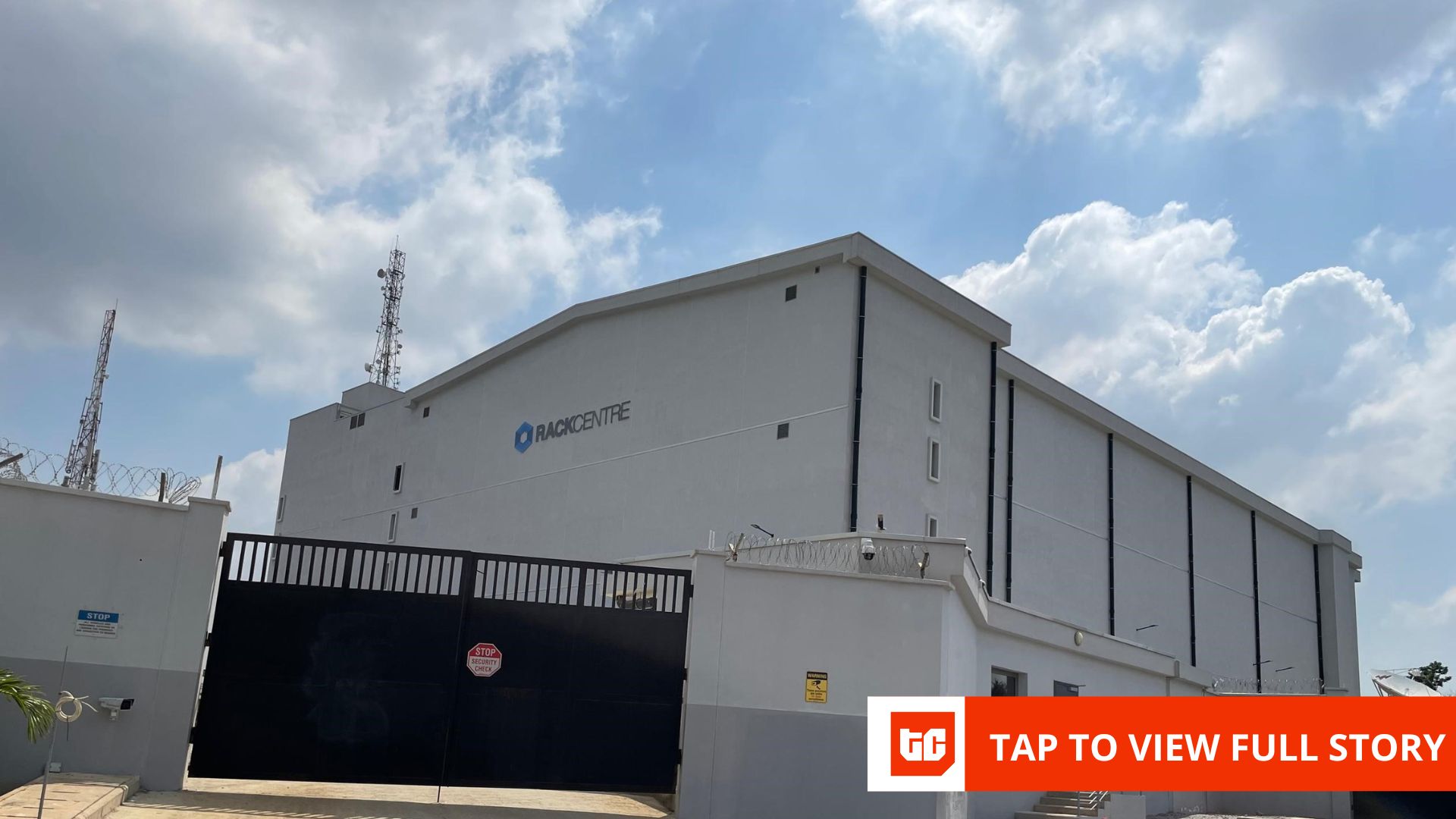
Nigeria’s data centre operators are being forced to rethink how they power their energy-intensive facilities as diesel prices hover around ₦1,000 per litre and the national grid struggles to deliver a stable 5,000 megawatts — far short of the needs of over 215 million people. For Rack Centre, the Lagos-based carrier-neutral data centre operator, the answer lies in a decisive shift toward gas and solar energy to keep operations running efficiently and support the surging power demands of Nigeria’s rapidly expanding digital economy.
Rack Centre’s Chief Executive Officer, Lars Johannisson, told on October 28, 2025, that energy efficiency is no longer an option but “the only option” for operators who want to stay competitive. “Data centres are digital assets, and they are very capex-heavy, often dollar-exposed,” Johannisson said. “Cost and energy optimisation is not a desired option; it’s the only one we have, both for ourselves and our clients.”
Data centres are the backbone of digital transformation, enabling cloud services, AI workloads, fintech operations, and enterprise computing. But they are also notoriously power-intensive. Globally, data centres consumed about 1.5% of total electricity or 415 terawatt-hours (TWh) in 2024, with projections suggesting that this figure could double by 2030. In Africa, annual power demand for data centres is growing at 20–25%, and in Nigeria, where electricity is unreliable and diesel remains expensive, operators face an even tougher challenge.
Energy costs now account for over 35% of total operating expenses for data centres in Nigeria, far higher than in many other regions. A single 1-megawatt data centre running on diesel backup generators can burn through about 270 litres of diesel per hour, costing over ₦275,400 per hour at ₦1,020 per litre of diesel.
“Energy is the elephant in the room,” Johannisson said. “As the sector grows from the current 25-megawatt installed base to 180–200 megawatts, the biggest question is: how do we energise that growth sustainably?”
Building for a hybrid energy future
To address this, Rack Centre is developing what Johannisson calls a “hybrid energy strategy,” combining natural gas and solar power to reduce its reliance on diesel and stabilise energy costs. “We are building on solar panels, which have become part of our business,” he said. “We also continue to build on gas generation because these are, today, the most convenient and cost-efficient ways to power a data centre.”
Gas-fired power generation offers several advantages in Nigeria’s energy landscape. Natural gas is not only cheaper, typically 30–60% less than diesel, but also cleaner and more stable in supply. By blending gas and solar, Rack Centre hopes to mitigate fuel price volatility and reduce its carbon footprint, aligning with both its clients’ sustainability goals and Nigeria’s broader energy transition agenda.
The move comes amid growing regional momentum for green data infrastructure. Africa Data Centres (ADC) and Open Access Data Centres (OADC) have both recently rolled out solar and hybrid energy systems in South Africa and Kenya, while exploring gas-based solutions for Nigeria. Rack Centre’s strategy, however, focuses primarily on Nigeria-first development, with solar and gas positioned as key pillars for both resilience and competitiveness.
Sustainability as a growth strategy
Rack Centre has long touted sustainability as one of its defining features. Founded in 2013, the company operates a Tier III-certified facility that has achieved an industry record, zero downtime in over a decade of operation. Johannisson says that operational reliability and environmental responsibility go hand in hand.
“Our clients, big and small, want the most energy-efficient solutions possible,” he explained. “They want to grow with us, but with the lowest carbon footprint achievable. That’s why we’re preparing through our gas and PV (solar) journey, to lead what we call sustainable digitalisation.”
The company’s latest 12-megawatt hyperscale-ready expansion embodies that philosophy. Designed with adaptive infrastructure, it can handle high-density racks, ranging from 40 to over 100 kilowatts, ideal for emerging AI and GPU-intensive workloads. These workloads demand far greater cooling and power efficiency, areas where Rack Centre is investing heavily to stay ahead.
“Our new facility is built for AI,” Johannisson said. “It’s flexible enough to handle future compute density while maintaining energy efficiency through design, whether through cooling, power optimization, or hybrid power integration.”
Nigeria’s policy landscape: collaboration, not confrontation
Despite widespread concerns about regulatory bottlenecks in Nigeria’s digital infrastructure ecosystem, Johannisson remains optimistic. He praises ongoing collaborations with agencies such as NITDA and the Nigerian Communications Commission (NCC) on policies related to data sovereignty, cloud adoption, and digital infrastructure.
“I don’t think there’s any policy slowing development,” he said. “In fact, I see policies in the making that will increase the sector’s growth rate. Discussions on data sovereignty, cloud-first strategies, and energy transition are very positive for the industry.”
He believes that Nigeria’s government and regulators can play a critical role in incentivizing energy investments for the digital economy. “We should continue discussing energy demand — not just now, but for the future,” he said. “Data centres are long-term infrastructure projects. Unless we build out energy capacity, we cannot close the digital divide or grow in line with the country’s youth profile.”
Competing through neutrality and uptime
Rack Centre also differentiates itself through what Johannisson describes as “cloud and access neutrality” — the ability to host clients from multiple cloud providers and network operators without preference. This neutrality, he argues, is essential for building trust and scalability in Nigeria’s digital ecosystem.
“Large cloud vendors prefer access-neutral data centres,” he said. “That’s part of what sets us apart. The biggest growth will happen in cloud and access-neutral environments — and that’s where we stand.”
Equally important is Rack Centre’s track record of uninterrupted service. “We are the only data centre that has been up and running since 2013 without losing one single second,” Johannisson said proudly. “That uptime is integral to who we are.”
This operational consistency, coupled with a diverse peering ecosystem of carriers, internet service providers, and enterprise clients, makes Rack Centre one of the strongest digital interconnection hubs in West Africa.
Beyond Nigeria: Regional opportunities ahead
While Johannisson insists Nigeria remains Rack Centre’s “first, second, and third priority,” he acknowledges the company is evaluating selective expansion opportunities in East, Southern, and North Africa, where cloud adoption is accelerating. “We could see similar demand patterns in East Africa, Egypt, and possibly other Northern African countries,” he said.
However, the CEO emphasises that Rack Centre’s immediate goal is to deepen its footprint in Nigeria, the continent’s largest and most promising cloud market. “We believe Nigeria represents the most relevant and dominant cloud opportunity in all of Africa,” he said.
Rack Centre’s gas-solar hybrid strategy may offer a glimpse of what the future holds — a model where sustainability, efficiency, and reliability converge. For Johannisson, it’s not just about cutting costs but redefining how Africa powers its digital growth.
“In the end,” he said, “sustainable energy isn’t just an environmental choice — it’s a business imperative. If we can solve energy, we can unlock the full potential of Nigeria’s digital economy.”