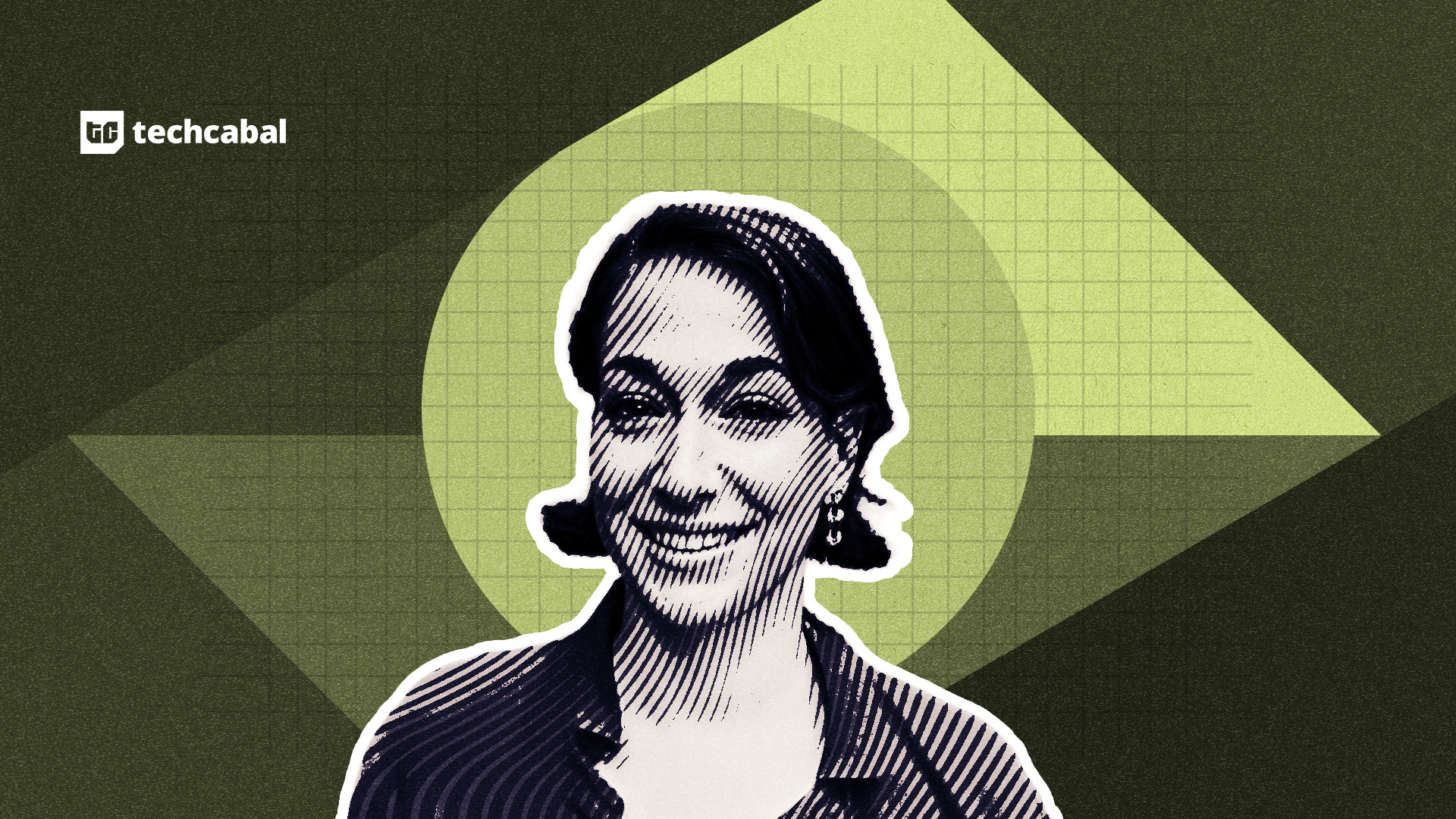
As an environmental engineer, Hannah Kates just wanted to clean up pollution. But with every career move, it was apparent that if you want real impact, you need to go further upstream. Now, as an American building free civic tech tools in Lagos, her biggest challenge isn’t the code; it’s convincing Nigerians she’s not trying to scam them.
Hannah Kates was “never that big on technology, especially not computer science,” partial only to specific missions and outcomes she cared about with technology as an enabling tool. This might seem strange coming from someone who now builds data tools and maps transportation systems. But for Kates, technology has always been just that; a tool. “It’s always just been something that is required to achieve the outcome I want,” she explains.
That outcome? Making cities work better for the people who live in them.
The engineer who wanted to clean sewage
Kates grew up in Florida and studied environmental engineering at the Georgia Institute of Technology, Atlanta. Her goal was refreshingly literal: “I wanted to learn how to clean up pollution. I wanted to learn how to clean sewage. Those are problems in the world. Let me learn how to solve them.”
After graduating, she worked for engineering consulting firms, doing exactly what she’d trained for. But something felt off.
“After I worked in engineering for a while, I started to appreciate the importance of policy and urban planning decisions that are made way before the engineers get involved,” Kates explains. “When we got involved as an engineering consulting firm, we were hired to focus within a specific box on certain problems that people had already prioritised for us.”
She couldn’t understand why certain neighbourhoods got built, why they connected to the sewer system the way they did, and why some issues were prioritised over others. “As an engineer, you’re really just executing on someone else’s vision,” she says.
If she wanted real impact, she needed to go further upstream.
Following problems to their source
Kates went to graduate school in New York City to study urban planning and policy. For four years, she worked in the New York City government’s digital innovation team, trying to influence decisions before engineers got involved.
It should have been perfect. But she discovered two new problems.
“First of all, things move very slowly, which can be quite discouraging,” she says. “And then I realised that a lot of times people are making decisions based on what they think is right and gut feelings, rather than real data.”
Even worse, “people will just roll out policies but then never actually study the impact to see if it achieved the goals they wanted or not.”
Kates found herself in endless conversations with other public servants about agreed upon good ideas that yielded no matching outcomes. “It feels more tangible to be able to produce a data analysis or piece of software rather than just having conversations for years,” she says.
So she learned to code; not in college, but years later, out of pure frustration. She was doing repetitive data analysis in spreadsheets until she realised that writing code could automate and streamline her process completely.
Technology wasn’t interesting to her. But solving problems was. And code happened to be the fastest way to solve them.
“The traffic in Lagos is horrible. Everyone knows this. The roads are really congested, and the waterways are an underutilised resource that people could use to bypass some of that traffic.”
— Hannah Kates
In 2021, Kates and her husband made a decision that would change everything: they moved to Nigeria.
They’d met at a university club called Engineers Without Borders and had worked on a water distribution project in Cameroon. “We both [have] always been interested in finding ways to focus our careers in that direction,” Kates explained.
To decide on Nigeria, they’d done what only an engineering couple would: Created a spreadsheet ranking system.
“We’re city people,” Kate explains. Lagos stood out for several reasons: It’s the biggest city in the most populous country in Africa. “I think Nigerians are more culturally similar to Americans compared to other places in Africa; more direct, which is helpful. The time zone difference wasn’t bad. And crucially, the big tech ecosystem was really appealing to both of us.”
The language factor was particularly important. Kates and her husband had worked in Vietnam, where they didn’t speak the language. “We were able to experience firsthand how limiting that can be. We had friends who spoke English, but because it wasn’t their native language, there were still certain [times] where it was just harder to connect on a deeper level.”
They visited Lagos multiple times before moving. COVID delayed their plans by two years. But in 2021, they finally made the move.
Kates has now lived in Lagos for four-and-a-half years.
The information gap
When Kates arrived in Lagos, she was struck by a gap she felt more information could solve. “The traffic in Lagos is horrible. Everyone knows this,” she says. “The roads are really congested, and the waterways are an underutilised resource that people could use to bypass some of that traffic.”
The potential time savings are enormous. Driving from Epe to the Island can take three hours. Taking the ferry? Forty minutes. Sometimes twenty, depending on currents.
“But I was just really surprised when I moved here and learned that a lot of people just never even think about the ferries,” Kates says. “They don’t know where they are. They don’t know where they go. It’s just not something that has ever crossed their mind. And there’s also not a lot of information about them online, or sometimes the information isn’t as accurate.”
There are other barriers—many Lagosians are afraid of water, and swimming isn’t widely taught. But the information gap felt solvable.
“Solving the information gap problem was something that felt pretty easy to solve,” Kates says. So she decided to build the Lagos Ferry Map.
Digging for data
Kates, alongside her team of data analysts and field contractors who collect data, are building the Lagos Ferry Map. “I think when people see that you can build something like that with such a small team, when you’re just really committed and passionate, and it’s clearly out there for free for the public, you kind of just have to show them that we’re committed, we’re in this for the right reasons,” she explains.
But getting the data isn’t always easy.
“The contractors face a little resistance at some of the ferry terminals when they show up and start asking questions. The staff working at the facility didn’t want to give them any information because they wanted some sort of official approval letter that explained the project.”
Even after collecting the data, Kates discovered something surprising: Almost all the ferries—even government-operated ones—work on a ‘fluid schedule.’
“Some of them say online that they have a specific departure time, but the reality is they still wait until the boat fills up before they leave,” she explains. “If you’re banking on that boat leaving at 7:30 so you can make it to a meeting on time, and then you realise it’s going to wait another 15 minutes till the boat fills up, that limits people’s ability to really rely on and trust the ferry.”
She was also surprised by how limited ferry service is on the mainland, where most Lagosians live. “There’s a huge stretch from Yaba up to Epe that’s just completely not served by ferries right now. I think that’s just a huge missed opportunity.”
“The contractors face a little resistance at some of the ferry terminals when they show up and start asking questions. The staff working at the facility didn’t want to give them any information because they wanted some sort of official approval letter that explained the project.”
— Hannah Kates
Building the technology was the easy part. The harder part? Convincing people she wasn’t trying to make money from it.
“When people hear that I’m volunteering my team’s time to work on some of these issues, we’re building the ferry map on our own, not to make money, but because we believe it’s the right thing to do, I definitely get met with skepticism,” Kates says. “People just always assume that you’re only going to do something if you’re going to make money from it.”
This was her real culture shock. Not the traffic, not the heat, not even the formality of calling people by honourifics. It was navigating public distrust.
“If I talked about these kinds of projects in the US, no one would question them because people are just so much more used to people doing these types of things out of genuine interest in trying to make things better,” she explains. “That’s also a privilege that comes with higher GDP per capita, where people can afford to fund passion projects.”
Kates’s solution is simple: show sincerity through action.
“The best I can do is just show my sincerity of how and why I’m excited about this and focus on the reason for doing it,” she says. “When people see that you’re sincere and genuine, and they’re able to see how progress can be made pretty quickly with a small team, that always impresses people.”
Setting up partnerships with government agencies has required the same patience and trust-building process. Public Tech Studio is currently piloting a data collection partnership with the Lagos State Waterway Authority.
What open data really means
Before the ferry map, Kates worked on open data projects at Stears, a data and intelligence publication based in Lagos. That’s where she refined her philosophy on what ‘open data’ should actually mean.
“Open data fundamentally is data that is made completely available to the public,” she explains. “The issue is just that governments provide open data in a format that isn’t user-friendly and is difficult to access.”
“It’s not just putting the data out there, making a spreadsheet available for download. It’s thinking about how we visualise this data to make it really easy to get the important insights, make it really intuitive.”
This is where her engineering background serves her well. “I’m just a very visual person. I usually just immediately start thinking about how I would want to visualise the insights from a data set.”
At Stears, she led the data visualisation training curriculum. She even briefly managed the marketing team because “they wanted me to help enforce better data analysis practices.”
“Stears really set the bar for what high-quality data-driven journalism and analysis looks like,” Kates says. “That level of rigour is still a gap in the media industry here.”
Building for the next five years
Since departing Stears, Kates has launched Public Tech Studio under which the ferry mapping project sits. Now, they’re working on projects even more ambitious than the ferry map.
“Our goal is to provide a holistic view of how all these different public transportation services connect with each other—or don’t,” she explains. They want to map all forms of public transport so people can “be more intentional about assessing government plans to see if planned expansions will do a good job of solving mobility and connectivity gaps.”
But the project she’s most excited about might be the most fundamental: population estimates.
“No one knows how many people actually live here, and that’s so important for basically any work anyone’s doing,” Kates says. “If you’re in the private sector, you need to know how many customers there are. If you’re in the public sector or nonprofit, you need to understand how many people need help or services.”
Multiple research institutions have produced population estimates using satellite imagery and machine learning, with densities estimated at the square-kilometer level. “But those resources aren’t very well known, and they’re all published in these giant big data files that require geospatial data skills.”
Public Tech Studio plans to clean all these estimates, validate which methodologies are most reliable, and “create very simple aggregated versions that people can download, where you can get LGA population estimates across these different data sources.”
It’s unglamorous work. But it’s exactly the kind of upstream problem-solving that Kates has been chasing her entire career.
“No one knows how many people actually live here, and that’s so important for basically any work anyone’s doing. If you’re in the private sector, you need to know how many customers there are. If you’re in the public sector or nonprofit, you need to understand how many people need help or services.”
— Hannah Kates
The long view
Kates is cautiously optimistic about African tech’s future.“I’m really nervous about the impact of AI on job opportunities for junior tech talent,” she admits. “It’s going to be so much easier for companies to leverage AI to accomplish the same work. Training people takes a lot of energy and resources.”
But she also sees opportunity. “Nigerians are really quick to adopt new technology. There are a lot of people learning how to use these tools and leverage them. I think there’s hopefully an opportunity for Nigerians to actually get ahead compared to people in other parts of the world.”
There’s also an added benefit in the civic tech space, “I believe AI will be good for civic tech because it will enable cash-strapped non-profits and advocacy groups to build tech solutions more inexpensively. Hiring quality software talent has been a big cost barrier for these types of organisations. I’m really bullish on vibe coding. I want to work with nonprofits to coach them through the process of building products with AI and showing them what’s possible on their own.”
All in all, Kates is trying to pace herself and not “do too many things at once.” So far, the reception to the ferry map has been encouraging.
“I’m really optimistic,” she says simply.
Recommended Reading: She left FIFA to build a low-fee school in South Africa