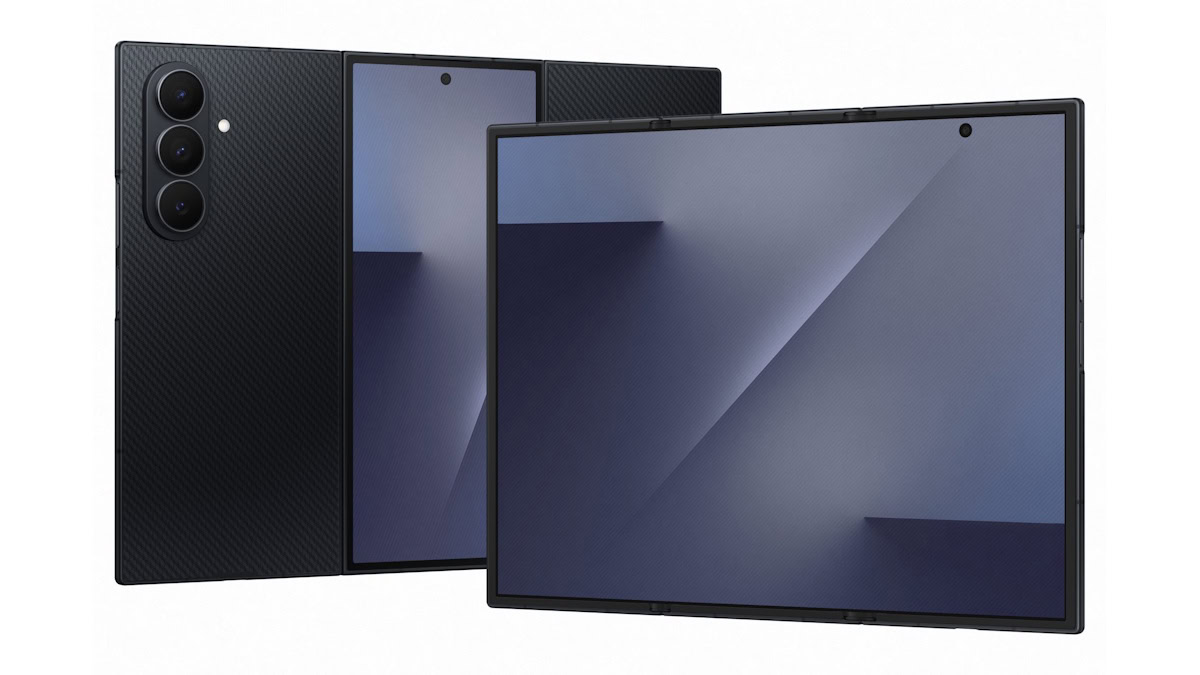
The Samsung Galaxy Z TriFold is finally official, and I’m very excited about this form factor. Conventional book-style foldables have always felt a little too small for my taste, so the prospect of a 10-inch display that fits into my pocket has me sitting up and taking notice.
Despite that intrigue and excitement, though, I can’t help but feel concerned about the TriFold for one simple reason: That gigantic folding screen is still made of plastic.
Foldable screens are fragile, and the TriFold is no different

The biggest issue with any folding screen, including the TriFold display, is that they’re made out of plastic rather than glass. Many folding screens have a layer of ultra-thin-glass (UTG), but this sits below a non-removable plastic screen protector. And the rest of the folding screen is made of plastic anyway.
Plastic scratches more easily than glass, which suggests that Samsung’s new foldable will gain more scratches over time than a conventional Android phone with a glass display. We have seen screen durability advancements in recent years, like impact-resistant films, impact-resistant gels, and thicker UTG layers. Nevertheless, these solutions don’t change the fact that folding screens can be punctured with a fingernail.
What do you think of foldable screen durability in 2025?
0 votes
Scratches aren’t the only concern I have regarding foldable screens. I’m also worried about long-term reliability, as there’s no shortage of stories about folding screens breaking after two or three years. Some of these broken displays are attributed to sudden temperature changes (e.g., leaving an air-conditioned home on a snowy winter’s day), but I really don’t want to find out the hard way whether the Galaxy Z TriFold will suffer this same fate.
Aside from durability concerns, there’s the tactile experience: Folding screens still feel like they’re made out of plastic, and that’s a turn-off for me. Touching these panels feels soft compared to conventional glass displays. So even if these screens were as durable as glass, you’d have a tough time convincing me.
Don’t want to miss the best from Android Authority?


Glare is another issue I have with many folding panels compared to glass screens, as the combo of direct sunlight and poor oleophobic properties makes for a sub-optimal viewing experience when outdoors. This has forced some foldable makers to implement anti-glare layers or increased display brightness to compensate for the reflectivity.
Finally, foldable phone manufacturers haven’t fully eliminated the display crease, but the Galaxy Z TriFold ups the ante with two creases. Will both creases stand out like sore thumbs on the new foldable phone? That’s one of several unknowns at this stage.
I have reservations, but the form factor is exciting

Despite my clear concerns about the durability and quality of the Galaxy Z TriFold’s main screen, I’m still excited about Samsung’s first dual-folding foldable phone. The ability to carry a 10-inch screen in your pocket seemed like science fiction back in 2015, but HUAWEI and Samsung are making this a tantalizing reality. Whether you’re watching videos, working, or gaming, this form factor certainly seems like the definitive foldable phone experience.
In any event, the Galaxy Z TriFold isn’t likely to change your mind if you’re like me and not a fan of foldable phone screens in the first place. But I’d be lying if I said I wouldn’t buy a TriFold or even the Mate XT at a bargain price.
Thank you for being part of our community. Read our Comment Policy before posting.