Spain has a world record that is difficult to justify; it is the country with the most registered electricity suppliers. For years, the official list exceeded 900 companies, although more than half never had real activity. A “ghost market” that generated confusion, operational risks and an opacity inappropriate for a strategic sector.
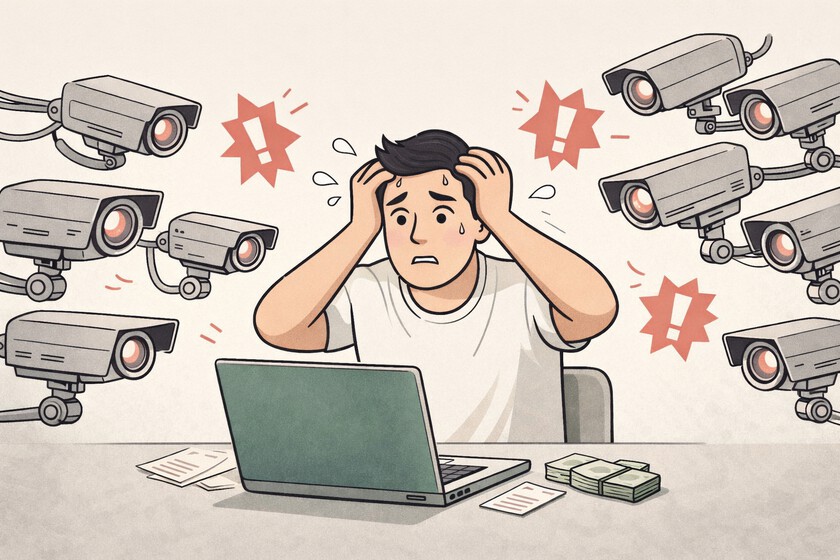
Now, for the first time, the Government has decided to put things in order. In the last twelve months, the first disqualifications have begun to cascade and everything indicates that the registry will undergo a massive purge.
A total screening. The latest report from the CNMC confirmed what the sector has sensed for a long time. Of a census of more than 900 marketers, only 416 companies had clients and purchased energy effectively. The rest—hundreds of societies—remained in a kind of permanent pause, registered but without activity. And the law is clear about this. Both Royal Decree 1955/2000 and Law 24/2013 allow the Ministry to withdraw the authorization of any marketing company that spends a year without operating or that fails to comply with its economic and technical obligations.
According to information that El Periódico has had access to, the Ministry for the Ecological Transition has disabled some 40 marketing companies in the last year, the majority without clients or without energy purchases for more than twelve months. The cleanup is based on the systematic application of article 74, a legal mechanism that had been underused for years.
A process that has come into action. The process is already observed in the Official State Gazette itself, where the disqualification of Virtual Power Plant & Smart Energy SL was published in October for not presenting the required guarantees to the market operator. The resolution also ordered the automatic transfer of its clients to a Reference Marketer, in accordance with Law 24/2013.
Similar cases are also recorded in CNMC files, such as INF/DE/368/23, where it was documented that a marketing company accumulated non-payments, insufficient guarantees and zero energy acquired to supply its clients. It worked only on paper.
What does this mean for the market and the consumer? Although it may seem like a technical matter, the purge directly affects citizens. According to Tarifa y Luz, the elimination of ghost marketers implies: less risk of a company going bankrupt overnight, more control over small operators without real solvency, more security and continuity of supply, since the regulations require customers to be automatically transferred to a Reference Marketer if their supplier goes down. And, finally, a less opaque market with a lower risk of fraud.
This is a systemic problem: some of these small firms accumulated non-payments to Red Eléctrica (REE) and the Iberian Market Operator (OMIE), generating costs that ended up absorbing the entire electrical system. Others promised unviable prices and, unable to Buy energy on the daily market, simply disappeared.
But, is it so easy to open a marketing company? Spain is the only European country where a prior administrative license is not required to operate as an electricity marketer. Opening a company of this type is relatively simple: it is enough to present to MITECO a communication of start of activity accompanied by a responsible declaration of compliance with the requirements, according to the official file of the Ministry itself.
First, of course, the interested party must prove to REE and OMIE their technical and economic capacity: present financial guarantees, demonstrate that they will be able to buy energy on the market and have computer systems to communicate daily with the system operator. According to the consulting firm Audynforsystem, this accreditation is the true operational filter, but it has not prevented the proliferation of small local or merely registered marketers.
How does debugging continue? The objective is not to reduce the number of marketing companies per se, but to eliminate: those that have never operated, those that do not meet guarantees, those that default on payments or generate risks to the system. According to Expansión, 416 marketing companies are still active, 335 have already been deregistered in recent years and 137 are under investigation for inactivity.
The CNMC and MITECO will continue to apply article 74 of RD 1955/2000 to automatically disqualify those who have not been active for a year. Furthermore, recent resolutions show that anyone who breaches guarantees or defaults will be disqualified, with mandatory transfer of clients. THE message is unequivocal, there will be fewer marketers, but more reliable ones.
It starts to get organized. For years, no one hit the brakes. Now, with defaults, regulatory tensions and an electrical system hit by unprecedented volatilities, the Government has decided to put things in order. The paradox is evident, while Europe tries to attract more competition, Spain has had to do just the opposite: reduce a hypertrophied market that never reflected real activity.
Ongoing purging is not just administrative cleanup. It is an attempt to rebuild trust in a sector that needs stability to face the country’s great energy challenges: electrification, storage, digital networks and renewable transition.
Imagen | Freepik
WorldOfSoftware | 2026 has not yet started but it has already managed to produce the first bad news: the light goes up