The AYANEO Pocket AIR Mini sets a new bar for what to expect from a budget handheld. This level of performance and build quality in a sub-$100 handheld should have other companies rethinking future releases.
AYANEO has been synonymous with premium gaming handhelds for years, so when it announced the sub-$100 Pocket AIR Mini, it immediately caught my attention. This is by far the cheapest device the company offers, but what corners did it cut to hit this price point?
After testing the device, I’m happy to say that it sacrifices surprisingly little. It’s easily one of the best options when it comes to entry-level handhelds, with a level of performance that outshines everything in its price bracket.
It’s so good, in fact, that I’m starting to think it might shift the entire market. Companies that previously charged twice as much for the same level of performance now need to do some serious soul-searching before releasing another budget or mid-range device. But first, let me tell you why the AYANEO Pocket AIR Mini is such a game-changer.
Premium design, budget pricing

Nick Fernandez / Android Authority
As the name implies, the Pocket AIR Mini adopts its design language from the Pocket AIR, which was a breakout handheld for AYANEO in 2023. A lot has changed in terms of chipsets since then, but thankfully, the design still feels modern.
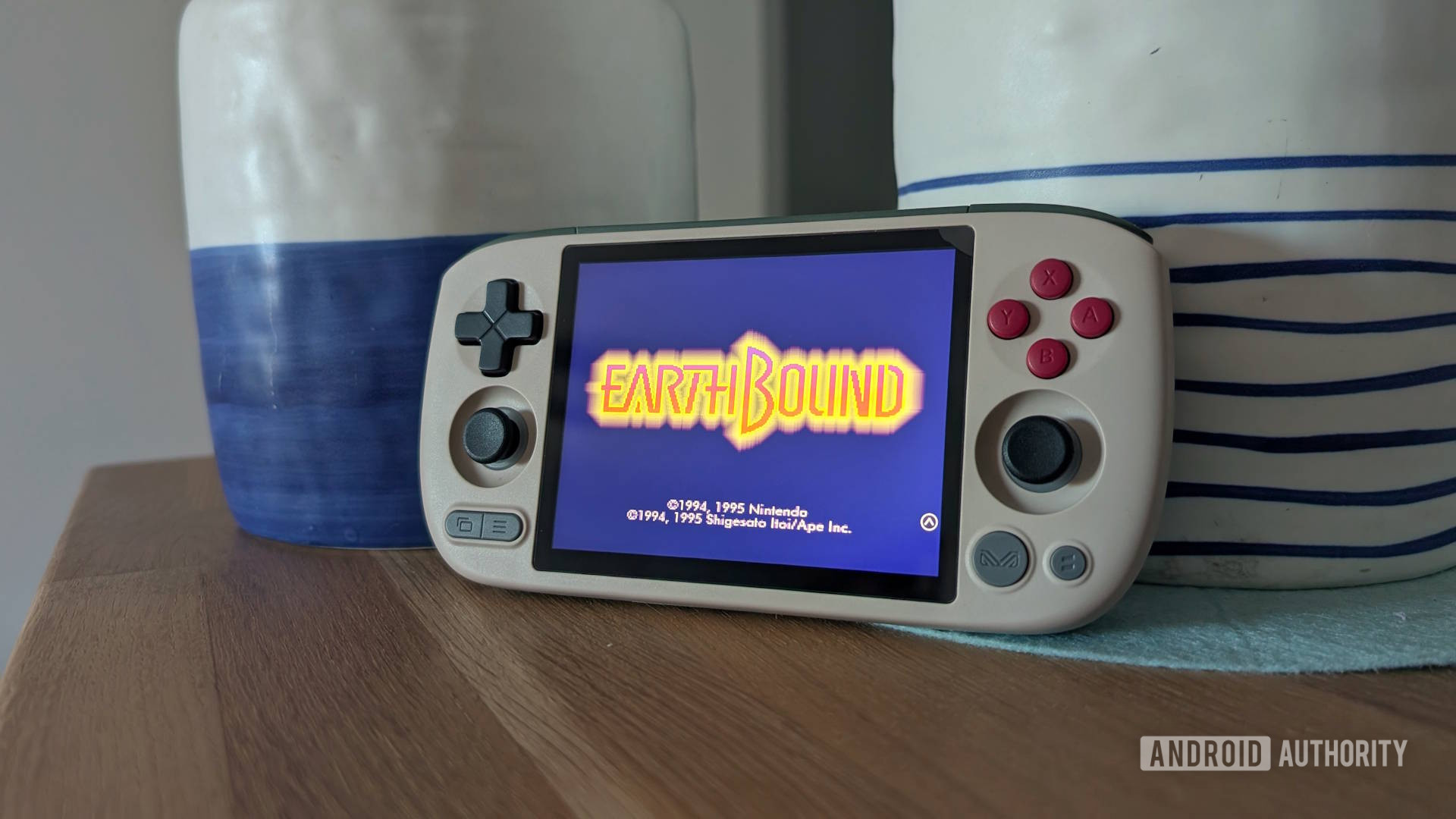
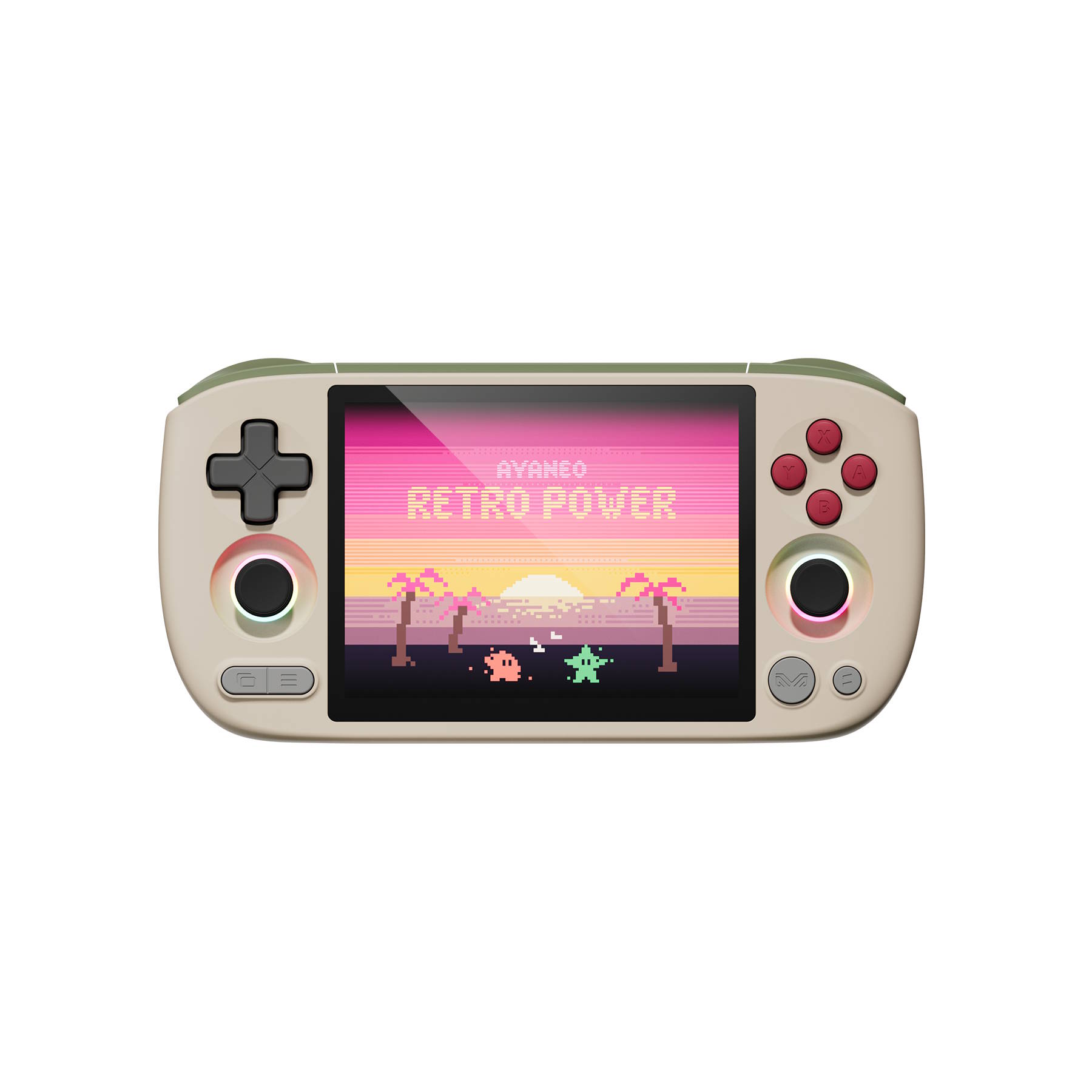
It replaces the all-glass front that most of the company’s handhelds (and increasingly, those of every other company) use with a plastic build that feels sturdy in the hand. The 4.2-inch 4:3 display keeps things nice and compact, with a nice weight to it. Despite the plastic build, this thing doesn’t feel at all like a toy.
AYANEO’s premium build quality is still on show, despite the budget pricing.
Speaking of the display, I found it to be excellent for retro console emulation. It gets nice and bright, with a pre-installed screen protector to prevent scratches. I don’t typically like screen protectors, and as punishment, the top right corner immediately came loose when I removed the outer layer. You will see this in every photo, just as I saw it in my dreams every night while testing the device.
The screen itself is still a 60Hz LCD panel, but it’s a step above other budget handhelds. The 1,280 x 960 resolution offers perfect 4x integer scaling for NES, Genesis, PlayStation, and N64, plus perfect 2x upscaling for Dreamcast.

Nick Fernandez / Android Authority
The more I test different Android gaming handhelds, the more I find myself drawn to these tighter aspect ratios. My first devices were all widescreen, and that remains the most popular aspect ratio for mid-range handhelds, such as the Retroid Pocket Flip 2. But there’s something extra cozy about retro aspect ratios that’s hard to appreciate until you get one of these devices in your hands. Old games look just as I remember from my childhood, without the letterboxing to remind me that I’m playing on an operating system designed for phones.
Thankfully, both retro and relatively modern consoles are comfortable to play. AYANEO has managed to cram a full set of controls onto the device, featuring two inset Hall-effect sticks, large shoulder buttons, and comfortable analog triggers. The buttons are on the small side, as are the sticks, but they’re very quiet. I’ve played this on the sofa next to my spouse without issue.
In addition to the standard array of buttons, there are two programmable buttons located next to the shoulder buttons, which is great for hotkeys. AYANEO has also included its standard AYAHome button, which pulls up a sidebar with various performance tweaks. More on that later.

Nick Fernandez / Android Authority
My only complaint about the design is the placement of the speakers. The downward-firing speakers sound fine, but they’re placed right where my pinky fingers want to rest when holding the device. This is similar to issues our readers have complained about on phones, but it’s the first time I’ve experienced it on a gaming handheld.
The speaker placement sometimes caused discomfort in longer gaming sessions.
I’ll get to the performance below, but there are a few systems I didn’t enjoy on this handheld for various reasons. The first is the PSP. Widescreen games appear too squished on this display, and the letterboxing is too extreme for my taste. Playing stick-heavy games and systems also quickly fatigued my thumbs, so I also avoided most first-person shooters. Finally, there’s no video out, so Nintendo DS games were limited to a single screen, which isn’t ideal for most titles.
Still, the fact that this has sticks at all means it enjoys broad compatibility. That’s further boosted by the surprisingly incredible performance I managed to get out of this machine.
Unbeatable performance for the price

Nick Fernandez / Android Authority
The AYANEO Pocket AIR Mini comes in two configurations, one with 2GB of RAM and 32GB of storage and another with 3GB of RAM and 64GB of storage. I tested the latter, which I consider a better buy, but both are powered by the MediaTek Helio G90T chipset.
This is a completely new chipset for AYANEO, and to my knowledge, it’s never been used in a gaming handheld before. I was very interested to see how it shapes up, so the first thing I did was run it through our standard suite of benchmarks. Find the results below, compared against similarly priced handhelds in the MANGMI AIR X and Retroid Pocket Classic.
Unsurprisingly, the Snapdragon G1 Gen 2 in the Retroid Pocket Classic outperforms the other two in our GeekBench CPU test. That device costs nearly twice as much as the Pocket AIR Mini at $130, but it has one clear weakness: its GPU. The Pocket AIR Mini hits a much better balance between CPU and GPU performance than either device.
In terms of emulation performance, the limitations of the MANGMI AIR X are felt a little sooner, but the other two powered through all retro gaming tasks I threw their way. Both were even capable of some PS2 and GameCube emulation, although the Pocket AIR Mini was the more comfortable choice due to its screen and control layout.
The Pocket AIR Mini punches well above its price in performance.
To be clear, this is not a foolproof PS2 and GameCube emulation machine. Most games were playable, although they experienced frame drops in demanding sections. Others crashed or failed to load at all. Combined with the smaller sticks, it isn’t the best experience. You might be able to achieve better performance by tweaking settings, but you’ll have to forgo niceties like upscaling. It’s shockingly good for the price, but still notably worse than larger, more powerful (and expensive) alternatives.
The handheld started to heat up when pushed to the limits, but the powerful fan made quick work of it. The heat never reached my hands, nor was it an issue when sticking to the retro consoles the Pocket AIR Mini excels at.

Nick Fernandez / Android Authority
I’ve seen reports that the Pocket AIR Mini can even emulate some PC games, but I didn’t have much luck in my testing. The Mali GPU is a major limiting factor, as is the paltry internal storage. Dedicated tinkerers might be able to get some lightweight games playing, but don’t buy this device if that’s what you’re after.
Battery life was also impressive. The 4,500mAh battery got me anywhere from four to eight hours of game time, depending on the system, shaders, and other factors. Like in other tests, the device shone brightest while playing my favorite retro games from the SNES and Genesis eras, where it could run for hours without needing to be topped off. It also sipped battery on standby, losing only one or two percent overnight.
Charging speeds, however, are pretty slow. On average, it took a little over two hours to charge from 10% to full. That’s not awful by any means, but don’t expect a quick 10-minute top-up to get you very far.
Android 11 is back, baby

Nick Fernandez / Android Authority
When the Pocket AIR Mini was first announced, one of the biggest headturners for me (apart from the price) was the fact that it’s running Android 11. 2020’s version of Android isn’t ancient by any means, but compared to the rest of AYANEO’s lineup, it’s an anomaly. In fact, even the company’s first Android handheld, the original Pocket Air, shipped with Android 12.
It’s not clear why AYANEO decided to go with such a dated operating system, but it may have to do with the amount of RAM. The lowest-spec Pocket AIR Mini has just 2GB of RAM, which may be an issue with newer versions of Android that run more features in the background.
Regardless, the overall experience is the same as other AYANEO handhelds. It’s mostly a stock experience, with a few of the company’s proprietary apps thrown on top. The frontend, called AYASpace, is still a mess. I quickly swapped to another frontend, ES DE, with the new iiSU theme in this case.

Nick Fernandez / Android Authority
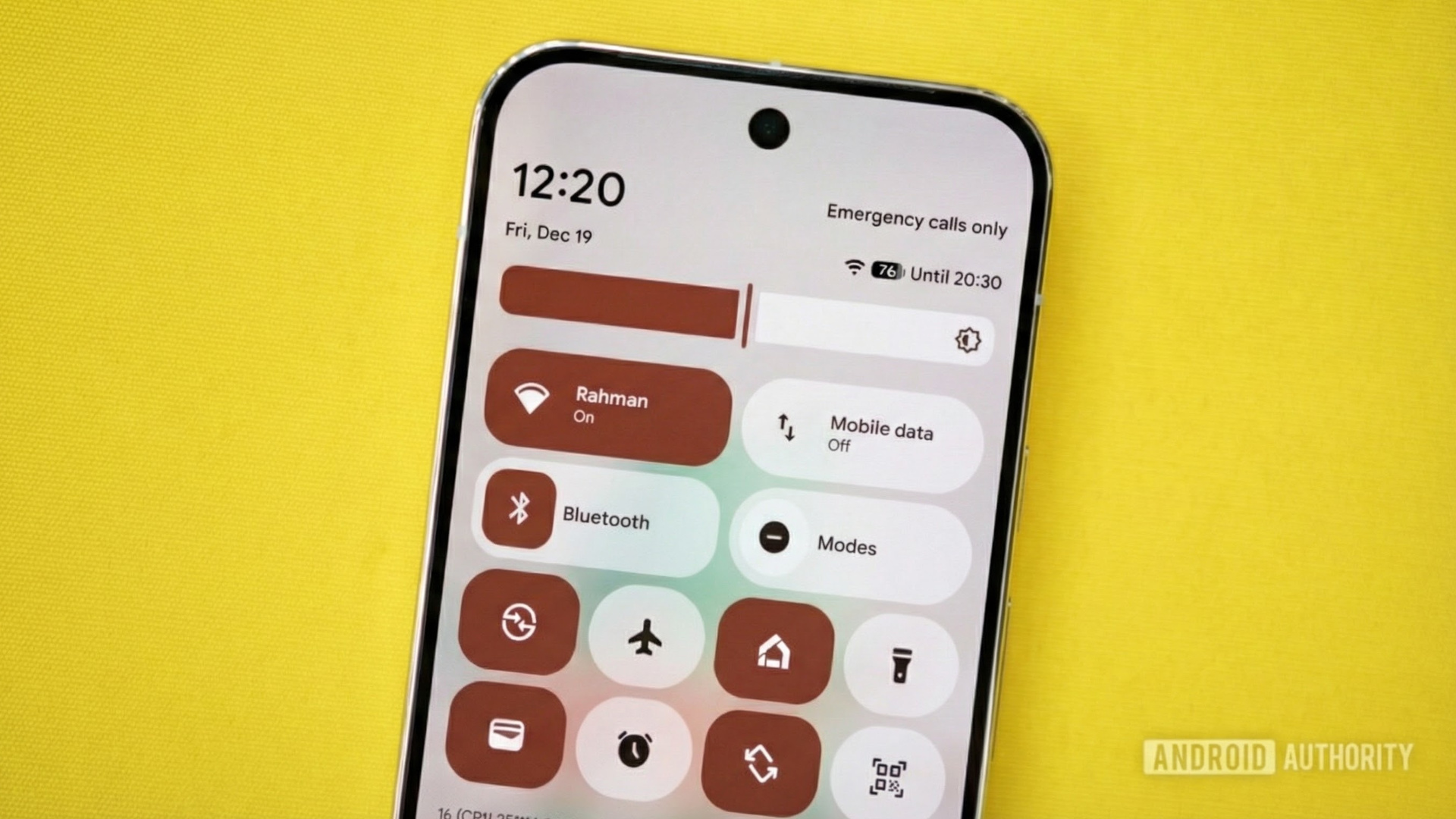
I mentioned the AYAHome app earlier, and it’s really the only menu I ever needed to open. As much as I enjoyed the trip down memory lane every time I pulled down the notification shade, performance toggles are all accessible by pressing the large dedicated AYAHome button. It’s also where you adjust brightness, turn on/off WiFi, adjust controls, and even check for updates. You can do pretty much everything without engaging with Android’s native menus at all.
Android games are a nice addition, but the limited storage space will be an issue for larger games.
But this is an Android device, which means Android games are on the table. That’s a huge advantage over Linux devices, which typically dominate the budget space. Surprisingly, the Pocket AIR Mini had enough power to run seriously demanding Android games like Genshin Impact, but the limited internal storage space means you’ll probably want to keep those to a minimum.
AYANEO Pocket AIR Mini review verdict: Is it worth it?

Nick Fernandez / Android Authority
If you are in the market for your first gaming handheld and don’t want to spend a fortune, the AYANEO Pocket AIR Mini is easily one of my top recommendations. It boggles my mind how far these gaming handhelds have come in the past few years, and the fact that virtually all of the games I enjoyed in my childhood are playable on a sub-$100 handheld is both impressive and humbling.
I feel like we’re right on the cusp of seeing a new wave of affordable Android gaming handhelds, and it’s surprising to see AYANEO at the forefront. The company released this handheld alongside the flagship-killer KONKR Pocket FIT ($239 at Indiegogo), which is an interesting direction for the company that’s best known for pushing the limits of what’s possible, but doing so with more premium price tags attached.
The Pocket AIR Mini is both the most affordable and the most versatile budget gaming handheld.
It’s also worth mentioning that AYANEO has already teased another budget device, called the Code R1, which CEO Arthur Zhang has stated might come out early next year. We don’t know anything about this, but if it’s as good as the Pocket AIR Mini, it could be another winner.
In terms of devices you can buy now, the MANGMI AIR X ($89.99 at Manufacturer site) is a great alternative. It doesn’t quite go punch for punch with the Pocket AIR Mini in terms of specs, but the 5.5-inch widescreen display is great for PSP emulation.
If you can spend a little more, the Retroid Pocket Classic ($149 at Amazon) is another great alternative. I was super impressed with the G1 Gen 2 chipset, but the Game Boy form-factor limits what’s fun to play on it. It also doesn’t have any sticks, so forget about systems like the N64 or GameCube.
At the end of the day, the AYANEO Pocket AIR Mini is both the most versatile and the most affordable option when it comes to budget Android gaming handhelds. Indiegogo pre-orders are finally shipping now, but new orders made via the official website will start shipping later this month.
Great build quality • Perfect retro screen • Exceptional performance for the price
MSRP: $89.99
The ultimate budget gaming handheld.
The AYANEO Pocket AIR Mini is an outstanding sub-$100 handheld, boasting superb build quality and performance.
Positives
- Great build quality
- Perfect retro screen
- Exceptional performance for the price
- Comfortable and quiet controls
- Unbelievably affordable
Cons
- Not great for PSP
- Smallish sticks
Thank you for being part of our community. Read our Comment Policy before posting.