The record-breaking 12 nominations at the Game awards this year was beyond the wildest dreams of Guillaume Broche when he first began inking out Clair Obscur: Expedition 33 as a personal project while working at Ubisoft.
Before selling more than 2m copies, the narrative-driven roleplaying game with “a unique world, challenging combat and great writing” was a technical demo called We Lost. It was Broche’s appetite for risk and a few hopeful Reddit posts that would create the game’s world of Lumiere and its struggle against the Paintress.
“I was doing like eight hours per day after work and not sleeping at all for a few years,” Broche says. And while he would be joined by Tom Guillermin on the programming side and Francoise Meurisse as producer, the next few members of the nascent studio – Lorien Testard, lead composer and Jennifer Svedberg-Yen, lead writer – would only come to Clair Obscur by chance, via social media.
Testard, a guitar teacher at the time who had never composed or published any music commerically, was discovered by Broche on SoundCloud. “We liked the same philosophy in games,” says Testard, who had been writing music inspired by his favourite titles. Similarly, Broche found his art director, Nicholas Maxson-Francombe, through personal works he posted on ArtStation. “We are all deeply engaged in our subject areas,” says Svedberg-Yen, who says that was what bonded the team together. “If you listen to Nicolas talk about art or Lorien talk about music, it’s just something that fills our minds and our days.”
Svedberg-Yen, meanwhile, had come from the world of finance. She saw Broche’s Reddit post and auditioned to not only write but also to voice some of the prototype characters of Clair Obscur, namely Maelle and Lune. Despite a deep love for video games, storytelling and a childhood engrossed in novels, Svedberg-Yen had not considered it as a career option. “It never crossed my mind as possible. As the adage goes, for Asian parents [it’s] doctors, lawyers, or finance.”
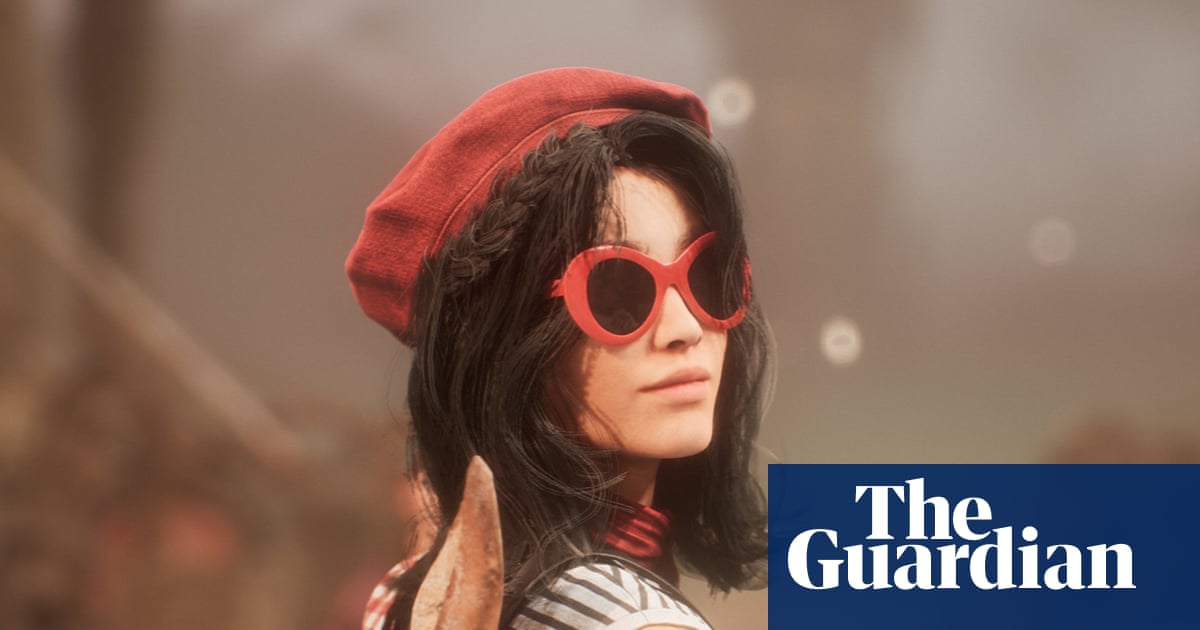
With a rudimentary team assembled under the banner of a new studio, Sandfall Interactive, they rebooted We Lost as Clair Obscur. It was there a world took shape and the gained its unmistakeable Belle Époque setting. “There’s a specificity,” Svedberg-Yens says. “I think that vision gets diluted when you’re trying to appeal to too many people.”
“It’s not meant to be French propaganda,” jokes Broche, about the game’s very Gallic aesthetic. The characters yell putain and merde, there are berets and extremely scary mimes not only because it’s fun, he says, but born from a desire to make something “sincere and authentic”.
Same goes for the story. Clair Obscur’s narrative drives the game forward and, as lead writer, Svedberg-Yen says it all has a “grounding and a basis in truth”.
“We are all first-time writer and game developers in this sense … and so we kind of only know instinctively how write to what instinctively comes from within. And for a lot of the characters in those particular situations, to write them [you] have to really delve into the parts of my life that resonate with the situation that they’re in.”
According to Svedberg-Yen, a conversation Broche had with his mother became core to the story’s emotional heft. When he asked her what would be the worst thing that could possibly happen, his mother responded saying it would be to lose her children. “The story deals with a lot of trauma,” she says, and that process of writing like that was often a scary process. “If people don’t like it, they don’t like you.” It was this ability to be vulnerable and open a communicative environment that Broche believes contributed to the success of the game.
Despite an anxiety in the industry about the rise of AI in the development of video games, the team at Sandfall isn’t worried – especially Testard, who composed the game’s orchestral score based off the narrative beats of the game and the eponymous concept of clair obscur (or chiaroscuro), AKA the interplay of light and dark. “Music is the language of the soul,” he says. In fact, the evolution of technology like Unreal Engine 4 and the later 5, which the game runs on today, made a lot of the game possible. “More games will be 3D, because we have a lot of tools now,” says Broche, who describes the budget of his game to be on the “lower end of AA.”
The team at Sandfall have been overwhelmed by their success. The French president, Emmanuel Macron, lauded the game as “shining example of French audacity”. None of them expected the experience of Clair Obscur to resonate so deeply with so many people. “I’ve gotten a lot of very heartfelt messages from players who have experienced loss in some way and who have felt that the story helped them deal with their grief or change their relationship with grief,” Svedberg-Yen says.
“What’s really cool is I’ve gotten tons of messages from creatives, writers, aspiring writers who felt creatively drained or just felt like they wanted to quit, but then the game inspired them to start again and they started creating their own art again, to start writing.”