Startups On Our Radar spotlights African startups solving African challenges with innovation. In our previous edition, we featured seven game-changing startups pioneering aquaculture, financing, funding, and healthcare. Expect the next dispatch on December 19, 2025.
This week, we explore seven African startups in the health, education, travel, and automotive sectors and why they should be on your watchlist. Let’s dive into it:
Zof AI wants to automate the entire software-testing lifecycle with specialised AI agents (AI, USA)
Founded by Kevin Kissi, a former engineer at Microsoft and the US Bank, Zof AI addresses the inefficiencies of manual software testing, which is often slow and limited in scope. At Microsoft, he saw how manual testers and separate units handling security, compliance, privacy, and accessibility, all needing to validate a product before release. These workflows made testing slow, fragmented, and expensive. Kissi left Microsoft with the insight that AI agents could fully automate every layer of software testing, from generating test cases to executing them at scale.
Zof AI’s platform runs software tests using 40 specialised AI agents, with each one dedicated to a specific testing category such as unit testing, integration testing, accessibility, security, device emulation, localisation, or SQL-injection detection. Users upload a requirements document or let the system generate one if none exists, which will allow Zof AI to automatically crawl the application, learn its behaviour, generate test scenarios, and assign them to its agent network. Inside the platform’s dashboard, users can start tests, target individual agents, or schedule automated runs that execute in the cloud, even when the user is offline.
Results of tests may include bug reports and analysis, and improvement suggestions. The system scores every developer based on bug frequency in their code, the speed at which they fix it, and historical quality. Zof AI integrates with GitHub, Slack, Asana, and a suite of enterprise tools.
The startup operates a tiered subscription model that includes an entry plan of $99 monthly for 120 credits and access to three agents, a higher tier at $599 monthly for 8,000 credits and full access to all 40 agents, and enterprise pricing, which is handled through corporate licensing deals. Zof AI is transitioning to a new pricing system that will price each agent individually and introduce team and business billing tiers.
Zof AI uses a mix of internally fine-tuned models and external large models, like Llama 70B and Mistral, and assigns different underlying models to each agent type depending on which performs best for its task. These models are trained on data that combines synthetic datasets, scraped public-domain materials, and open datasets. Since launching in Q4 2025, Kissi claims that Zof AI has raised $250,000 from angel investors, onboarded 50 startups, 10 medium-sized companies, and one major enterprise client in France, and is currently raising its seed round.
Why we’re watching: Competing platforms, like Katalon, applitools, testsigma, and Tricentis, still require recordings, pre-written test cases, or human-in-the-loop inputs. Zof AI’s differentiator lies in its ability to crawl applications, interpret requirements, autonomously generate hundreds of test cases, and deploy 40 specialised agents to those tests. The company is also preparing to launch an always-on feature that continuously tests software by monitoring codebases and documentation without requiring a user to manually trigger a test.

My Oga Mechanic wants to save Nigerian car owners from unreliable mechanics and expired papers (Autotech, Nigeria)
Founded by Kefas Longshak, My Oga Mechanic was born from personal frustration. In 2016, Longshak bought a Volkswagen Passat, then spent over a year being exploited by mechanics when the car got faulty. Recognising that many vehicle owners lack technical knowledge and struggle with trust, he built My Oga Mechanic as a single mobile application to handle all vehicle needs, from documentation to diagnostics and repairs.
Users can renew and register all vehicle documents, including change of ownership, vehicle licenses, tint permits, and driver’s licenses. They can also book vetted mechanics for two types of repairs: on-site fixes (with a flat ₦10,000 [$6.90] logistics fee) or in-shop repairs at a mechanic’s workshop. Longshak claims that My Oga Mechanic operates a growing marketplace of over 2,000 mechanics, spare-parts vendors, and service centres across Lagos. Each vendor goes through a multi-step verification process that includes identity checks with the national identification number (NIN), on-site visits, skills assessments, and provides dedicated agents to support mechanics who don’t own smartphones.
Users get full cost visibility with mechanics providing estimates for necessary autoparts and workmanship before a job begins. Payments are split into two. Mechanics receive an upfront amount to buy parts and then get the balance only after the user confirms completion.
Every repair comes with repair protection insurance (charged at an extra 1% of the repair cost) to cover unexpected damage during vehicle repair. My Oga Mechanic also supports accident repair claims for users with third-party or comprehensive insurance, by handling the entire claims workflow between service centres and insurers.
Its flagship feature is MechaAI, an automotive diagnostic AI agent that lets users describe car symptoms and chat about issues that come up with their vehicles. It can also make suggestions for simple fixes or recommend verified mechanics. MechaAI pulls from a large internal database of repair manuals and technical data, and is built on a custom AI model that sits on top of Google Gemini to handle natural-language conversations. Additionally, the platform handles document renewals, delivering updated papers directly to the user’s doorstep.
The platform runs on a subscription model. Users pay ₦6,000 ($4.14) per month for a primary vehicle and ₦3,500 ($2.41) for each additional vehicle. Subscribers get unlimited MechaAI access, free and timely document renewals, and no booking fees, meaning that subscribers pay only for actual repair parts and workmanship. Non-subscribers pay ₦1,000 ($0.69) per MechaAI session and ₦2,000 ($1.38) booking fees. My Oga Mechanic earns a 10% commission on mechanic workmanship and commissions on spare parts sales, and claims to have a network of 306 spare parts suppliers offering warranties on all purchases. The startup is currently bootstrapped and preparing for a full launch on iOS and Android. It claims to have 103 active users in beta and has completed about 30 document-processing tasks.
Why we’re watching: My Oga Mechanic is attempting to unify the fragmented auto-repair industry by combining insurance and AI on top of a standard marketplace of mechanics and car parts. This is its differentiation. Its AI-powered diagnostics tool enables car owners to understand issues before dealing with mechanics, thereby addressing a major trust barrier in the market. The startup plans to launch an IoT On-Board Diagnostics (OBD) device that streams real-time data to the app for predictive fault detection, alerting users to issues before breakdowns occur.
Timon is ensuring that spending and connecting around the world is effortless for travellers (TravelTech, Nigeria/Global)
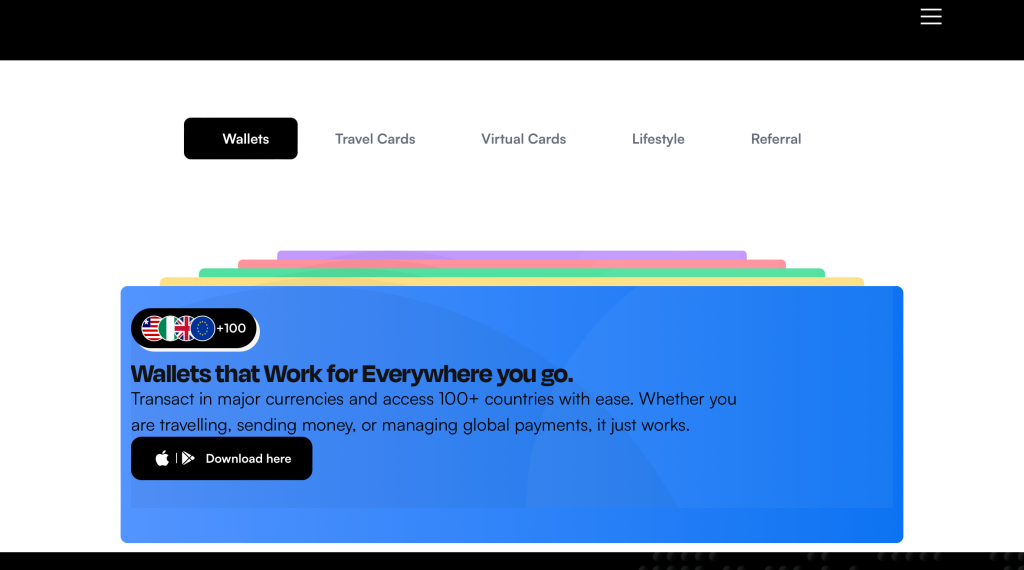
Timon is a travel-tech startup designed to solve the payment frustrations faced by nomads, particularly those from emerging markets. The product was born from the observation that payments often fail when users are abroad, or travellers struggle to access local payment methods, such as M-Pesa in East Africa, when visiting new countries. Rather than just building another fintech wallet, the team set out to create a solution that ensures a traveller’s money works everywhere they go.
Founded by Chizaram Ucheaga and Oluwatomi Ayorinde, Timon allows users to request physical cards that can be funded directly in their local currency. Timon claims to be live in 16 African countries and Canada. It also offers virtual cards, called Timone Black, which support Apple Pay and Google Pay. The founders say the app enables users to make local transfers to mobile money wallets in 16 African countries, meaning a visitor in Kenya can pay a local vendor using M-Pesa directly from the Timon app.
The platform also provides local, regional, and global eSIMs to keep travellers connected without relying on hotel Wi-Fi. Additional travel features, like bookings and travel planning, are under development for release in 2026.
Timon earns revenue through a small funding fee when users fund their cards or wallets. Other revenue streams come from profit-sharing agreements with service providers, such as eSIM partners or payment infrastructure partners, and from charged card-provider fees that are split between Timon and its partners.
Since launching fully in September 2024, the platform claims to have grown to nearly 50,000 users. Its wallet can be funded from the US, Canada, the EU, and 16 African countries, with plans to expand into the UK, Latin America, and parts of East Asia.
Why we’re watching: Timon is positioning itself as a travel-tech companion built around payments, and addressing challenges that neobanks, eSIM sellers, or booking services handle in isolation. While the startup claims to have no direct competitors in the African space currently, it views existing travel or payment players such as Booking.com and Send by Flutterwave as potential integration partners.

Foolen Games wants to turn mobile playtime into real economic value (Gaming, Côte d’Ivoire)
Foolen Games, founded by Azyz Kouyo, is a mobile gaming platform designed around African realities by African developers for the continent’s youth. The platform hosts casual mobile games created by African developers, operating on a play-to-earn model. The platform converts every minute of gameplay into African Free Coins (IFC), a virtual currency that players earn as they play. Foolen Games integrates a fintech solution called Foolen Pay, a digital wallet where users accumulate every IFC coin earned. Players can exchange these coins for real products from partner brands, including shoes, food, fast food, and other everyday items. Each IFC has a defined value of 0.5 CFA ($0.00089), meaning users accumulate coins until they can afford physical goods.
Foolen Games operates as a free-to-play platform. Revenue comes from brand partnerships, collaborations, and advertising, with five partner brands already onboard in Côte d’Ivoire, including restaurants, gaming communities, and bakeries. For African game developers, the platform is currently free to join, allowing them to host their mobile games without upfront fees. Official launch is slated for January 2026, and the founder claims that the platform has already attracted over 100 testers.
Why we’re watching: Foolen Games differentiates itself from platforms like Gara, which functions primarily as a distribution hub. Instead, Foolen Games is building a closed-loop economy that merges entertainment, fintech, and e-commerce, allowing users to monetise their leisure time for necessities like food.
Bravoo wants to pay Nigerians to learn tech skills (Edtech, Nigeria)
Bravoo, founded by Jessie Udah, is a gamified learning platform built for people who want to break into tech but often struggle with where to start and how to stay motivated. The idea emerged from Flowva, the startup’s previous product, where early users showed far more interest in earning rewards and improving their skills than in the tool-organising features. Inside Bravoo, users complete bite-sized missions that take about 2–5 minutes across areas like design or AI prompting.
Each mission includes a short learning segment and a practical assignment that the user must recreate and submit. Bravoo reviews the submissions, gives corrections, and rewards users with 10–50 coins per task. These coins can be redeemed for items like gadgets, airtime, or data.
Bravoo’s product is still in development and will go live on January 10, launching first in Nigeria, where the founder believes people have fewer accessible online earning opportunities.
All learning modules are produced in-house, and the company plans to add a social squad missions layer where groups complete tasks and share rewards. Bravo will be free for its first two to three years, and will generate revenue from brand partnerships, affiliates, and light advertising.
Why we’re watching: Bravoo is uniting people’s urgency to learn tech skills and the need to earn money. It does this by gamifying the upskilling process with tangible rewards like airtime and data. The model is comparable to that of platforms like BitDegree, except that Bravoo focuses on mainstream tech skills rather than blockchain-specific learning. Udah claims that the startup has over 10,000 users acquired during the Flowva era and early brand affiliations that are ready to fund user rewards.
PatDoc wants to be the digital bridge between hospitals and their patients (Healthtech, Nigeria)
Founded by Tunde Owolawase, Abdulmutalib Amoka, and Mohammed Otu, PatDoc is a telemedicine platform designed as a white-label SaaS communication system for hospitals that lack the technical capacity to build their own digital patient–doctor interface.
PatDoc was inspired by a personal ordeal during the COVID-19 pandemic when Amoka struggled to access medical care for his ill child due to movement restrictions and unreachable doctors. He realised how difficult it was for patients to access care due to long wait times or secure follow-ups. He also observed that patient health records and lab results are often stored within hospital filing systems, making them inaccessible to patients once they leave the facility.
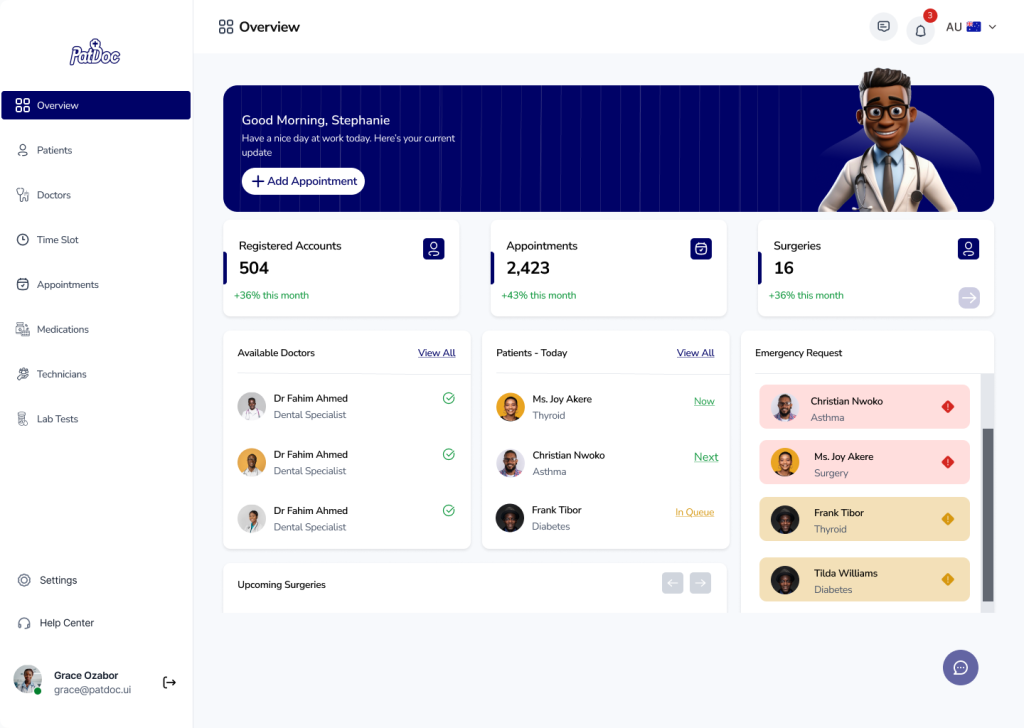
PatDoc addresses this by offering a dual solution that functions as a standalone telemedicine app and, more centrally, as a white-label SaaS platform for healthcare providers. The platform allows hospitals to launch their own branded applications, giving their patients the ability to book appointments based on doctor availability, conduct video or audio consultations, and receive lab results and prescriptions directly on their mobile devices, through an integrated lab module that allows labs to upload test results directly to a patient’s profile using a unique user ID. Both the patient and the doctor get access to results immediately.
PatDoc also features a queue management system to manage patient flow, and a role-based access control for patients who manage multiple profiles, such as children or dependents. It keeps full records of appointments, diagnoses, prescriptions, and follow-up instructions. Hospitals can license a customised version that would have their own doctors and patients.
The startup operates on a subscription-based business model, charging hospitals an annual fee with tiered packages based on the number of doctors and patients they wish to onboard. Hospitals get access to the back-end portal for managing appointments and queues, while PatDoc handles all hosting and technical maintenance. The app is live on the Google Play Store, currently under Apple Store review, and the team is preparing a soft launch ahead of a full rollout in early 2026.
Why we’re watching: PatDoc distinguishes itself from the crowded market of B2C telemedicine apps by operating a B2B2C model that empowers hospitals to digitise their own operations and bridges the communication gap between hospitals, doctors, and patients. Unlike traditional hospital management systems that are purely internal, PatDoc turns that closed loop into a continuous channel by giving patients real-time access to their own medical data from the comfort of their homes.
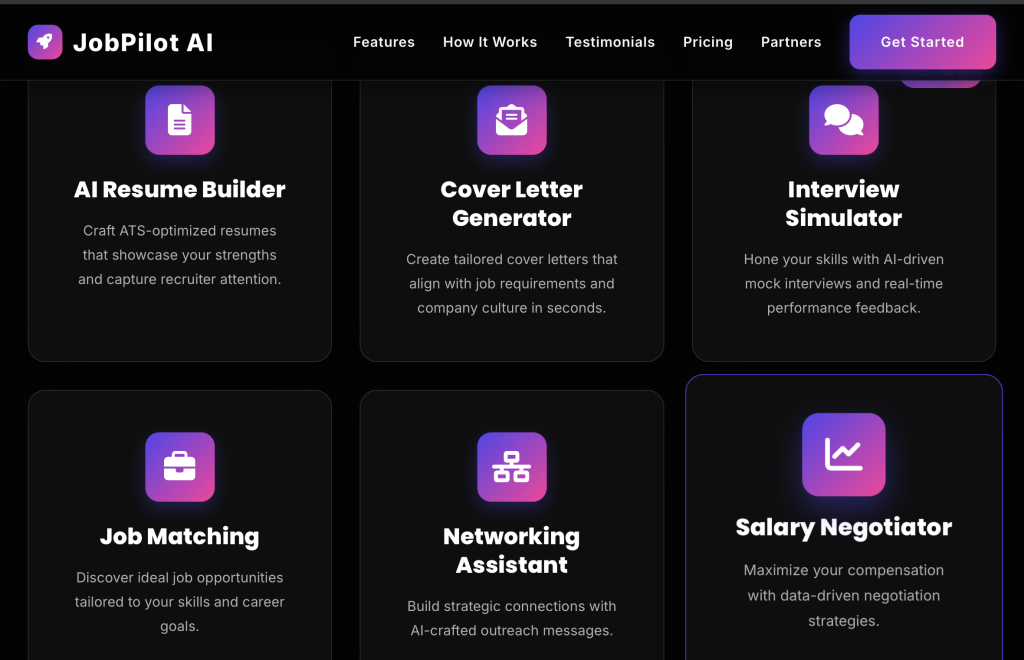
JobPilot AI wants to become the all-in-one career copilot for Africa’s job seekers (HRTech, Ghana)
Founded by Kelvin Agyare Yeboah and Anthony Gudu, JobPilot AI is an AI-powered career companion designed to help job seekers across Africa prepare for interviews, build stronger applications, and find relevant roles, all from a single platform. Yeboah built the platform after his personal observation that African graduates are often underemployed despite their talent due to interview anxiety and a lack of structured preparation. The startup addresses the fragmentation of the career support market, where users typically bounce between LinkedIn and other job boards for job hunting and separate tools for resume building.
It does this by bundling together AI-powered interview simulations that provide instant feedback and build confidence, a smart job listing engine that matches candidates to opportunities across Africa and Europe based on their skillsets, a community forum for peer-to-peer mentorship, an AI resume/cover-letter generator designed to produce ATS-friendly documents, and a dashboard for tracking career progress.
The startup runs on a premium subscription model. This subscription unlocks the ability to create multiple resumes and grants access to expert coaching in the community forum. Since launching in April 2025, the startup has focused on outreach to universities, including the University of Ghana, where some institutions have shown interest in purchasing subscriptions for their students.
Why we’re watching: JobPilot AI layers résumé generation, interview simulation, intelligent job matching, networking, and mentorship all in one place. This strategy distinguishes it from big players like LinkedIn, which lacks AI résumé/cover-letter generation and built-in interview simulation, and Wellfound, which lists startup jobs and offers some career tools but doesn’t provide an interview test simulator. Interest from schools and paying users, even before large marketing budgets, suggests genuine demand for such services, and JobPilot AI wants to fill that gap.
That’s all for today. Expect our next dispatch on December 19th. Know a startup we should feature next? Please nominate here.