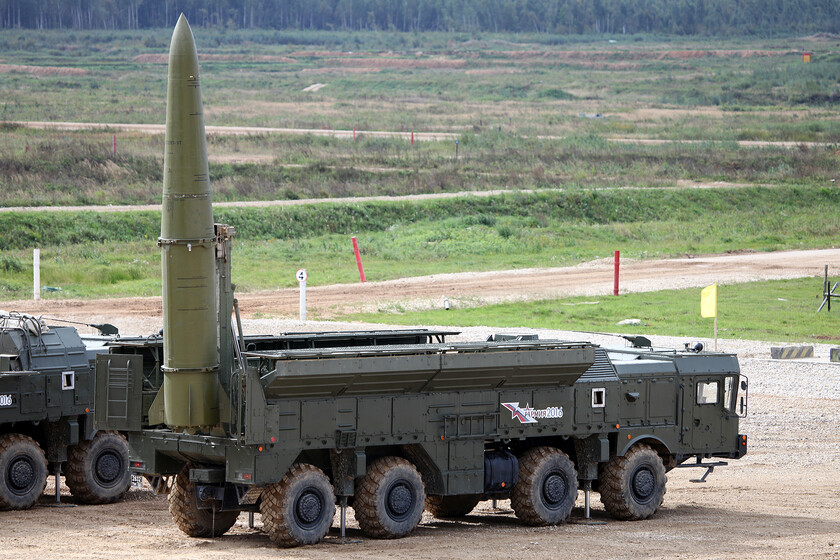
The inside of a missile says much more than it seems at first glance. Beyond its military function, it is also the result of a design, manufacturing and distribution chain that crosses borders. In several analyzes carried out in Ukraine, technicians have identified foreign components integrated into Russian weapons. That information, by itself, does not explain how they got there, but it does open an investigation that begins in the technical field and ends up connecting with international trade and the courts.
In this way, that clue is transferred to the judicial field. Several civil lawsuits were filed this week in Texas state court in Dallas on behalf of dozens of Ukrainian citizens against Intel, AMD and Texas Instruments, as well as Mouser Electronics, a large components distributor linked to Berkshire Hathaway. The plaintiffs maintain that these companies did not prevent restricted chips from being resold to Russia through third parties, despite the sanctions in force. The chosen location is not coincidental, since the aforementioned companies have an operational presence in that state.
The accusation in a sentence. As reported by Bloomberg, the lawsuits maintain that the companies incurred what lawyers describe as “willful ignorance”, a deliberate ignorance regarding the diversion of chips to Russia through foreseeable intermediaries. According to the plaintiffs, there were sufficient signs that components from these companies were being resold in violation of US sanctions, but they allege that controls were not strengthened to prevent this. That omission is the basis of a broader accusation of corporate negligence in export control and diversion prevention.
So how do the chips arrive? The background of the litigation links to investigations that have long pointed to the presence of foreign technology in Russian weapons. Vladyslav Vlasiuk, Ukraine’s presidential commissioner for sanctions policy, explained to CNN in September that many of these components are dual-use and that their entry into military programs usually occurs through intermediaries and front companies.
The demands are not based only on a general approach, but on specific episodes. The writings cite five attacks that occurred between 2023 and 2025 that killed or injured civilians in Ukraine. According to the documentation presented, one of those attacks would have involved Iranian-made drones, while others are attributed to KH-101 cruise missiles and Russian-produced Iskander ballistic missiles. In several cases, the plaintiffs claim that the systems used incorporated electronic components associated with the aforementioned companies.
The focus of the lawsuits is not limited to the manufacturers. Named in court documents is Mouser Electronics, a large components distributor based in Mansfield, Texas, and owned by Berkshire Hathaway since 2007, when it acquired parent company TTI. The plaintiffs allege that Mouser facilitated chip transfers to shell companies controlled by intermediaries with ties to Russia, and that its logistics decisions and operations were a relevant domestic component of the alleged conduct.
Position of the companies and sanctions. The companies mentioned have not made public comments on the matter. In the past, however, they have said that they comply with sanctions requirements, that they ceased their activity in Russia when the war began, and that they maintain strict policies to monitor compliance.
Since the start of the war, the United States has tightened controls on the export of semiconductors and other electronic components, but the results have been mixed. A report by the Senate Permanent Subcommittee on Investigations concluded last year that U.S.-made components continue to appear in Russian weapons. As we can see, sanctions and export controls do not seem to be preventing Western chips from ending up in the hands of companies linked to the Russian military complex.

From now on, the course of the case will depend on when the court processes the lawsuits and they become publicly visible in the judicial record. From there, the judges will decide if the litigation moves forward and with what schedule. Beyond the result, the case focuses on a question that is difficult to resolve with simple rules, how far the responsibility goes when a component is resold over and over again and ends up in a prohibited end use, with human consequences far from its point of origin.
Imágenes | Vitaly V. Kuzmin (CC BY-SA 4.0) | Rubaitul Azad
In WorldOfSoftware | The US has joined the “party” of China, Russia and Japan in the Pacific: with its nuclear bombers