Data is the new oil, but for most legacy enterprises, it looks more like sludge.
We’ve all heard the mandate: “Use AI to unlock insights from our historical data!” Then you open the database, and it’s a horror show. 20 years of maintenance logs, customer support tickets, or field reports entered by humans who hated typing.
You see variations like:
- “Chngd Oil”
- “Oil Change – 5W30”
- “Replcd. Filter”
- “Service A complete”
If you feed this directly into an LLM or a standard classifier, you get garbage. The context is lost in the noise.
In this guide, based on field research regarding Vehicle Maintenance Analysis, we will build a pipeline to clean, vectorize, and analyze unstructured “free-text” logs. We will move beyond simple regex and use TF-IDF and Cosine Similarity to detect fraud and operational inconsistencies.
The Architecture: The NLP Cleaning Pipeline
We are dealing with Atypical Data, unstructured text mixed with structured timestamps. Our goal is to verify if a “Required Task” (Standard) was actually performed based on the “Free Text Log” (Reality).
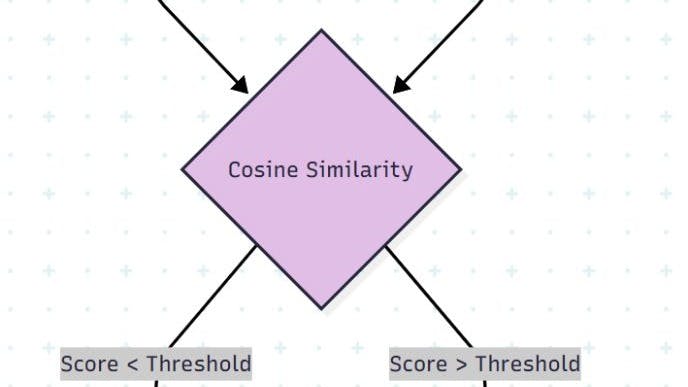
Here is the processing pipeline flow:
The Tech Stack
- Python 3.9+
- Scikit-Learn: For vectorization and similarity metrics.
- Pandas: For data manipulation.
- Unicodedata: For character normalization.
Step 1: The Grunt Work (Normalization)
Legacy systems are notorious for encoding issues. You might have full-width characters, inconsistent capitalization, and random special characters. Before you tokenize, you must normalize.
We use NFKC (Normalization Form Compatibility Decomposition) to standardize characters.
import unicodedata
import re

def normalize_text(text):
    if not isinstance(text, str):
        return ""

    # 1. Unicode Normalization (Fixes width issues, accents, etc.)
    text = unicodedata.normalize('NFKC', text)

    # 2. Case Folding
    text = text.lower()

    # 3. Remove noise (e.g., special chars that don't add semantic value)
    # Keeping alphanumeric and basic punctuation
    text = re.sub(r'[^a-z0-9s-/]', '', text)

    return text.strip()

# Example
raw_log = "Oil Change (5W-30)" # Full-width chars
print(f"Cleaned: {normalize_text(raw_log)}")
# Output: Cleaned: oil change 5w-30
Step 2: Domain-Specific Tokenization (The Thesaurus)
General-purpose NLP libraries (like NLTK or spaCy) often fail on industry jargon. To an LLM, “CVT” might mean nothing, but in automotive terms, it means “Continuously Variable Transmission.”
You need a Synonym Mapping (Thesaurus) to align the free-text logs with your standard columns.
**The Logic:
Map all variations to a single “Root Term.”
# A dictionary mapping variations to a canonical term
thesaurus = {
    "transmission": ["trans", "tranny", "gearbox", "cvt"],
    "air_filter": ["air element", "filter-air", "a/c filter"],
    "brake_pads": ["pads", "shoe", "braking material"]
}

def apply_thesaurus(text, mapping):
    words = text.split()
    normalized_words = []

    for word in words:
        replaced = False
        for canonical, variations in mapping.items():
            if word in variations:
                normalized_words.append(canonical)
                replaced = True
                break
        if not replaced:
            normalized_words.append(word)

    return " ".join(normalized_words)

# Example
log_entry = "replaced cvt and air element"
print(apply_thesaurus(log_entry, thesaurus))
# Output: replaced transmission and air_filter
Step 3: Vectorization (TF-IDF)
Now that the text is consistent, we need to turn it into math. We use TF-IDF (Term Frequency-Inverse Document Frequency).
Why TF-IDF instead of simple word counts? n Because in maintenance logs, words like “checked,” “done,” or “completed” appear everywhere. They are high frequency but low information. TF-IDF downweights these common words and highlights the unique components (like “Brake Caliper” or “Timing Belt”).
from sklearn.feature_extraction.text import TfidfVectorizer

# Sample Dataset
documents = [
    "replaced transmission fluid",
    "changed engine oil and air_filter",
    "checked brake_pads and rotors",
    "standard inspection done"
]

# Create the Vectorizer
vectorizer = TfidfVectorizer()
tfidf_matrix = vectorizer.fit_transform(documents)

# The result is a matrix where rows are logs, and columns are words
# High values indicate words that define the specific log entry
Step 4: The Truth Test (Cosine Similarity)
Here is the business value. n You have a Bill of Materials (BOM) or a Checklist that says “Brake Inspection” occurred. n You have a Free Text Log that says “Visual check of tires.”
Do they match? If we rely on simple keyword matching, we might miss context. Cosine Similarity measures the angle between the two vectors, giving us a score from 0 (No match) to 1 (Perfect match).
The Use Case: Fraud Detection. If a service provider bills for a “Full Engine Overhaul” but the text log is semantically dissimilar (e.g., only mentions “Wiper fluid”), we flag it.
from sklearn.metrics.pairwise import cosine_similarity

def verify_maintenance(checklist_item, mechanic_log):
    # 1. Preprocess both inputs
    clean_checklist = apply_thesaurus(normalize_text(checklist_item), thesaurus)
    clean_log = apply_thesaurus(normalize_text(mechanic_log), thesaurus)

    # 2. Vectorize
    # Note: In production, fit on the whole corpus, transform on these specific instances
    vectors = vectorizer.transform([clean_checklist, clean_log])

    # 3. Calculate Similarity
    score = cosine_similarity(vectors[0], vectors[1])[0][0]

    return score

# Scenario A: Good Match
checklist = "Replace Air Filter"
log = "Changed the air element and cleaned housing"
score_a = verify_maintenance(checklist, log)
print(f"Scenario A Score: {score_a:.4f}")
# Result: High Score (e.g., > 0.7)

# Scenario B: Potential Fraud / Error
checklist = "Transmission Flush"
log = "Wiped down the dashboard"
score_b = verify_maintenance(checklist, log)
print(f"Scenario B Score: {score_b:.4f}")
# Result: Low Score (e.g., < 0.2)
Conclusion: From Logs to Assets
By implementing this pipeline, you convert “Dirty Data” into a structured asset.
The Real-World Impact:
- Automated Audit: You can automatically review 100% of logs rather than sampling 5%.
- Asset Valuation: In the used car market (or industrial machinery), a vehicle with a verified maintenance history is worth significantly more than one with messy PDF receipts.
- Predictive Maintenance: Once vectorized, this data can feed downstream models to predict parts failure based on historical text patterns.
Don’t let your legacy data rot in a data swamp. Clean it, vector it, and put it to work.