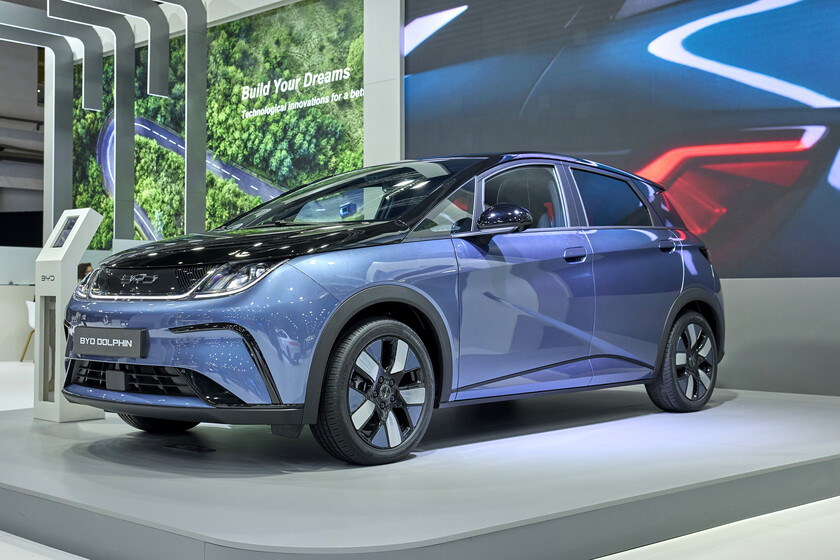
Despite how brands are making waves outside of China, in its home market there is voracious competition among all automakers, which has led to an uncontrolled discount trend. For this reason, China’s market regulator has published draft guidelines to regulate prices in the automobile industry, seeking to stop the destructive Price war that has shaken the sector in recent years. The country’s major manufacturers, including BYD, Xpeng, Great Wall Motors, Chery and BAIC, have publicly expressed their support for these new rules.
The origin of the problem. According to data cited by Wang Xia, chairman of the Automobile Committee of the China Council for the Promotion of International Trade, more than 200 vehicle models recorded price reductions in the domestic market during 2024.
In May, the situation worsened even more when leading manufacturers applied massive discounts that exceeded 50,000 yuan (about 6,300 euros), while some vehicles were sold for as little as 30,000 yuan. This spiral of cuts has forced some small manufacturers to leave the market and has deteriorated the profitability of the sector.
What the guidelines propose. The document from the State Administration for Market Regulation (SAMR), published on December 12 and open to public consultation until the 22nd of this month, establishes clear requirements for both manufacturers and dealers. Manufacturers must set prices based on production costs and market conditions, respecting the price autonomy of distributors.
On the other hand, according to the document, selling below the production cost with the aim of eliminating competitors or achieving a monopoly position is prohibited, as well as price-fixing agreements between manufacturers. Dealers, for their part, must show complete and transparent prices, without false price references or misleading discounts.
The reaction of the industry. BYD, the world’s largest electric vehicle manufacturer, issued an official statement committing to follow the guidelines and optimize its internal price management systems. Xpeng, Nio and other manufacturers released similar statements supporting both the pricing guidelines and other complementary financing regulations that make it easier to switch vehicles by reducing penalties for early loan repayment.
Between the lines. The word “involution” has appeared more than once and twice in China’s hectic domestic vehicle market. Therefore, the Government wants to confront this idea with this new series of price regulations. The authorities had already tried to stop the price war in June, when they summoned the CEOs of the main electric vehicle manufacturers to warn them about the abusive cuts. However, prices continued to fall: according to Bloomberg with data collected by China Auto Market, BYD’s average transaction price fell from 116,200 yuan in June to 108,100 yuan in October.
The transition aims to be complicated, since according to Bloomberg, there is a persistent weakness in demand, especially in luxury combustion vehicles. The media also says that there are already manufacturers adapting these measures, offering more equipment for the same price or selling large SUVs at the price of smaller models.
And now what. Following the public consultation period, which ends on December 22, the guidelines are expected to be formalized and play a key role. November already showed signs of stabilization, with 19 models seeing price cuts compared to 26 the previous year, according to ChinaEVHome. It remains to be seen if these regulations end up alleviating two of the most serious problems of this industry in China: excess productive capacity and weak demand.
Cover image | BYD
In WorldOfSoftware | When the United States handed over its entire electrical grid to Chinese devices it seemed like a good idea. Now you have a problem