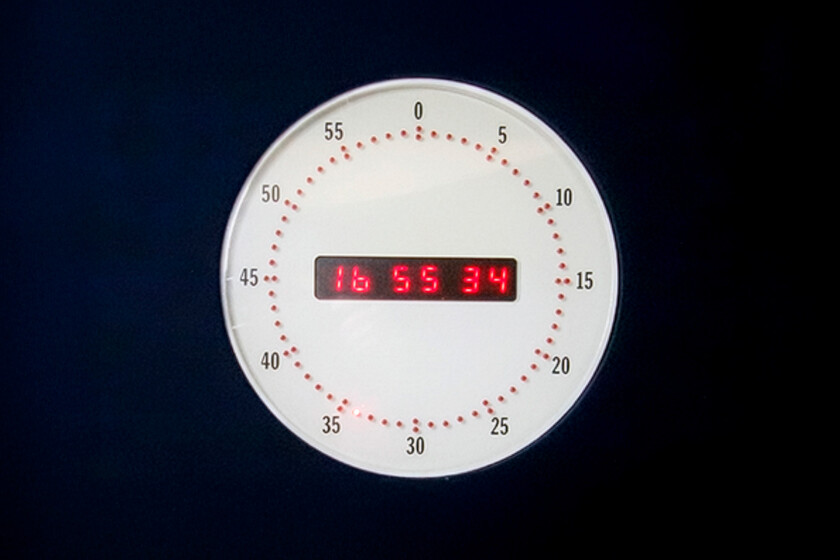
To think that the official time of a country could fail is, at first, almost impossible. We are not talking about a domestic clock or just any server, but about the system that sets the pace of networks, satellites and critical services. That is why it is surprising to discover what happened recently in the United States. A power outage in Colorado was enough to remind us that extreme precision is not isolated from the physical world that sustains it.
According to CBS, Xcel Energy applied a preventive shutdown to reduce the risk of fires due to very strong wind gusts, and the NIST complex in Boulder was affected on Wednesday of last week. Added to the power outage was the failure of one of the backup generators. In that sequence, and according to information confirmed by NIST, the country’s time reference was slightly off for a brief interval, until part of the supply could be restored.
Put a tiny deviation into context. The figure that came out of the NIST systems was 4.8 microseconds, that is, just a few millionths of a second different from what was expected. To get an idea of that magnitude, NIST itself explained that a human blink lasts around 350,000 microseconds, a scale very different from that of the recorded mismatch. The variation is so small that for the vast majority of everyday uses it is irrelevant, but it serves to illustrate the extent to which even a minor deviation is measured, recorded and taken seriously in temporal reference systems.
To understand why this offset is considered relevant, it is worth clarifying what exactly the official time of the United States is. The country is not directly governed by UTC, the coordinated international standard to which multiple nations contribute, but by a national implementation known as NIST UTC. Since 2007, that baseline has been set under the supervision of the US Secretary of Commerce and the Navy, and adjusted to stay aligned with global coordinated timing.
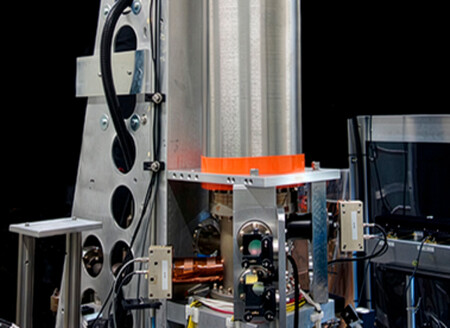
NIST-F4 Cesium Source Atomic Clock
NIST calculates the official time from a weighted average of sixteen clocks spread across its campus, including hydrogen masers and cesium beam clocks, each with different functions and strengths. This approach allows us to gain stability and resilience, since the final signal is not conditioned by the behavior of a single instrument. Therefore, even when one of the elements of the system is affected, the whole should continue to offer an extremely accurate reference.
What broke was not the watch. During the blackout, atomic clocks continued to run thanks to their battery systems, NIST explained. The problem occurred in the connection between some of those clocks and the measurement and distribution systems that consolidate the final signal. When that communication was lost for an interval and one of the planned backups failed, the resulting time reference slowed down slightly. Technical personnel who remained at the facilities later activated a reserve diesel generator, which allowed part of the operation to be recovered and the system to be stabilized.
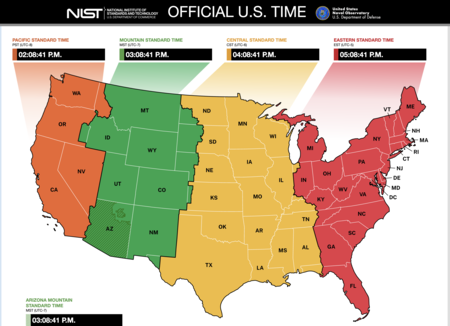
NIST page
The institute stressed that this gap has no appreciable effects on daily life. The nuance appears when looking at certain technical sectors, where extreme synchronization is an operational requirement. Critical infrastructures, telecommunications networks, positioning systems or some scientific environments work with such tight margins that even a minimal deviation deserves to be recorded and reported.

The next step was to return to operational normality. NIST indicated that the correction of the gap will be carried out when all systems are fully powered and can be recalibrated with guarantees. Xcel Energy announced yesterday Monday that it was completing the restoration of service after the storm and the preventive cuts applied due to fire risk. Meanwhile, the institute began an internal review to evaluate the impact of the blackout and verify that redundancies and protocols responded as planned.
Images | NIST
In WorldOfSoftware | China says it has detected an NSA operation against its most sensitive infrastructure: the center that controls the time