
Background
In a previous post, we had looked at the importance of rice in the Philippines, as a representative crop, and how its value might be preserved and grown. We had considered the context of extreme weather events. As a solution, we proposed a conceptual product. In this post, we will look at a related financial activity. This is rural supply chain financing. It applies to the Philippines but equally to other large Southeast Asian economies.
Concept
Let us talk about supply chain financing within a specific region which is dominated by farms and fisheries but has strong ties to urban markets. An efficient network would connect the participants inside a supply chain among themselves and with an active community bank. There is a perennial need for credit in the pipelines that run commerce. For providers that supply complex supply chains and intermediaries who occupy critical positions inside distribution channels, the reliance on inefficient forms of credit is a perpetual concern.
A peculiar fallout from the growth of fintech in many countries is that fragmented, semi-autonomous transactional clusters have sprung up. This is a natural consequence of innovation and entrepreneurship. It also gives choice to customers. Regrettably, though, integration with the key players in rural markets-the banks and microfinance institutions-is spotty. Moreover, if a fintech is financed by venture capital, it is unlikely (though not impossible) that a rural market focus would provide it scale.
For banks to be involved on a regular basis and provide credit at a scale and frequency that overrides traditional supply chain credit gaps, key pre-requisites are data availability and risk measurability. Further, visibility through the entire supply chain is important. This calls for an intelligent network which is described below. The network should be designed in a manner that it can be used to measure key performance indicators, enable transactions and provide for seamless injection of liquidity as and when needed.
Description
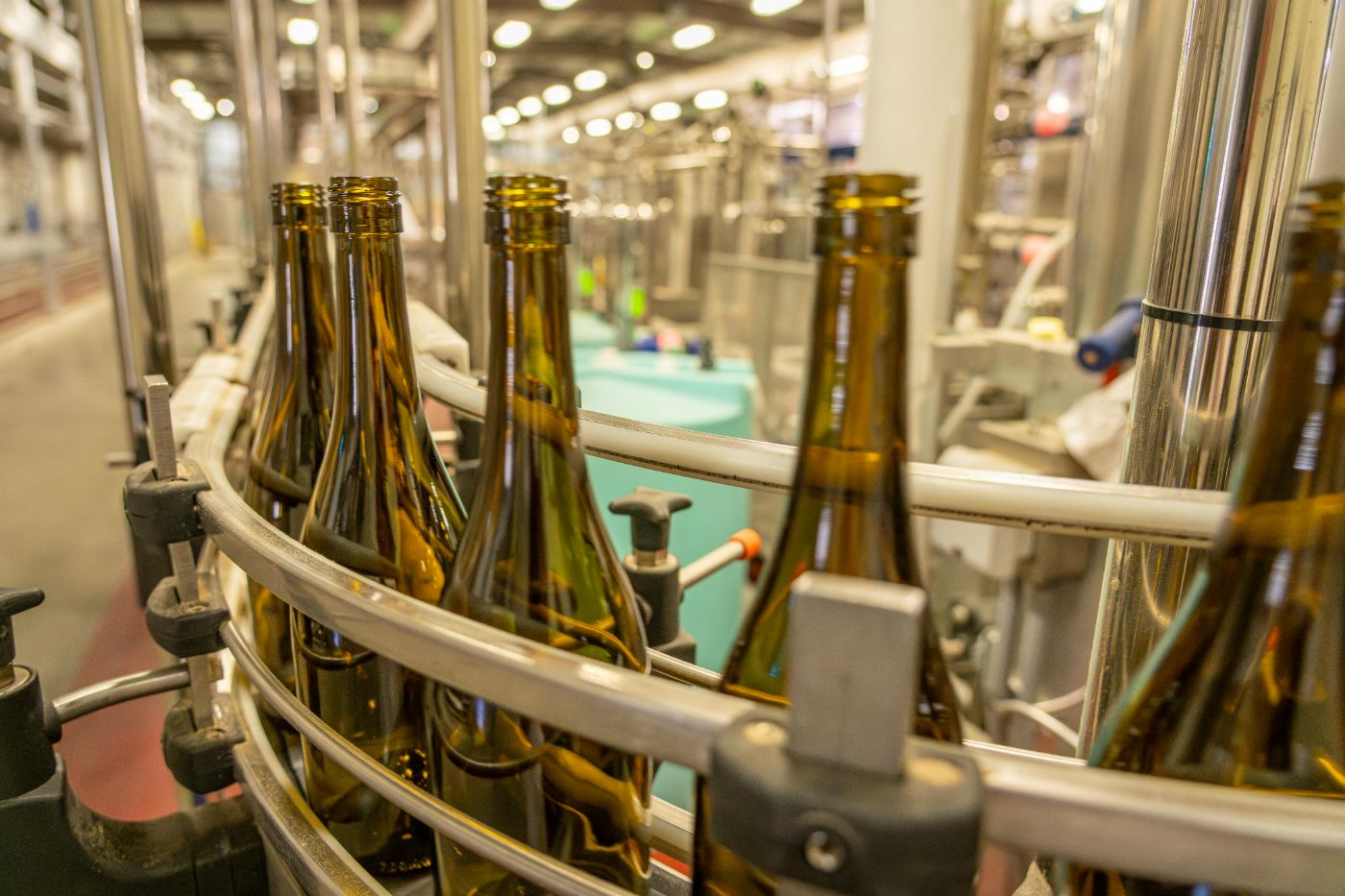
You can see a high-level diagram here to represent the concept. We have taken the example of a soft drink bottling company and its supply chain ecosystem in a predominantly rural region. It is assumed here that the bottler is based in a semi-rural area and is an important employment provider locally. It has close ties with a rural or community bank with an effective catchment area of around thirty to fifty square kilometers.
The Players are:
1. The bank
2. The bottler
3. The distributor
4. Retailers
The player at the apex of the supply chain pyramid is the bottler. It would have no hesitation in giving credit to a long-standing distributor. However, degradation of that distributor’s physical assets (warehouse, residence, vehicles) and impact on geography (roads, docks) due to frequent storms may result in the risk profile being amplified. New potential distributors may find it more problematic to get credit on terms that are comfortable to them.
When risk becomes a network asset as opposed to burdensome data that has to be regularly updated, things change dramatically. Much of the raw data that helps to assess risk continuously is available at the bottler-distributor level. For example, there is institutional and informal knowledge about repayment histories, supply volumes, returns (if any) and reputation. The network may formalize the data and forecast future risk by weighing it with possible events. This may give a relatively clear picture that may emerge over a reasonable time window. The network seeks to capture all possible data, formal and informal, at all points of time and process it in real-time.
All this needs a terminal at each point of transaction (virtual or physical). This terminal is the node of the network. It is where the transactions are recorded, value is exchanged, and the network blockchain meets the physical world. None of the daily users need to know that a blockchain is embedded. What kind of terminal should this be? It could easily be a physical terminal or merely a QR code. Every transaction will be written to the blockchain. As a result, we are not only putting every transaction on an immutable ledger, but we are vastly increasing the efficiency of supply chain financing.
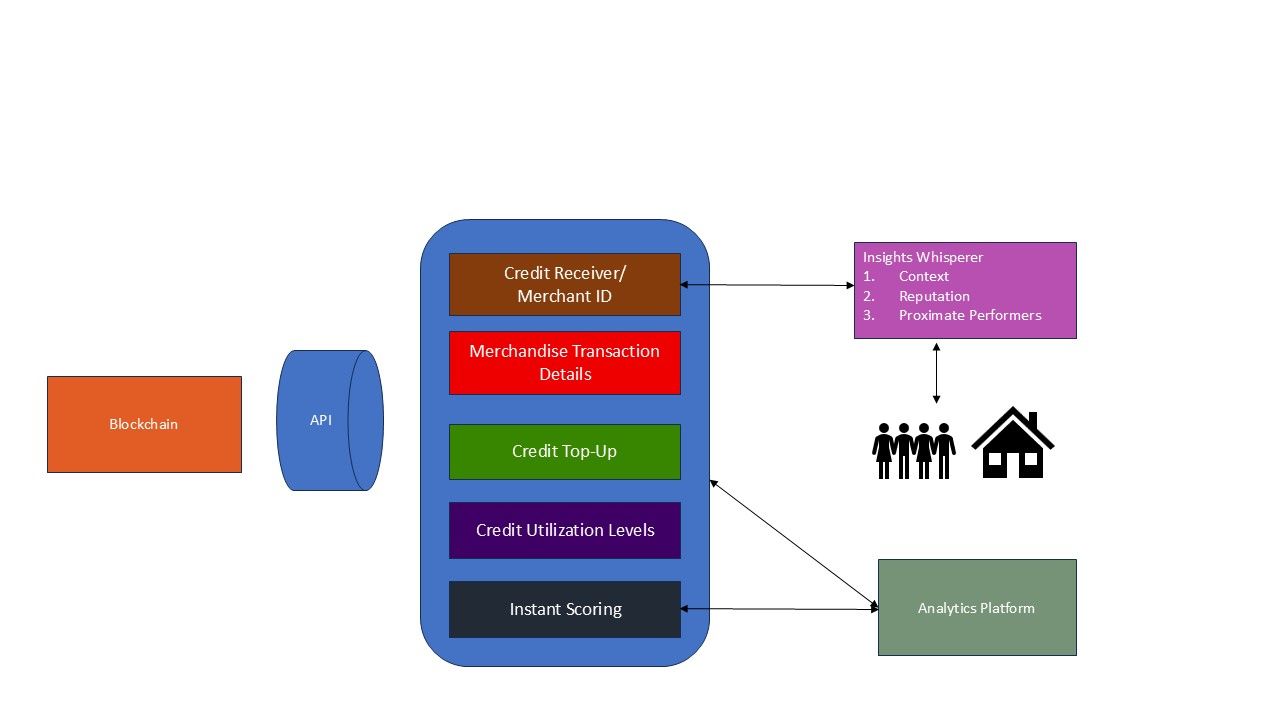
It is worth exploring if the risk profile of a distributor can help a bottler infer that of a retail store (which comes downstream). This may be relatively easy if the bottler is able to get information about the risk coming out of a retail cluster. It is likely that such data would be gathered anyway to some extent as part of market intelligence. The bottler can also leverage stock-keeping unit (SKU) data and assign weightages to different categories of stock (premium, value for money, promotional) to calculate a risk view of a cluster of retailers. But the relationship between the distributor and the retailers becomes quite important when assessing things like footfalls, surrounding community potential, reputation of shop-owner, and localized weather event impacts.

However, in order to process particularly complex scenarios and to deliver insights at speed, ML might prove to be useful. This, in turn, may lead to putting in place a recommendation engine which helps distributors determine what credit to provide to which shop at what time. We will also discuss the concept of data neighbourhood and proximate context.
Through a measured combination of analytics, machine learning, and blockchain, it is possible to create a transactional network that enables real-time risk assessment and credit approval within supply chains. For rural banks, this can be a massive asset to which they can provide significant liquidity.
Merry Christmas and Happy New Year.