The end of the year is always a good time for reflection — an opportunity to look back at what went right, what went wrong, and how you can improve things for the new year ahead. If anyone at OnePlus is reflecting on the company’s 2025, I don’t know how they can view it as anything but a train wreck.
For the last few years, OnePlus has been a steady, driving force in the Android space. Its phones have consistently delivered excellent performance, fast charging, distinctive designs, great software, and strong value. But as 2025 draws to a close, OnePlus is at risk of that all falling apart.
After starting 2025 on an incredibly high note, the rest of the year was disastrous for the company, marked by bad decision after bad decision. What exactly went wrong with OnePlus in 2025? A lot.
How would you grade OnePlus’s 2025?
1409 votes
From the incredible OnePlus 13 series …
Ryan Haines /
OnePlus 13
The OnePlus 13 felt like a turning point for OnePlus. Where past OnePlus flagships had been consistently good (great, even), the OnePlus 13 was the first one to do everything right.
Its design was unique and exciting; the cameras were outstanding; the performance was excellent; and the battery life and charging were unmatched. The OnePlus 13 pushed the needle forward while companies like Samsung coasted along with recycled specs and designs. And on top of all that, OnePlus won the value fight, too, with the OnePlus 13 retailing for $400 less than the Galaxy S25 Ultra. While there’s no such thing as a perfect smartphone, the OnePlus 13 got damn close.
Rushil Agrawal /
It was a similar story for the more budget-minded OnePlus 13R. While not as impressive an overall package as the OnePlus 13, the 13R was still a huge success. For $600, the phone delivered flagship-like performance, display quality, hardware, and battery life. Hell, the cameras were pretty decent, too.
My colleague Rushil Agrawal said the 13R was “as good as $600 phones get” in his OnePlus 13R review, and I fully agree with him. Crafting an Android phone in that $500-$600 price range is far easier said than done, but OnePlus made it look easy with the 13R.
The OnePlus 13 and OnePlus 13R quickly became two of the most impressive releases from OnePlus in years, and it made us excited about how the company would follow up on them. OnePlus had created two near-perfect foundations to work from, so surely the next generation of OnePlus phones would keep the momentum going, right?
… to the disappointing OnePlus 15
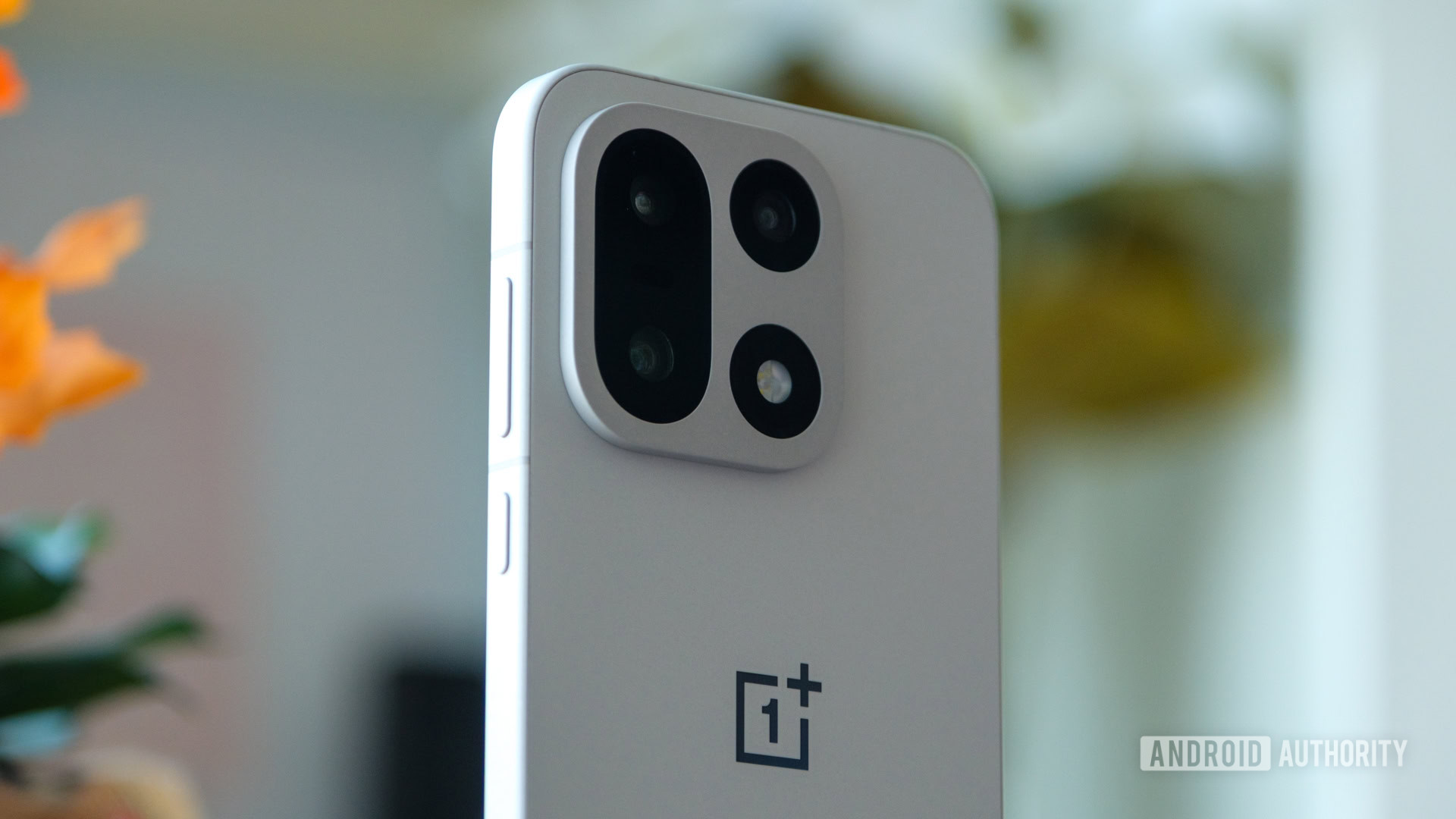
Not exactly. OnePlus fast-tracked the OnePlus 15 series as we’ve never seen from the company before, launching the OnePlus 15 just 10 months after the OnePlus 13. Whether it was an issue of OnePlus rushing the new phone to market or something else, the difference between the OnePlus 15 and OnePlus 13 is staggering.
After seeing so much success with the OnePlus 13 camera system, OnePlus thought the right move for the OnePlus 15 was to downgrade all of the cameras to smaller sensors and abandon its tried-and-true Hasselblad partnership. The OnePlus 15 has excellent performance, as OnePlus phones typically do, but it overheats to an alarming degree during benchmarks and real-world gaming. And while the 15’s design may be durable and well-constructed, it doesn’t have the same sense of fun or originality as its predecessor.
Looking at the OnePlus 15 on its own, you could argue that it’s still a decent Android phone. After all, it has a powerful chipset, a big battery, fast charging, and retains its $900 starting price. If you’re OK with compromising camera quality, thermal management, and design to get those things, the OnePlus 15 doesn’t look too bad.
The problem is that just 10 months ago, OnePlus proved it could create a flagship Android phone that doesn’t make you pick and choose. The OnePlus 13 offered a flagship chip, long battery life, and fast charging in addition to top-notch cameras, good thermals, and great design — it wasn’t one or the other. That’s why when we voted for our best phone of 2025, the OnePlus 13 won while the OnePlus 15 failed to even make it onto our 20-device shortlist for voting.

Joe Maring /
What about the OnePlus 15R? Just as the OnePlus 13R followed the success of the OnePlus 13, the 15R shares the same disappointment as the OnePlus 15.
The OnePlus 15R is worse and more expensive than its predecessor.
The last couple of R-series phones from OnePlus have been home runs, and there’s no reason the 15R shouldn’t have continued that success. But as I wrote in my OnePlus 15R review, OnePlus completely dropped the ball. The phone doesn’t have wireless charging, ditches the iconic alert slider, has worse (and fewer) cameras compared to the 13R, and is $100 more expensive to boot.
After emphatically recommending the OnePlus 13R earlier this year and the OnePlus 12R last year, I’m not sure anyone should buy the OnePlus 15R. It’s worse and more expensive than its predecessor, and believe it or not, that’s not a recipe for success.
Everything wrong with OxygenOS 16

Mishaal Rahman /
Unfortunately for OnePlus, hardware struggles have just been half of the company’s hardships in 2025. In addition to all of the issues outlined above, the OnePlus 15 and OnePlus 15R are also plagued by some of the worst software I’ve seen from OnePlus in years.
At the start of 2025, OnePlus’s Android software was in a fantastic place. OxygenOS 15 was fast and smooth, had a good overall design, excellent customization features, and was relatively free of bloat. It’s because of those things I wrote in February that OxygenOS was becoming my new favorite Android skin.
But that all changed with the release of OxygenOS 16 this fall.

Joe Maring /
While OxygenOS 15 had a relatively lightweight, clean UI, OxygenOS 16 feels heavier and more cluttered by comparison. System animations bog things down, scrolling doesn’t feel as snappy as it used to be, and so much of it is now draped in iOS inspirations — whether that’s a new “Categories” tab in the app drawer or cheap Liquid Glass effects haphazardly strewn throughout parts of the interface.
I don’t love any Android skin that goes out of its way to mimic iOS, but what’s especially annoying with OxygenOS 16 is that it does this while ignoring other longstanding issues that should have been fixed. Notifications on OnePlus phones are still heavily delayed. The always-on display often gets stuck showing the same notification, even when new ones arrive.
To make matters worse, there’s also the issue of software support. Despite annual criticism, OnePlus still refuses to offer more than four years of Android updates for its smartphones, continuing to trail the seven-year update guarantees from Samsung and Google. And with each year this persists, the more it feels like a slap in the face.
How can OnePlus get back on track in 2026?

Joe Maring /
When I first thought about this question, the answer seemed simple enough. We know what works well for OnePlus. If the company reverts its hardware ambitions to those of the OnePlus 13 series and aligns its software more closely with OxygenOS 15, that’s a surefire way to get back on track. The OnePlus 13 lineup was much more successful than the OnePlus 15 family, and OxygenOS 15 was far and away a better software product than OxygenOS 16. If both those things are true, the path to success in 2026 should be obvious.
However, while that sounds good in theory, I’m afraid the likelihood of it happening is slim to none.
OnePlus didn’t just accidentally release two stinkers of smartphones with the OnePlus 15 and OnePlus 15R. Both phones were purposefully designed to cater more to power users and gamers rather than having the mass market appeal of their predecessors. That strategy clearly wasn’t as successful, but it’s hard to see OnePlus completely abandoning it when it releases the OnePlus 16 lineup.
OnePlus’s future looks really uncertain.
It’s also impossible to ignore the impact of OPPO’s tie-ins with OnePlus. More than ever before, OPPO’s involvement is clear as day with the OnePlus 15 series and OxygenOS 16 — both with hardware and software design. If the OnePlus 15 and OxygenOS 16 are OPPO’s vision for OnePlus’s future, there’s likely a long-term plan behind them, and one that’s unlikely to change next year.
With that in mind, OnePlus’s future is concerning, and I say that as someone who’s been a fan of this brand since the OnePlus One. I want to see OnePlus have a much more successful 2026. The Android world is better off when OnePlus is firing on all cylinders. But the way the company ended things this year isn’t how that happens, and if this is the plan OnePlus is committed to, it’s hard to see 2026 being much better.
Don’t want to miss the best from ?


Thank you for being part of our community. Read our Comment Policy before posting.