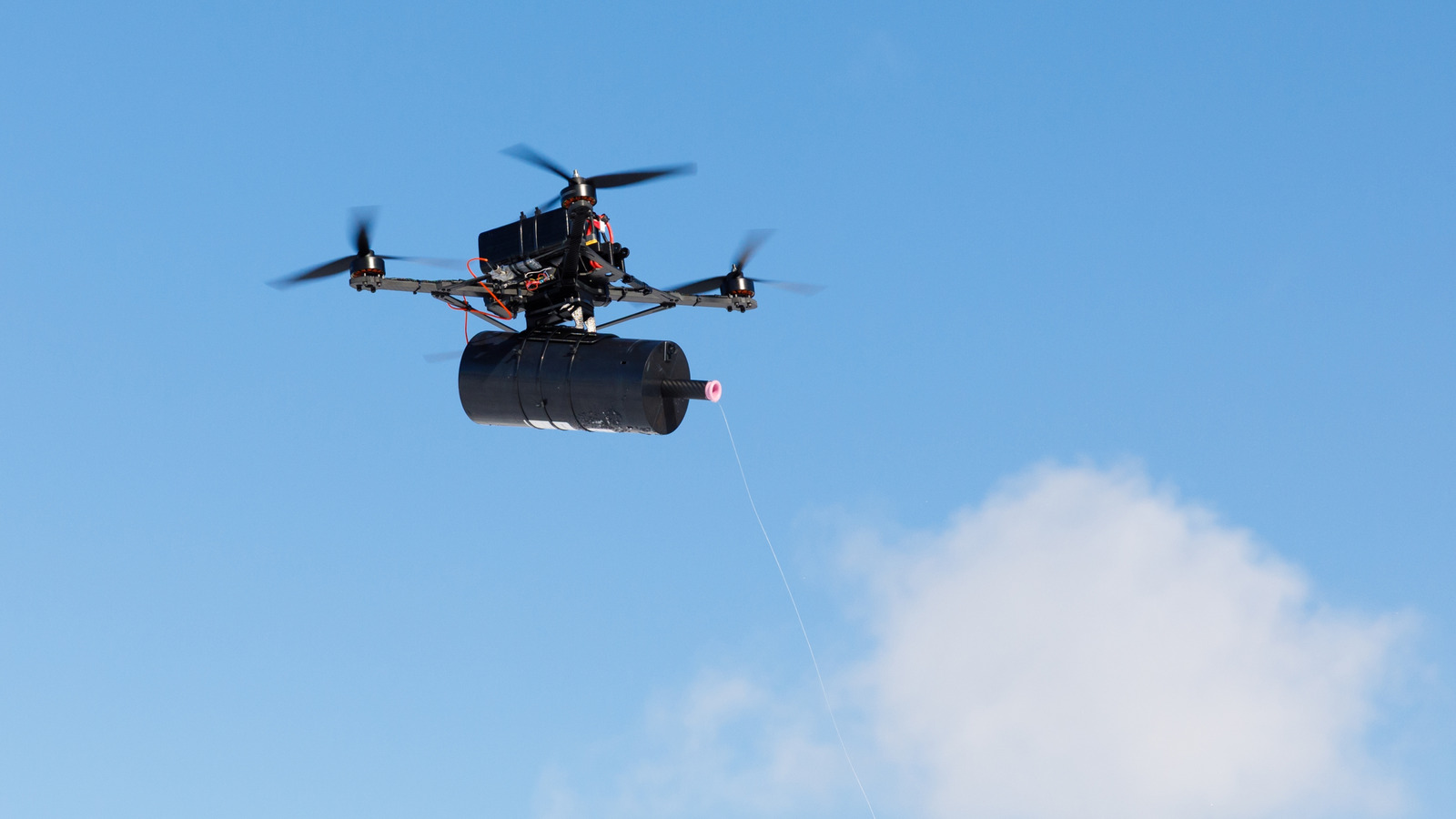
The Federal Bureau of Investigation has put out a request for information (RFI) seeking suppliers of unjammable drones, and if you’re wondering what “unjammable” means, the goal is to find options “controlled by fiber optic cable” that are also “NDAA compliant.” In other words, they’re talking about wired drones. Unusual though it may seem, these models do exist. Wired drones cannot be jammed or tampered with remotely — the only way to stop them is to shoot them down, which takes a considerable amount of skill or specialized countermeasures.
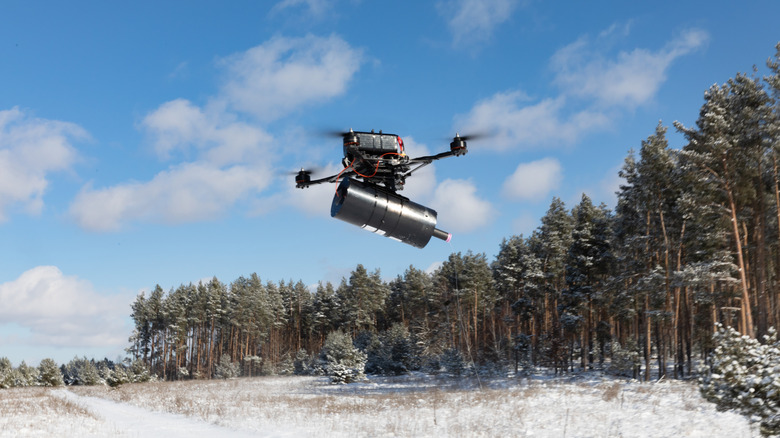
The cables attached to these drones can be up to 20 kilometers long (about 12 miles) or more, and they’re incredibly thin. Most constraints you might expect from a wired cable are negligible. The biggest concerns are the snag risk, particularly regarding battlefield debris and objects in the area, or the drone’s own propellers. Reduced maneuverability is also a net negative attached to wired drones versus wireless counterparts. The cable can also limit the range of the drone, however, they often carry the spool of cable onboard, using a mount or casing to mitigate this problem. Because the cable spool is attached, it can reduce travel speed, also affording less room and deliverability for additional payloads like explosives or supplies.
But despite the tether, fiber-optic drones are hard to detect, since the cable is super thin, and offer a better, more reliable signal — especially in areas prone to wireless interference. Further, as the FBI concisely stated, they’re “unjammable.” The Moscow Times reports that fiber-optic drones are already in use on the battlefield. Ukraine and U.S. tech companies have them, as well.
Why does the FBI want unjammable drones?
Drones are the future of warfare — not just in the air, but also on land. Next-gen hydrogen-powered stealth tanks are on the horizon, and in the sea, autonomous 5th-gen submarines have been unveiled. But that’s not what the FBI is looking for. Classified as a UAS (unmanned aircraft system) in the RFI, the FBI lays out exactly why it’s looking for unjammable UAS options.
The bureau is “responsible for the investigation of a multitude of federal crimes” and it explains that “UAS are used in a variety of facets while responding, and on scene of, various incidents.” The RFI also states that the agency is looking for any drones that operate via a fiber-optic connection with the Ground Control Station, or whatever is controlling the drone. The FBI is willing to consider “any size, class, and capability” as long as its NDAA compliant. Of course, it stops short of explaining precisely what activities would require such a drone.
As for being “unjammable,” the requirement makes sense given what we know about anti-drone tech. A News Nation report claims that counter-drone jammers are being used by cartels against Customs and Border Protection units at the U.S.-Mexico border. If the cartels have access to jamming tech, it’s safe to assume the FBI’s enemies, or subjects of advanced investigations, might as well.
Drones are being used in unique ways in the modern world, not limited to military applications. A team of engineers created a revolutionary new drone that can feed on electricity from nearby power lines to fly forever. Amazon’s delivery drones, though they keep running into problems, are certainly utilized in an interesting way. It’s not a stretch to imagine them being used by U.S. agencies for surveillance, recon, and other tasks.