
Something is changing in the bitcoin business, and it doesn’t just have to do with the Price of the cryptocurrency. As mining becomes more demanding and less profitable, artificial intelligence is triggering a race for electricity and computing power. The result is a striking paradox: companies that see their historical activity losing traction possess exactly what is now scarce. Infrastructure, land and electrical contracts that, suddenly, have become worth much more than expected. This combination of factors is beginning to reorder the map of crypto mining.
The sector is transforming. Beyond the currencies, the true value of many miners lies in access to electricity and the infrastructure already deployed. For years, these companies ensured stable supply, built industrial warehouses with refrigeration and signed energy contracts that are difficult to obtain today. The Wall Street Journal points out that this set of assets fits precisely with the current needs of the technology sector, which is seeking immediate capacity to deploy large-scale computing.
Now, going from traditional mining to supporting advanced loads is not a simple change of machines. Bitcoin-oriented centers are designed for a very specific type of work, while intensive computing demands more sophisticated infrastructure and much lower tolerances for failures or latencies. This requires updating internal electrical systems, cooling and networks, in addition to completely replacing the equipment. The process can be profitable, but it is not trivial, and it marks a clear border between companies capable of assuming that effort and those that are not.
The infrastructure hosting model. Instead of competing for the purchase of chips and assuming their rapid obsolescence, some miners have chosen to rent what they already control. In this model, they cede buildings, electrical power and cooling capacity to hyperscalers and large technology companies that install their own hardware. In exchange, they sign long-term contracts with more predictable income and counterparties with great financial capacity. The logic is clear: less exposure to the volatility of the crypto market and a more stable use of assets that were already on balance, even if some traditional mining continues to operate.
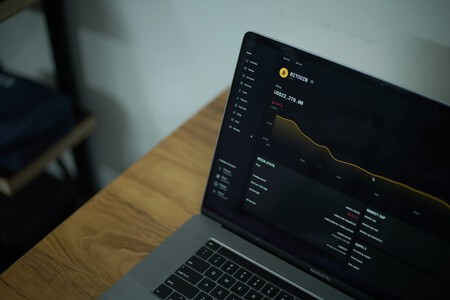
One of the most illustrative cases is that of Core Scientific, whose data centers began to be adapted for artificial intelligence loads long before its acquisition by CoreWeave was announced in July 2025. The company has been modifying facilities designed for bitcoin mining to house AI-oriented GPUs, replacing ASIC-based environments with more advanced infrastructure. This previous work explains why these assets have gained strategic value, regardless of the final outcome of the corporate operation.
Flexibility as an advantage over the network. CleanSpark proposes a different path, based on combining bitcoin mining and infrastructure aimed at other uses. Its central argument is not only economic, but also operational: mining companies can provide flexibility to the electrical grid. By being able to disconnect part of their consumption in times of overload or instability, they offer an adjustment capacity that data centers dedicated to AI do not have. According to its management, this capacity has become increasingly in demand by electricity companies, which are looking for large consumers capable of adapting in real time without compromising the stability of the system.
The market has reacted quickly to this change in narrative. The shares of several companies linked to mining have registered strong increases even in a context in which bitcoin has shown a decline. The most visible case is that of the CoinShares Bitcoin Mining ETF, which has accumulated a revaluation of close to 90% in the year, driven by companies that have announced long-term agreements linked to infrastructure and data centers. For investors, the appeal is not so much in the cryptocurrency as in the possibility of transforming a volatile business into one with more predictable income.

A turn that is not without risks. The strong appetite for AI infrastructure has reignited debate about a possible bubble, fueled by demanding valuations and highly capital-intensive investment plans. For mining companies, the leap requires significant disbursements and impeccable execution, with the risk of being left halfway if demand cools. Additionally, shifting focus toward AI-oriented data centers could reduce mining capacity in the United States, pushing some bitcoin production to other countries and altering the geographic balance of the sector.
Everything seems to indicate that we are not facing a simple technical change, but rather a more profound reconfiguration. Some miners are no longer thinking of themselves as actors linked exclusively to bitcoin to become owners and operators of infrastructure, while others use AI as a hedge against an increasingly demanding business. The AI fever has not saved mining, but it has opened a new vein.
A WorldOfSoftware | Erling Løken Andersen | Amjith S | Igor Omilaev
In WorldOfSoftware | Something is going wrong with AI. The US is turning to energy solutions that it thought were buried to power data centers