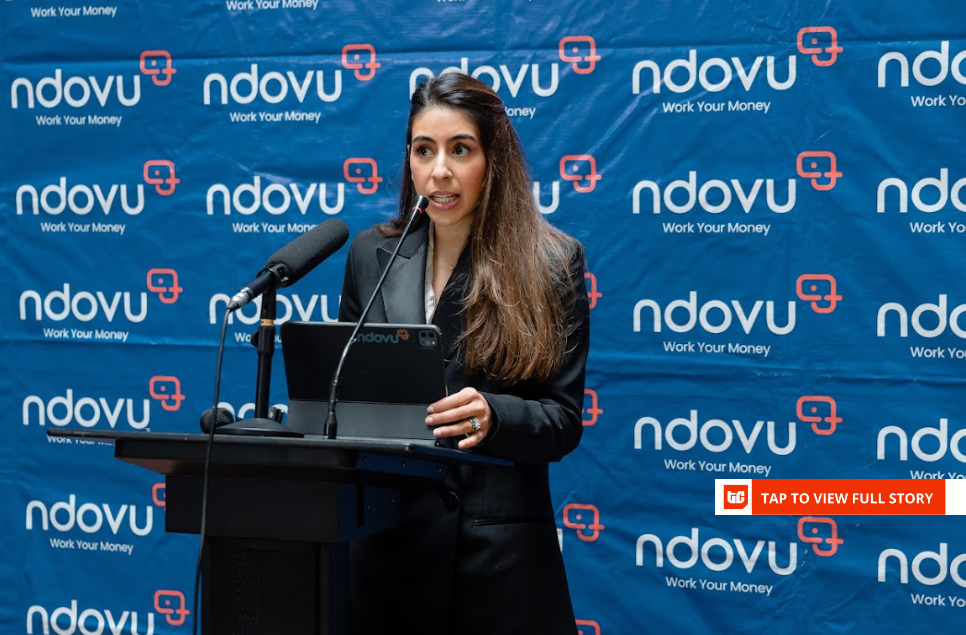
In this exclusive interview with TechBullion, we are talking with Ksenia Cohen, Financial Director at Noda, about how Open Banking can be more than a regulatory requirement; how it can drive strategic growth, innovation, and partnerships. Ksenia is a finance and operations leader with experience spanning audit, high-growth tech, fintech, and advisory work with Tier 1 institutions. Since joining Noda in 2025, she has focused on strengthening the company’s financial resilience, supporting regulatory readiness, and building the operational foundations needed to scale a regulated Open Banking and payments platform across Europe and the UK. In this conversation, she shares her insights on turning Open Banking into a strategic advantage, designing partnerships that last, and aligning finance leadership with product and ecosystem strategy.
Open Banking is often discussed as a technical or regulatory framework. From your perspective, how should leaders reframe Open Banking to turn it into a true strategic advantage rather than a compliance exercise?
Too often, Open Banking is approached as something to implement rather than something to design around. Companies focus on APIs, regulatory checklists, or minimum viable compliance, and stop there. That mindset limits its strategic potential.
The real advantage of Open Banking emerges when leaders rethink their business model, incentives, and decision-making structures in light of what Open Banking actually enables. That includes how data flows throughout the organisation, how products are priced and distributed, and how customer value is created across multiple touchpoints.
When Open Banking is treated as infrastructure instead of as an add-on, it becomes a foundation for new operating models. The question shifts from “How do we comply?” to “How does this change the way we build, partner, and scale?” That reframing is what separates firms that merely participate in Open Banking from those that extract durable strategic value from it.
Partnerships sit at the heart of the Open Banking ecosystem, yet many fail to scale or create lasting value. What criteria should fintechs use when assessing strategic partnerships, and what are the most common mistakes you see companies make?
Open Banking is structurally fragmented by design. No single participant holds all the elements required to deliver end-to-end financial products. Data, infrastructure, customers, and regulatory permissions are distributed across different actors. As a result, Open Banking lives or dies on partnerships.
The most successful partnerships start with a clearly defined purpose. Both sides need to be explicit about what problem they are solving together and why the partnership exists beyond short-term convenience. Without that clarity, relationships tend to remain transactional and fragile.
Operational fit is just as important. Many partnerships look attractive at a strategic level but fail under real-world conditions because systems, processes, or risk tolerances are misaligned. Incentives also matter. Understanding what genuinely motivates each party, and whether those motivations remain aligned as the business scales, is critical.
Additionally, partnerships require ongoing design, governance, and adaptation. Without that effort, they rarely translate into lasting value.
As Financial Director of a regulated payments platform, how do you reconcile the tension between rapid innovation in payments and the operational discipline demanded by regulators such as the FCA?
The tension is real, but it is often overstated. In practice, the role of a Financial Director in a regulated payments platform is not to choose between innovation and discipline. It is to design the financial and operational architecture in a way that allows innovation to happen safely, predictably, and at pace.
Strong regulatory discipline does not have to slow innovation. From my perspective, innovation becomes difficult not because regulation exists, but because financial and operational systems were not designed with scale and change in mind. When those foundations are solid, innovation and compliance reinforce rather than undermine each other. That clarity enables teams to move faster because expectations are clear and decision-making is grounded in reliable data.
Scaling an Open Banking and payments platform across multiple markets introduces significant complexity. Which financial or operational challenges are most underestimated by founders and executives, and why do they tend to surface late in the growth cycle?
Many challenges are underestimated because things appear to work “well enough” in the early stages. A platform may function smoothly in one market, under one regulator, with a limited number of banks and manageable transaction volumes.
Problems emerge when volume increases, additional currencies are introduced, and multiple regulatory regimes come into play simultaneously. Under this scenario, what was once manageable complexity becomes structural strain, and for a small company, it could be substantially overwhelming.
Your career spans audit, high-growth tech, fintech, and advisory work with Tier 1 institutions. How has this perspective shaped your view of the role finance leadership should play in product design and ecosystem strategy?
That background has fundamentally shaped how I view finance leadership. I do not see finance as a control function whose primary role is to say no. I see it as a system-design function.
Experience across audit, scaling technology companies, fintech, and driving change at Tier 1 institutions makes it clear to me that financial architecture influences product decisions whether leaders acknowledge it or not. Pricing models, risk assumptions, capital structure, and reporting requirements all shape what products can realistically be built and sustained. In my view, finance becomes a strategic partner in building platforms that can grow responsibly, and not a downstream function tasked with managing problems after they appear.
Fraud prevention, AML, and financial controls are often perceived as defensive functions. How can companies design these capabilities in a way that actively supports growth, trust, and competitive differentiation?
This perception exists because many companies bolt controls on after growth has already occurred. In those cases, controls feel restrictive because they interrupt processes that were never designed with risk in mind.
When fraud prevention, AML, and financial controls are treated as core product capabilities, the dynamic changes. These functions can enhance customer trust and improve decision-making.
Designing growth through controls also creates leverage, and allows companies to differentiate themselves as reliable counterparties in complex financial ecosystems.
Looking ahead, how do you see Open Banking reshaping payments and financial ecosystems in Europe and the UK over the next three to five years, and where should leaders focus today to remain relevant in that future?
Over the next three to five years, Open Banking will continue to reshape payments and financial ecosystems in Europe and the UK. The deeper change will be in how financial services are structured and delivered.
Payments will become more embedded and closely integrated with broader platforms and services. This will place greater emphasis on reliability and trust across ecosystems instead of isolated product features.
Leaders who want to remain strategically relevant should focus now on building scalable financial and operational foundations, developing thoughtful partnership strategies, and treating Open Banking as a strategic issue. Compliance will remain necessary, but relevance will be defined by how effectively organisations translate Open Banking into tangible economic and customer value.