
Within many crypto communities, the words democracy and decentralization are often used interchangeably. They appear to represent well-meaning concepts based on “the power of the people,” and some projects attempt to demonstrate fairness with them. When we hear them together, it becomes tempting to treat them as twins. We can say they do share a house and borrow each other’s clothes, but they’re not the same thing.
It’s important to understand that each word emphasizes a different aspect of power. Decentralization relates to distribution and infrastructure, while democracy has to do with the decision-making process and agreement/consensus for the next steps. By separating them in this way, we can more easily see how they are used within the crypto world and beyond. n
What Decentralization Means in Crypto
Decentralization refers to the distribution of power and infrastructure. A framework by Vitalik Buterin provides three ways in which people can orient themselves on this concept. Architectural decentralization addresses how many independent machines form the backbone of the network. Political decentralization indicates how many individuals or groups possess the power to make decisions that influence the operation of the system, and logical decentralization provides a sense of shared consistency through the entire system’s rules to enable it to function.
In crypto, we mainly use the first two types. Architectural decentralization appears when a network provides incentives for many people/nodes to join. This will keep the system functioning even if any of the machines fail or get corrupted individually. On the other hand, political decentralization occurs when decisions don’t happen within a single team, company, or the like.
Different chains utilize different combinations of these two types of decentralization. For example, Bitcoin focuses on miners and their success in creating and maintaining the security of its blockchain. Many Proof-of-Stake (PoS) chains, like Ethereum and BSC, rely on validator nodes. Then, there are other projects, such as Obyte, that don’t use or rely on any middlemen: only users approve their own transactions. The goal with these approaches is to make powerful roles as limited as possible.
In any case, decentralization isn’t a single switch. It’s a combination of design choices that determine how secure, transparent, and censorship-resistant a crypto network will be.
What Democracy Means in Politics and Crypto
Democracy describes a social process for making decisions in groups —we could call it the decision made by the majority. There will always be times when there are differences of opinion among people, so there must be some way to come to an agreement, and for many, voting is the way to go. It’s not always the best answer, and democracy is very far from perfect, but it’s a “fair” enough system (especially if everyone is allowed to vote).

Crypto adapts democratic ideas in its own way. Through the use of governance tools, crypto-related projects provide community members with an opportunity to vote on upgrades, fund proposals, or adjust important parameters of their system. Token-based voting is the most established voting mechanism, but other types of tools and methods exist for community vote participation. This includes community delegation systems, forum discussions, community video calls, and more experimental strategies.
These techniques are still in their early stages of development. Currently, they exist as functional systems, but will evolve over time. Developers are working on different types of mechanisms that allow for easier participation. Communities are experimenting with using different types of identity systems, quorum rules, and reward structures. This work demonstrates that crypto is creating its own form of participatory governance and improving on such a structure through real-world usage and user feedback.
Where They Overlap and Where They Diverge
While both decentralization and democracy allow for collective decision-making by a group of individuals, they each have different objectives. Decentralization distributes control so no single actor can dominate a system. Democracy creates procedures that help a group choose what to do next. One is structural. The other is procedural. One protects the network from concentrated power. The other gives people a meaningful voice.
They overlap when a decentralized network also allows its community to participate in decisions, likely in the form of on-chain governance. This creates an environment in which both the structure (decentralized) and the process (democratic) are mutually supportive of one another. A decentralized network is perceived as being robust because there’s no single entity that controls the infrastructure or decisions, and more equitable because its users have input as to how the platform operates.
They diverge when a project leans more heavily toward one side. Some networks are deeply decentralized but rely on stable rules rather than frequent voting (Bitcoin, for instance). Conversely, there are networks that may utilize a decentralized technical stack, but they may also provide for an active governance process. These variations are common; they clearly indicate that every network values different aspects of decentralization and democracy in its respective governance paradigms.
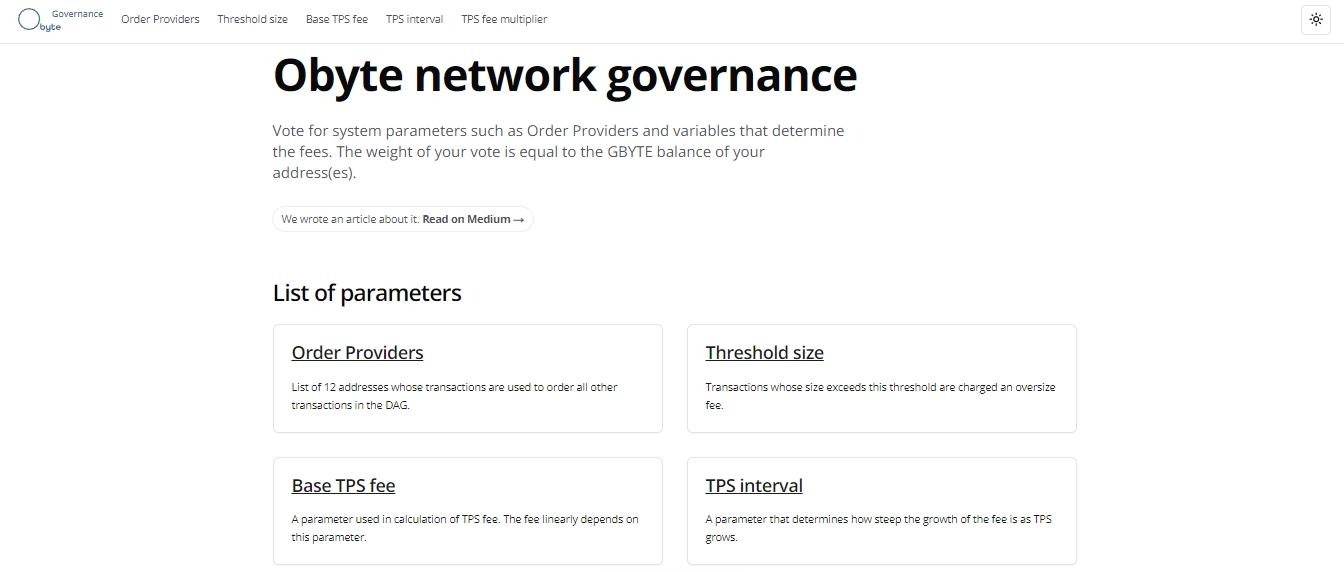
Obyte can be viewed as a model for both decentralization and democracy. This is a decentralized network built upon a Directed Acyclic Graph (DAG) structure that doesn’t require miners or “validators.” Therefore, users retain the authority over their assets in a truly decentralized way. At the same time, it offers on-chain governance, available for any GBYTE holder to vote on several aspects of the network.
What This Means for You
Now comes the practical part. Anyone exploring crypto benefits from separating these concepts while still appreciating how they work together. A network can be decentralized and democratic, decentralized but not very participatory, democratic but technically centralized, or anywhere between.
A simple checklist could help when evaluating crypto projects:
- Look at the node and validator distribution to understand architectural decentralization. The more nodes and participants, the merrier.
- Check who controls upgrades to see how political power is shared. Is it a foundation? Is it open-source? Is it a company?
- Look at governance participation to understand whether the community engages with proposals.
- Pay attention to off-chain dependencies that might centralize critical services. Those include oracles, bridges, and custodial services. Are they centralized? What happens if they fail?
- Observe whether discussions happen in open spaces where people can join freely. GitHub and Discord are great places to start.
These various pieces of advice will help you gain a better understanding of the project’s approach to balancing its commitment to freedom with its need for coordination. As the crypto market grows, the combination of decentralization and democracy will also evolve. Developers will find new ways to create tools that allow users to collaborate more effectively.
The entire space becomes more welcoming when people understand how these systems relate, and when they choose networks that match their expectations for resilience, inclusion, and long-term health.
n
Featured Vector Image by Freepik
n