Anthropic’s Claude Code tool is having a moment: It’s recently become popular among software developers for its use of agents to write code, run tests, call tools, and multitask. In recent months the company has begun to stress that Claude Code isn’t just for developers, but can let other kinds of workers build websites, create presentations, and do research—and stories about non-coders completing interesting projects have filled social media.
The latest offering, called Cowork, is a new version (and a rebranding) of Claude Code for work beyond coding, and it could dramatically widen the audience for Anthropic’s tools within the enterprise. Cowork is in “research preview” and is available only to Anthropic’s $100-per-month Max plan subscribers; there’s a waitlist for users on other plans.
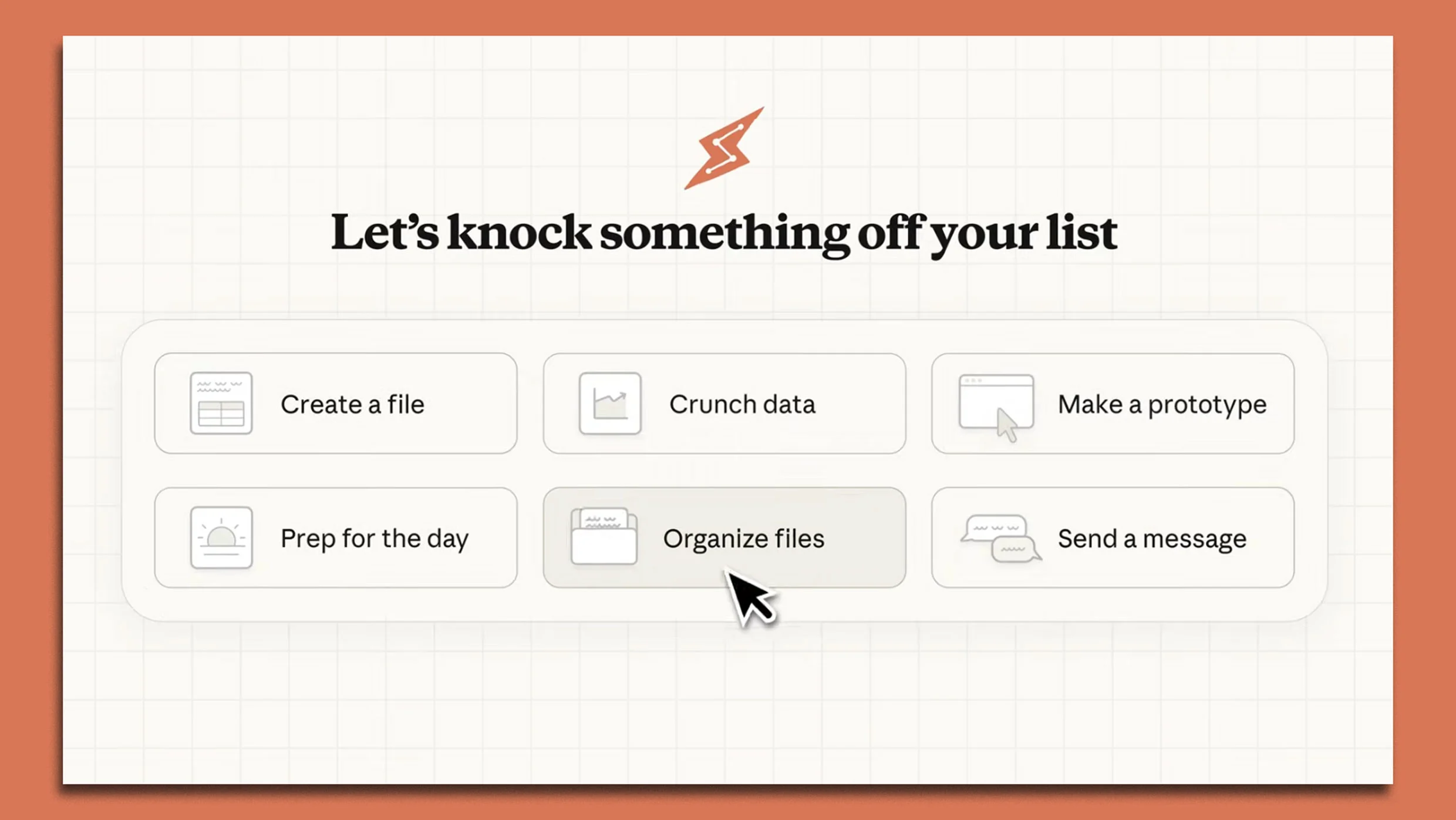
While Claude Code requires an API key and runs in the terminal, users can access Cowork through the Claude desktop app with a familiar chatbot interface. Most important, Cowork is built to access content stored in the file system on the user’s computer. A user can give the tool permission to modify, or just read, files in a given folder. They can also allow Claude to create new files or organize existing ones.
The new tool could help Anthropic as it eyes an IPO in 2026 (reportedly at a $350 billion valuation), and may put additional pressure on Microsoft, which offers a number of predefined AI agents (for things like research, analysis, and meeting facilitation) as part of its Copilot AI assistant. A December 2025 report from The Information claimed that Microsoft salespeople have been having trouble hitting their quotas selling the company’s Azure (cloud) AI products (including agents and agent builders) to enterprises. Microsoft denied the report.
Cowork can do simple things like organize a user’s desktop folders or the contents of a “downloads” folder. Or it can search folders and emails for recent expenses and collect them in a new folder.
But its most powerful use cases involve more complicated tasks. The tool can produce slide decks, large reports, or spreadsheets by calling up local (folder) data or data from connected business tools (such as Microsoft Teams or Zendesk) and then synthesizing the information.
For multipart tasks, Cowork can create subagents for each part. Each of the subagents start with a clean context window so it has plenty of room to gather and remember information about its task. (In single chats with complex tasks, chatbots sometimes run out of context window memory, or become overwhelmed with data and then fail to make sense of it.)