By using this site, you agree to the Privacy Policy and Terms of Use.
Accept
World of SoftwareWorld of SoftwareWorld of Software
  • News
  • Software
  • Mobile
  • Computing
  • Gaming
  • Videos
  • More
    • Gadget
    • Web Stories
    • Trending
    • Press Release
Search
  • Privacy
  • Terms
  • Advertise
  • Contact
Copyright © All Rights Reserved. World of Software.
Reading: Astronomers Created A 3D Map Of An Exoplanet We Can’t See – BGR
Share
Sign In
Notification Show More
Font ResizerAa
World of SoftwareWorld of Software
Font ResizerAa
  • Software
  • Mobile
  • Computing
  • Gadget
  • Gaming
  • Videos
Search
  • News
  • Software
  • Mobile
  • Computing
  • Gaming
  • Videos
  • More
    • Gadget
    • Web Stories
    • Trending
    • Press Release
Have an existing account? Sign In
Follow US
  • Privacy
  • Terms
  • Advertise
  • Contact
Copyright © All Rights Reserved. World of Software.
World of Software > News > Astronomers Created A 3D Map Of An Exoplanet We Can’t See – BGR
News

Astronomers Created A 3D Map Of An Exoplanet We Can’t See – BGR

News Room
Last updated: 2026/01/17 at 1:07 AM
News Room Published 17 January 2026
Share
Astronomers Created A 3D Map Of An Exoplanet We Can’t See – BGR
SHARE


Darryl Fonseka/Getty Images

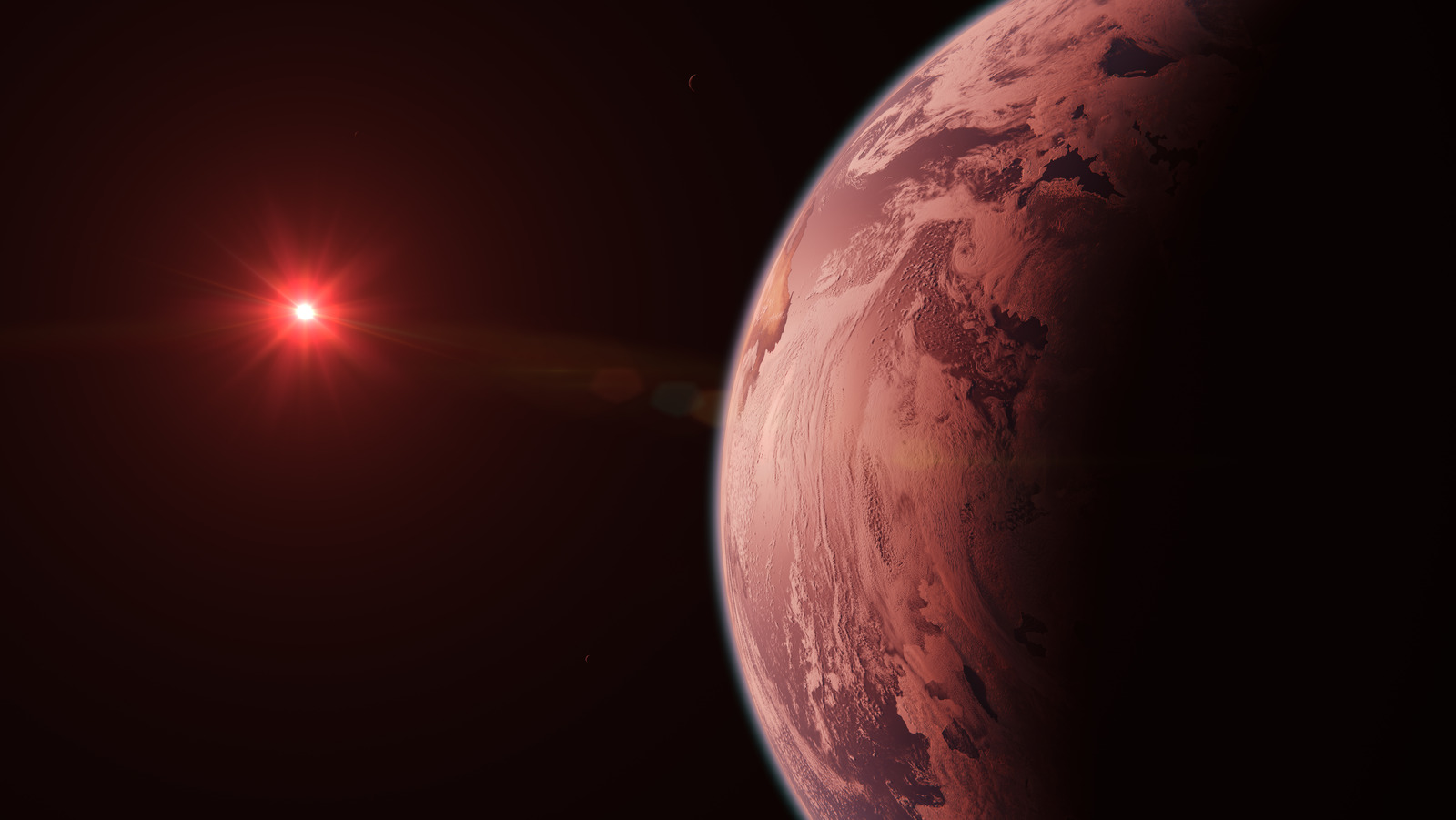
The James Webb Space Telescope (JWST) helped astronomers to find and create a 2D model of an exoplanet in 2023. More recently, in 2025, that same exoplanet has gotten a revolutionary 3D mapping treatment, helping scientists to understand it as never before. It is a new technique that promises to open up an exciting future for space research.

Exoplanets are planets that exist outside of our solar system. This specific one is called WASP-18b and is 400 lightyears from Earth. Though exoplanets can be very difficult to see, the James Webb Space Telescope has helped with such discoveries. WASP-18b in particular is a gas giant with a 23-hour orbit, and its 5,000 degrees Fahrenheit temperature helped it be seen by the JWST.

Creating a 3D map of WASP-18b was a challenging effort that brought together a team of 36 researchers from institutions such as Cornell University, Arizona State University, the Austrian Academy of Sciences, the University of Montreal, and more. Their work was published in the Nature Astronomy journal in late 2025 under the title “Horizontal and vertical exoplanet thermal structure from a JWST spectroscopic eclipse map.” Their process and findings can help us better understand what exists outside of our own solar system.

How this 3D map was made

Graphic of the James Webb Space Telescope in space
24k-production/Getty Images

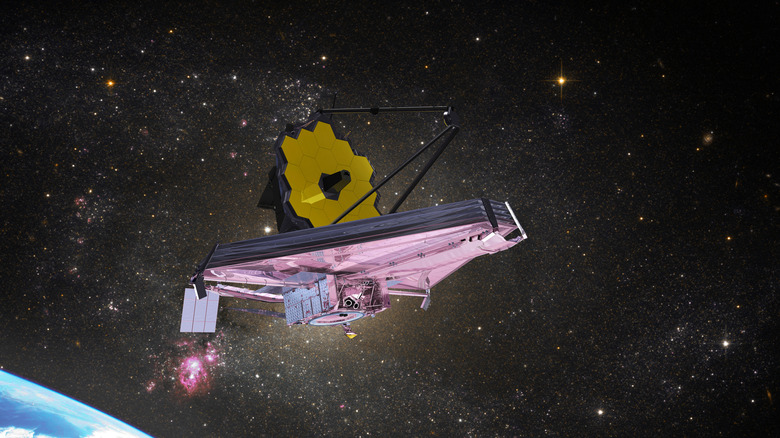
The power of the JWST was essential in this endeavor — this ultimate guide to the technology behind it and its capabilities gives a pretty good idea as to why. To turn the raw JWST data into a 3D map of this distant planet, the researchers used two different analysis techniques that look at how WASP-18b’s light changed as it passed behind its star. One method, called Eigenspectra, analyzed each slice of color separately, providing more flexibility and allowing it to match the observed JWST signals much better. The second method, ThERESA, tries to fit everything at once using a full 3D model of the planet, which makes it more physically realistic but also harder to fine-tune, so it didn’t capture some of the details seen in the data.

To overcome this, the Eigenspectra were the research team’s focus with ThERESA being used mainly for confirmation. By watching how the planet’s infrared light disappeared as it slipped behind its star, they reconstructed a three-dimensional picture of its atmosphere. The researchers grouped together regions of the planet based on similarly measured characteristics. They then used established atmospheric modeling tools to figure out how temperature changes with height and which chemicals are present in different parts of the planet.

The final result was a layered, region-by-region atmospheric profile, allowing scientists to reconstruct a 3D view of an exoplanet’s atmosphere. The map revealed two distinct regions, with a hotter one facing the star it orbited and a cooler ring around the planet’s edge.

How this can help view other exoplanets

an image of outer space with stars, planets, and galaxies
Bymuratdeniz/Getty Images

The researchers refer to this technique as 3D eclipse mapping or as spectroscopic eclipse mapping. By combining the JWST and this technique, the researchers are hopeful that more exoplanets can be seen more clearly, as the James Webb’s discoveries continue to challenge what we know about the universe.

As this technique could open up understanding more and more exoplanets, the research team sees this as an opportunity to understand these planets as a whole and how they individually vary. There are currently about 6,000 known exoplanets, so it is quite exciting to think about the possibility of 3D eclipse mapping being used on each of them to build a more thorough picture.

Looking to the future, the team already sees some improvements that can be made to the technique. With further observations of WASP-18b using the James Webb Space Telescope, the data can be further refined and expanded to create an even better 3D map. As the JWST makes new research possible, we can eagerly wait and see what future 3D mapping reveals about our universe.




Sign Up For Daily Newsletter

Be keep up! Get the latest breaking news delivered straight to your inbox.
By signing up, you agree to our Terms of Use and acknowledge the data practices in our Privacy Policy. You may unsubscribe at any time.
Share This Article
Facebook Twitter Email Print
Share
What do you think?
Love0
Sad0
Happy0
Sleepy0
Angry0
Dead0
Wink0
Previous Article X still allowing users to post sexualised images generated by Grok AI tool X still allowing users to post sexualised images generated by Grok AI tool
Next Article Samsung TV Transfer Portal: Get  Venmo to find a better watch party Samsung TV Transfer Portal: Get $50 Venmo to find a better watch party
Leave a comment

Leave a Reply Cancel reply

Your email address will not be published. Required fields are marked *

Stay Connected

248.1k Like
69.1k Follow
134k Pin
54.3k Follow

Latest News

OpenAI to Show Ads in ChatGPT for Logged-In U.S. Adults on Free and Go Plans
Computing
The technology sector eliminated almost 245,000 jobs globally in 2025
Mobile
AYANEO’s fancy Game Boy-like handheld is arriving earlier than expected
News
Muvment by Autogirl: Lessons from Nigeria’s P2P car rental market
Computing

You Might also Like

AYANEO’s fancy Game Boy-like handheld is arriving earlier than expected
News

AYANEO’s fancy Game Boy-like handheld is arriving earlier than expected

3 Min Read
Microsoft shutting down Skype in May
News

Microsoft shutting down Skype in May

4 Min Read
Database maker ClickHouse raises 0M, acquires AI observability startup Langfuse –  News
News

Database maker ClickHouse raises $400M, acquires AI observability startup Langfuse – News

5 Min Read
Pulumi Adds Native Support for Terraform and HCL
News

Pulumi Adds Native Support for Terraform and HCL

4 Min Read
//

World of Software is your one-stop website for the latest tech news and updates, follow us now to get the news that matters to you.

Quick Link

  • Privacy Policy
  • Terms of use
  • Advertise
  • Contact

Topics

  • Computing
  • Software
  • Press Release
  • Trending

Sign Up for Our Newsletter

Subscribe to our newsletter to get our newest articles instantly!

World of SoftwareWorld of Software
Follow US
Copyright © All Rights Reserved. World of Software.
Welcome Back!

Sign in to your account

Lost your password?