As enterprise AI matures, the limiting factor is moving beyond raw compute and into the messy reality of continuous systems: data access, orchestration, governance and integration across cloud, on-premises and edge environments. The pressure is on for infrastructure providers to help organizations operationalize AI without stitching together a fragile stack of point products that slows deployment and inflates cost.
That shift shows up in the data layer. In fact, theCUBE Research’s recent survey of enterprise AI teams found that 64% say insufficient storage throughput — not GPU count — is their biggest roadblock to scaling model training, while 58% report that fragmented storage hinders unified data workflows. Those constraints point to a platform design problem: AI teams can’t scale what they can’t reliably access, govern and route.
Unified software platform company Vast Data is betting that the answer is a consolidated AI operating system — a single platform that unifies data services and makes them available wherever compute runs. Vast’s disaggregated, shared-everything (DASE) architecture is designed to scale data capacity independent of compute, while supporting the real-world mix of file, object, database and streaming needs that sit underneath modern AI pipelines.
“Vast’s move toward compute‑near‑data capabilities, enabling transformations, analytics or light inference directly on the data platform, becomes especially compelling in that context,” said Paul Nashawaty, principal analyst at theCUBE Research. “The result: Organizations can scale multi‑GPU clusters or distributed AI infrastructures without storage bottlenecks or architectural overhead. In short, Vast doesn’t just offer fast storage; it delivers the kind of scalable, unified and high-throughput data substrate that modern AI and HPC infrastructures fundamentally need.”
This feature examines how AI platforms are evolving into continuous, data-driven systems — and why unified data access, orchestration and platform integration are becoming the real constraints on scaling AI across enterprise, cloud and neocloud environments. (* Disclosure below.)
Continuous systems are shaping the future of enterprise AI
For organizations trying to move from experiments to production, AI is increasingly less about one-time training runs and more about continuous inference, retrieval, feedback loops and agentic workflows that depend on live, governed data. That evolution raises the bar for the platform underneath: Teams need a unified foundation that can serve data products in real time, support orchestration at scale and integrate cleanly with the services where developers actually work.
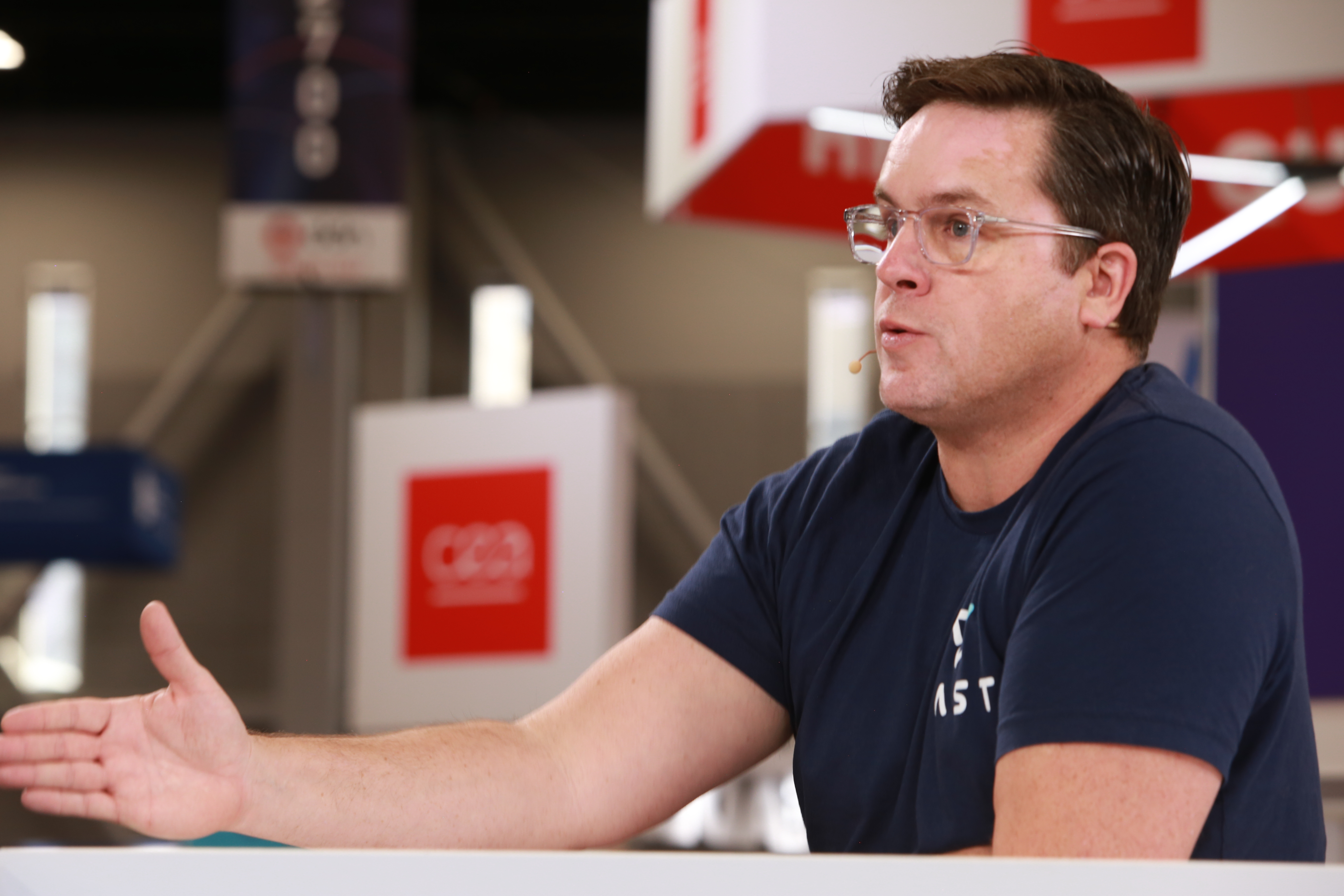
That’s the core of Vast’s AI OS story — not “bridge storage into HPC,” but consolidate the stitched-together components that make AI brittle. During a recent interview with theCUBE, News Media’s livestreaming studio, Jeff Denworth (pictured), co-founder of Vast, framed the company’s direction as making Vast available wherever customers compute and pairing that portability with tighter integration into major cloud ecosystems.
“The fundamental principle of our business plan is that we want customers to be able to benefit from Vast wherever they want to compute,” he said. “That starts by supporting all the different platforms that customers may want to compute on. Being able to put our software natively in their early days.”
Soon, Vast customers will be able to run object, file, database, vector database and event-streaming services — along with agent deployment — on Azure. The bigger value, though, comes from closer collaboration with Microsoft, both through co-designed platform engineering that better surfaces Vast’s software capabilities and deeper integration with Microsoft’s first-party services, giving customers a more unified data experience across Azure.
That integration emphasis also speaks directly to the challenge many enterprises face: pilots that never become production systems because the platform can’t meet resiliency, security and governance requirements at scale.
Consolidating the ‘five different pieces’ into one platform
Vast’s core message and value proposition resonates with neoclouds and GPU-as-a-service providers for a similar reason: These operators are under pressure to extract efficiency from massive AI investments, and “just renting GPUs” isn’t enough to differentiate their offerings. They need a service layer — but building (and operating) every component internally slows time-to-market.
“In terms of the neoclouds, we’re increasingly seeing them want to offer more services to their end users,” said Andy Pernsteiner, field chief technology officer of Vast, during an interview with theCUBE. “Renting GPUs by the hour is one thing, but providing service layers on top of it … if you think about, let’s say, CoreWeave, do they want to have to build their own block store, their own database table format? Do they want to have to create their own mechanisms for doing all these things, or would they rather take something that exists and is on the same platform, what they’re using for everything else, and expose it?”
That same “platform, not parts” story extends into the enterprise, where teams frequently get stuck in proof-of-concept purgatory because they lack the operational controls to deploy AI systems broadly.
Enterprise environments face an added layer of complexity, with formal processes, internal policies and regulatory constraints — particularly in financial services — that make it difficult to move quickly. Those controls often slow AI adoption, even when the technology itself is ready to scale, Pernsteiner added.
“We find that, oftentimes — and this is something common I see in the large banks — that they can start a pilot to create an AI factory, for example, but they can’t bring it to production at scale because they don’t have a platform that gives them all of the resiliency and the security and the traceability and data governance that’s required, So, it stays in a sandbox forever.”
From Vast’s perspective, consolidating capabilities into the platform reduces the need for endless tool evaluations and separate operational islands. For instance, many sandbox projects stall as teams spend cycles debating infrastructure choices — from vector databases to models — rather than progressing toward production, a pattern Vast aims to address by embedding much of that functionality directly into the platform, according to Pernsteiner.
“Nobody really wants to go manage a separate Kafka cluster, to manage native services on their own,” he said. “They don’t want to manage all these pieces. It’d be much easier if it was integrated into a platform, and that’s where we’re really focusing energy.”
Reliability, security and data movement become AI requirements
As AI expands into distributed environments — including edge inference and hybrid deployments — reliability and secure data movement become first-order platform requirements, not bolt-on features. Vast has been evolving encryption and protection capabilities, and it recently announced SyncEngine, described as a “universal data router” designed to streamline migration and integrate external sources through advanced pipelines.
That evolution is part of the company’s shift from its roots into a broader enterprise-and-AI platform story, according to Pernsteiner.
“If you think about back in time, the HPC community was our focus, primarily the research labs and a lot of the publicly funded research institutions. Our focus initially was providing a cost-effective all-flash storage platform for doing large-scale analytics and data processing,” he said. “But we wanted to solve bigger problems. We extended the platform to support enterprise-grade encryption, data protection services, all of the things that people would expect from what you would consider to be a more traditional enterprise file system we brought to large-scale, all-flash implementations.”
Over the past several years, there’s been the dawn of the neoclouds or the GPU as a service clouds, and reliability is becoming less of a technical concern and more of an economic one for AI operators running at neocloud scale, according to both Pernsteiner and Denworth. As clusters grow into the tens of thousands of GPUs, even brief disruptions can cascade through customer commitments, service-level agreements and revenue models. For providers monetizing AI infrastructure, downtime isn’t just an operational headache — it directly cuts into margins and turns scale itself into financial risk.
“I can’t overstate how important that is for organizations that are paying SLAs back to customers when their clusters fall down,” Denworth said. “You think about a 10,000, 20,000, 100,000 GPU cluster, when these things go bump in the night, the cash machine starts ringing, but in the opposite direction of what these cloud vendors hope for because they have to pay SLA penalties.”
Taken together, Vast’s message is that AI has outgrown stitched-together infrastructure — and the next wave of AI efficiency will come from unified platforms that make data accessible, governable and usable across every place organizations compute.
(* Disclosure: TheCUBE is a paid media partner. Neither Vast nor other sponsors have editorial control over content on theCUBE or News.)
Photo: News
Support our mission to keep content open and free by engaging with theCUBE community. Join theCUBE’s Alumni Trust Network, where technology leaders connect, share intelligence and create opportunities.
- 15M+ viewers of theCUBE videos, powering conversations across AI, cloud, cybersecurity and more
- 11.4k+ theCUBE alumni — Connect with more than 11,400 tech and business leaders shaping the future through a unique trusted-based network.
About News Media
Founded by tech visionaries John Furrier and Dave Vellante, News Media has built a dynamic ecosystem of industry-leading digital media brands that reach 15+ million elite tech professionals. Our new proprietary theCUBE AI Video Cloud is breaking ground in audience interaction, leveraging theCUBEai.com neural network to help technology companies make data-driven decisions and stay at the forefront of industry conversations.