Kaitlyn Cimino / Android Authority
Then, Oura rolled out two updates I didn’t see coming: colorful, ceramic Oura Ring 4 variants and multi-device support. While neither was something I’d been actively pining for, the combo has reshaped how the ring fits into my daily life.
Would you purchase a ceramic Oura Ring 4?
64 votes
Adding a sense of style

Kaitlyn Cimino / Android Authority
Oura has positioned its ring as a piece of jewelry from the beginning. To Oura’s credit, they’re certainly more subtle than a wrist-based wearable, but they aren’t fooling anyone either. Thick metal builds (primarily lightweight titanium) finished in neutral metallics mean they still read like a piece of tech or, at best, a man’s wedding band. The finishes also age like most coated wearables, showing fine scratches and losing polish over time. Generally, I’m fine with these limitations of the form factor, even if I’m eager for the day when smart rings aren’t so bulky.
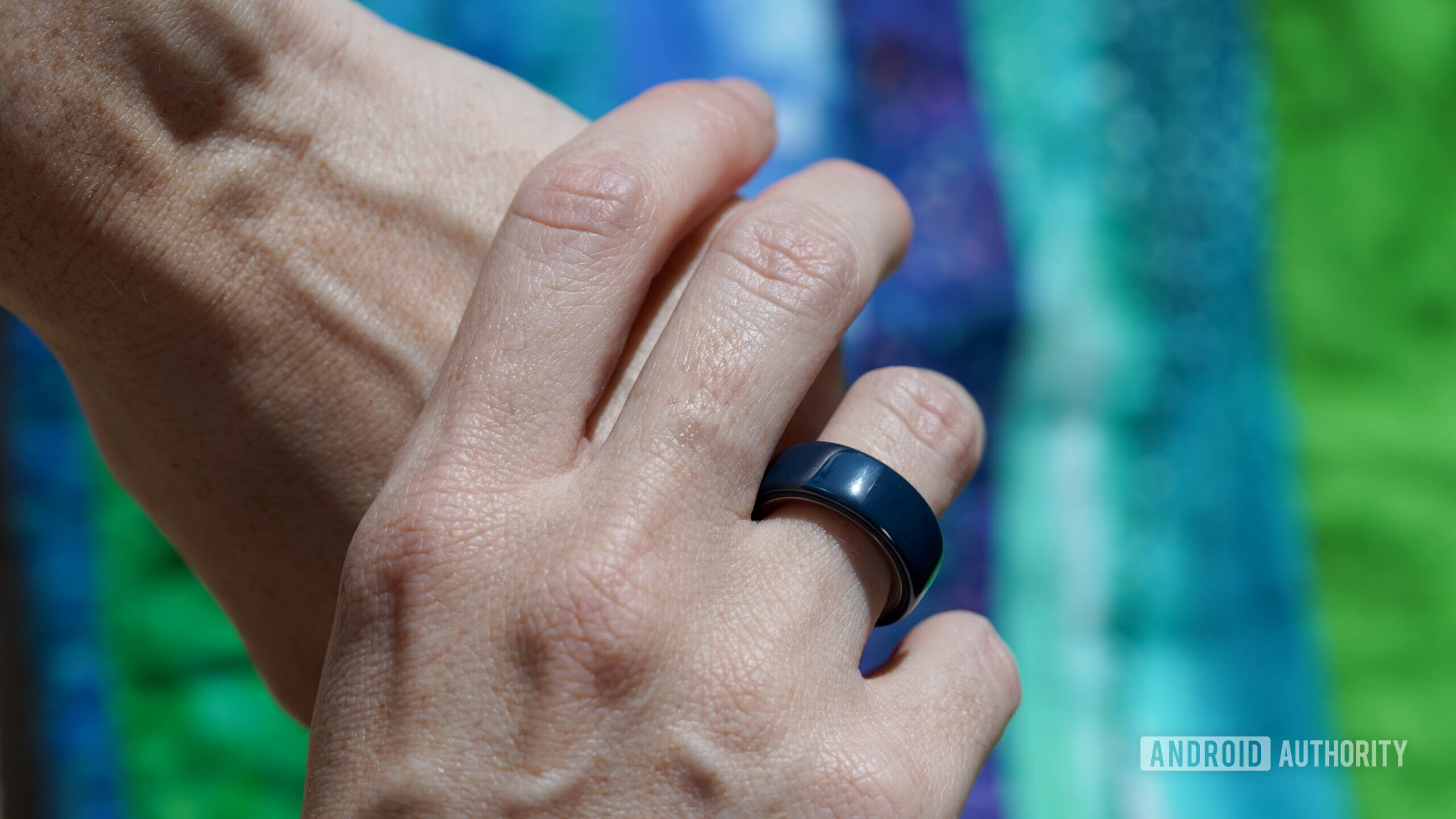
The ceramic models are completely different. They offer a smoother, more refined look and are far more scratch-resistant because their color is baked into the material rather than coated on top. Mine has stayed pristine through workouts and constant wear (the same routine that usually starts to mark up metal rings).

The ceramic options are also gorgeous. I genuinely had a hard time choosing one, and though I absolutely love the Midnight colorway I landed on, I still think about Tide’s pastel-green on a semi-regular basis. The other options, Petal (a blushy pink/lilac) and Cloud (a soft white), are equally attractive.
The ceramic models genuinely feel like styled jewelry.
Instead of variations of metal tones, they feel like real style choices, which is the hope with a tracker posing as jewelry. Over the holidays, friends and family noticed my ceramic Oura Ring as a ring first (admittedly, still a bulky one) and were surprised to learn it was a health tracker. That’s the clearest sign yet that Oura’s jewelry pitch is finally landing.
Multi-device support

Kaitlyn Cimino / Android Authority
The second change isn’t immediately obvious, or at least you won’t notice it on your finger so much as in the Oura app. Until now, Oura has allowed only one ring per account, which meant that whatever size and finish you chose at the start was a long-term commitment. Multi-device support finally removes that constraint, so I can switch between rings without re-pairing and keep my data continuous. There’s no friction or need to manage devices; the transition happens automatically in the background.
Being able to switch rings without re-pairing quietly changed how I use Oura day to day.
What surprised me is how much this changed my daily use. I’ll reach for my standard ring to wear around the house or at my desk, then switch to the ceramic ring when I’m heading out and want something that looks more deliberate. The duality makes charging nearly mindless, as my charger becomes a landing station for whichever ring isn’t in use. The ability to swap back and forth makes the experience feel more flexible overall.
There’s no getting around the cost. Owning multiple rings won’t be realistic for everyone, and it’s not how most users will interact with Oura. Still, the importance of this update isn’t about encouraging people to buy more hardware. It’s about giving users choices.
The one-two punch

Kaitlyn Cimino / Android Authority
Neither update would carry the same weight on its own. New designs without multi-device support would still confine users to a single aesthetic. Multi-device support without compelling design options would feel abstract, and most existing users wouldn’t invest in a new variant just to replace a permanent fixture on their finger. Part of the appeal of the ceramic colors is the contrast they create alongside Oura’s more traditional finishes.
Neither update matters much on its own, but the combination changes the Oura experience.
Together, they create genuine flexibility. Most wearables still lock users into a fixed visual identity. Some brands don’t support multi-device use (looking at you, Fitbit), and even when accessories like interchangeable bands are an option, the core look rarely changes. Rings are typically even more restrictive.
Oura’s approach breaks that pattern. New hardware introduces real variation, and updated software supports it without friction.
Headed for the jewelry box
Oura’s jewelry claim feels closer to the truth, or at least more attainable. The ceramic better reflects my personal style, and that alone has made me more inclined to keep the ring on. Combined with multi-device support, it feels like Oura is finally helping the ring category move beyond one-size-fits-all hardware. Now, please, someone launch rings designed for tiny hands.
Don’t want to miss the best from Android Authority?


Thank you for being part of our community. Read our Comment Policy before posting.