
A quick Google search for how to turn social followers into SMS subscribers will drown you in “strategies” (post more reels, run giveaways, comment-to-DM funnels, etc.)… and then go weirdly quiet when you ask the practical question:
Cool. What tools do I use to actually do that without duct tape and missed opt-ins?
That gap is exactly what this guide fills.
As of September, Mark Zuckerberg announced on Threads that Instagram alone has over 3 billion monthly active users, and that number has almost certainly grown since.
But scale doesn’t equal control. No matter how large your following is, social reach is still rented attention: algorithms decide who sees your posts, when they see them, and whether they see them at all.
SMS is the opposite: when someone opts in, you can reach them directly. And it’s fast. One recent benchmark from Mobile Text Alerts puts SMS at 55% open rates and “view rates” of 100%. That’s why it’s a good idea for many brands to move from “hope the algorithm shows it” to “send it to people who asked for it.”
So let’s skip the fluffy advice and get into what you came for: 7 tools that help you turn social followers into SMS subscribers, with examples of how to use each one in real campaigns.
What to Look for in Tools That Convert Followers to SMS Subscribers
Before we get into tools, it’s important to set a baseline for what actually makes a social-to-SMS setup work.
When you’re evaluating tools to help turn social followers into SMS subscribers, focus on capabilities that are known to reduce friction, support compliant opt-ins, and improve follow-through after signup.
SMS tools that perform well here tend to share these traits.
1. Low-friction opt-ins:
Social platforms are fast, interrupt-driven environments. People tap, scroll, and move on. Tools that ask for minimal effort like keyword-based opt-ins, mobile-first signup links, or QR codes that open directly to a form, align with what conversion research consistently shows: the fewer steps involved, the higher the likelihood someone completes the action.
If opting in feels like work, most followers simply won’t finish.
2. Built-in compliance and consent capture:
SMS is regulated. Explicit consent, clear disclosures, and easy opt-outs are compulsory requirements. Check for SMS tools that automatically handle:
- Opt-in language
- Consent logging
- STOP and HELP responses
Plus, they should be able to easily guide you through the process of compliant sending number registration, which is necessary to make sure your text messages are actually delivered.
3. Social-native usage:
Not all tools that “support social” actually fit how social platforms are used. Strong tools work naturally with:
- Instagram bios and Stories
- TikTok profile links
- Comment-driven CTAs
- Short, repeatable instructions in captions
If the opt-in flow requires explaining multiple steps, it’s misaligned with how people behave on social media.
4. Immediate follow-up after opt-in:
Across email and messaging channels, immediate welcome messages are a widely accepted best practice.
They confirm the subscription, set expectations, and reduce early opt-outs. SMS tools that trigger automation the moment someone subscribes help ensure that initial intent doesn’t go cold.
Look out for that.
5. Clear attribution and tracking:
Subscriber growth only becomes useful when you understand where it’s coming from.
Tools that show which platform, link, or keyword drove each opt-in make it possible to compare performance and improve over time, rather than relying on guesswork.
If a tool checks these boxes, it’s designed to convert social followers into SMS subscribers in real conditions. With that framework in place, we can now look at the tools that do this best.
7 Tools That Help Turn Social Followers Into SMS Subscribers
Turning social followers into SMS subscribers isn’t about finding one “magic” platform. It’s about assembling a small stack where each tool handles one job well; from capturing intent to completing a compliant opt-in.
Here are seven tools that are commonly used at different points in that journey.
1. Mobile Text Alerts (SMS opt-in and automation)
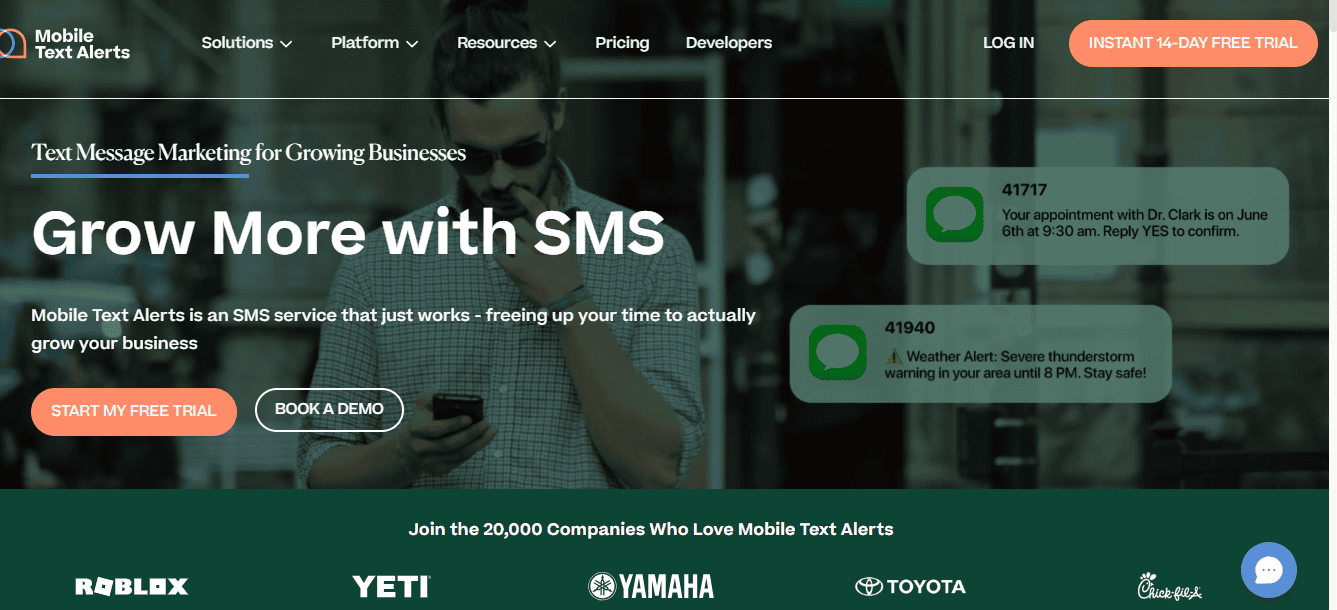
At the center of any social-to-SMS setup is an SMS platform that can legally collect phone numbers, confirm consent, and follow up immediately.
Mobile Text Alerts is built for that moment when a follower decides to opt in. It supports keyword-based subscriptions and mobile signup links, then sends an instant confirmation message so subscribers know what they signed up for and what to expect next.
This matters because social-driven opt-ins are impulsive by nature. When someone taps a link or texts a keyword from Instagram or LinkedIn, delays create confusion. An immediate response closes the loop while intent is still high.
Another worthy-of-note feature is its inbuilt analytics, plus it can integrate with other tools like HubSpot.
2. ManyChat
ManyChat is often used to respond automatically to comments and direct messages on platforms like Instagram and Facebook.
For SMS growth, its role is simple: it helps surface intent. When a follower comments “info,” “yes,” or “how?” on a post, ManyChat can trigger a response that points them toward an SMS opt-in, such as instructions to text a keyword or visit a signup link.
This works well because it meets people where they already are. Instead of pushing followers off-platform immediately, it uses conversation to guide them toward the next step.
3. Linktree (link-in-bio distribution)
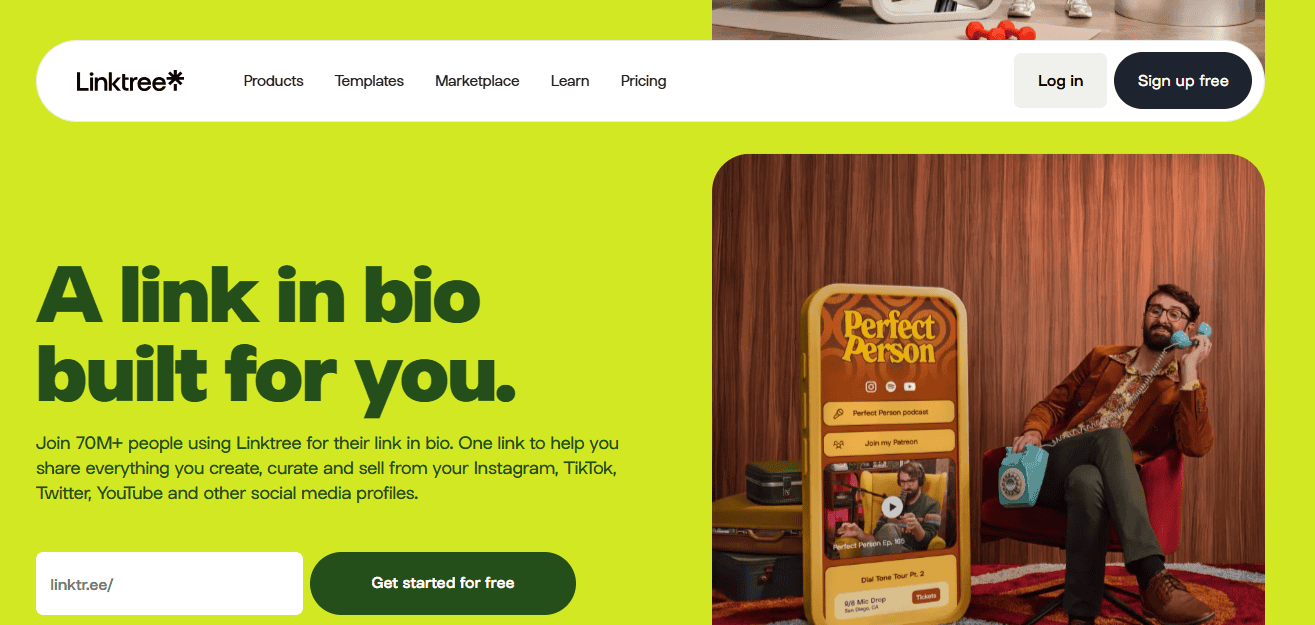
By acting as a single destination for multiple links, it gives SMS signup links a permanent, visible place in a profile bio. Followers don’t need to search through old posts or wait for a specific story before they can opt in.
Linktree makes your SMS link available for them whenever.
Note: Linktree doesn’t collect subscribers itself, but it removes one of the most common sources of friction between interest and action.
4. Bitly (short links and click tracking)
Short links are often overlooked, but they’re useful in SMS-focused social funnels.
Bitly allows you to create links for captions, comments, and bios, while also tracking how often those links are clicked.
When those links lead to SMS signup pages, you get basic visibility into which posts and platforms are driving traffic.
This is especially useful on platforms where long URLs look spammy or get truncated.
5. QR code generators (offline-to-SMS opt-ins)
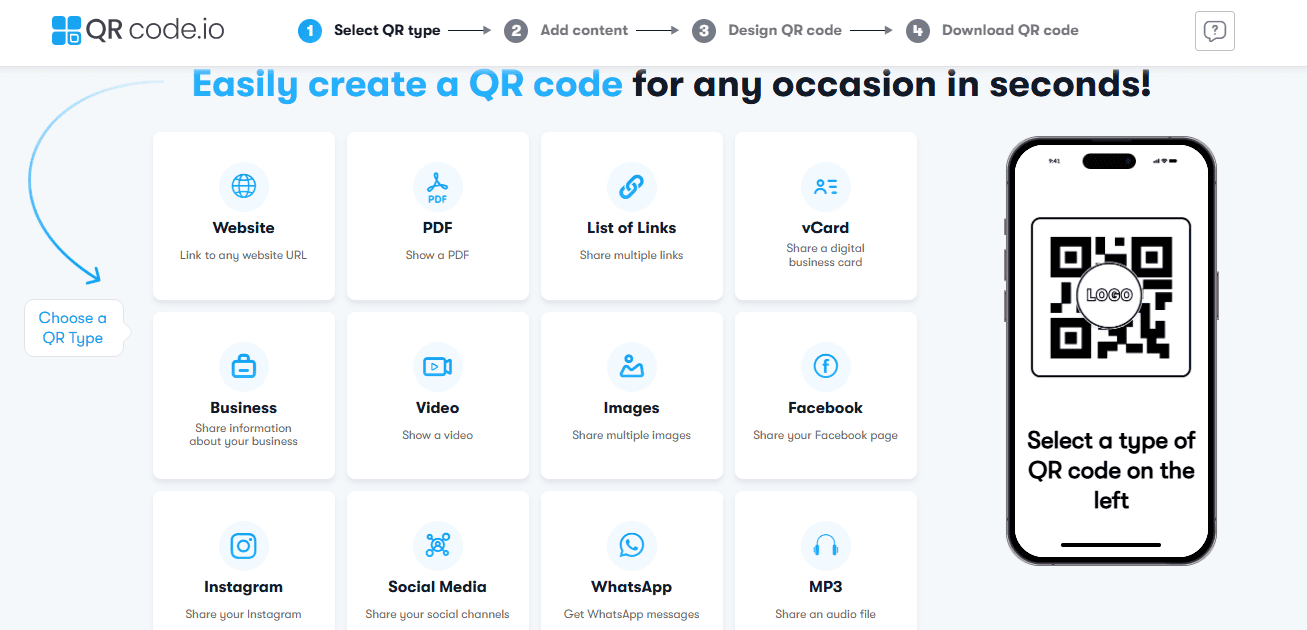
QR codes extend SMS opt-ins beyond screens.
They’re commonly used at events, meetups, pop-ups, and even on packaging—places where social followers might encounter a brand offline.
When scanned, a QR code can open directly to a mobile SMS signup or pre-filled message. Effective QR codes don’t send people to a homepage; they send them straight to an opt-in flow designed for mobile use.
Used correctly, QR tools help capture subscribers at moments when typing or searching isn’t practical.
6. Google Forms
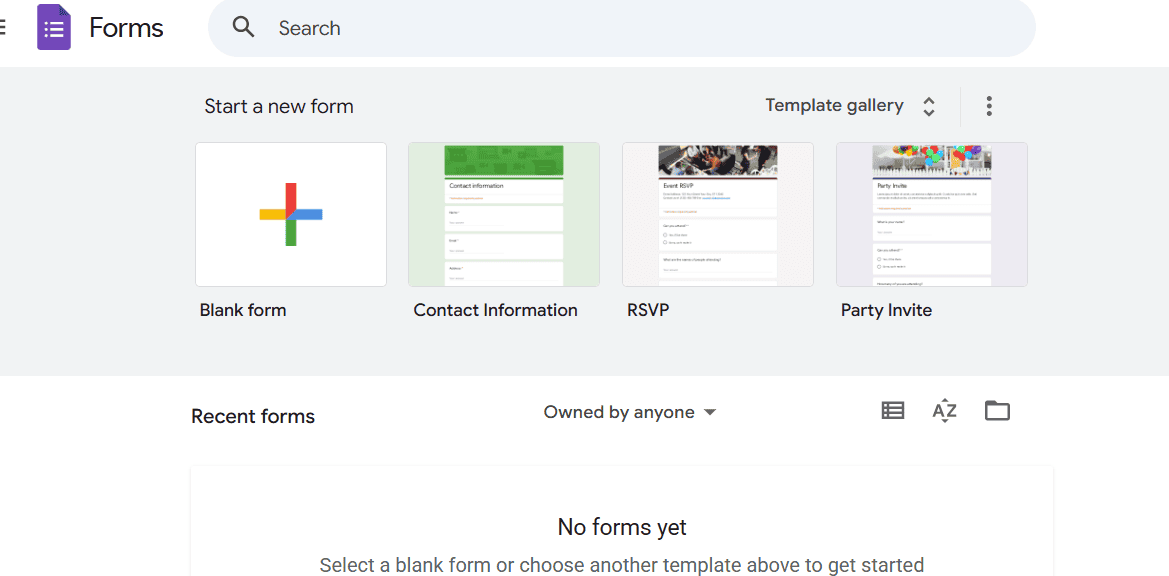
While not purpose-built for SMS, Google Forms is often used as a lightweight way to collect opt-ins from social traffic, especially for early-stage campaigns.
Its value lies in familiarity and speed. Most users know how to interact with it, and forms can be kept short and mobile-friendly.
When paired with clear consent language and a follow-up SMS workflow, it can function as a basic entry point into an SMS list.
This approach works best when simplicity matters more than customization.
7. Google Analytics
You can’t improve what you don’t measure.
Google Analytics helps track which social platforms, links, or pages are driving SMS signups.
When your opt-in pages are tagged correctly, you can see patterns such as which channels bring the most traffic or which campaigns produce spikes in subscriptions.
This doesn’t tell you everything about subscriber quality, but it gives enough context to make informed decisions about where to focus your efforts.
Each of these tools handles a different part of the same process. You don’t need all of them to start. But understanding what each one does makes it easier to build a setup that turns social followers into SMS subscribers consistently, not accidentally.
How to Combine These Tools Into a Simple Social-to-SMS Workflow
The tools above don’t operate in isolation. Each one supports a specific moment in the same flow, from the first sign of interest on social to a confirmed SMS opt-in. When used in sequence, they form a simple, repeatable process.
Here’s what a simple, repeatable workflow looks like in practice.
Step 1: Capture intent where engagement already happens
Everything starts on social media. Posts, comments, Stories, and captions are where interest shows up first. The goal at this stage isn’t to collect phone numbers yet, it’s to surface intent.
That might look like:
- A caption that invites people to “get updates by text”
- A comment prompt that encourages replies
- A Story sticker pointing followers to your bio link
Tools like ManyChat help here by responding consistently when someone engages, so no interested follower falls through the cracks.
Step 2: Give followers one clear next action
Once someone signals interest, the next step has to be obvious and lightweight. Most funnels break here because people are unsure what to do next and once they leave, it’s hard to get them back.
Forbes records a whopping 88% of online users won’t come back after a bad website experience.
A strong next action is:
- Easy to understand in one glance
- Optimized for mobile
- Clearly framed as optional and permission-based
This is where link-in-bio tools, short links, or simple instructions like “Text JOIN to…” do the heavy lifting.
Step 3: Complete the SMS opt-in immediately
When a follower takes that next step, timing matters.
Whether they click a link or text a keyword, the SMS platform should respond right away with a confirmation message.
This does two things:
- Confirms the subscription was successful
- Sets expectations for what they’ll receive
Immediate feedback reassures subscribers and prevents confusion, especially when opt-ins happen quickly from social feeds.
Step 4: Organize subscribers by source
As subscribers start coming in, organization becomes more important than volume.
Tagging or grouping subscribers by where they came from—Instagram, LinkedIn, an event, a QR code—makes future messaging more relevant. It also helps you understand which channels are actually driving SMS growth, instead of guessing based on follower counts.
This step is what turns a growing list into a usable one.
Step 5: Measure, adjust, and repeat
Finally, look at the signals that matter:
- Which links get clicked
- Which platforms send the most opt-ins
- Which CTAs consistently lead to subscriptions
You don’t need complex dashboards to start. Even basic analytics can show patterns over time. Once you see what works, you repeat it, and stop promoting what doesn’t.
That’s the workflow.
When these tools are combined with intent and simplicity in mind, turning social followers into SMS subscribers becomes a system you can run week after week, not a one-off experiment.
Final Thoughts to Turn Social Followers into SMS Subscribers
You’ve just walked through the tools that let you actually convert your social following to SMS subscribers, and how they fit together in a real workflow.
The next thing to do is to stop treating SMS as something you’ll “set up later” and start testing it where your audience already pays attention.
You don’t need a complex stack or a polished campaign to begin.
One clear CTA, one opt-in path, and one follow-up message is enough to see whether your social followers are willing to raise their hand and hear from you directly.
Social platforms will keep changing how and when your content gets seen. An SMS list doesn’t work that way. Once someone opts in, you have a direct line you control.
Pick one channel, launch a simple flow, and let the response guide what you build next.