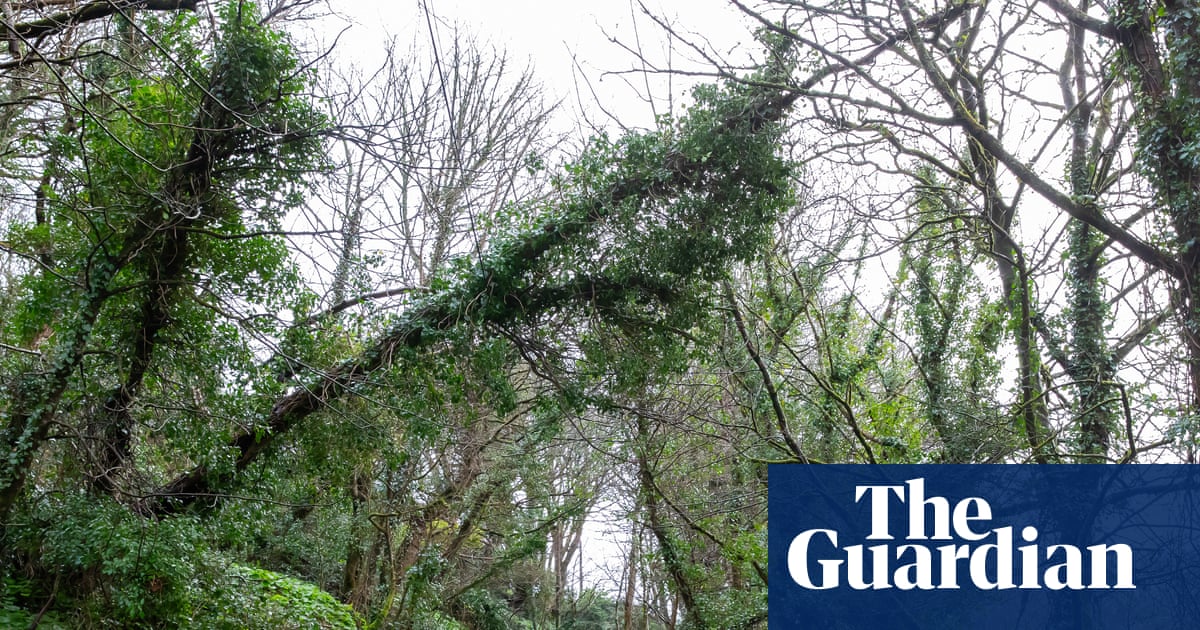
Accessed by a steep, winding lane, the tiny settlement of Cucurrian in the far-west of Cornwall feels remote at the best of times. But over the last two weeks, the people who live here have felt even more isolated after they were left without a way of communicating with the outside world as a result of Storm Goretti.
“I think people feel let down, angry, failed,” said Mark Pugh, an audiobook producer, who has spent more hours than he would care to tot up carefully picking his way out of Cucurrian and sitting in his car in a layby to find a mobile signal good enough to work from. “This storm has shown that Cornwall isn’t resilient enough. A lot is promised, but not enough is delivered.”
Goretti brought down thousands of power, phone and broadband lines and caused countless trees to fall, including one that crushed the caravan of 50-year-old James Southey and killed him.
For days, many hundreds of people were left without power, water or both, but while those services have been restored, communication links in some places remain down a fortnight on. In a world where reliable online connections are needed for everything from health consultations to banking, it makes life very difficult.
“It’s like we’re forgotten,” said Elaine Claxton, 70, an actor, as she pointed to the wires still broken and dangling next to a giant fallen tree on the lane leading to her home in Cucurrian. She has no broadband, no landline and the mobile signal is unreliable at best. Staying in touch with frail family members a few miles away has been fraught.
Her sister, Shelley Claxton, 63, an animal trainer, said places such as Cucurrian were resilient. “When you’re as remote as we are, you have to be, but I think this storm shows us we need to do something different. Nature is whipping up more and more storms and we need to find ways of adapting to that.”
On the Lizard peninsula, the southernmost point of the British mainland, Sam Kirby, 53, described how the communication breakdown led to difficulties in working as a digital marketing consultant and in her volunteer role as a coastguard rescue officer.
Her old-style copper landline meant the coastguard station officer could – just about – contact her by phone, but without broadband, working was challenging.
“I had to go full digital nomad, which included time working in a supermarket car park with the car heater on, in the library, and basically perching anywhere I could to find wifi,” she said.
“We’re constantly being told by those pushing Cornwall as a place to work that we’ve got to trade nationally or internationally, that we have the best broadband in the country, that we’re a booming digital economy. It’s hard to boom digitally when you can’t even get a text message out.”
Kirby and the people of Cucurrian are angry that Openreach, which builds and maintains the UK’s largest broadband network, has not restored services more quickly.
There is concern that the continuing switch from copper phone lines to full-fibre broadband makes them more vulnerable. “If this happens again next year, we won’t even have the copper landline so won’t have any link out at all,” said Kirby.
It is not just remote communities that have been hit. Karen Bennett, 72, lives close to Penzance town centre but a pine tree brought down a pole there, cutting off her broadband.
A new pole has been put up but the broadband hasn’t returned, making her work as chair of the twinning association forging links between Penzance and the French town of Concarneau difficult. “We’ve had to find ways of working around it,” she said. “It’s frustrating. We still don’t know when the broadband will be back.”
These are interesting political and cultural times in Cornwall. The UK government has indicated that it will explore a bespoke devolution deal for Cornwall, possibly giving it more control over transport, housing and economic development.
This week the Cornish language – Kernewek – was officially recognised under part three of the European charter for regional or minority languages, which gives it greater protection and status.
But the loss of power, water and the continuing communications issues have made many Cornish people question whether the rest of the UK cares enough about the far-west of Britain, when it is not holidaying or visiting second homes there.
Loveday Jenkin, a leading member of the political party Mebyon Kernow, which campaigns for greater self-government for Cornwall, said Goretti had exposed weaknesses in its infrastructure.
“It shows Cornwall should have more devolved resilience money,” Jenkin said. “People want to treat Cornwall as a holiday playground. They need to recognise that there are people on the ground who have to manage it but don’t have the money.”
Jenkin spoke as yet another storm, named Ingrid by the Portuguese national weather service, brought in strong winds and heavy rain on Friday. “I think UK government needs to recognise Cornwall as the canary in the coalmine in relation to climate change,” Jenkin said. “There will be more storms coming.”
Openreach said it could not put a figure on how many people in Cornwall were still without broadband and rejected the idea that the switch to fibre made the county more vulnerable, arguing the outages were largely down to trees falling on overhead wires or taking down poles, which affected the copper and fibre network.
A spokesperson said: “Storm Goretti has caused the worst impact to our network in Cornwall in recent memory and as soon as it was safe to do so, we’ve had teams of engineers working round the clock to repair the extensive damage.
“We have managed to reconnect thousands of homes and businesses, but there is more to do and we know how frustrating that is. Unfortunately, the reality is that this type of repair work – closing roads, replacing poles and overhead cables – is complex and time-consuming.”
The recovery will take a long time. Alasdair Moore, the head of estate and gardens on Tresco, one of the Isles of Scilly, which lies 30 miles (48km) off the mainland and was battered by 99mph gusts during Goretti, said the effect was devastating.
Trees fell, houses were damaged and the water supply interrupted. “The scale of the clear-up is huge,” said Moore. “It will be ongoing for a few years but the way the community and the team has responded has been magnificent.”
Moore said remote communities such as those huddled on Scilly and west Cornwall always got on with it and came good. “Dealing with gales is very much part of this place’s history,” he said.