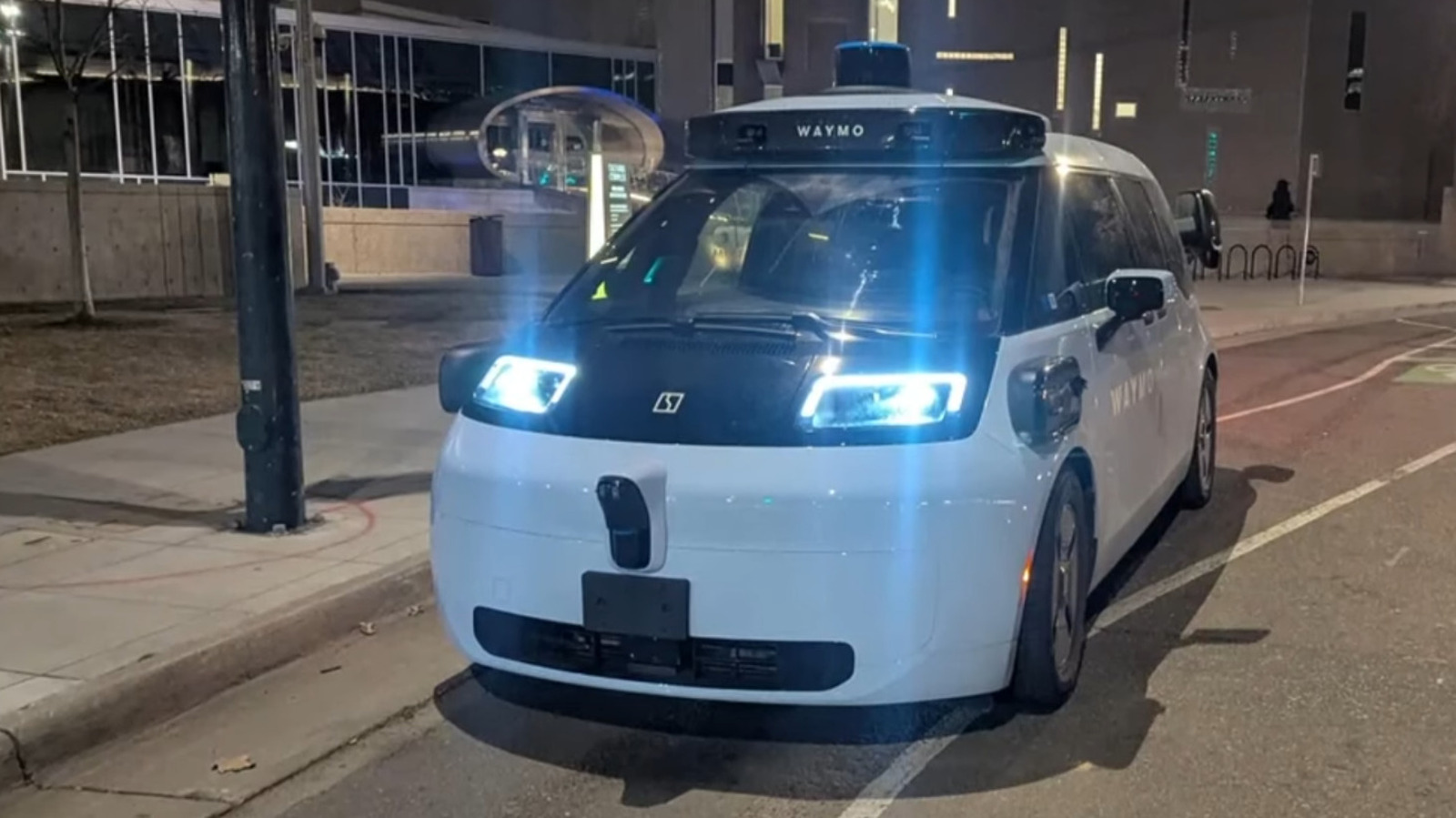
Waymo, developer of self-driving taxis, caught the public’s attention when one of its Denver robotaxis was spotted parked inside a bike lane. Self-driving car technology is relatively new, and it has been met with some controversy regarding the safety of such vehicles that don’t rely on a human driver. Because of this perception, this bike lane incident resulted in Waymo being subjected to internet backlash. However, Waymo claims it is not at fault because it was actually the human driver in the vehicle, not the autonomous system, that chose to park there.
Waymo began in 2009 under the name the Google Self-Driving Car Project and rebranded in 2016 under its current name. It has scaled rapidly, with plans to expand its robotaxi fleet to more major US cities. In Denver specifically, where the bike lane incident happened, Waymo’s robotaxis are still undergoing training and require human drivers with them. There are only about a dozen Waymo taxis in the city for this training program, and Waymo has plans to fully launch its service later in 2026.
Despite Waymo explaining that it was human error that parked in the bike lane, the photo circulating online still can risk Waymo’s reputation for those that might not look further into the story or are set on a negative perception of self-driving cars altogether. Given the rising rates of vehicle crashes that involve a self-driving car, it’s understandable that the image of one parked incorrectly can cause a stir.
Waymo’s commitment to safety
Waymo advocates for its self-driving cars on the basis that they are safer than human drivers and can help to prevent vehicle accidents. This incident seems to underline Waymo’s point since it was a person, not the autonomous system, that made the wrong choice. The city of Denver will be issuing a ticket to the registered car owner, but no specific name has been disclosed. Prior to being a human trainer for Waymo, people must pass stringent driver safety education.
Waymo seems to take quick action when there are potential issues with its self-driving cars. Waymo issued a safety recall in late 2025 because one of its robotaxis passed a stopped school bus. The recall involved a software update to its autonomous vehicle systems.
A few years ago the co-CEO of Waymo, Dmitri Dolgov, published a statement on the company’s website regarding its commitment to safety as it continues to expand across the US. In the statement Dolgov said, “Building a safe, robust, and generalizable autonomous driver […] is our main focus.” Another co-CEO, Tekedra Mawakana, emphasized in an interview with The Independent that a high bar of safety standards must always be maintained and that Waymo will ensure its vehicle incident records are kept public to help with trust and transparency.
The impacts to Waymo’s safety reputation
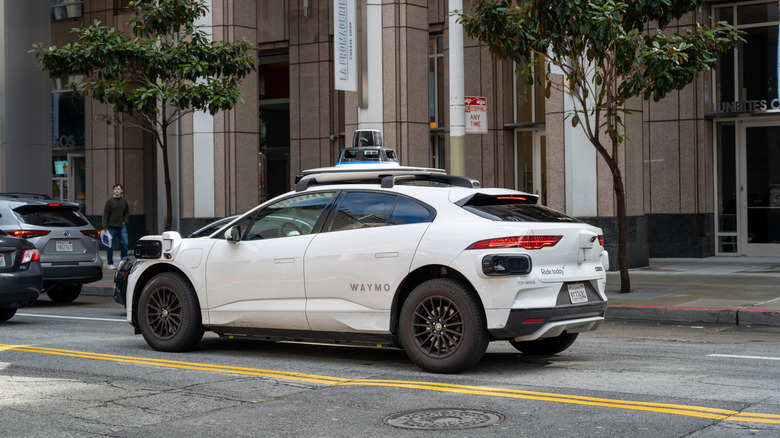
Despite Waymo’s assurances and the fact that it was human error that parked in the bike lane, this still keeps the dialogue open about the safety of self-driving taxis. GM canceled its own robotaxi program when one of its driverless cars hit a woman and proceeded to drive with her under the car. Waymo also shares a history of problems.
According to data from injury attorneys DiMarco, Araujo, and Montevideo, in 2021 Waymo vehicles were only involved in 33 incidents. In 2025, though, they were involved in 733. Within these incidents, there were four people who ended up with critical injuries and two fatalities. It is worth noting that just because a Waymo vehicle was involved in an accident does not mean it was directly at fault.
One issue that gets raised with Waymo robotaxis and incidents they are involved with is liability. It’s a much grayer area than one person hitting another on the road. If a self-driving taxi causes an accident, it may be up to legal professionals to determine if the autonomous system behaved as it should, as a person might in such a situation. In that case, we are still holding autonomous systems up to the standards we expect from other human drivers. As long as there are still incidents, people will continue to raise the question whether a human driver would have made the same error. This time, at least, it seems Waymo’s technology is off the hook.