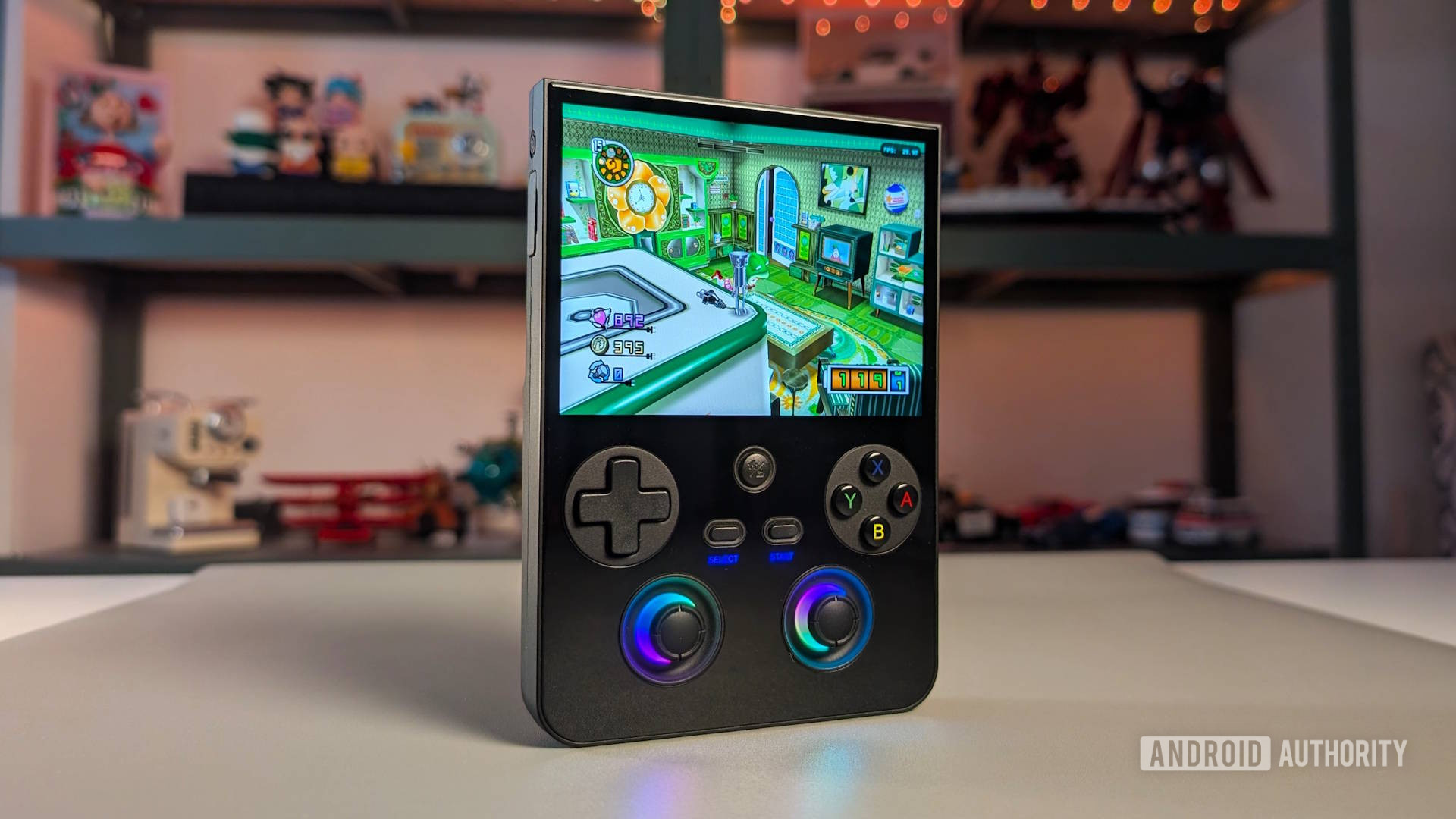
The RG 477V is the culmination of years of iterative improvements from ANBERNIC, bringing the best elements of past devices into a vertical form-factor that’s finally powerful enough to play my childhood favorites.
Despite the original Game Boy being my introduction to handheld gaming, I have never been convinced by modern vertical handhelds. Sure, I enjoyed revisiting older games on the Retroid Pocket Classic, but anything with sticks felt far too compromised an experience.
So when the RG 477V arrived on my desk for review, I was skeptical. It’s a beautiful device with a shockingly large screen, but can this really work for modern games? Sticks on a vertical don’t just look goofy, they’re also downright uncomfortable on every handheld I’d used until that point.
After a few weeks of testing, this device defied all of my expectations. Not only is it a comfortable way to play retro games, but it’s also now one of the best ways to play my favorite systems of all time: PS2 and GameCube.
The Game Boy grew up

Nick Fernandez / Android Authority
One of the main reasons why the RG 477V won me over is the screen. The 4.7-inch panel runs almost from edge to edge on the device, with minimal bezels. This helps keep the device’s overall footprint from ballooning to absurd proportions (granted, it’s still huge), while still providing a very immersive experience.
It’s actually the same panel used on ANBERNIC’s other recent devices, and the 120Hz LCD is still a winner. The 4:3 aspect ratio is perfect for retro games, and the high refresh rate means you can take advantage of black frame insertion for smoother visuals.
The RG 477V inherits the best parts of ANBERNIC’s previous handhelds.
In fact, just about every element of the RG 477V is inherited from other ANBERNIC devices, and it’s truly a case of survival of the fittest. It has the same Dimensity 8300 chipset as the RG 477M, the same screen first used in the RG Slide, the same sticks as many previous handhelds, and the same (somewhat divisive) all-glass front of the RG 476H. For what it’s worth, I didn’t find the RG 477V to be any more of a fingerprint magnet than other all-glass handhelds, but if you’re sensitive to it or have nasty cheeto fingers, get the gray model.

Nick Fernandez / Android Authority
Unlike the rest of the device, the D-pad appears to be an entirely new component. It’s a little soft and mushy, but the inputs are still spot on. Despite having the D-pad on top, I still found it very comfortable to play stick-focused games, which is almost never the case on vertical handhelds.
The sticks are slightly inset into the device, and they’re located pretty close to the middle. I have medium-sized hands, and my thumbs slid easily into place. My right thumb also didn’t rub up against the right stick when hitting the buttons, which is often a problem in smaller handhelds. I had a great time playing games that use the left stick for movement, like Chibi Robo or any number of third-person platformers.
The controls are great, but the triggers were hard to reach while using the sticks.
That said, I did not enjoy playing dual-stick first-person shooters with these controls. It wasn’t the Dualshock-style symmetrical sticks that put me off, but rather the triggers.

Nick Fernandez / Android Authority
For most games, the microswitch-style digital triggers work just fine. They’re not as good as analog triggers for racing games, but at least they’re quieter and more discreet than the in-line shoulders on the RG 477M. However, no matter how hard I tried, I could not get my fingers to comfortably rest on the triggers while using the sticks. They’re just too far toward the outer edge of the device. I can rest my fingers on the L2 and R2 buttons if I stretch my hand out, but the L1 and R1 buttons are simply too far out and too small.
While that somewhat limits the number of games that I enjoyed playing on the RG 477V, it’s really my only complaint about the device. It’s well-made and well-designed, and it has enough power to run the games I want to play on a 4:3 screen.
Performance tweaks that count

Nick Fernandez / Android Authority
This is the second ANBERNIC device to feature the MediaTek Dimensity 8300 chipset, and while it does suffer from a lack of drivers (more on that in a minute), it’s still a top performer. In fact, it’s right where I feel a higher-end ANBERNIC device should be.
Starting with specs, I ran the RG 477V through our standard suite of benchmarks, with interesting results. Despite having the same specs as the RG 477M, it performed much better across all tests. I’ve compared the CPU test results with a few other devices in the same category below.

Nick Fernandez / Android Authority
The RG 477V outperformed not just the RG 477M, but also the Retroid Pocket Flip 2, which I’m using as a stand-in here for the wide variety of Snapdragon 865 devices on the market. It’s well above the performance of ANBERNIC’s previous generation chipset, the Unisoc T820, found in the RG Slide.
The RG 477V gets far more out of the Dimensity 8300 chipset than its predecessor, the RG 477M.
As for the GPU, again it’s a solid upgrade over the RG 477M. ANBERNIC has clearly tuned things better this time around, providing very solid performance. More importantly, it’s also much more stable.

Nick Fernandez / Android Authority
Across 20 runs in the 3Dmark Wildlife Extreme Stress Test, performance saw only a minor dip. Compared to the RG 477M, which throttled almost immediately, it’s an impressive showing. The 93% stability rating is lower than the other handhelds compared above, but it’s so much more powerful that it doesn’t really matter.
Thermals were mostly kept under control, but still ticked a few degrees higher than Retroid’s Qualcomm offerings. The fan intake does get pretty loud, but it’s located on the back of the device, so it’s not too audible over game noise. The heat itself was never noticeable while gaming, and the hot air blew safely out of the top of the device, far from my delicate digits.

Nick Fernandez / Android Authority
I should also point out that these benchmarks were done in the middle “Performance” mode, rather than the “High Performance” mode. For whatever reason, this gave me much better results, both in benchmark apps and in emulation testing. I’m not really sure what the High Performance mode is for, but it caused the RG 477V to throttle much sooner. I ignored it for most of my testing, sticking to Auto or Performance modes, toggleable from the notification shade.
Thankfully, real-world performance paints a much prettier picture. Like all ANBERNIC devices, it comes with a plethora of emulators pre-installed, which speeds up the setup process significantly. There’s also a built-in frontend accessible via a button on the left-hand side of the console, but it’s still a worse experience than third-party launchers like ES-DE or Beacon.
The RG 477V has enough power to play GameCube and PS2 games without issue.
This thing absolutely flies through GameCube and PS2 games, which I would consider the edge of retro gaming. None of the games I tested showed any signs of slowdown on the lowest “Auto” power profile, even when upscaled to (roughly) match the native resolution of the RG 477V.
Older systems also worked flawlessly, but I was surprised to see that more demanding systems also worked well. When I first tested Switch emulation on the RG 477M in the middle of 2025, it was a mess. Few games ran at all, and none were what I would consider playable.
Fast forward to today, and I found that a healthy number of Switch games were perfectly playable on the RG 477V. The developers behind Eden and other Switch emulators have been pushing compatibility with Mali GPUs for months now, and the results speak for themselves. Without Turnip drivers there are still graphical glitches in some games, but it’s now the exception, rather than the rule.

Nick Fernandez / Android Authority
Granted, I still wouldn’t buy this device for Switch emulation. For starters, you’ll see significant letterboxing on the 4:3 display. That’s true for all 16:9 systems, including the PSP. They can be played in a pinch, but they’re not what this particular handheld is best suited for.
I also tested PC emulation via GameHub and Game Native, and there, the lack of drivers was much more pronounced. Only a few games managed to launch successfully, and overall performance was limited. This area is developing very quickly and things may change as the year progresses, but for now, it’s not quite ready for primetime.
Battery life was great, typically netting around five hours of PS2 or GameCube game time. Older retro systems netted anywhere from seven to 10 hours, depending on the shaders I used. Fully charging the 5,500mAh battery took around two hours, but a quick 30-minute top-off got me about 30% battery. As expected from an Android device, the standby time is also excellent, draining just 1-2% overnight.
ANBERNIC RG 477V review verdict: Is it worth it?

Nick Fernandez / Android Authority
After a few weeks of testing, I can confidently say that the RG 477V is by far the best vertical handheld I’ve ever used. It’s not small by any means, but it’s compact enough to sneak in a bag (with a case), and powerful enough to play everything but the most demanding systems. Cheaper handhelds like the RG Slide ($199.99 at Amazon), fall just short of reliable PS2 and GameCube performance for the reasons mentioned above, and this is the true sweet spot for retro handhelds.
Vertical alternatives like the Retroid Pocket Classic ($149 at Amazon) are great for older systems, but again fall short for GameCube and PS2. It’s a wonderful device for older systems, but the lack of sticks and an extremely underpowered GPU hold it back from newer systems.
If you can spend a little more, the AYANEO Pocket DMG ($419 at Manufacturer site) remains a fan favorite, with a gorgeous screen and a luxurious build. Despite being smaller than the RG 477V, it’s significantly more powerful. Still, it only has one stick, so it suffers from many of the same control issues I ran into on newer systems.
The RG 477V sets a new bar for ANBERNIC devices, and vertical gaming handhelds as a whole.
On the lower end, there are plenty of options to play PS1 and below. The TrimUI Brick ($84.99 at Amazon) is a great everyday carry handheld, and the follow-up Brick Pro might even be capable of some PS2 emulation. The 4-inch display is significantly smaller though, so the newly added sticks might be too cramped to be comfortable.
Horizontal handhelds have a lot more interesting options available in the same price range just around the corner, starting with the Retroid Pocket 6. For just a little more than the RG 477V, you get a 5.5-inch 120Hz OLED, Snapdragon 8 Gen 2, and a more comfortable control scheme. In fact, you can even choose between D-pad top or stick top configurations, which is unique to this model. However, if you buy one today it won’t ship until March at the earliest, while ANBERNIC’s offering is in stock and ready to ship.
All things considered, the RG 477V is one of the best gaming handhelds on the market. This chipset and screen are clearly winners for the company, and it’s hard for me to imagine how it could improve upon this without switching to a different form factor. Sure, an OLED panel might have deeper blacks and a Snapdragon chipset might have better driver compatibility, but I’m not convinced they’d make a big enough difference for the types of games I’d want to play on a device like this. In so many ways, this one is just right.
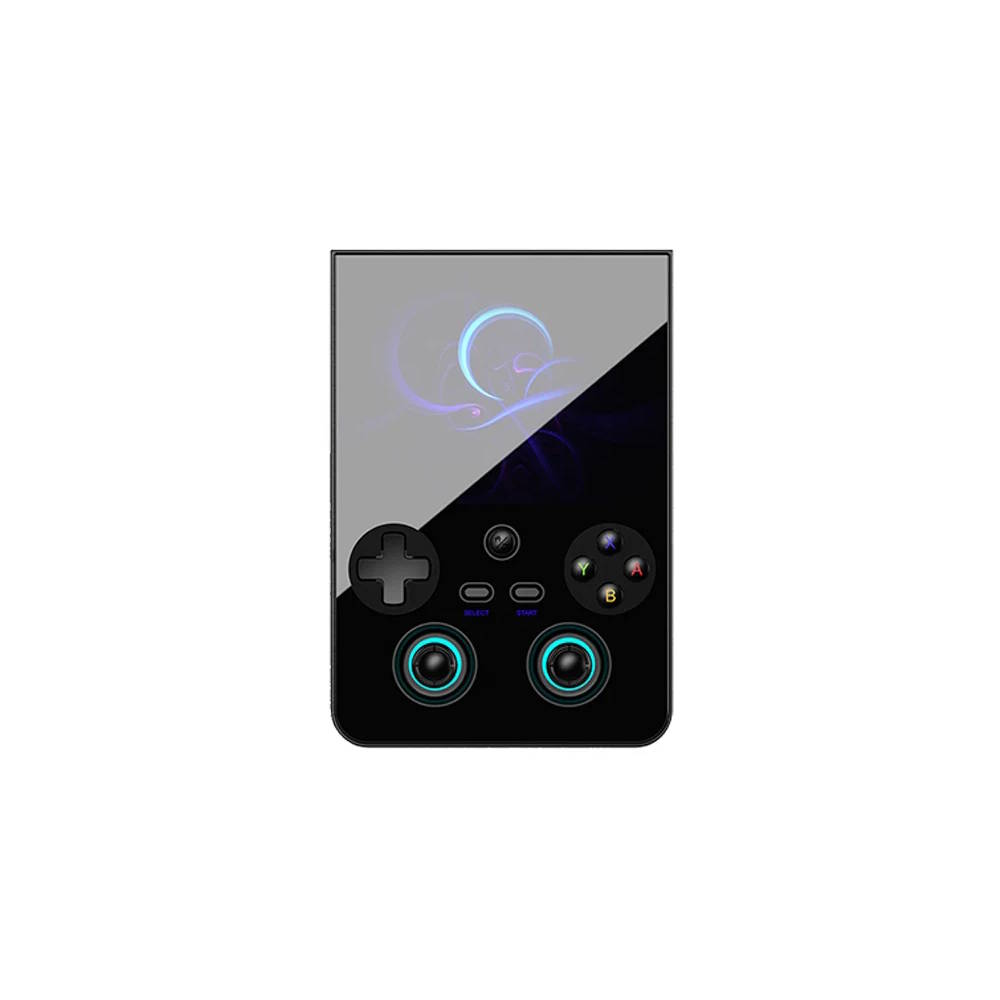
Beautiful screen • Compact vertical design • Great PS2/GameCube performance
MSRP: $219.99
The massive, PS2-ready Game Boy of your dreams.
The RG 477V is the most powerful vertical handheld ANBERNIC has ever made, with a 4.7-inch screen that will make your favorite retro games pop like never before.
Positives
- Beautiful screen
- Compact vertical design
- Great PS2/GameCube performance
Cons
- Cramped triggers
- Poor Mali driver support
Thank you for being part of our community. Read our Comment Policy before posting.