Social media in higher education shapes how people discover, experience, and stay connected to your institution. From recruitment to fundraising, it plays a role at every stage.
In this article, we share 14 essential tips to make social media work for your institution.
Key takeaways
- Social media plays a role at every stage of the campus lifecycle. It attracts prospective students, engages current students, and helps maintain alumni connections.
- Social media supports real institutional goals. It can increase enrollment, strengthen community, and make it easier to share important information.
- The best results come from a clear strategy. This gives your social team a clear direction for what to post, where to post, and why.
- Managing social media is easier with the right tools. Hootsuite helps higher education teams manage messages, monitor social conversations, and track performance all in one place.
The benefits of social media in higher education include increased enrollment, stronger community connections, clearer communication, and more engagement with students, faculty, and alumni.
If you work in the post-secondary world, here are some of the main advantages:
Increase enrollment
56% of Gen-Z students say social media matters most when they’re just beginning to explore colleges, according to a new report. That’s before campus tours, applications, or essays even come into play.
That makes social media a powerful tool for reaching prospective students early, when curiosity is high.
Share authentic, student-led content that shows what campus life is really like, such as this post from Quinnipiac University of students enjoying a sunny day on campus.
Source: Quinnipiac University
This kind of social media content is gold for student recruitment and outreach. It gives them a clear picture of what their future could look like, and helps your institution feel familiar before they set foot on campus.
Showcase your values
Social media is a powerful way to communicate your institution’s mission, values, and the culture you’re working to build.
Plus, it shows students (past, present, and future) what you stand for and how those values show up in real life.
This can be as simple as posting about the people and work that embody them. For example, Tufts highlighted its commitment to democracy through a video series featuring faculty voices.

Source: Tufts
Promote achievements
Sharing accomplishments isn’t just about showing off. It’s a chance to remind people why your institution is worth supporting.
So talk about your sustainability efforts, community projects, or research breakthroughs. Give people a look at what’s happening on campus. Celebrate awards, highlight student wins, and cheer on athletic victories.
This also gives current students and alumni something to feel proud of, and can increase student engagement online.
For example, the University of British Columbia shared a new partnership with Lululemon to highlight its research in innovative fabrics.

Source: University of British Columbia
Connect with alumni and boost fundraising efforts
If you work in higher education, you already know that alumni are a major fundraising source. Staying connected with them matters, and social media makes it easier than ever.
Colleges and universities can use social platforms to keep in touch with graduates long after they leave campus. Some even create accounts just for alumni, like Facebook groups that bring together graduates who live in the same city.
Social media can also be a great publicity tool for fundraising events, like Columbia University’s annual Giving Day campaign.

Source: Columbia
Social fundraising campaigns are a way to turn alumni, students, staff, and faculty into active advocates for your school.
To get the most out of these efforts, connect your social campaigns with a CRM system. This helps you track donations, measure ROI, and see the impact of your social media push.
Take advantage of UGC (user-generated content)
Your campus is brimming with digital natives. Across TikTok, Snapchat, Instagram, and beyond, students are creating content around the clock.
That means you don’t have to create everything from scratch. Students are already showing what life on campus looks like.
One easy way to tap into this content is by using a dedicated hashtag. For example, the University of Alabama encourages students to use #FirstDayUA when sharing content of their first day on campus.

Source: University of Alabama
You can repost the best ones (with credit, of course) on your official channels.
Social media contests are another simple way to encourage sharing. Small prizes — like university-branded clothing — work well as motivational prizes. Plus, those clothing items will likely appear organically in later social media posts.
Develop new learning opportunities
Social media can also be a useful learning tool. In higher education, it opens up new ways for students to research, discuss topics, and share their work.
Instructors can use social platforms to meet students where they already are. For example, a class might use a shared hashtag to collect posts and talk about their meaning.
At Memorial University, one course used Twitter as a discussion space. Students in the Human Kinetics and Recreation 1000 course shared thoughts on readings and research using the hashtag #HKR1000.
Libraries are getting involved, too. The A. Holly Patterson Library at Nassau Community College offers resources to help instructors build social media into assignments, with a focus on information literacy and spotting fake news.
Used thoughtfully, social media can help students build real-world skills (like critical thinking, media awareness, and digital communication) alongside more traditional coursework.

Free tools and templates
Download a free bundle of social media tools designed specifically for universities and colleges — including post ideas, a social policy template, a social media strategy template, and alumni reachout templates.
Download now
Social media matters in higher education because it allows institutions to share timely information, create a real sense of community, build brand awareness, and reach people where they already are.
Not every university should feel compelled to start a TikTok account. But ignoring social media altogether means missing out on opportunities to connect.
New York University, for instance, uses Twitter (X) to share news about expanding its campus, exciting academic programs, new scholarships, and more. These posts reach 184,000 followers.

Social media is flexible and approachable. It brings people together, and offers a platform for sharing important information.
If your job as a higher education institution is to educate and inform, consider your social media accounts to be digital classrooms. They are spaces where all are welcome to come and learn more about you, your accomplishments, and your values.

#1 Social Media Tool for Education
Meet students where they’re at with the tool that makes it easy to engage, recruit, schedule, measure, and win.
Book a Demo
Here’s how higher education institutions can make the most of their social media:
- Speak directly to prospective students
- Listen as much as you share
- Set social media guidelines and policies
- Share important updates in real time
- Streamline your social media operations
- Reply to all messages
- Engage students on and off campus
- Livestream campus events
- Develop a social media strategy
- Review your analytics regularly
- Use social media as a community message board
- Invite students and staff to create content
- Adopt a platform-specific approach
- Partner with departments across campus
1. Speak directly to prospective students
84% of students say social media is a helpful tool for researching colleges, according to a 2025 study by RNL.
To connect with prospective students, your content should help them step into the shoes of current students. One way to do this is with engaging content like virtual tours and student takeovers.
Feature the clubs, communities, and social opportunities attendees can get involved in. Show off the campus, or a highly-anticipated football game. Help them understand the benefits of your institution beyond academic study.

Source: University of Idaho
2. Listen as much as you share
Social media is a powerful broadcasting tool, but it can be a great space for listening, too.
Every day, students chat online — engaging in debates, airing complaints, sharing wins, participating in trends, and yes, critiquing cafeteria food. All of this chatter can offer valuable insights into life on campus, and highlight issues that are bubbling under the surface.
That’s why social listening matters. By keeping an eye on key accounts, hashtags, and keywords, you can spot patterns, optimize your content strategy, and understand what your community cares about.
3. Set social media guidelines and policies
When a lot of people are involved in social media, a little structure goes a long way. Clear guidelines help everyone stay aligned and confident when posting, responding, or managing accounts.
Your complete set of higher education social media guidelines should include:
It may seem like a lot of ground to cover. But thorough guidelines provide crucial support to social teams. They also empower students and faculty to participate in an authentic way.
4. Share important updates in real time
People look to social media for real-time updates and information, so social should be a key part of your crisis communications plan.
It helps to think ahead about how you’ll handle tough situations, whether that’s faculty-related issues, on-campus safety updates, or severe weather. Planning now means your communications team won’t have to scramble later.
Even things like snow days — like the one Simon Fraser University faced recently — need clear, timely updates. Social media is an easy way to keep college students informed.

Social media can also play a role beyond campus. Today, institutions are expected to acknowledge social movements and broader issues, too. When used thoughtfully, social platforms give you a space to share context, values, and next steps as situations evolve.
5. Streamline your social media operations
Managing social media — especially in higher education — usually involves a lot of people and even more accounts. That’s why it helps to bring everything together in one place.
With the support of a tool like Hootsuite, a core team can monitor all channels from a central dashboard.
This makes life easier for busy social teams. Use the dashboard to assign tasks, approve and schedule posts, coordinate content from contacts across the campus, and mobilize in the event of a crisis.
6. Reply to all messages
Responding to messages on social media helps build trust and improve the student experience.
When everything lives in one inbox, it’s much easier to keep up with messages from prospective students, current students, and alumni. No messages slip through the cracks, and your team can respond faster and with more confidence.
With Hootsuite Inbox, you can bridge the gap between social media engagement and customer service. Plus, you can manage all of your social media messages in one place.
This includes:
- Private messages and DMs
- Public messages and posts on your profiles
- Dark and organic comments
- Mentions
- Emoji reactions
… and more.
The all-in-one agent workspace makes it easy to:
- See a full history of someone’s past interactions with your digital campus across your accounts and platforms, giving your team the context needed to personalize replies
- Add notes to profiles that interact with you the most (Inbox integrates with Salesforce and Microsoft Dynamics)
- Handle messages as a team, with intuitive message queues, task assignments, statuses, and filters
- Track response times and CSAT metrics
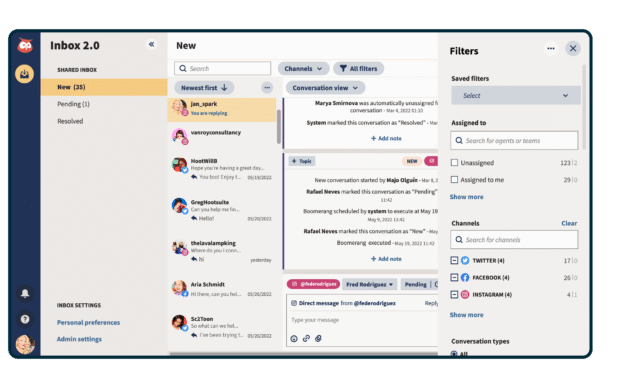
Plus, Inbox comes with handy automations:
- Automated message routing
- Auto-responses and saved replies
- Automatically triggered customer satisfaction surveys
- AI-powered chatbot features
7. Engage students on and off-campus
A key advantage of social media in higher education is that it allows students to connect. That might be from home, different campuses, work-study programs, or at a conference.
Not all students live on campus. That doesn’t mean they’re less motivated to engage and participate in student life.
Create social media groups to rally students around wide-ranging topics, interests, experiences, and activities.
For instance, University of Chicago runs a Civic Engagement page to bring together students looking for community service and activism opportunities.

Source: University of Chicago
8. Livestream campus events
Nearly a third of all internet users report watching at least one video livestream each week.
And can you blame them? Live streaming is authentic, engaging, and — we won’t deny it — a little bit thrilling. Social media makes it incredibly simple to broadcast campus life to the world.

Whether a private livestream just for students, or putting a commencement speech up for the world to see, it just takes a few taps to livestream on most social media platforms.
Check out our full guide to livestreaming on social here.
9. Develop a social media strategy
Behind every successful social media channel is a strategy. Add more channels to the picture, and the need for strategy increases. But so do the obstacles.
It’s an enormous challenge to create a strategy for a multi-channel organization, but it starts with creating an overarching social media marketing strategy for the institution itself.
Then, each individual department or account should align its specific strategy back to the university’s core objectives. This creates a clear business case for social media and allows managers to better allocate resources.
10. Pore over your analytics
Sure, you might be able to gauge student sentiment on campus by measuring the number of sweatshirts sold from the gift shop, or eavesdropping in the cafeteria. But social media analytics provides a data-driven picture of your target audience.
Maybe you’re hoping to drive more traffic to your website or reach a specific demographic of prospective students. With social media metrics, it’s clear as day how close you’re getting to your goals.
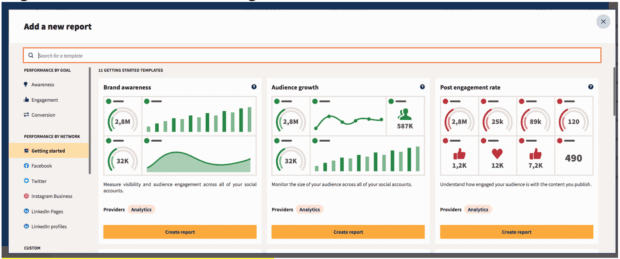
Reviewing your engagement, reach, and audience data can help you understand just how successful your communications have been, and guide you towards obvious areas for improvement in the future.
Hootsuite Analytics can package up intel from your various social platforms with one-off or regularly scheduled reports.
11. Use social media as a message board
Social media can act as a great hub for feedback or conversation for the community at large.
Instead of spending time and money building a student portal, embrace the platforms that are already known and loved (or at least, tolerated) by the community.
Here are some ideas for digital gathering spaces for the campus community:
- Facebook groups for students seeking housing
- Twitter threads collecting input for the new student center
- Hyper-specific Instagram accounts dedicated to the experience of international students

Source: Yale
12. Invite students and staff to create content
Strong social communities don’t happen by accident. They grow when people feel invited to participate.
One way to do this is by setting up an easy way for students and faculty to apply to create social content. Then, give them room to be creative.
For example, the University of New Hampshire lets students apply to take over its social channels for a short period of time. These takeovers offer an honest, behind-the-scenes look at campus life that audiences actually want to see.

Student takeovers give a real sense of what it’s like to be on campus. Whether it’s one creator sharing their day or many students posting from different perspectives, the result feels more authentic

The point is, the more people who share, the farther your message goes. Inviting students, staff, and faculty to act as ambassadors helps extend your reach and boost your social share of voice.
Tools like Hootsuite Amplify make it easy to share approved, on-brand content while still letting individual voices shine.
13. Adopt a platform-specific approach
Not every message belongs on every platform. Before you post, it’s worth asking a few simple questions: Who are you trying to reach? And where are they most likely to see it?
For example, TikTok may not be the best place to share messages aimed at parents — but it is a strong channel to engage with prospective students. Just look at how University of Miami uses TikTok to hype up campus life.

Source: The University of Miami
(It can also be a platform to experiment with new content ideas and formats in the inexplicable way that only TikTok can.)
Your audience is bigger than just undergraduates. Higher education also speaks to adult learners, parents, faculty, staff, partners, and peers at other institutions.
Stay on top of platform and demographic trends to identify where your communities are most active. This allows managers to focus on channels that drive the most results.
Management tools like Hootsuite make it easy to compare how channels stack up against each other.
14. Partner with departments across campus
Social media for higher education is not a one-person job. Nor is it a job that should be left to interns. (Although it is a great idea to include student interns or work placement opportunities on your social team.)
Create strategic alliances with other departments. You’ll gain even more access to information and resources.
A social media management platform like Hootsuite also helps teams curate posts in advance, schedule them for the best posting times, and upload batches of posts in bulk. In other words, you don’t waste time logging in and out of different platforms.
FAQ: Social media in higher education
How can universities use social media to increase student enrollment?
Universities can use social media to increase student enrollment by showing what life is really like on campus. Content like student takeovers, virtual tours, day-in-the-life videos, and highlights from campus events help prospective students picture themselves there. Social media also lets schools reach students early in the decision process, before applications and campus visits even begin.
What are the best social media strategies for higher education institutions?
The best social media strategies for higher education institutions focus on being authentic, consistent, and adopting a platform-specific approach. That means sharing authentic stories, listening to what your community is talking about, and tailoring content to each platform.
Which social media platforms work best for colleges and universities?
The social media platforms that work best for colleges and universities depend on the audience you’re trying to reach. Platforms like TikTok and Instagram are effective for engaging prospective students and sharing campus life. LinkedIn works well for reaching adult learners, alumni, faculty, and partners. The key is to match the platform to the audience and message.
How do higher education institutions measure social media success?
Higher education institutions measure social media success by tracking metrics that connect back to real goals. This can include engagement rates, follower growth, website traffic, message response times, and conversions like event signups or applications.
Listening to qualitative feedback (with social listening) also helps teams gauge what content and messages are resonating.
What are examples of effective social media campaigns in higher education?
Examples of effective social media campaigns in higher education often highlight real people and real moments. Student takeovers, hashtag campaigns, short campus highlight videos, and fundraising or awareness days all perform well when they feel genuine. The most successful campaigns help audiences feel connected and give them a reason to care.
Save time managing your social media presence with Hootsuite. From a single dashboard you can publish and schedule posts, find relevant conversions, engage the audience, measure results, and more. Try it free today.