We may receive a commission on purchases made from links.
OLED and high-end TV panel technologies provide vibrant colors, sharp pictures, and extreme brightness. Yet they’re also expensive, with prices easily dipping into the multiple thousands depending on the size of the TV. Rather than sit around and debate if OLEDs will ever get cheaper, why not spring for some ultimately more accessible alternatives?
If you still want top-tier image quality but don’t want to necessarily empty your bank account, QLED, Mini-LED, and similar options are great alternatives. For example, TCL’s QM7K series comes in six sizes between 55 and 115 inches with QD-Mini LED technology, 4K UHD resolutions with HDR, and 120-144Hz refresh rates. Plus, the 65-inch and 55-inch models cost less than $1,000.
Meanwhile, the Hisense QD6QF series also offers several options up to 75 inches for under $1,000. This model comes with Dolby Vision and Dolby Atmos, a 120Hz refresh rate, HDR 10+ support and Alexa built-in with Amazon’s Fire TV smart streaming platform. The 55-inch model is also one of the most reliable TVs under $500. The point is, there are quite a few options out there that are less expensive but still plenty nice enough for a home theater setup.
The benefits of OLED alternatives
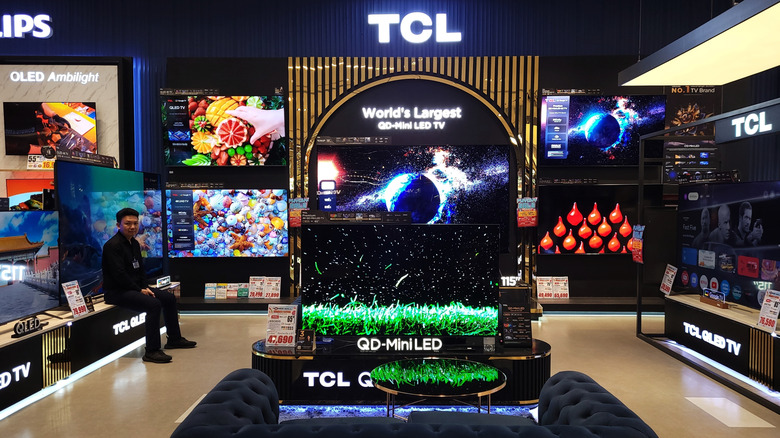
Although there are now several different types of TVs, QLED is probably the best and closest comparison to an OLED; that’s why they’re often featured in head-to-head comparisons. QLED technology is essentially an LCD TV with quantum dots offering better brightness and more vibrant colors. OLED panels, on the other hand, use a completely different form of technology. Because they don’t need an LED backlight to produce the light displayed on screen, they tend to have better contrast and can achieve “true blacks” when all of the individual pixels turn off.
When you’re talking about resolution and picture quality, though, the two types are pretty close in performance. QLED TVs also come in a much wider variety of sizes, so they’re a great choice if you want to go with a more unorthodox panel size to match your open wall space or entertainment area. Moreover, QLED panels have been known to have longer lifespans compared to OLEDs simply because of the technology behind them. They can also work better in well-lit rooms and are immune to burn-in, which happens when the same image stays on the screen too long and leaves a lasting picture on the screen. Combine all of that with the fact that they generally run cheaper, and you have a solid argument for going non-OLED.