If all goes well, it could be as little as a year from now that NASA’s Artemis III mission becomes the seventh crewed spacecraft to land on the moon. However, there’s a vocal contingent of society that would argue that number is false. Few conspiracy theories have become as widespread as the idea that the first moon landing was faked. From virtually the moment that Apollo 11 took off in 1969, people have questioned its legitimacy, arguing that it was all an act to give the United States a victory in the space race against the Soviet Union.
Perhaps the best piece of common sense evidence against these conspiracies is that, while they typically talk about “the” moon landing, there have been six in total, all between 1969 and 1972. If the only point was to stunt on the Soviets, why would NASA spend the money and manpower on faking an extra five moon landings in three years?
The Apollo program employed roughly 400,000 people, plus additional partnerships with more than 20,000 private contractors and universities. To suggest that the moon landings were fake is to suggest every one of those people and institutions is a liar working in cooperation, and just think how hard it is to get even two people to cooperate on anything. Frankly, the government is probably too inept to pull it off. Faking the moon landing would be more complex than actually going to the moon. That’s the common sense argument, but let’s dig into the specifics.
Unpacking the evidence for the moon landings
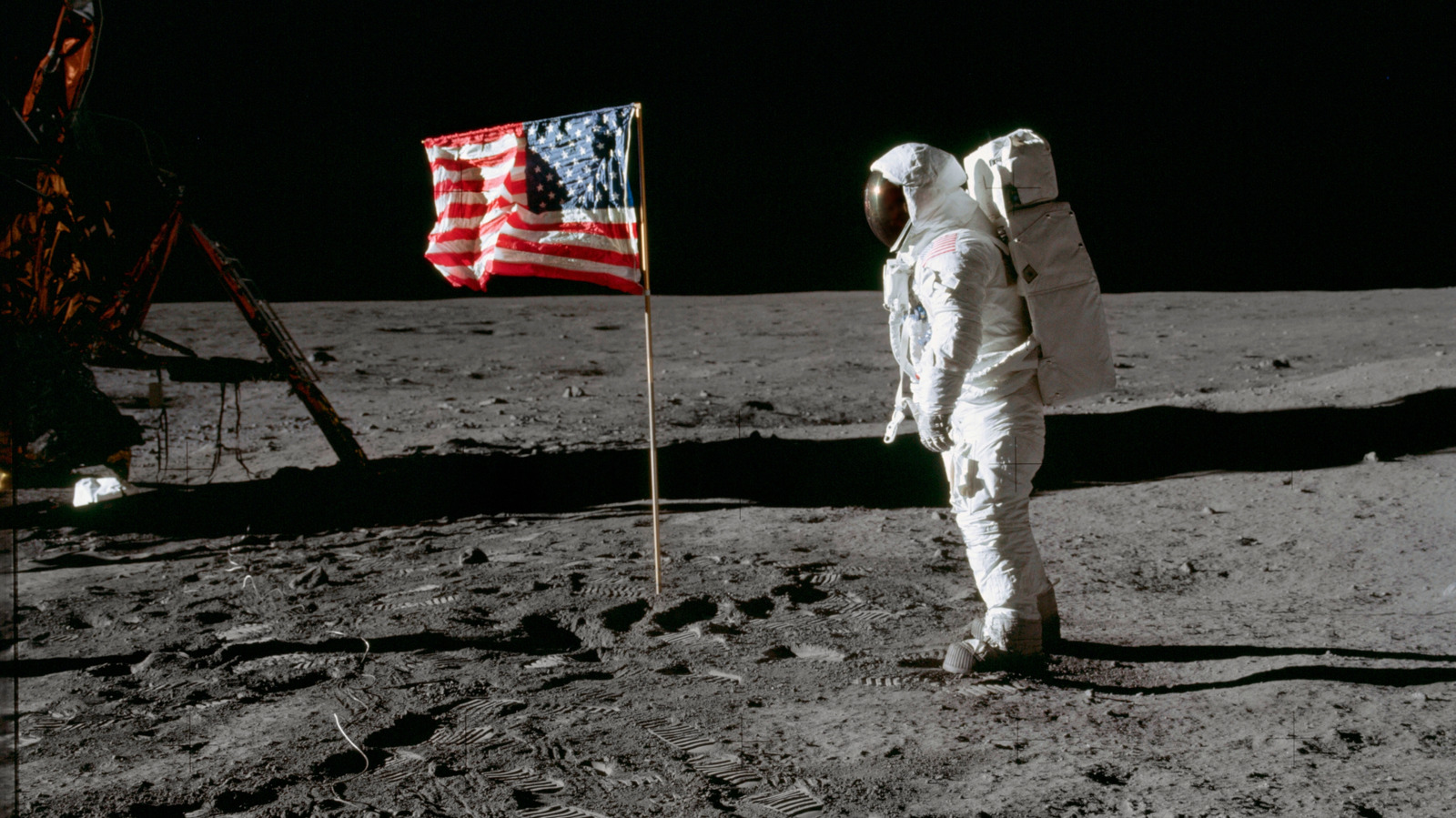
Perhaps the most famous argument against the legitimacy of the moon landing is that the flag Neil Armstrong and Buzz Aldrin planted in the lunar soil appears to be waving in photographs, despite there being no wind on the moon. In actuality, NASA had accounted for the lack of wind and added a rod to the flag to hold it out. The flag appears to be waving because it was extremely wrinkled from being crammed in with all the other supplies for the journey.
Another prominent theory says that astronauts could never have made it to the moon because they would have died passing through the Van Allen belts, two rings of highly radioactive particles from the sun trapped by Earth’s magnetosphere. However, NASA knew of this danger, so they insulated the Apollo craft with aluminum shells. In the end, the Apollo crews still ended up absorbing roughly 10 times more radiation than the average medical radiographer does, but that’s not enough to be deadly.
Still more people point to the Apollo 11 footage and note a lack of stars in the sky, despite there being no light pollution. What these theories conveniently forget is that the moon landing took place during lunar day. Lunar soil is reflective, amplifying the light. This also explains why shadows in the Apollo footage don’t behave as they would on Earth. These conspiracies fail because they assume things on the moon work exactly as they do on Earth, which simply isn’t true.
Why the moon landing conspiracy theories persist
Most people who believe the Apollo 11 mission was faked will have already heard the evidence put forth in this article. If they are ever going to be convinced, there needs to be an honest dialogue about why these theories persist. On the most fundamental level, it’s an issue of mistrust in the government, and it’s not surprising considering the political climate at the time of Apollo 11. The Vietnam War had been on for a decade and a half, and public sentiment had sharply turned against America’s role in the conflict. Then came the Watergate scandal a mere three years later, further shattering public trust in government institutions.
More than 50 years after Apollo 11, that mistrust in the government has only increased. In recent years, we’ve seen people sabotaging 5G towers, claiming COVID-19 is a hoax, and promoting dangerous anti-vaccine theories online. Declassifications of government documents have also revealed legitimate cover-ups by the U.S. government, such as MKUltra and the Iran-Contra affair, fueling suspicions that other longtime conspiracies may also be true. All of this serves to undermine the legitimacy of not just the moon landings, but all of the important work that NASA does. Trust in these institutions is vital for debunking the Apollo 11 conspiracy, but the U.S. government hasn’t been doing itself any favors on that front. We can only hope that years from now, you won’t see any articles like this one about the Artemis missions.