Apple Inc.’s iPhone sales surged to unprecedented heights during the holiday season, as revenue grew across every geographic segment, driving record-breaking quarterly revenue.
The company reported first-quarter results that blew past Wall Street’s expectations. Earnings before certain costs such as stock compensation rose 16% from a year ago, to $42.1 billion, or $2.84 per share, on revenue of $143.78 billion. Analysts had been looking for earnings of just $2.67 per share on revenue of $138.48 billion. All told, Apple generated net income of $42.1 billion during the quarter, rising from a profit of just $36.33 billion in the year-ago period.
There are more good things to come. Apple Chief Financial Officer Kevan Parekh said he’s forecasting revenue growth of between 13% and 16% in the March quarter, which would amount to sales of between $107.8 billion and $110.66 billion. That’s well above the Street’s expectations, with analysts looking for $104.84 billion in current quarter sales.
During the quarter, iPhone revenue soared by 23% from a year earlier to $85.27 billion, with the huge increase driven by “staggering” demand for its newest iPhone 17 models, which launched in September. The impressive growth marks a big turnaround from the previous holiday quarter one year ago, when Apple said iPhone sales had declined slightly, mainly as a result of supply chain problems.
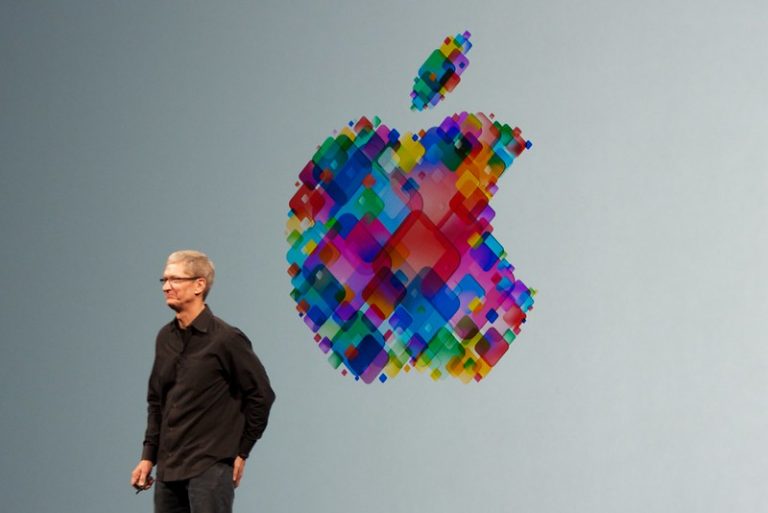
In an interview with CNBC, Apple Chief Executive Tim Cook (pictured) said the company now has an active base of 2.5 billion iPhone, Mac and other Apple devices currently in use, rising from 2.35 billion one year earlier. That’s a key number for investors and analysts because it highlights how big a market Apple has for its highly profitable services business.
Cook said Apple benefited from particularly strong sales in China, which includes Hong Kong and Taiwan. He said revenue there jumped 38% from a year earlier, to $25.53 billion, during the quarter, driven primarily by demand for the new iPhone 17 models. “We set an all-time record for upgraders in mainland China, and we saw double-digit growth on switchers,” he said, referring to current iPhone users who bought a newer model and those who switched from another brand and bought an iPhone for the first time.
According to Cook, the improvement in China was “much greater” than even the company’s most optimistic forecasts for the region.
The other bright spot for Apple during the quarter was iPad sales, which increased 6% during the quarter to $8.6 billion, ahead of the Street’s $8.13 billion estimate. According to Cook, around half of all those sales were to people who had never previously owned an iPad.
It wasn’t all rosy for Apple, though. Mac sales were a disappointment, declining 7% from a year earlier and falling short of the Street’s targets. Apple said Mac sales accounted for $8.39 billion in revenue, some way short of the $8.95 billion analyst consensus. That happened even though Apple launched a new MacBook Pro laptop model in November equipped with its new M4 processor.
Apple’s Wearables, Home and Accessories segment, which bundles products such as its AirPods, Apple Watch and Vision Pro headset, also fell short. Sales came to $11.49 billion, down 2% from a year earlier and trailing the $12.04 billion consensus estimate.
Apple’s Services business was another disappointment, with revenue there reaching $30.01 billion, just below the $30.07 billion analyst target. The bright spot within that segment was Apple TV, which saw its viewership increase by 36% on an annual basis.
Looking forward, Apple plans to try to sustain the momentum behind the iPhone by launching a suite of new artificial intelligence features, including an upgraded Siri that’s set to be more conversational and versatile, similar to something like Google LLC’s Gemini or OpenAI Group PBC’s ChatGPT.
Apple is doing this by tapping into Google’s Gemini 3. It announced the partnership earlier this month, saying Google’s AI will power all of its Apple Intelligence offerings going forward, in a tacit acknowledgment that its internal AI efforts have fallen short. That’s not really surprising, though, given that Apple has spent far less money than big technology peers such as Microsoft Corp. and Meta Platforms Inc., which have invested hundreds of billions of dollars into their AI infrastructure.
Zacks Investment Research analyst Ethan Feller said Apple has faced some criticism for not pursuing a more aggressive AI strategy, but he believes that the quarterly results show that those concerns are misplaced. “With an installed base of roughly 2.5 billion active devices, Apple already controls one of the largest consumer on-ramps to AI globally,” he said. “Rather than competing in an arms race for models, Apple appears focused on distribution and integration, positioning AI as a feature that scales naturally across its ecosystem. It has a powerful platform for future AI adoption that leaves Apple well-positioned for another strong year ahead.”
During the quarter, Apple’s capital expenditures came to just $2.37 billion, down from $2.94 billion in the year-ago period. However, its research and development costs rose to $10.89 billion, up from $8.27 billion a year earlier. Parekh explained this to analysts, saying that “AI is going to require incremental investment on top of our normal product roadmap investment.”
Analysts also had questions about how Apple is going to respond to surging prices of memory chips, which are vital components in all of its devices. There is a global shortage of memory, and manufacturers including Samsung Electronics Co. Ltd. and Micron Technology Inc. cannot make enough of it to meet the industry’s demand, resulting in a dramatic increase in the cost of these components. “We’re in a supply chase mode to meet the very high levels of customer demand,” he said. “We are currently constrained, and at this point, it’s difficult to predict when supply and demand will balance.”
Memory prices had only a minimal impact on the company during the previous quarter, but Cook admitted that the company anticipates these “increasing significantly” during the current period.
It’s not just memory chips that are a concern for Apple. Cook said the company is facing a second constraint with the advanced chip manufacturing capacity needed to produce the custom processors that power its iPhones, iPads and Mac computers.
EMarketer analyst Jacob Bourne said the challenge for Apple going forward involves making the right calls around product pricing and leveraging Gemini to ensure that Siri’s AI updates are relevant, seamless and able to produce a return. “The backdrop of inflation-fatigued consumers and an ongoing memory chip shortage will pressure hardware margins in coming quarters, making that high-margin sales momentum even more vital,” he said.
For now, though, investors seem more or less OK with the company’s efforts. Apple’s stock gained a fraction of a point in late trading, adding to a slight gain made during the regular trading session. However, the stock is still down 5% in the year to date.
Photo: Mike Deerkoski/Flickr
Support our mission to keep content open and free by engaging with theCUBE community. Join theCUBE’s Alumni Trust Network, where technology leaders connect, share intelligence and create opportunities.
- 15M+ viewers of theCUBE videos, powering conversations across AI, cloud, cybersecurity and more
- 11.4k+ theCUBE alumni — Connect with more than 11,400 tech and business leaders shaping the future through a unique trusted-based network.
About News Media
Founded by tech visionaries John Furrier and Dave Vellante, News Media has built a dynamic ecosystem of industry-leading digital media brands that reach 15+ million elite tech professionals. Our new proprietary theCUBE AI Video Cloud is breaking ground in audience interaction, leveraging theCUBEai.com neural network to help technology companies make data-driven decisions and stay at the forefront of industry conversations.