Ukraine entered 2026 in a seemingly perilous position, with Russian forces advancing on the battlefield and Ukrainian cities experiencing prolonged blackouts due to relentless Russian bombardment of critical infrastructure. This is adding to concerns that Ukraine’s defenses may be in danger of fraying. The country’s new Defense Minister Mykhailo Fedorov confirmed in January that around two hundred thousand soldiers are currently absent without official leave (AWOL), with a further two million men accused of avoiding military service.
Russia is also facing serious problems. Unsustainable Russian military spending constitutes an economic time bomb for the Putin regime. Meanwhile, the Russian military continues to suffer heavy losses in Ukraine while making very limited territorial gains. Despite enjoying the initiative throughout 2025, Russia managed to capture less than one percent of Ukraine.
In order for Russia’s emerging weaknesses to prove decisive, Ukraine may need to sustain the war for longer than some believe is realistic. With this in mind, an increasing number of voices now argue that Ukraine’s allies should compel Kyiv to accept a Kremlin-friendly peace agreement. However, the idea that Kyiv has little choice but to end the war on Russian terms overlooks the importance of Ukraine’s role at the epicenter of a revolution in military affairs that is currently taking place.
After almost four years of full-scale war, Ukraine now leads in the development of inexpensive and highly accurate drones and cruise missiles. By fully embracing this revolution, Ukraine and its allies stand a good chance of regaining the battlefield initiative and obliging Russia to compromise on its objectives.
Historians have long known that the development of warfare is not linear. For long periods of time, weaponry and tactics tend to develop only incrementally. European armies in 1780, for example, looked almost identical to those of 1680. Likewise, little distinguished the medieval forces of 1300 from the armies that fought two centuries earlier.
At specific junctures, however, a confluence of new weapons, tactics, and forms of organization can fundamentally transform how wars are waged. In the late medieval period, a military revolution saw disciplined, salaried infantry displace mounted knights. Then came the early modern military revolution characterized by cannons, star-shaped forts, and oceanic warships. Centuries later, the industrial revolution empowered those states able to master the new technologies of railways, steel artillery, and mass conscription.
Not all military revolutions are the same. Some have led to the introduction of new technologies that only the wealthiest states can afford, while others have seen new military capabilities become more readily available to a wider range of states.
These two trends can clearly be seen in the military history of early modern Europe. In the late fifteenth century, the emergence of bronze artillery and star-shaped fortresses fundamentally changed the nature of war. Bronze cannon meant that armies could demolish castles and city walls in a matter of days rather than mounting lengthy sieges. To counter these new cannons, defenders developed star-shaped fortresses. Both technologies were exceedingly costly and were initially only accessible to a handful of leading powers such as France, Spain, and the Ottoman Empire.
It was a small state that kicked off the next wave of military revolution. This began in 1568 when the Dutch revolted against Imperial Spain. By almost any measure, the rebellious Dutch provinces should have lost. Spain was flush with silver from the Americas and had a far larger population base. Spain was also the indisputable military superpower of the period, having humbled France in the 1551-59 Italian War and crushed the Ottoman navy in 1571.
Initially, the war went as expected, with the Spanish conquering key cities such as Antwerp. However, the Dutch then began innovating. They discovered that the expensive and complex masonry employed in the construction of star-shaped fortresses was superfluous in wartime. Once they realized this, they started mass producing star-shaped fortifications out of earth and timber. Paid laborers or conscripted peasants could now build fortresses, so long as a trained engineer was present to supervise.
Likewise, the Dutch also pioneered casting cannon from iron. In many respects, these iron cannon were inferior to bronze; they weighed more and were prone to bursting. Iron guns, however, cost only one-tenth as much to manufacture. The Dutch used these cheaper cannons to equip larger fleets than the Spanish and to supply their many earthen fortifications with plentiful guns.
Dutch innovation in the late sixteenth century enabled the Netherlands to record one of the greatest military upsets in history. By 1609, they had obliged Spain to sign a truce. In 1648, The Spanish granted the Netherlands full independence. This military revolution did not introduce intrinsically different technologies. Instead, the Dutch developed ways of accessing capabilities that had hitherto only be available to great powers. What we are seeing in Ukraine today is a modern iteration of this dynamic.
Eurasia Center events

In the modern era, the United States has led the way in another military revolution by pioneering the development and deployment of precision-guided long-range strike weapons. Once again, the cost and complexity of these new weapons meant that only the world’s wealthiest and most technologically capable states could initially embrace this revolution.
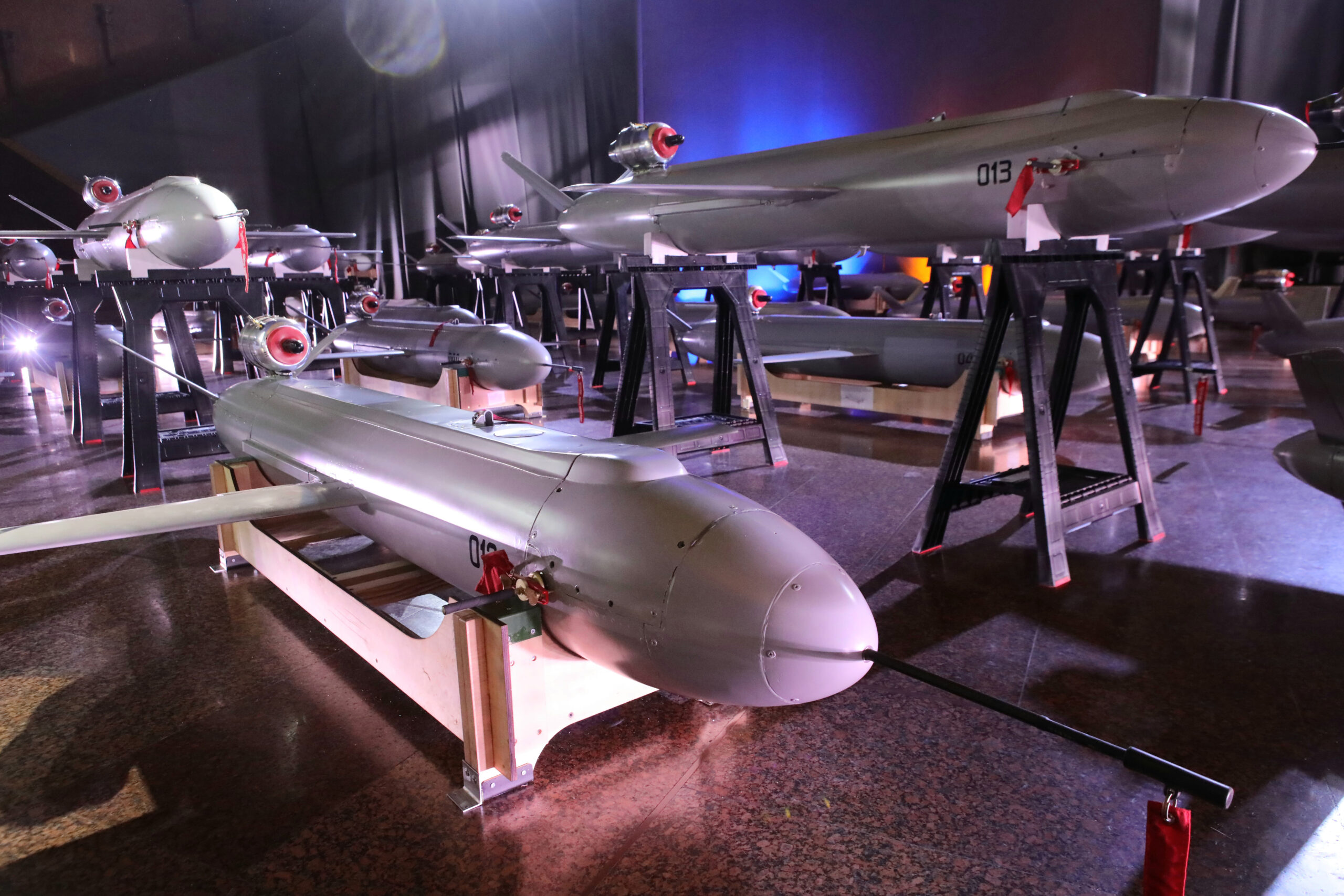
Ukraine now stands on the brink of replicating the success of the Dutch more than four centuries ago. As the fourth anniversary of Russia’s full-scale invasion approaches, Ukraine is manufacturing large quantities of attack drones and developing its own cruise missiles, with plans to expand domestic production further. This ambitious objective is realistic, particularly if Ukraine’s allies provide sufficient support.
The conditions that have enabled Ukraine to achieve such innovations are unique in modern history. The existential nature of the war for Ukraine has meant that a vast talent pool of individuals hitherto uninvolved in the arms industry such as software engineers, tech entrepreneurs, and physicists have all embraced the task of developing novel solutions for Ukraine’s defense.
The funding of Ukraine’s war effort, with multiple Ukrainian ministries and foreign partners all financing projects, has created a remarkably pluralistic environment. In other words, entrepreneurs with promising products and potential backers are perpetually in search of one another. Meanwhile, Ukraine’s wartime circumstances have swept away many of the bureaucratic barriers and regulations that typically impede the testing and evaluation of weapons. The upshot is an innovation ecosystem more akin to Silicon Valley that typical military-industrial complexes.
Ukraine’s unique defense sector ecosystem has made it possible to produce an extraordinary number of long-range strike systems with unprecedented cost effectiveness. This is democratizing the long-range weapons technologies first pioneered by the United States in the final decades of the twentieth century. Ukraine’s progress is reminiscent of Dutch achievements in the sixteenth century, when they developed cheaper versions of existing technologies that had shaped Renaissance Europe’s earlier military revolution.
By leaning into this progress, Ukraine’s allies can help the country regain the initiative in the war against Russia. Ukraine currently lacks the resources to fund the production of cruise missiles and drones at the necessary scale, but Ukrainian defense sector companies do have spare capacity to produce more. By financing additional output of drones and missiles in Ukraine, partner countries can help transform the military situation.
Increased volumes of long-range strike weapons can enable a strategically successful campaign with an operational depth stretching hundreds of kilometers behind the front lines. In conditions of modern warfare, infantry and armored units are comparatively brittle and ineffective if they are denied supplies and long-range fire support. Ukraine’s expanding arsenal of deep strike assets provides a plausible means of achieving this, especially if supported with real-time intelligence from the country’s partners.
Ukraine’s long-range strike systems can also be used effectively in tandem with Western sanctions measures to increase the pressure on Russia’s overstretched wartime economy. A combined policy of tightening sanctions on Russian energy exports and escalating Ukrainian strikes on refineries and pipelines can seriously damage the strategically crucial Russian oil and gas industry.
The military revolution that Ukraine is currently leading has already succeeded in democratizing the production of long-range strike systems. With sufficient support from Kyiv’s partners, this revolution offers a viable pathway to Russia’s battlefield defeat and can set the stage for an acceptable peace agreement.
Dr Marc De Vore is a senior lecturer at the School of International Relations at the University of St. Andrews.
The views expressed in UkraineAlert are solely those of the authors and do not necessarily reflect the views of the , its staff, or its supporters.

The Eurasia Center’s mission is to enhance transatlantic cooperation in promoting stability, democratic values, and prosperity in Eurasia, from Eastern Europe and Turkey in the West to the Caucasus, Russia, and Central Asia in the East.
Image: In Kyiv, Ukraine, on December 6, 2024, long-range Peklo (Hell) missile drones are displayed during the handover of the first batch to Defence Forces on the Day of the Armed Forces of Ukraine. Ukraine’s President Volodymyr Zelensky conveys the first batch of advanced Peklo missile drones to the military. During the event, it is reported that there have already been five successful uses. The Peklo missile drone, which has a strike range of 700 km and a speed of 700 km per hour, is launched into serial production. (Photo by Ukrinform/NurPhoto)