SAP SE reported strong profit growth and cash generation in the fourth quarter of 2025, but its shares fell sharply after investors focused on slower-than-expected growth in cloud bookings, highlighting continued sensitivity around the company’s long-running transition from traditional software licensing to cloud subscriptions.
The enterprise resource planning software giant said fourth-quarter revenue rose 3% year over year, to about $11.6 billion, while operating profit increased 27%, to roughly $3.1 billion. For the full year, revenue climbed 8%, to $44.2 billion, and operating profit more than doubled, to about $11.8 billion, reflecting expanding margins and sharply lower restructuring expenses compared with 2024.
A slight miss
Despite those gains, investors were disappointed by growth in SAP’s current cloud backlog, a closely watched measure of future contracted cloud revenue. That figure rose 16% (25% at constant currency) in the fourth quarter over the previous year to $25.3 billion. That was slightly below some analysts’ expectations of 26% growth. SAP shares fell more than 15% in early trading, marking their steepest one-day decline since 2020.
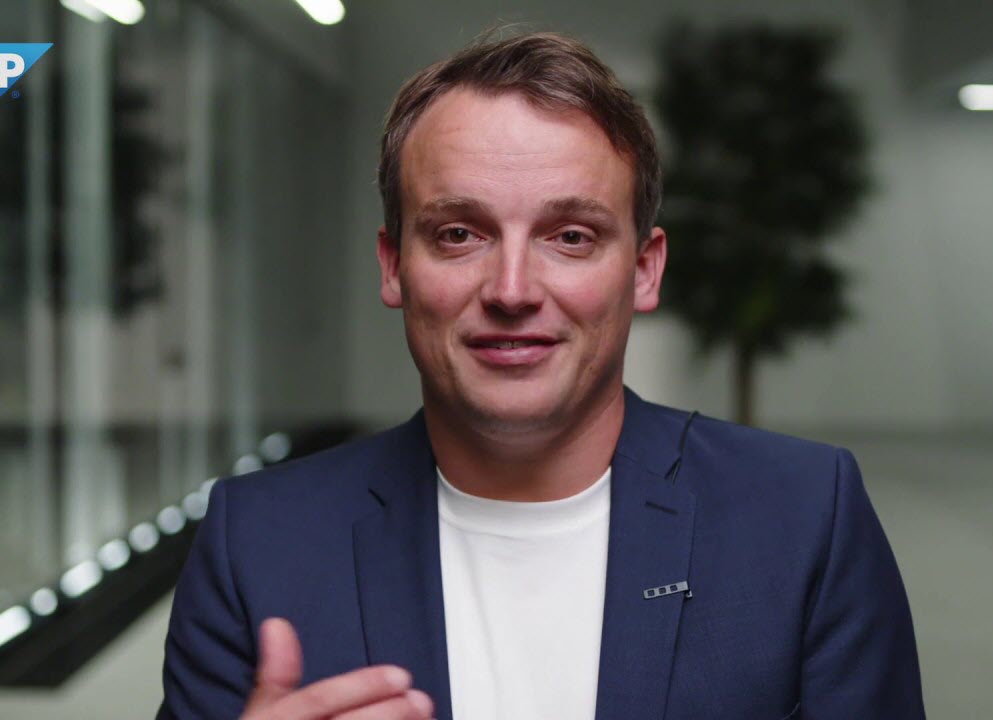
On a call with analysts, Chief Executive Christian Klein (pictured) said bookings performance in the quarter exceeded internal expectations, but deal mix weighed on near-term backlog metrics. “New bookings came in clearly ahead of plan, and we saw strong customer retention, low churn and stable discount rates,” he said.
However, he noted that a higher share of very large transformation deals featured “more back-end-loaded ramps,” limiting their contribution to the current cloud backlog in the first year. He also cited an increase in government contracts that include termination-for-convenience clauses, which are excluded from backlog calculations.
Those factors combined to reduce reported backlog growth by about one percentage point and shift some expected revenue from 2026 into later years. “While we even overperformed on bookings and are very satisfied with the outcome of Q4, the combination of both effects resulted in a one percentage point difference to what we expected,” Klein said.
Chief Financial Officer Dominik Asam acknowledged that backlog growth slowed more than SAP originally anticipated, but emphasized the long-term significance of total cloud commitments. “We have a significant amount of our future cloud revenue in the books,” he said, adding that large deals ramping over multiple years are expected to support revenue acceleration through 2027.
The investing site TIKR Inc. also noted that the selloff may reflect investor worries that generative artificial intelligence could hurt vendors such as SAP by enabling companies to build their own software rather than buy it from vendors.
Cloud drives growth
Cloud remains SAP’s primary growth engine. Fourth-quarter cloud revenue increased 19% year over year, to about $6.7 billion, or 26% at constant currency, driven largely by demand for the company’s Cloud ERP Suite, whose revenue rose 23% in the quarter, to $5.8 billion. Software license revenue fell 34% in line with SAP’s continued shift away from on-premises licensing toward subscription-based cloud services.
Profitability improved significantly across the business. SAP’s operating margin reached 29.2% in the fourth quarter, up from 26% a year earlier. Free cash flow swung to a positive $1.2 billion in the quarter, compared with negative $1.1 billion in the same period last year. For the full year, free cash flow rose 95%, to roughly $9.9 billion, reflecting higher operating profit and lower restructuring payments.
SAP ended 2025 with about $4.1 billion in net liquidity and announced a new share repurchase program of up to $12 billion, scheduled to run through the end of 2027. The company has already repurchased roughly $9.6 billion of shares since 2020, signaling confidence in its long-term cash generation despite near-term market volatility.
SAP forecast continued cloud growth in 2026 but guided for a modest deceleration in current cloud backlog expansion. The company expects cloud revenue of $31 billion to $31.4 billion next year at constant currency, representing growth of 23% to 25%, and non-IFRS operating profit of $14.3 billion to $14.8 billion.
While SAP highlighted strong cloud demand, expanding margins and growing adoption of AI-infused offerings, the market reaction underscored persistent investor concern over the pace and predictability of its cloud transition. The results showed a company delivering on profitability and cash flow, but still navigating the complexities of long-term transformation.
Photo: SAP
Support our mission to keep content open and free by engaging with theCUBE community. Join theCUBE’s Alumni Trust Network, where technology leaders connect, share intelligence and create opportunities.
- 15M+ viewers of theCUBE videos, powering conversations across AI, cloud, cybersecurity and more
- 11.4k+ theCUBE alumni — Connect with more than 11,400 tech and business leaders shaping the future through a unique trusted-based network.
About News Media
Founded by tech visionaries John Furrier and Dave Vellante, News Media has built a dynamic ecosystem of industry-leading digital media brands that reach 15+ million elite tech professionals. Our new proprietary theCUBE AI Video Cloud is breaking ground in audience interaction, leveraging theCUBEai.com neural network to help technology companies make data-driven decisions and stay at the forefront of industry conversations.