For decades, the question of who gets to tell Africa’s stories has been tied to influence: who controls the cameras, the budgets, the distribution pipelines, and, ultimately, the narrative. Today, a new force has entered that debate: artificial intelligence (AI).
As generative AI tools reshape global filmmaking, African creatives are asking a familiar question in a new context: when these tools are developed abroad, who truly owns the stories they help create?
For Sandra Adeyeye Bello, founder and creative director of Abuja-based creative media organisation and content studio SAB Studios Nigeria, the answer is straightforward.
“AI does not tell stories on its own,” she told in an interview. “It’s a tool. The storyteller is still the human being using it.”
Bello sees the rise of AI not as a threat to African storytelling but as an opportunity to bridge the long-standing divide between talent, technology, and economic opportunity on the continent. With Africa’s AI market expected to expand from about $4.5 billion in 2025 to $16.5 billion by 2030, she argues that the moment is ripe for creators to shape their own future.
SAB Studios was founded in March 2025 to address that gap. Bello’s background spans radio, television, print, and film, before she moved into digital media and content marketing. She founded SAB Studios to serve foreign clients seeking faster, more flexible content production.
But as demand has grown, so have concerns that African creatives are generating content for global platforms they do not own, platforms whose monetisation rules are set outside the continent and often work against their interests.
That concern pushed SAB Studios beyond agency work into community building. Today, the studio powers the AI Filmmakers Network (AFN), a growing collective of more than 500 African creators across Nigeria, Kenya, Ghana, Sierra Leone, and South Africa. Their shared mission is to experiment with AI-assisted filmmaking while keeping creative control and, eventually, economic value, within Africa.
Beyond Nollywood’s first act
Any conversation about African storytelling inevitably runs through Nollywood, one of the world’s most prolific film industries. Valued at more than $6.4 billion, the industry is known for producing low-budget yet highly engaging films at an astonishing rate of over 2,500 titles annually. It was built from the ground up by screenwriters, actors, directors, producers, and technical crews, not by machines.
Bello is quick to acknowledge its significance.
“Nollywood has done an incredible amount of work,” she said. “It normalised African faces, our languages, our family structures, and our everyday realities on screen. That presence is undeniable.”
But visibility, she argues, is not the same as ownership. Africa’s global image is still too often shaped through external lenses, whether via Hollywood productions or international platforms that control distribution and revenue. Even Nollywood, influential as it is, now faces a new test: the need to evolve.
“This is where we come in,” Bello explained. “We are evolving through AI filmmaking and digital platforms. The costs are lower. The barriers are lower. Distribution is global-first.”
For her, SAB Studios represents the “next layer” of African storytelling, building on Nollywood’s foundation while adapting to a rapidly changing media landscape.
Creators at SAB Studios produce videos using Elon Musk’s xAI tool GrokAI for scripting and idea generation, Google’s advanced video-generation model Veo 3 for realistic, high-fidelity visuals, OpenAI’s Sora 2 for complex scene simulation and cinematic storytelling, and Wan 2, a creative AI engine known for stylised visuals, animation effects, and artistic video enhancement.
Can tools built elsewhere tell African stories?
In debates about ownership of AI tools for African videos within production, Bello reframes the question. She compares AI tools to a pen.
“You’ve always used your pen to write,” she said. “Have you ever worried that because you didn’t manufacture the pen, it won’t write what you want?” The tool, in her view, is neutral. What matters is who wields it and with what intent.
Crucially, she argues, AI has weakened traditional gatekeepers. In earlier eras, African filmmakers had to navigate distributors, marketers, and financiers who often shaped content to suit external tastes. Today, a creator can make a film on a smartphone, use AI tools to enhance it, and publish directly to a global audience.
That shift also changes the relationship between African creators and big tech companies such as Google, which owns YouTube, one of the primary platforms through which these videos are monetised. Bello recounts reaching out to AI platforms whose teams knew little about Africa beyond stereotypes.
“We are the ones telling them our story,” she said. “When they see that we have 500 African creators, weekly challenges, and a film festival, they are baffled. The conversations are running constantly.”
From skills to sustainability
At the heart of SAB Studios’ model are three pillars: skills acquisition, showcase, and sustainable funding. The studio trains creators in-house through workshops, tests, and internal projects before they graduate to client work. AI has accelerated this process, allowing creators to experiment rapidly across formats.
The results are varied. AFN creators are producing AI-assisted music videos, short drama skits, documentaries, animations, and product adverts. According to Bello, some projects move from script to screen without traditional production crews.“The only limitation is your mind,” Bello often tells her students.
Yet experimentation alone does not pay the bills. Most African creators still earn primarily through foreign platforms such as YouTube, TikTok, and Facebook.
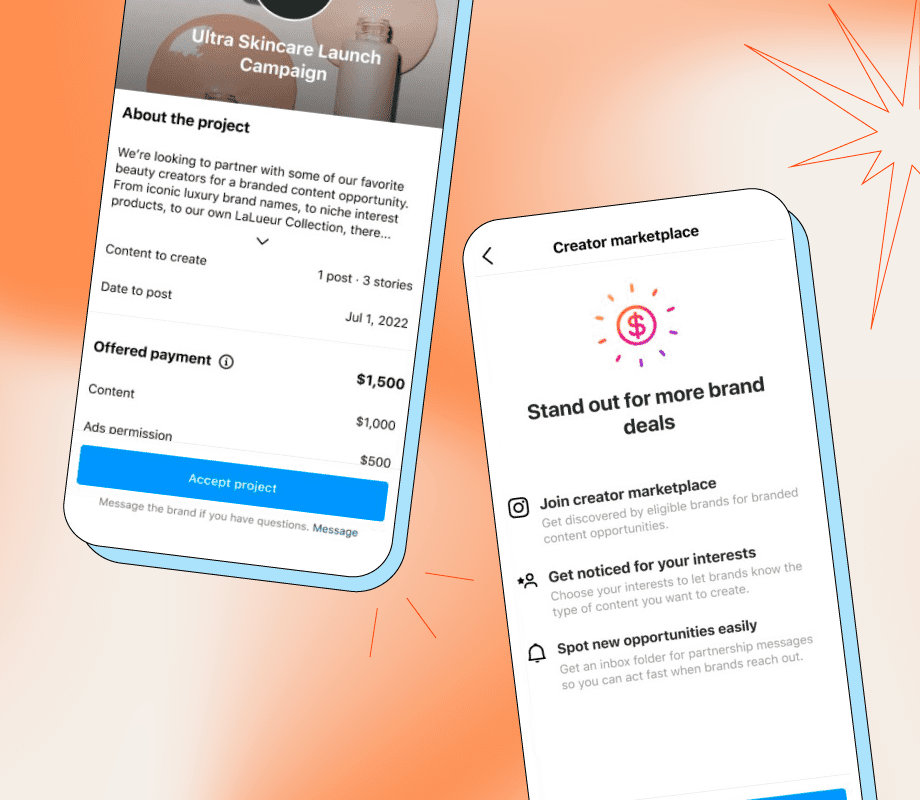
SAB Studios’ longer-term ambition is to change that equation by building a local monetisation platform: an African marketplace where brands can collaborate with vetted creators and keep more value within the continent.
Building a local marketplace that truly connects African creators to audiences and brands is not a new ambition, and several high-profile attempts have shown how difficult it can be.
IROKOtv, once Nollywood’s brightest streaming hope, spent nearly $100 million before abandoning its Africa-first model.
Low incomes, expensive broadband, piracy, and weak payment systems made a local subscription business impossible to scale; by 2023–2025, up to 89% of its revenue came from the diaspora instead.
Econet’s Kwesé TV faced a similar fate. Despite its bold mix of satellite pay-TV and VoD across the continent, the platform shut down by 2019 after slow subscriber growth and cash-flow pressures rendered its content-heavy model unsustainable.
The studio’s streaming app, currently 80% complete, is set to launch in beta during its April film festival. The idea is that businesses looking for creators should not have to search endlessly across platforms, while creators should not depend entirely on algorithms designed elsewhere.
“We want to tell African businesses: come here,” Bello said. “These creators understand your stories. They pronounce your names properly. And the money stays here.”
Fear, backlash, and adaptation
The global debate over AI in film has been loudest in Hollywood, where strikes in 2023 focused partly on the use of AI in production. In Africa, resistance has been more muted but no less intense.
Fully AI-generated films such as The Omegamax Conspiracy (Nigeria, 2024) sparked backlash from some Nollywood veterans who argue that AI strips filmmaking of its human essence. In South Africa, actors’ guilds have warned about the dangers of unregulated digital replicas of performers’ faces and voices.
Bello acknowledges these fears but sees them as part of a familiar cycle.
“People fear the unknown,” she said. “We moved from firewood to gas, and now to air fryers. Change is inevitable.” Rather than resisting AI, she believes African creatives should adapt early, shaping how the technology is used instead of reacting to it later.
That adaptive mindset is already visible across the continent. By early 2026, at least five prominent AI-focused film labs and initiatives had emerged, from Rise Interactive Studios in Nigeria, which produced Makemation, to South Africa’s Film Runway meetups and the British Council-backed Film Lab Africa. SAB Studios sits within this broader ecosystem but differentiates itself by centring community and ownership, not just experimentation.
Inclusion as a creative dividend
One of Bello’s strongest arguments for AI-enabled storytelling is inclusion. Her community is largely made up of women and young people, groups historically underrepresented in film leadership. AI tools, she says, also open doors for people living with disabilities, who can now showcase their talent without navigating physical or social barriers.
“In a traditional setup, you show up for an interview and biases kick in,” she said. “With AI, you set up a profile, show your work, and let the work speak.” Belonging to a community further reduces isolation, offering peer feedback, visibility, and a sense of shared purpose.
The question of who owns Africa’s stories in the age of AI has no single answer. Tools, platforms, and capital still largely sit outside the continent. SAB Studios’ experiment, however, suggests that ownership is less about where technology is built and more about how it is used, governed, and monetised.
For Bello, success would mean building a true home for African creators: a platform that pays them to create, helps audiences discover them, and reduces dependence on foreign systems.
“That,” she said, “is what ownership looks like.”