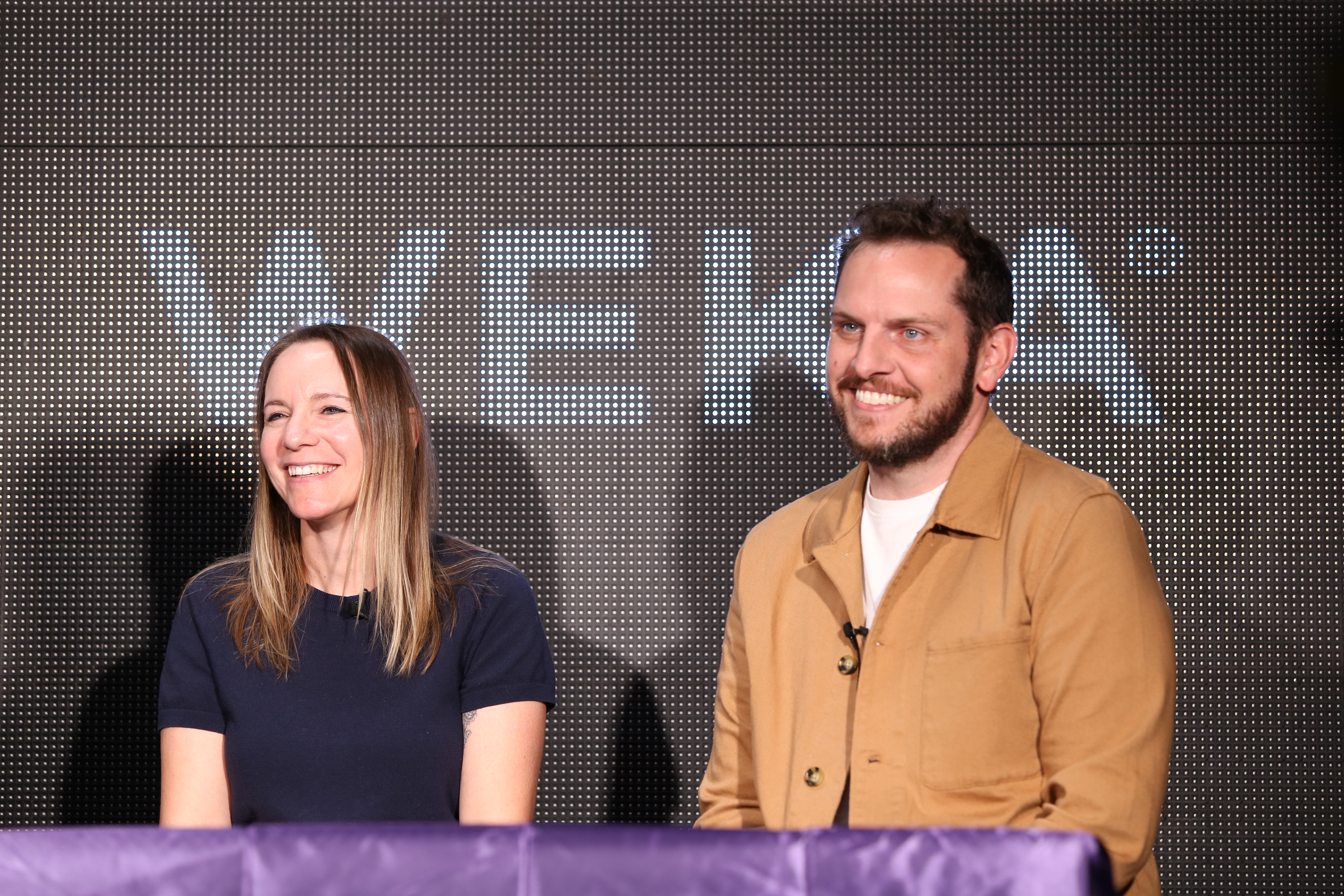
Immigration, civilizational battles, arguments about Israel, race, racism — This is the zone of debate, and abortion doesn’t seem central. I mean, I would have a slightly different view, for better and for worse and that — So I do think there’s an identity crisis happening on the right. I agree with you on that. Today, I’m excited to bring you something a little bit different. Last month, I spoke with the pro-life activist Lila Rose in front of a live audience at the Catholic University of America. We were there to talk about the future of the pro-life movement, and the students in attendance had a lot of questions. So my question for you… My question has to do with the collapse of marriage. I wanted to ask about IVF, and specifically how we should go about resolving that. The fundamental question is, when does life begin? I wanted to ask about, I guess, the future of the pro-life movement… And I had questions too. Was the pro-life movement really prepared for the end of Roe v. Wade? Is Donald Trump actually a pro-life president? And where does the anti-abortion movement go from here? For answers to those and many more questions, here’s my interview with Lila Rose. Lila Rose, welcome to the stage at Catholic University and welcome to “Interesting Times.” Thank you so much. I’m thrilled to be here, both for Catholic University and the interesting times that we’re in. That’s right. And we’re here to discuss the politics of abortion, the position of the pro-life movement. A few years after Roe v. Wade was overturned. I want to know what you think the pro-life future looks like here in the second Trump administration. But since this is a podcast, I’m going to start by asking you a little bit about your own biography. So you’re the founder of Live Action, a pro-life organization, and you founded it when you were 15 years old. Correct. So what was Live Action at the beginning, when you didn’t have your driver’s license yet? Well, because I didn’t have my driver’s license, it was a group of other 15-year-olds, maybe some 16-year-olds in my parents’ living room, fellow students. And we were determined to just make a difference of some kind about abortion, because I became very convicted that this was the human rights issue of our day. And I had found this book in my parents’ home, which had basically the history since Roe v. Wade and before that of abortion in America. It had images of fetal development, and it also had images of abortion victims. And I was just very compelled that I needed to do something about the issue, because I had never heard it talked about in my church growing up — I was raised evangelical. I rarely heard it talked about anywhere else. My parents were pro-life, but they were not activists. Where did you grow up? San Jose, California. So, early Silicon Valley days. My dad was in software programming, and we were very much just in some ways a normal family. In other ways not — I’m one of eight kids, so we were pro-life. They were living the pro-life conviction very beautifully by having so many kids. But all that to say, I thought, O.K, there’s 3,000 abortions a day. This has been legal since before I was born. I find out there’s a Planned Parenthood abortion clinic committing abortions up to 24 weeks within 10 miles of where I grew up, and no one seemed to say or do anything about it. And so I said, I want to do something. I was interested in a lot of other causes. I was a normal kid otherwise doing, trying to get through high school, but I thought I got to do something and that was the origin of Live Action. So I think the point at which you came to national prominence was a little bit later when you were in college. And you became famous for basically going undercover at Planned Parenthood. What were you doing in those days? Well, freshman at U.C.L.A. and I was inspired to do more pro-life activism, started Live Action U.C.L.A. And so Planned Parenthood was at the time, especially seen as this great organization serving women’s health care. People didn’t really understand. It’s the biggest abortion chain — they’re providing abortions, which end human lives. And so that inspired me to say, “I want to expose this. I want to get people talking about this.” Started to — I started a magazine on campus, started doing investigative reporting as best I knew how. And then I ended up going undercover into Los Angeles Planned Parenthood facilities to expose the connection between underage girls who are pregnant and abusers. Because unfortunately, I’ve been doing all this research. I saw this horrible pattern of these court cases where girls would sue Planned Parenthood or name them in their lawsuits for the sexual abuse coverup that they endured at abortion clinics because they were taken by their abusers when they were pregnant. And instead of reporting it — there’s mandatory reporting laws for sexual abuse — the Planned Parenthood would cover up the abuse, and then they would send the girl home, back to the abuser. She’d come back for a repeat abortion. Horrible cycles continued. I started compiling the footage of them covering up the abuse, saying they wouldn’t report it and they’d get me a secret abortion. How old — How old were you at that point? You were 18. It wasn’t hard to be 15. That was — It was easy back then. And you would tell them. Yes. a back story, basically. Exactly and then when we started to report that it took up a life of its own, mostly through YouTube, some independent media. Some of the more mainstream media started to cover it when Planned Parenthood threatened to sue me. At the time, for the investigative reporting. As time went on, I started doing investigative reporting across the country. We launched live Action News, and since then, we’ve been reporting now for the last almost two decades. Let’s go from there to a kind of I mean, we can call it pro-life 101. I’m going to ask you some very simple questions now. Why is abortion wrong. So I would say abortion is wrong. You can do a very simple logical syllogism. First, it’s always wrong to intentionally take an innocent human life. And I found that most people agree with that. Virtually everyone I speak to agrees with that. It’s always wrong to intentionally take an innocent human life. Abortion intentionally takes an innocent human life. And so then the conclusion of those premises is therefore, abortion is always wrong. Now some people, of course, are going to take issue with that second sentence, that second premise. You can argue there are potential. You can say that, well, they’re not the same value as born life. Certainly they have potential. But it is undeniable scientifically that they are alive and they are human. They are human life. You wouldn’t have to have an abortion to end the pregnancy if they were not a human life. And so that is why in the pro-life movement, we oppose the murder. We consider it the murder of pre-born children for the same reasons we oppose the murder of those that are born. And what would you argue to someone who listens to that and says, well, surely there’s some kind of ambiguous ground in there. Someone who says, look, I can accept that abortion kills an organism that is a member of the species Homo sapiens. And I can even accept that. That might be wrong. But I don’t think that rises to the level of what we think about when we think about homicide, murder and so on. And I think usually when people make this argument, if they push it through, they end up saying something like, there is some feature of humanity, awareness, consciousness, brain development and so on. That is just not there in the tiniest embryos. I think there’s a lot of people who have a hard time seeing the tiniest embryos as the equivalent an infant or an adult human being, and so on. So what’s your response to that quest for a kind of wrong, but not murder perspective on the subject. And of course, we get that all the time. That’s the common objection. It’s just not the same. It’s just not the same. They’re different. It’s different. The entity, when they’re unborn for all of these reasons, are different. And I think you can categorize all of those reasons under the acronym sled. And sled stands for size, level of development, environment and degree of dependency. And these are the only four distinguishing factors between a preborn child or preborn life and unborn life. So of course size is different. You already referenced that the embryo is clearly smaller than a born child. A born child a newborn child is clearly smaller than a toddler who’s clearly smaller than you are or I am. I’m smaller than you. Our size shorter. Indeed I’m shorter. Yes, our size does not. Our size does not determine our value as human lives. And it certainly doesn’t should not determine our legal status. So there’s size. Then there is level of development. It is clear that an embryo is less developed than in a fetus, and a fetus is less developed than a newborn, a newborn and a toddler than an adolescent, then an adult, et cetera. But your level of development as a human life, we all begin life as a single cell embryo. We’ll end life, hopefully, in our gray Old Glory years when we die peacefully in our beds. That’s what we hope. But I intend to die at the podcast, Mike. But oh, no, that sounds quite dramatic. No I’m joking Yeah but our level of development also does not determine or negate our humanity. We are humans that are developing. And if you again tie legal status or legal human rights, human rights, basic human rights like life, the right to not be killed to our level of development, then I would say it’s an elitist society where the strong get to have tyranny over the weak, then there’s environment. Clearly the child in the womb is in the womb, not outside the womb. A lot of people say, well, birth is personhood. You’re suddenly life outside the womb. You have legal status, but your environment in any other context wouldn’t determine your humanity. Because you’re born in a different country, born to a different family. You’re in a different location that doesn’t change your humanity. And then finally, your degree of dependency. It is clear. And this is the big one, right. Bodily autonomy. They’re totally dependent on the mother. Therefore, the mother should have the power to end the life of her child in the womb, but only in the womb, not a newborn. We are all dependent in one way or another. You are dependent myself. We’re dependent on people who we can get food from. And otherwise, if we can get our food, we would. We would die. A newborn is certainly dependent on his or her parents, and those parents have to use their bodies to care for that newborn or the surrogate adult that they transfer care to. And an unborn child is totally dependent, completely dependent on his or her mother. But that doesn’t change his or her humanity. In fact, I would argue that proves the humanity because that’s how we all start life. That is the nature of a human being to be interdependent and to start life totally dependent and often to end life totally dependent. So when you look at the acronym of sled, you can see none of these differentiators between an unborn human and a born human mean that there should be less value assigned or a differing legal status. Both are human and both deserve fundamental human rights. I’ve always thought that the dependence question has ended up being, I think, where a lot of the legal and political arguments have rested, because it is connected to the idea that it is, in effect, illegitimate for the government to ask women to carry the unique burden of having this life that is so dependent on them is literally inside them is you’ve had three children. You’re aware of the substantial burden that pregnancy involves. I do think the level of development argument is the place where. There is a kind of intuition that people have that until you have consciousness, you have not passed some kind of threshold into humanity. And obviously a problem there is no one knows exactly when consciousness begins and so on. But someone sitting here arguing with you could say, I think you the S, the E and the D fine. They make a good case against second trimester or third trimester abortion. But are you really telling me that the 28 cell organism that clearly doesn’t seem conscious at all has attained a status where you have to grant it full legal rights. Well, and I would say, listen to judge the single cell embryo as somehow not up to par because they’re not at 20 weeks yet, or 24 weeks or whatever. You put your arbitrary marker for consciousness. I don’t think there’s any good argument for that. Of course, consciousness is very special about humans that we eventually develop it, but humans can go in and out of consciousness. Humans can have varying degrees of consciousness. A newborn clearly has far less consciousness than just a year later and certainly than an adult. So I would argue that’s a very arbitrary standard. First of all, you can’t again, put a line in the gestational time of pregnancy and say this is exactly when it happened. So it’s also very dangerous to say, well, that’s going to be my line for telling someone they have legal value or not, because you don’t know when it is. So I just I don’t buy that argument. I don’t find it compelling. I understand people want a line in the sand that they can draw to say some abortion is O.K. And I think the question we should ask, why do we want that so badly. And that, I think, is the interesting discussion. Why is America so hooked on abortion. But a lot of people would say that if people want it, they want it because they associate legal abortion with what gets described as reproductive, right. The language of reproductive rights, reproductive freedom, but which is fundamentally about female equality and what was historically a male dominated society, Roe v Wade, is decided at during a particular surge of feminism and female advancement in American society. And I think it’s very hard for a lot of people to imagine a world where abortion is restricted, as it was in 1955, but you have the landscape of female achievement and opportunity that you have in the 2020s. Do you think there’s a tension there. I mean, I think that the tension is an unnecessary one. I think we’ve locked ourselves into a brick wall and we didn’t need to do it. The mistake of feminism and not first wave. I think first wave was beautiful. But then as we went further down the waves with feminism, the mistake was to say, well, now I need to be the same as men, not just have equal status under the law, but now I need to be the same. And so if a man can’t get pregnant, then I shouldn’t have to get pregnant. So then if we have sex and he’s not pregnant and then I get pregnant, then I should be able to disappear the pregnancy. That’s not reality. The reality is, men and women are different. And the reality is, when you get pregnant, you’re pregnant with a New human life that also has rights and bodily autonomy and a whole lifetime of choices in front of them. And so when we play the game of unreality that men and women are the same and should always be treated the same bodily in terms of what they can do with their bodies or reproductive systems, is just a mistake. And that’s why one of the reasons why, of course, we have abortions a year now because we’re not living in reality. I would argue what’s truly pro-woman, and certainly going to make for a more just and loving society, is to acknowledge the differences between men and women and acknowledge what sex does because I think this is the root of the issue. We see sex today, and this was the sexual revolution. On steroids. The free love movement. Sex should be divorced at all times for adult pleasure, as long as there’s consent, whatever that means. It should be divorced from consequences, responsibility, and certainly procreation. And that’s not reality either, because sex creates New life and sex is incredibly bonding. And sex is also, I think, sacred and belongs in lifelong commitment, which is why historically, we valued sex in marriage as something really special, where it belongs. And that’s what I would say is as the tragic mistake we’ve made. And that’s why people now have this view of sex of as recreational. And it’s less they’ve lowered the bar for its value. And then the next step is you say human life isn’t valuable. And I think this was a huge error, that feminism, when it started to get married to the free love movement, the sexual revolution movements, it wasn’t always like that. But when they started to get married, those movements, it became very toxic for both women and now certainly for children. We live on the far side of the sexual revolution. And I think any plausible world where abortion is restricted is not going to be a world where you have an immediate return to large scale premarital chastity. And so it is most likely going to be a world where you have a lot of pregnancies in difficult circumstances that under current conditions, would end in abortion. You’re talking about reality. A core reality is that of difference between men and women. Is that in a situation where there’s an unplanned or unexpected pregnancy, women do bear a burden that men don’t bear. What is the responsibility of society, government, public policy. To be cognizant of that and provide some kind of special support. Is that an obligation. Is there inherent in the pro-life argument. Is there a case for a kind of public provision of support for women who are being asked to carry pregnancies. I would say absolutely yes. And I think part of live action’s advocacy is certainly we want to abolish abortion. We don’t legal abortion is at its core unjust. And it should not be permitted. Abortion should not be permitted. But I do think the government should provide there should be safety nets for people that find themselves in tough situations to support children. And I also think there should be public policy to encourage marriage because I’m not. So I guess, pessimistic about the future. And when it comes, I’m talking about just the short term. The short term. You pass a short pass an anti-abortion law in the District of Columbia or the state of California tomorrow, and in the next two years, what. What does the landscape we know in states like Texas that have banned abortion because there were about 12 states where the laws kicked in after Dobbs v Jackson, where they were able to ban most or virtually all abortions, and you saw tens of thousands of lives saved. And so there are lives that are being saved because of pro-life laws and people who choose not to abort. I mean, was a feature piece on a young woman who was in Texas right after Dobbs v Jackson and couldn’t get the abortion because it was illegal now. So she had twins, and they painted the picture as a very dire one. And it was like, wait, she had these beautiful twins and they have their whole life in front of them so that we could celebrate that. But the point is, pro-life laws absolutely do prevent abortions. And I think if there is abortion provided as effectively back up contraception, that’s how it’s used today. And I think we should be very realistic about that. Percent of women who have abortions are using contraception when they get pregnant, the month that they get pregnant, and the idea that contraception is going to save lives ultimately somehow because it’s going to prevent abortions. No, it’s created this mindset that, again, sex is not for marriage. And ultimately to be open to life. It can be for pleasure and you can just use abortion as a backup contraception. You can change the mindset. And we’ve seen this after Dobbs. We saw huge social media campaigns for people saying, now we’re going to be abstinent because we can’t basically use abortion as backup contraception. I mean, that’s what they didn’t say that the quiet part out loud, but that’s what it was. So I do think sometimes they said they wouldn’t date a Republican like that. Well, that line may have also appeared and I took that personally. No sorry. We’re so I’m trying to basically sketch out what you might call a kind of ideal pro-life vision before we descend to the realities of politics right now. So just the last question on that is what kind of in an ideal world. What kind of exceptions around abortion are permissible from your point of view, from a pro-life perspective, if any. So when we’re talking about direct and intentional taking of an innocent life, there’s no exception that can be just. And this is highly controversial for some because we’ve been trained to think that abortion is somehow medically necessary. And I’m not talking about the removal of an ectopic pregnancy. In that case, the child’s growing in a hostile environment. They are the intention is not to take their life. You have to remove the child anyways. It’s not going to be able to survive there. The mother’s life is threatened. I’m also not talking about miscarriage care where the baby’s heart has already stopped beating. Removing that baby during a procedure is not in the direct, intentional taking of a life. But in any other case, if there’s a medical scenario where there is some emergency situation, the mother is having a health crisis. There’s a whole world of medicine to support and care for both mother and baby, and to advocate for both of those lives in a clinical setting and in very rare cases, in a life threatening emergency. An early delivery may be necessary of that baby. But in that case, you do everything you can to save both lives, so it changes entirely. The posture of our medical system, which today is basically saying, well, life is disposable. Have the abortion because it’s easier. Have the abortion because the baby’s disabled. Have the abortion because you may have this health complication. I mean, I have a sibling, beautiful family, my brother who’s married, beautiful kids, one of his children is missing part of his hand because an amniotic band issue in the womb immediately recommendations to abort were made to him and his wife at 20 weeks. It’s happened to many other friends of mine. People listening probably have had those recommendations in their lives. The medical system right now is not designed to care for both as patients. It’s designed to treat abortion as somehow a necessity or a go to. And I think we need to care for them both. So in no case should abortion be permissible under law. O.K, I’m going to come back to that issue, because I think a lot of very fraught political debates revolve around it. But first, let’s talk about the bigger realities. Roe was overturned in 2022, in the Dobbs decision. The issue has currently returned fully to the states. Pro-life laws were on the books in a number of states. But just to give my own summary of where things stand and you can react to this. I think the pro-life movement has been maybe more successful in some ways than I expected in defending some of those existing pro-life laws, mostly in red and conservative states. And it was also successful in basically averting defeat in 2024, when the Democratic Party was campaigning very straightforwardly on a promise to restore abortion rights. And there was a sense that the election could be a referendum on abortion. But in the end, Donald Trump was elected president. So those are, in a sense, pro-life victories. At the same time, when the abortion issue has come up for a referendum, including in Republican leaning states, the pro-life movement has lost. There have been, I’d say, at best, piecemeal attempts to pass kind of pro-family or mother supporting legislation of the kind you were suggesting that you support. Trump himself has very conspicuously kept the pro-life movement at arm’s length, has accepted a system where abortion pills are available by mail across the country and into the bargain overall. And this started before Dobbs. But the abortion rate has risen in America as a whole. So you can react to that analysis or just tell me, was the pro-life movement prepared for the fall of ROE. That’s a very good question. I think in some ways we were prepared, and in other ways, we were not. So you could say, well, then you weren’t prepared. A lack of preparedness in any area is a lack of preparedness. And what does that mean concretely, I would say. It’s one thing to break an institution institutionalization of abortion over five decades, which is what happened after Roe. Government got caught up in funding the biggest abortion chain, which is Planned Parenthood, with ultimately hundreds of millions of dollars. Then you have the academia largely becomes very pro-abortion. You have media becoming very pro-abortion. ’ editorial board supports abortion and most editorial boards. Do you have entertainment media supporting abortion. So you have this really, I would say, a monolith throughout these different industries, parts of society that just support abortion. It’s the given. And if you’re pro-woman, if you’re feminist, then you have to support abortion. I mean, that was another message that I think a lot of women in my generation, millennial women were sent. That’s not true, by the way. The early feminists were pro-life, but all of that was the messaging. And so when you get this blow to Roe v Wade, they didn’t assert personhood of the child, right. So they said, well, the states get to decide this, which was a step of progress, but I don’t think it was full justice. So do you think do you think the Supreme Court should have ruled the unborn have a right to life under the 14th Amendment. Absolutely, yes. And I think the 14th Amendment is very clear that every one should be given equal protection of our laws, and no state shall have the right to deprive anyone of life and equal protection of the law. And that’s not happening with the unborn children that are not being treated as human beings and persons. So I think they didn’t go far enough. But all that to say, there was a major backlash. We have to be real about that. There were referendums. There were. I mean, in California they passed proposition one. And what happened was we basically enshrined abortion yet again. I mean, it wasn’t enshrined to the degree that it was, but we enshrined abortion in our state Constitution. Now, I’m in a very blue state. You’ve got Gavin Newsom now Kamala Harris obviously from California. It’s very far left. That’s the ideology there. But the pro-life movement has always been a volunteer movement. It is different from virtually every other movement because the victims are all voiceless and have no votes and they’re unborn. So people who are fighting for life, pro-lifers they’re called all kind of names or media, they can be kind of disparaged or put in caricatures. But the reality is there are a lot of just good, normal people who themselves are not getting anything from this cause. They’re not advocating for their own rights. They’re advocating for basically other people’s children’s rights. And the amount of money that the sheer amount of money that the pro-life movement has been outspent by. When you consider Planned Parenthood as a lobbying organization, when you consider the money of the Democratic Party that threw it behind pro-abortion ads in midterms after Dobbs v Jackson and then some of these ballot initiatives to push abortion on demand as part of the state constitutions. In some of these states, the pro-life movement was outspent sometimes 10 to one, sometimes 30 to 1, and the pro-life movement didn’t have the infrastructure that the Democratic Party has built for abortion or that Planned Parenthood, quite frankly, has built in their lobbying groups. Now, is that our fault. Yes we’re live action. One of the projects of live action is working to solve that. But the point is, it’s a David and Goliath type fight. And that’s a fairly pessimistic narrative, though. What do you apart from just. David one. David one. He wins. So yes. Yes that’s fair. But what advice then do you give David in this. What is the sling and the stone. Very good question. If we’re going to extend the metaphor and what I mean, apart from saying, O.K, you need better grassroots organizing need better fundraising and so on. What is the actual all political strategy like you’re here in DC, you March for life just happened. There’s been a lot of argument among pro-lifers about what the Trump administration is or isn’t doing. What is your view of how the Trump administration has handled the abortion issue. Yes, I think there’s some absolute wins and then there’s some yet to be won objectives. I’ll put it that way. And what I mean by that is, there’s things that I think should be happening that haven’t happened yet, and the abortion pill should not be on the market. And that’s one of the things that I’m here in DC to talk about. We did a press conference yesterday on Capitol Hill. We had a meeting with Secretary Kennedy. Have been had meetings with the administration urging that this be done. And again, it’s highly politicized. What do you think without betraying private confidences is just as a pundit, let’s say God help you. What do you think is the big impediment. I mean, the big impediment is that this is the most prevalent kind of abortion today. 600,000 lives were lost by the abortion pill in the last reported year. And women are being told that this is like a period pill. There’s literally a website that’s called period pills. Basically saying you don’t even have to know if you’re having an abortion, if you just want your period to come more quickly. Take mifepristone. There’s so many issues with that. It’s misleading. There’s no informed consent. I mean, there’s so many issues with that. But the political problem is if you took this step, it would be seen as a very big national pro-life step. And the administration thinks that would be unpopular. But this just shows. And I think but this just shows some in the administration, I don’t think again, there’s so much nuance here. But I do think that this is one of the big lies. I mean, the pro-choice movement originally was supposed to be for women. That was the idea. Give women choices. What it has become politically is a very extremist movement that only is supported by a small number of Americans. It’s not a majority in terms of that public policy that they’re promoting abortion on demand without apology, no religious exemptions, taxpayer funded. And so it’s been so politicized is what I’m saying. But again, in terms of the political problem, yes, there is a version of the pro-choice position that is sweeping, comprehensive and only held by a minority of the country. But the view that abortion should be available in some form is a popular position. Yes, we’re hooked on it right now culturally. And that’s one of the political fight. I know we’re talking about that. It’s so important. But our biggest focus, that light faction actually my personal focus with other projects I’m working on is changing really the environment that we’re in through really one person at a time, because it does take people having their own moments about relationships and sex and purpose and identity, because I think there’s a spiritual sickness and a moral decay that we’re experiencing. And that is the biggest thing to fight. So just to preview the goals of this conversation, I want to end with that question of persuasion and one on one, but I want to stay with the political for the moment, because that is, persuasion is, by definition, a long term project, maybe not a 50 year project, but at least a long term project. In the meantime, the pro-life movement needs a way to make political progress defend the territory that it has speak to people who are deeply conflicted on the issue. And is there a zone of incrementalism and compromise that you’re comfortable with in that area. Well, I would say the administration has already proven time and time again that they’re willing to go out and do highly controversial things. That’s true. So I also have a rather low approval rating at the moment. But I might do they. I mean, how much do they care when they have their issue that they are going for because they believe it’s important to the base. So there is a pro-life base. That base matters. So my argument purely politically would be obviously do the right thing, period. Always is my encouragement. But from a political standpoint, if they want to rally the base, I would say you need to take bold, decisive action. That’s what the base wants to see. They’re seeing it on other issues, different parts of bases, whether it’s ice and how they’re handling the ice situation. They are handling the ice situation in a way that seems only popular. I have my gripes with it. A lot of people do, but they’re still doggedly going the route that they choose to go. Good So let’s talk about why do you think that is. Because it seems like O.K, so there’s a pro-life, there’s a basic pro-life problem of how do you persuade the moderate, the uncertain, the lukewarm person. But then it seems like what you’re describing is a concrete internal Republican coalition problem. And this is not a New thing, I should stress. By the way, for a long time, pro-life activists have said, O.K, maybe our issue is doesn’t poll incredibly well, but neither do tax cuts for the rich. And the Republican Party is happy to more comfortable passing tax cuts for the rich than protecting the unborn. So this is not a new issue, but it does seem like there is this energy inside the Trump White House where it’s like, we have to take these steps on immigration and we don’t care how they poll. Why is abortion different? Well, they’ve made some strides on abortion. So we have seen some decisive actions. And the hardening of the pro-life prisoners last year. Just to clarify, this was pardons of pro-life protesters who were arrested and put in prison, including grandmothers and mothers of I mean, I some of them personally. They’re really beautiful. I would say sacrificial people, but there was the budget last year that President Trump signed, which defunded Planned Parenthood of Medicaid money for one year. That was a big deal. I remember being told two decades ago or 15 years ago, I don’t remember when I was first on Capitol Hill as an activist. It’s never going to happen. They’re never going to defund Planned Parenthood. The Republicans love him. Everyone loves him. It was, it’s good luck with that. Things seem impossible until it’s done. They’re done. And I think on the life issue we have seen big strides. Roe v Wade was overruled. People told me for years that was going to be impossible. Will we remove the abortion pill from the market. It doesn’t belong on the market. It kills human beings. That’s what it’s designed to do. It doesn’t belong on the market. So I think it is a matter of time. I think the administration, yes, has been slow to move on some issues and I’ve been the first to say move, please move faster, take a stand here. But I guess I’m interested, though, in the extent to which it’s not just about the administration itself, but also about the kind of conservative coalition it’s leading. You have not been making religious arguments for abortion, but it is, again, excuse me, we have not been definitely haven’t been making religious arguments for abortion. But you haven’t been making those are the worst, but you haven’t been making explicitly religious arguments against abortion. But it is no secret. We’re here on the campus of a Catholic University, that opposition to abortion is very often linked to religious faith. America as a whole. But even American conservatism has become less religious, more secular, as gender polarization has increased, conservatism has become more male coded. And I mean, I think one interesting thing that people who are pro-choice don’t always realize is that a lot of especially early pro-life activism was very female dominated. You’re not. In fact, you’re an exceptional figure, but not an exceptional figure in that I feel a daughter of those figures like Nellie gray, Helen Alvarez, others. So in that sense, though, there’s a way in which a kind of secular, male dominated conservatism maybe is just inherently less interested in the pro-life cause. Do you think that’s a possibility. And if so, what. What is the pro-life movement do about that changing reality of the conservative coalition. That’s an interesting read. I actually haven’t I don’t know that I agree with the read that it’s the fact that it’s male dominated that makes it less because I’m speculating Yeah, I think there’s plenty of squishy. There have been squishy politicians who are women on life, so on both sides, quite frankly, and certainly on the Democrat side, unfortunately, they’re very locked in on support of abortion, which is tragic, by the way. And there are many, obviously very, very pro-life men. I just think of it as I go on the internet, right. Like I’m familiar with what Gen Z right wingers on social media are talking about. And it is immigration, civilizational battles, arguments about Israel, race, racism, these kind of things. This is the zone of debate. And abortion doesn’t seem central to that just as an observer. I mean, eye would have a slightly different view, for better and for worse. And that. So I do think there’s an identity crisis happening on the right. I agree with you on that. There’s this their internal factions are forming about what are we going to be, what we support. And I’m sure there’s been variations of that on the left too. So it kind of is a problem here and there ongoing. And that’s where if you don’t have ideological consistency, if you don’t have truth, you’re going to end up fraying at the seams. It’s just it’s going to fall apart eventually. There needs to be a foundation of truth. And the truth of the pro-life cause is so foundational to any civilization. Human life has value. Human beings have a right to life. Human humans are worth protecting. Children are worth protecting. But I think on the right, yes, there’s a lot of shiny objects, a lot of New crises that hit and a lot of things to get passionate about. I do think there is a very strong pro-life core in the administration. There’s a lot of strong pro-life people who are there who are like, Mr. Trump, please. Like, let’s get all this stuff done. And President Trump has all of his other objectives and the things he’s working on. He’s let some things pass, which is wonderful. We celebrate that. We obviously need to see more. I don’t think it’s a matter of there’s not people who care enough. I think a lot of people care. I do think it is a matter, though, of prioritization and there are competing interests. And that’s where again, I’m here in DC live actions, working on many other pro-life groups because the children in the womb, they don’t have a voice. But I think that’s an opportunity. I think that’s an opportunity for really forming a resolute spiritual identity of we’re not in this just for ourselves. We’re thinking about other people. We are caring about the future and future generations we may never meet. And I would say that’s not just a spiritual identity that the Republican Party should have. I would hope the Democrat party could find that identity, too. They used to have it, by the way. The Democrats used to be pro-life. That was a flip in the last several decades as well. So I think it’s going to take a pendulum shift. Certainly it’s going to take activism, advocacy, education. But I do think that shift can and will happen on that idealistic argument. That’s an argument. It’s very hard for me to imagine the current president of the United States making in those terms himself. I mean, basic question do you think Donald Trump is pro-life? I think he’s told me he’s told me himself that he supports some abortions. But he’s also said he is pro-life. So I think he has a desire to be seen. And to do good things for the country. And I think that some of the things that he has helped accomplish have been very good. So my hope for someone like Donald Trump is that President Trump is that as he’s surrounded by people who are encouraging him to do the good thing and showing him the data and telling him the base wants this, I think those are all he’s a very political, obviously, leader. It’s going to help him with his decision making. I think we can see future pro-life decisions out of President Trump, I do. I mean, I’ve been disappointed. I’ve been critical. I’ve gotten in trouble. Certainly, I know you were. I mean, you were very critical during the campaign. During the 2024 campaign when he was already distancing himself from the pro-life cause. You do see him change tone on things. I mean, he from time to time Yeah, from time to time. And so, I mean, he used to be a pro-abortion liberal. He used I mean, and that’s not some secret, that this is clear. So the president, President Trump has changed on issues. That’s a fact. Everyone knows that. Do you think that he is talking about persuasion and talking about the idea that ultimately, for the pro-life cause to triumph, it can’t be a Republican issue. It has to be an issue that brings people together across party lines. Isn’t that hard to do, as long as a figure as polarizing as Donald Trump is seen as the primary spokesman for your cause. Well, I don’t think he’s the primary spokesman for our cause. I think he has spoken for the cause, but he’s also said things that the cause has been very upset about. So there’s this tension there that everyone, I think can see. But I think that there is, I think a narrative, a painting of the brushes, say, Donald Trump speaks for all pro-lifers or President Trump speaks for all whatever cause or advocacy group that he may align with at least to some degree. I don’t think that’s fair. No, I don’t think that’s fair, but I guess I’d put it this way. I think there’s an entanglement that always happens in politics between the persona of the president, he’s a dominant figure in conservatism today or the right today. Maybe we don’t want to say conservatism. I’m not sure. I think it’s fair to say, if you were sketching the ideal spokesman for the kind of idealistic cause that you’re describing, it probably wouldn’t look like Donald Trump. How do you imagine the pro-life movement escaping, being just a conservative cause. Just a Republican cause, just a partisan cause. Like, what role can politics play in getting you beyond politics, I guess Yeah, it’s a very important question you’re asking, and one that we’re always wrestling with because and that’s why I consider my work culture first, politics second. What’s happening is you have, thousands of pregnancy resource centers across the country and campus movements of hundreds and hundreds of pro-life student chapters on college campuses. You have this movement among churches where people are coming back to the pews, and there’s a higher mass attendance. As Catholics here, we talk about mass, higher mass attendance at among the cohort of Gen z-ers in college. So these are the things that sometimes, this is I should those statistics are hotly debated because I just did the math. I just did a podcast episode that is available on YouTube that contains a long debate about that on the mass attendance question, church attendance and Gen Z and everything. I just want to stipulate that but what I but just to actually to ask a question not rather than to just make a comment about other podcast episodes does that is that I’m sure it was a good one, but it was a wonderful they’re all good episodes. I love them all equally. The on that you mentioned crisis pregnancy centers and so on. Is there a world where public support for women, pregnant women, families with children and so on. Is there a world where that becomes a successful form of pro-life outreach. Yes where you say, go ahead Yeah. Sorry yeah, I believe it already is. And that’s the thing. It’s not something that is necessarily picked up by ’ although here we are talking about it in interesting times. But the pregnancy care center movement and the lives of the heroes and the amazing women choosing life. Those sorts of stories, those sorts of movements that are really, I would say, long term movements that are very much really underground. You don’t really see them necessarily, but that’s what I see every day, not just as an activist, but as an educator and an advocate. But can politics and policy, I’m saying, play a role in elevating that you. Don’t you think so. Now You would not expect a Republican candidate for president to say the central plank of my platform is going to be government, more government funding and support for people working to help women in crisis pregnancies, and people with young kids who need help. Do you think if it were, it would be a stronger argument for the wavering, the uncertain, the person caught between the pro-choice and pro-life side. Yes, I absolutely do. I think making America a more welcoming place to have a family and raise a family is the winning message for any party, but certainly for the Republicans. And you see that happening with the administration. They’re picking that up. I mean, the child tax credit, Trump accounts Yeah conversations about how the Trump accounts, though, aren’t available when you’re having the baby, right. These are long term wealth building. You’ve got to do it every year for 18 years or whatever the span is. But yeah, I see what you’re saying. Meaning they’re not giving a chunk of cash right when baby is born. And that would be profoundly helpful for a lot of people. And I think that’s where I support tax credits, certainly, but I think there should be cash, direct cash given to parents. That’s what I think. I think that there should. I think that birth should be free. Here it might sound a little bit not like your typical Republican, but you see this language now happening more on the right where if we’re going to be spending public, we’re going to be spending taxpayer funds. It should go to what is really an existential crisis that we’re facing, which is our plummeting birth rates. You want to talk about it from 100,000 foot view. And we want to make America healthier for families and better for parents. So I think public policy that does focus on that and yeah, uses taxpayer money. I think that that’s a wonderful thing. And I do see that happening more on the right. People are talking like this. Yes I mean, I remember when I on the internet. Yes on the internet. So in Congress but I mean, Vice President JD Vance and his speech at the March for Life today was talking about making America a more welcoming place to raise a family, talking about, obviously, the Trump accounts, child tax credits. We want to make birth easier to have children. So that language is happening. Yes, the policy is going to catch up more. And that’s where we have to get concrete. But I do see that more on the right than I’ve ever seen before in my lifetime. All right. Let’s touch on one more concrete form of outreach that loops back to something we were talking about earlier, which is the idea of compromise and middle ground. I think one of the things that has been most notable about the way the abortion debate has played out since Dobbs has been the focus on difficult pregnancies, pregnancies where the woman’s health is threatened in some way, where there’s an issue with the pregnancy, where there’s a potential miscarriage, and so on, and where there is what I would describe as a kind of zone of uncertainty about when exceptions for saving the life of the mother, kick in when doctors are allowed to perform abortions, and so on. Earlier you talked about essentially the idea that should be allowed to perform an abortion under ectopic pregnancy conditions, but basically that’s about it, that there isn’t really any other circumstance where a pregnancy should be treated as life threatening to the mother and aborted. That is a very, very unpopular position. And it’s also a position I think that from my perspective again, I think underplays the deep uncertainty that obtains in situations where health and life are in different ways in the balance. Is there any room for effectively saying, look, if we are going to restrict abortion, we need to recognize that there has to be a certain kind of latitude for doctors in these circumstances. Well, first of all, it’s important to note that the exceptions, the rare cases for life threatening emergency, that they’re coded that way anyways, or rape or incest are less than 3 percent maybe even less than 1 percent So I think that’s also just important ground to set that this has always been used in the political context and the media context, as this is why we need abortion. And then you get a million abortions a year. Absolutely, absolutely. But it’s been but it’s been used because it is politically effective because people are aware of the inherent uncertainty that hangs over certain medical situations during pregnancy. I’m just curious, can the pro-life movement basically say, look, in those situations, we don’t know exactly which abortions count as saving the life of the mother or not. But for the sake of a larger ban, we are willing to accept that doctors are going to make decisions that we’re not going to second guess. So I think it is in the training of the doctor when a doctor is committed to both lives and is not. Secretly, I want to support abortion liberalization because that’s my agenda that I have. I think it’s a lot easier for a doctor to operate. I think what we’ve seen in many of these cases that you’re referencing, and we could get specific about one if you’d like. In these cases, there’s 1,000 different factors. There’s a lot of different factors. And it is very easy to politicize these cases. And that’s what has happened again and again and again. They’ve become politicized to say, well, in this case, this woman wasn’t given care because of the pro-life law. But you start to investigate. And we do this all the time at live Action News. We work with medical professionals who provide their expert opinion. There’s a blog which is a pro-life group of Obstetricians gynecologists. There’s the Dublin declaration, over 1,000 medical professionals who say abortion, the direct and intentional killing is the definition there of the child, is not medically necessary. We can care for both. There’s ways to care for both. That really, I think, hasn’t really reached enough people that there’s. But in the meantime, you have laws and you have hospitals that have not been trained in these practices or doctors who disagree with those arguments. Or they who and who are in the position of basically saying, we’re in states that ban abortion, they’re a life of the mother exceptions. We’re not sure what those cover. So you’ll see this hospitals will say, well, we’re going to wait and see and not perform an abortion. And then that yields stories of medical difficulty that I think some of them, some of them are blown out of proportion, but some of them are legitimate. And it seems like your argument would be in those circumstances, the hospitals are basically just doing the right thing by waiting. But that again, seems to me to what I would also say is there’s no investigative energy behind all of the cases where abortions may have been performed. And there were also bad outcomes for mom and baby. Certainly for the baby. The baby’s dead. There’s always the worst outcome for the baby. And there’s no energy behind that investigative reporting. I mean, maternal mortality rates in America are atrocious. They’re atrocious. And that’s not because of pro-life laws. That’s because of our health system. But the bottom line is this you. Abortion is not medically necessary. And this is not my opinion. This is the position of thousands of medical professionals. There are thousands of doctors today who are doing amazing work, caring for both mom and baby and abortion and early delivery of a baby where you’re not directly killing the baby. You’re delivering the baby. The baby might pass away because the baby is too small for NICU. Obviously that would be a tragedy. That would be a very rare case. If you get the right care, good care, the care you deserve for a high risk pregnancy, the odds are very good that you can save you and the baby. And if the baby has a disability. This is also used as a medical justification for abortion if it’s medically necessary because the baby’s going to die. Well, if you have a view in health that instead of we kill a dying patient expedite the death, get the baby to die before it naturally dies because the baby’s sick or the baby has a disability. If you instead allow if there is a natural death that may take place instead of taking the life, you allow the natural death to take place. You provide hospice care or palliative care for the child, or many times the child does survive. There’s so many cases where parents were told their baby’s going to die and the baby survives. Your baby’s going to have a severe disability. The baby’s much better than they believed the baby to be. So the point here is there is a pro-life health system that is within reach. It’s been done before. That requires. But that argument, again, I guess, brings us back to questions of persuasion and mindset. You’re talking about a world where medical professionals and the medical system writ large themselves have just a very different, just a very different basic and fundamental attitude. And also where it is true, as you say that know diagnoses are wrong and children survive and so on. But it is also the case that is a world that would accept to a greater degree than our system does disability and that is also part of the story here. And I don’t want to go too far with that. I just want to pull us back here at the end to the arguments that you make. And I asked you to walk through in a kind of almost like forensic debaters way. The case around abortion. But the reality is that obviously, this is an incredibly personal issue that is connected to people’s experiences, their bodily experiences, their experience of having kids, not having kids, all the rest of it. And it is, in the end, a female issue in a profound way. I think that no man can quite fully understand. And I gestured at this a little talking about the Republican Party. But it is the case. It is this situation right now where the Republican Party, which is the pro-life party, is a more male party, less female party. There is increasing political polarization of the sexes. And so the pro-life movement is in a position increasingly of speaking from within a more male coalition to a female population, that for Trump specific reasons and other reasons, is alienated from that coalition. So I just wanted to end by asking you if you’re having a personal discussion about why women should be pro-life, what kinds of things do you say. I think that we as women are our superpower. The thing that makes us different from men, of course, is the ability to mother. And there has been so much, I think, rejection of motherhood as somehow giving us a lower status. Over the last few decades, I know when I was growing up, the girlboss era was in full swing. It’s kind of dying down a little bit right now because people are realizing maybe that’s not my end game is girlboss thing so hard. And by the way, I girlboss. So I’m not saying girlboss is bad. I wasn’t going to say it, but since you said it, I love it. I mean girlboss and that use your talents to the fullest extent you can for the good of others. Your hope. Is the goal. But also embrace marriage, motherhood, and yeah, there’s going to be seasons where you work. You have to pull back. I travel far less than I did when I didn’t have my young children, but I think that there needs to be for women a better vision for ourselves, because I think that’s part and I would say this is true for men existentially to some degree in our culture, there’s this I think we’re very tired. We’re at war with each other. We have been for some time the sexes, and we’ve lost a sense of identity about what a woman even is. And you can make a joke about this, of course, with the transgender issue and confusion around biological womanhood. But what does it mean to be a woman. And I would say the most unique thing about a woman versus a man is that ability, uniquely in its own womanly way versus this masculine way to bring life into the world. And that’s not always going to be biological, because not every woman is called to biological motherhood. But I think a mature woman ultimately is going to be called to some emotional or spiritual mothering of others. Same for a man. A fathering of others. So I think presenting that vision where women are not at war with their ability to bring life into the world biologically, we’re not at war with men. We re-embrace marriage as a good thing. We are not at war with our talents that maybe exist outside of our marriage and our kids, that we could also use and develop. Of course, that’s going to have different seasons and how we do that. I think that’s the more honest look at what women are designed for, what we can become. And I think we’re tired otherwise. And if someone if your interlocutor says that’s inspiring and I believe in that, but I or a woman I know are in a position where motherhood feels like it’s being imposed under impossible circumstances, which is again, I think, where a certain kind of pro-choice sentiment starts, where it just seems impossible. Last thing, what do you say in that circumstance. I get messages on Instagram almost daily, about that. And with each case, we talk to her. We connect her to resources in her community that will help her and empower her not just to give birth and have a healthy pregnancy, but if she chooses to mother. And sometimes that’s the hard path for some women of choosing to mother alone because there’s a child support guy in the picture she doesn’t want to be with and that is a challenging path. But there are so many heroes that I know of women who have overcome the greatest challenges and have fought for their children and have accomplished incredible things. So I would say there are resources. There are people that want to help you. So if you’re in that situation where you’re feeling, oh, I need to have abortion. First of all, you’re not in a position of empowerment to say, feel like you need to have an abortion. Abortion was supposed to be choice empowerment. The reality is people feel like, oh, I really need this. I’m really hurting. I’m struggling. Well, there are people that want to help you and we are. I’m excited at live action. There’s a resource page. We have a whole suite of organizations we work with. There are people that want to help you, and we’re not meant to do this alone. No woman is meant to do this alone. And people want to help you. And what do you get if you do it. I mean, a lifetime of love. A New human being. There’s nothing greater than love and loving other human beings and being loved by them and the joy of a New human life, even in challenging circumstances. Again, talking about some of these people that I’ve had the privilege of learning their stories and playing a very small role in helping them. There’s nothing to there’s no more peak life experience, I would say, this side of heaven than embracing a New human life and having the privilege of providing some nurture and helping them grow. Lila Rose, thank you for joining me. Thank you. Thank you so much.
Opinion | Why Ending Roe Wasn’t Enough for the Pro-Life Movement



Leave a comment