Hello, and welcome back to Fast Company‘s Plugged In.
“Programming, as it turns out, is just typing.”
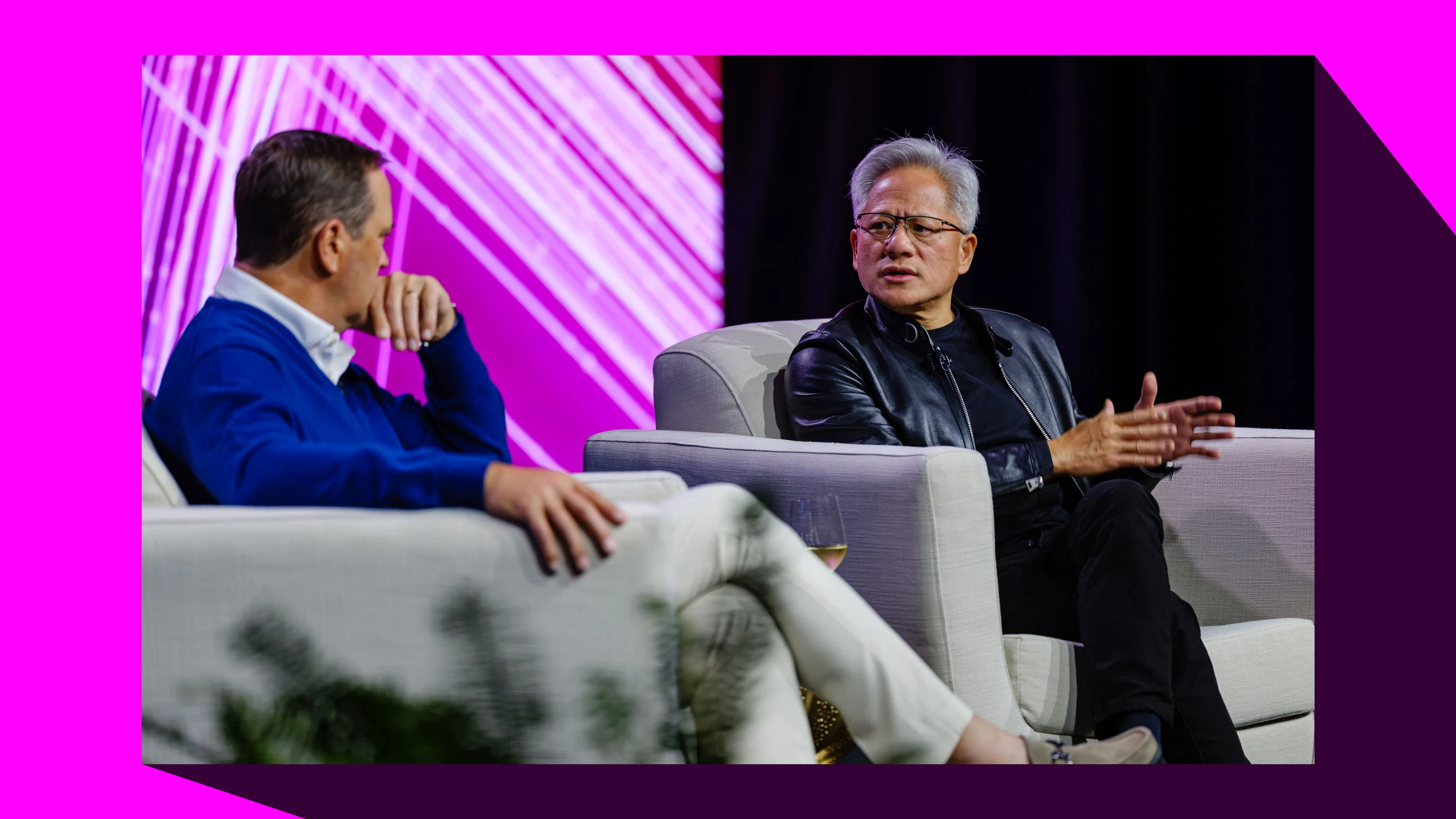
Talking at Cisco’s AI Summit in San Francisco on February 3, Nvidia CEO Jensen Huang made that pithy observation to sum up the phenomenon of people using AI coding tools to simply describe in plain language software they want to exist, with an algorithm doing the heavy lifting. The comment came during a wild, wide-ranging riff on how AI is changing the world, and Huang kept joking that his chatter might have been influenced by several glasses of wine. (Hey, he was the after-dinner speaker.) But even if alcohol-fueled poetic license was involved, the sentiment captured the present moment.
The earliest evidence that AI could transform how people program computers came even before ChatGPT’s arrival, dating to when GitHub released the first version of its Copilot in 2021. At that point, AI was autocompleting snippets of code for humans rather than generating software from scratch. The progress has been radical since then, reflected in the boom for coding agents such as Cursor, Windsurf, Replit, and the industry’s current darling, Anthropic’s Claude Code. Along the way, the act of willing software into reality through AI got a name: vibe coding.
At the Cisco event, Huang, OpenAI CEO Sam Altman, Andreessen Horowitz cofounder Marc Andreessen, and other Silicon Valley luminaries talked about the whole industry having arrived at a crucial juncture in the pivot to AI software generation. Anthropic’s chief product officer, Mike Krieger, whose boss, Dario Amodei, predicted last March that AI would be writing “essentially all of the code” within a year, suggested that’s in the neighborhood of coming true—at least at Anthropic: “Right now, for most products . . . it’s effectively 100%.”
Along with potentially upending the entire tech industry, AI’s ability to write programs could have a powerful democratizing effect on how the world uses technology. For the past few decades, most people who use computers have been wholly dependent on software written by trained professionals. What happens when that trained professional might be an algorithm, available to the masses to create whatever pops into their minds?
I’ve been exploring that question since last March, when I used Replit to bring my dream note-taking app to life. The experience was amazing enough that I put up with Replit’s many rough edges, including its iffy debugging skills, repeated introduction of security flaws, and sycophantic tendency to tell me my ideas were pure genius. Since then, I have had better luck with new and improved versions of the service. I’ve also dabbled with several other coding platforms with increasingly impressive results.