
Over the past decade, computer manufacturers have prioritized form factor, launching sleeker models year after year. That involved making a drastic change to something most people never think about: how RAM is installed inside your laptop.
In most older laptops, memory modules came as removable sticks (usually DDR3, DDR4, or DDR5) that sat in RAM slots, so you could easily remove and swap them. Now, on many modern laptops, the RAM (usually low-power DDR or LPDDR) is directly soldered to the motherboard. With fixed soldering, the additional space around the motherboard, housing the connector piece, and the extra headroom between the modules and the bottom panel is significantly reduced. That’s the reason laptops today look so sleek and compact.
Manufacturers claim this improves speed and power efficiency for Windows machines, and in some cases, it does. However, it comes with a major trade-off. With soldered RAM, repairability and upgradability are affected. Laptop models with soldered RAM modules are harder to repair, and memory can’t be upgraded as easily. Additionally, for everyday users, the effects on performance with soldered RAM may not be as pronounced or as noticeable, especially when RAM is not the primary performance bottleneck. If something goes wrong, soldered memory leaves you with far fewer options.
You lose out on upgradability
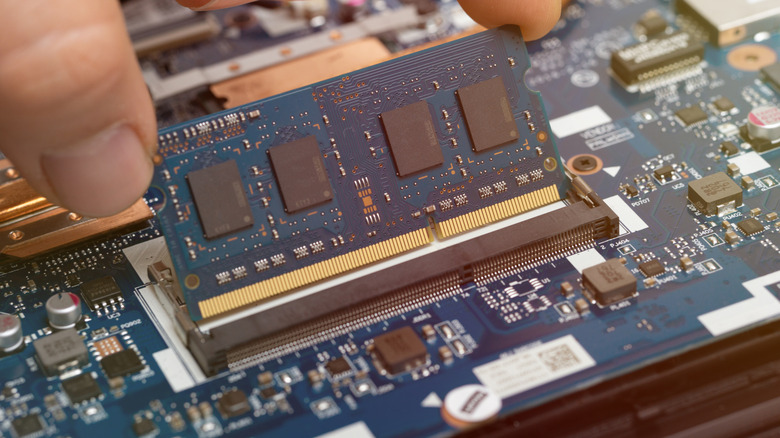
The biggest problem with soldered RAM is that it’s not upgradable. That means you can’t swap out the RAM sticks for newer ones with a higher capacity. In older laptops where the modules were housed in slots, you could just add more RAM to a laptop, and it would instantly feel faster, extending its lifespan by a few more years.
With soldered RAM, that option disappears, even for advanced users. To swap modules on laptops that come with soldered RAM, you need specialized tools and skills, and it’s often not worth the risk or cost. Some laptops do offer a middle ground, like the Lenovo ThinkPad P series, that come with soldered RAM as well as an empty SO-DIMM slot for expanding the memory.
This matters even more because modern operating systems and apps are getting more resource-intensive, primarily due to the integration of a wider feature set. Without the ability to upgrade RAM, you may be forced to replace your laptop sooner than you might have initially anticipated, even if it’s working perfectly fine.
Repairs cost more
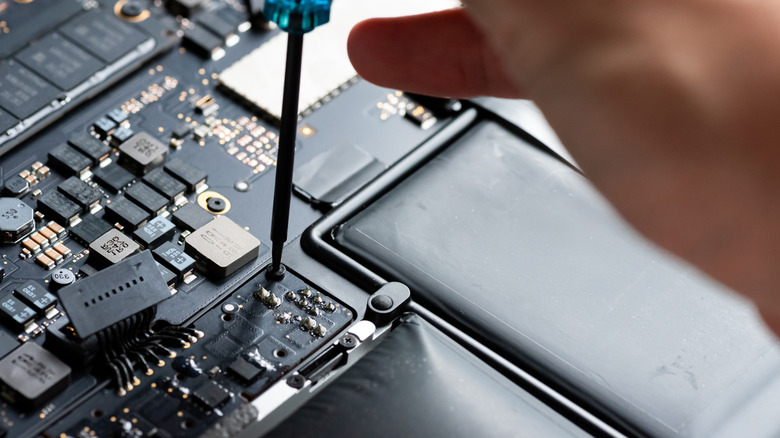
Even if you ignore the upgradeability factor, laptops with soldered RAM are more expensive to repair. On a laptop with removable RAM, you can simply remove the back panel and replace the faulty stick if your RAM has failed. With soldered RAM, the memory becomes a part of the motherboard. In some cases, fixing a RAM-related problem involves replacing the entire motherboard, which is expensive. Even when a repair is possible, it may not be worth the cost compared to the laptop’s value at that time. That’s why laptops with soldered RAM are not viable in the long run, especially if you plan to keep it for the next 5-7 years.
While the decision is ultimately yours, it’s vital to consider these trade-offs when picking your next laptop. And if you are buying a laptop with soldered RAM, the safer move is to get more memory upfront. If 16GB meets your current requirements, perhaps get one with 32GB instead. This way, your laptop is more likely to stay fast for years.