First published 08 Feb, 2026
Selling the absence of smoke
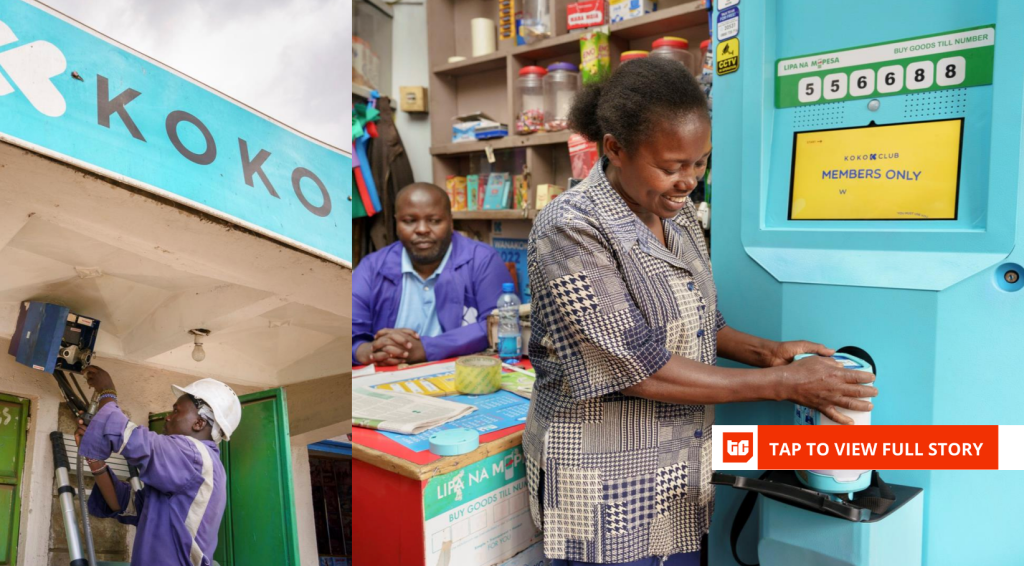
Image: KOKO
If you are a climate tech startup in 2026, you are essentially in the business of selling two things: a physical object that helps the planet, and a financial abstraction that pays for the physical object. The problem is that the physical object is expensive, and the financial abstraction is a house of cards.
The KOKO shutdown
Take KOKO Networks in Kenya. For a decade, KOKO was the poster child of Africa’s green transition. They had 1.5 million households using high-tech bioethanol stoves instead of smoky charcoal. It was a beautiful, blue-flame success story. Until it wasn’t.
In January 2026, KOKO abruptly shut down and laid off its 700 employees because the math no longer worked. The way the math worked was that KOKO sold stoves at a massive discount, roughly KES 2,000 ($16) for a stove that actually cost KES 8,000 ($62) to manufacture. They sold the fuel at half the market price.
The logic was simple that every time a Kenyan household switches from charcoal to bioethanol, they avoid emitting a certain amount of carbon dioxide and methane. KOKO turns those avoided emissions into carbon credits and sells them to international airlines or banks for maybe $20 a ton. The carbon credit revenue was not an extra because it was the entire business model.
But to sell these credits in the high-value compliance markets like Carbon Offsetting and Reduction Scheme for International Aviation (CORSIA), KOKO needed a Letter of Authorisation (LoA) from the Kenyan government. The government essentially had to sign a paper saying, “We waive our right to count these emissions reductions toward our own national goals so KOKO can sell them to an airline”. The government looked at the paper, realised they were giving away their own climate progress to help a private company turn a profit, and they didn’t sign it, or so some people closer to KOKO’s operations claimed. KOKO ran out of cash and went into administration.
Next Wave continues after this ad.

The integrity crisis
The KOKO story is a microcosm of a much larger problem: The things being sold as carbon credits are increasingly seen as hot air. If the government doesn’t authorise the credit, the credit doesn’t exist. But even when the credits are authorised, they might not represent any actual carbon being removed.
“The result, according to Romm’s team, is that less than 10% of offsets on the market deliver genuine, measurable and lasting emission cuts,” Joseph Romm, a climate scientist, says.
Romm’s 2025 study found that the vast majority of credits fail the additionality test, meaning the projects would have happened anyway, or the carbon “saved” was never actually at risk. If you pay someone not to cut down a forest that they were never going to cut down, you haven’t helped the atmosphere but just paid a “not-chopping-down-trees” tax.
The absolution fallacy
If you are an oil company, you buy these credits so you can tell your customers your liquified natural gas or your flights are carbon neutral. But the experts who actually set the rules for corporate targets are increasingly saying this is nonsense.
According to Doreen Stabinsky, SBTi Technical Council, “The evaluation of evidence of carbon credit effectiveness reinforces what many academics have been saying for decades: carbon credits of any sort should not be used to compensate for fossil emissions.”
The problem is fungibility, where the market treats a ton of carbon stored in a tree (which might burn down tomorrow) as equivalent to a ton of carbon pulled from the ground as oil and burned into the atmosphere (where it stays for a thousand years). They aren’t the same. One is a permanent change to the earth’s crust, while the other is a temporary biological storage locker.
Gilles Dufrasne of Carbon Market Watch adds that “Some certificates can play a positive role in corporate decarbonisation, but carbon offsetting is not one of them.”
Dufrasne is arguing for a shift from offsetting (where you pretend your emissions don’t count) to contribution (where you just fund good stuff because it’s good). But contribution doesn’t let you put a carbon-neutral sticker on your fuel pump, so it’s a much harder sell to a chief marketing officer.
Junk-for-junk swaps
When these systems break, they break in a way only a financial engineer could love. Take the Shell rice paddy scandal in China. Verra, the world’s biggest carbon registry, found that credits Shell bought for methane reduction in rice fields were hot air; the activities never happened.
In a physical world, you’d admit the atmosphere is worse off. In the carbon market world, Verra “compensated” for the failure by replacing the sham credits with credits from other rice projects that were also being cancelled for being shams. It’s a junk-for-junk swap that balances the ledger but does nothing for the planet.
The blockchain frontier
Naturally, the solution the banks are pitching is more technology. JPMorgan is building Kinexys to put these credits on a blockchain. The idea is atomic settlement, where you buy a credit, and the token and the money swap places instantly.
They are also creating a composite asset, which is basically a single token that is a basket of fractionalised credits from a hundred different projects. This is great for liquidity, but it makes it even harder to know if the trees are actually standing. If the underlying credits are the 90% that Joseph Romm says are junk, you’ve just built a very efficient way to trade high-speed garbage.
We aren’t solving the climate crisis with carbon math because climate action now looks like compliance work.
Next Wave ends after this ad.
Kenn Abuya
Senior Reporter,
Thank you for reading this far. Feel free to email kenn[at]bigcabal.com, with your thoughts about this edition of NextWave. Or just click reply to share your thoughts and feedback.
We’d love to hear from you
Psst! Down here!
Thanks for reading today’s Next Wave. Please share. Or subscribe if someone shared it to you here for free to get fresh perspectives on the progress of digital innovation in Africa every Sunday.
As always feel free to email a reply or response to this essay. I enjoy reading those emails a lot.
TC Daily newsletter is out daily (Mon – Fri) brief of all the technology and business stories you need to know. Get it in your inbox each weekday at 7 AM (WAT).
Follow on Twitter, Instagram, Facebook, and LinkedIn to stay engaged in our real-time conversations on tech and innovation in Africa.