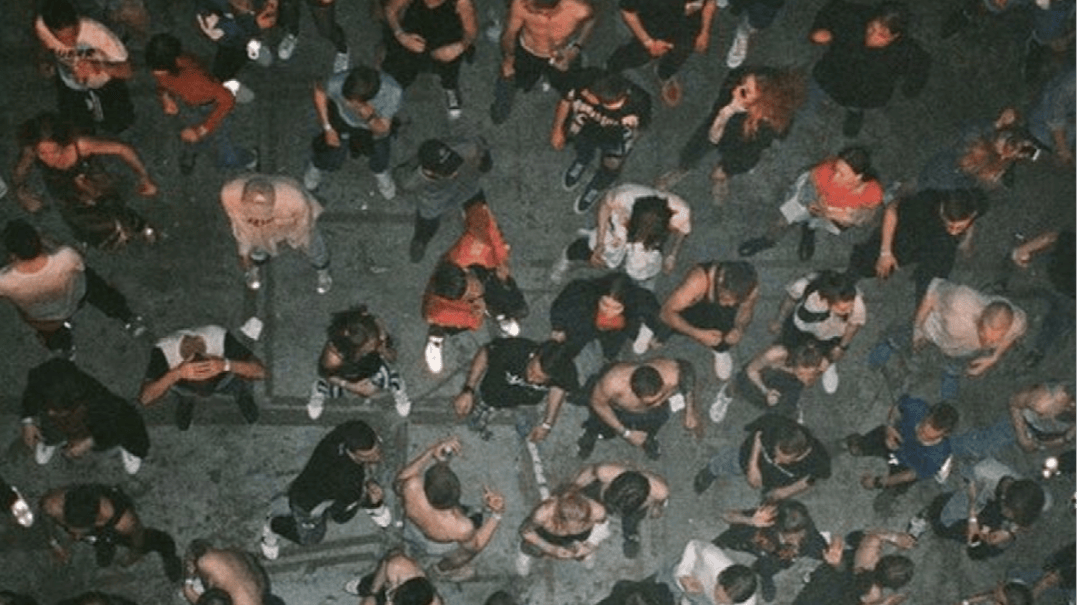
Every subculture that succeeds encounters the same dilemma. If it remains small, it retains coherence but lacks durability. If it scales, it gains visibility and resources, but risks losing the qualities that made it meaningful in the first place. Rave culture has followed this trajectory closely.
In its early years, rave existed largely outside formal markets. It was temporary, loosely organized, and marginal by design. As long as it remained difficult to monetise, it retained a high degree of autonomy. That autonomy began to change as economic conditions shifted and electronic music moved into the cultural mainstream.
n
When the Economic Climate Changed
By the late 1990s and early 2000s, the broader economic environment had turned more favourable. Markets expanded, capital became cheaper, and optimism returned. Technology companies went public, and consumer spending increased across much of the developed world. Cultural industries followed that momentum.
Rave, which had thrived in informal spaces and peripheral zones, began to solidify. What once took place in warehouses and temporary locations moved into licensed venues, stadiums, and open-air sites backed by sponsors. Electronic music crossed from underground into mainstream culture.
This transition produced what many regard as the festival era’s high point. Large-scale events such as EDC, Tomorrowland, and Ultra grew rapidly, drawing audiences that expanded from thousands to hundreds of thousands. Production quality rose sharply. Stages became more elaborate, logistics more complex, and global headliners the norm rather than the exception.
On the surface, this appeared to be an unambiguous success. In many respects, it was. Electronic music gained cultural legitimacy, economic sustainability, and global reach.
The Costs of Scale
Still, scale introduces its own structural consequences. As festivals expanded, artist fees rose, production costs increased, and financial risk concentrated among organisers. What had once been flexible and adaptive became capital-intensive and tightly managed.
The economic logic shifted. Festivals increasingly resembled high-risk financial operations dependent on ticket sales, sponsorship revenue, and flawless execution. Margins narrowed. The tolerance for uncertainty diminished.
At the same time, the nature of participation changed. Early rave culture had blurred the distinction between organiser, performer, and attendee. The festival model reintroduced clear separations. Stages grew taller. Barriers multiplied. VIP areas became common. Participation became more passive, defined by access rather than contribution.
This shift was not the result of bad faith or cultural betrayal. Large systems require predictability. But predictability is fundamentally at odds with the conditions that initially allowed rave culture to flourish.
A Familiar Tension
Today, signs of strain are again visible. Large festivals face rising artist costs, inflation-driven production expenses, increased regulatory scrutiny, and intensifying competition for audiences. Post-pandemic changes in consumer behaviour and discretionary spending have further tightened conditions.
For many attendees, the experience remains visually impressive but increasingly distant. Ticket prices have risen. Interactions feel mediated. Participants are often reduced to data points and access credentials. The system continues to function, but not as inclusively as before.
This pattern is not unique to music. Similar dynamics have played out in other cultural and technological movements. Crypto, for example, followed a comparable trajectory: early experimentation, rapid growth, substantial capital inflow,s and subsequent institutionalisation. In both cases, success introduced constraints that the original culture was not designed to accommodate.
The question that emerges is not whether commercialisation represents failure. It is what happens after commercialisation peaks?
Cycles of Reconfiguration
Cultural movements do not disappear when they become mainstream. They fragment. New layers emerge alongside established ones, often smaller, more local, and more community-driven. This process is less a rejection of success than a recalibration of what was lost.
Historically, such moments create space for experimentation. Not by dismantling existing institutions, but by complementing them with alternative forms of participation that restore agency and shared ownership.
The conditions that once gave rise to rave culture are again visible: economic pressure, cultural fatigue, technological tools that lower coordination costs, and communities seeking meaning beyond scale. These factors do not guarantee renewal, but they make it possible.
Before the Next Chapter
Understanding the commercialisation trap is not an exercise in nostalgia or blame. It is a way of recognising how cultural systems evolve as they grow, and where tensions naturally arise.
What comes next does not need to replace festivals or reject mainstream success. It may instead take the form of parallel structures that reintroduce participation, flexibility, and collective authorship in ways suited to the present moment. In recent years, we’ve seen glimpses of this shift: independent organizers turning to cooperatively run events, micro-festivals rooted in local scenes, and digitally coordinated gatherings that prioritize community over spectacle. These models do not scale in the traditional sense, but that may be their strength.
That story has not yet been fully written. But the conditions for its emergence are already in place.